Singular, idiosyncratic and a little mysterious, Black Clock is one of America's leading literary journals.

Archive for the ‘Look Out’ Category—

John. Chapter One. Verse One.

imagesAfter twenty-one hours of traveling, four different countries, three different planes, and three hundred and fifty pages, a litany kept repeating itself in my mind: my life, my time, my hope, my god, my faith, my love, my glory.
 

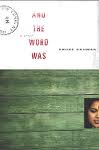
With his 2006 debut novel And The Word Was, Bruce Bauman has given us the gift of an honorable character and an honest man; a man who isn’t afraid to love. Neil Downs is an ER doctor from Queens who runs away from New York City after the tragic death of his son. He ends up in New Delhi, where a myriad of factors come together and blow up in front of the reader, ranging from the political to the philosophical to the hypocrisy that exists in our everyday lives.

Neil tracks down his favourite writer, Holocaust survivor Levi Furstenblum, whose writings are interspersed throughout the novel and are the catalysts to certain events. What was fascinating to me was Neil finding himself in the writings of Levi while Levi’s writing reflected what Neil is not. Levi might have lost his god, his family, and his faith in humanity, but Neil did not. Yes, Neil lost his son, his god, and even his wife for a while, but he was always on the path toward repairing this. Perhaps my favourite parts of the novel are the instances when Neil kneels down to help an injured young woman, and to place rocks on specific graves, as if he is brought to his knees from all the guilt, the tormented ghosts of his past, and his regrets.

(And perhaps my choice of Edith Piaf’s “Non, Je Ne Regrette Rien” wasn’t a random yearning that has been haunting me ever since I read Bauman’s first sentence.)

Curiously enough, “epistasis is the biological term, which science best defines as that nothing is simple and everything depends on everything else” (Bauman 230). The etymology of “epistasis” comes from the Greek word “epi,” meaning “upon,” and “stasis,” which means “stopping;” therefore “a stopping” or “stoppage.” While Neil is in this constant game of “stop and go” (something that Levi knows all too much about), they both need each other and everything that exists in the universe in order to survive.

In essence, this sums up Bauman’s novel beautifully (even if the science that has been carefully penned into this novel is sometimes out of my reach but hey! That is the beauty of fiction). When you lose a person you love, you lose a part of yourself. When you lose your god, your faith is shaken and you start to shatter into small fragments. Most of the time, those two are interrelated and I’m not quite sure which way the causal relationship works.

It is the tug of war that goes on in our entire universe. It is the debate of god and science, of love and loss, of death and life. It is the alienation that Neil feels wherever he may be, mentally or physically. It is his wish to go deaf—for silence in a world that is anything but silent. It is the desperation for something more and the unwillingness to accept that perhaps seeing is  believing. It is the bonding of people who are suffering and how they heal each other by searching for the truth together, consequently bringing each other to salvation.

I can’t stop thinking about the struggle that Holika, an intriguing upper-class Indian woman who had a brief affair with Neil, faced with the social norms that exist in India. I can’t help but think about Abraham and Isaac. About Rilke and “The minds of murderers are easily comprehended.” About the similarities between India and America. Between Israel and Palestine. All the corruption and death, but all of the underlying humanity that is surely found between them. Between, between, between . . .

Ultimately, the greatest tragedy is not Levi Furstenblum losing his family or his god. It is not Neil Downs losing his son in a savage hate crime. It is not the unfairness that plagues India, America, or the world. The tragedy, fundamentally, lies with Sarah Roberts—Neil’s wife who is lamentably silent throughout the first part of the novel—who has her own heavy cross to carry. A cross that is so heartbreaking and so intense, that not even words could contain her pain as most of her journey was off the page. She was alone. And when Neil hears the anguished words of what really happened, our stomachs are in our throats, too.

Because while every single one of the broken characters in the book lose faith in a god that lives out of reach, Sarah loses faith in the man she loves. She lost faith in herself. But as much faith as was stolen from her, she did not lose faith in humanity. Humanity—which Levi (spells ‘Evil,’ spells ‘Live’) Furstenblum only saw the most vicious, the most atrocious, the most horrible aspects. Humanity—which never cared about the agony that was found in the victims of the 20th century, a counterpart to the hatred that was felt by their torturers.

 
And The Word Was is a novel that teaches the reader that hope is often found in the strangest, dampest, and darkest of places. It tells the story of hope always dying last. While I willingly run to the city that Neil Downs has tried to leave behind, I realise that hope is time, and my time will last as long as I want.
 

By Eleni Demetriou
an Associate Editor for Black Clock and a graduate of the MFA Writing program at CalArts.
Peering Into the Void: A Review of Gwenaëlle Aubry’s “No One”

noonenovel“Here again I don’t know what, in all of this, is wisdom, what is madness.”

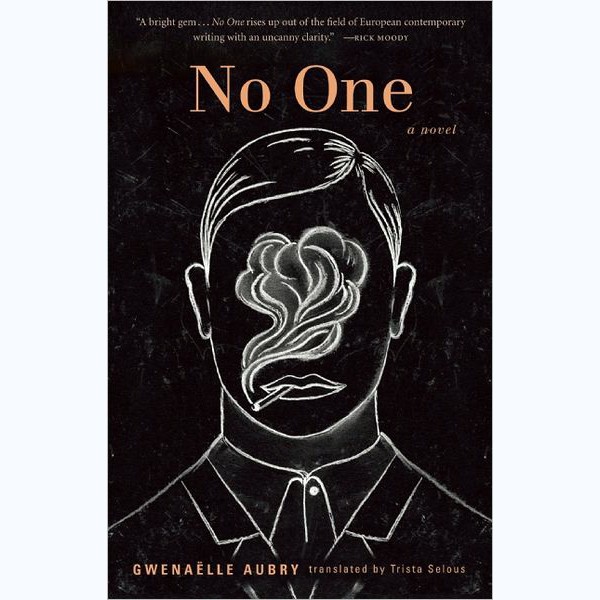
How do we write madness? What language can accurately encompass something as personal and unknowable as mental illness? In her latest book, No One, French philosopher and writer Gwenaëlle Aubry seeks to find that language. Piecing together her own fragile recollections with excerpts from the handwritten, autobiographical manuscript (titled The Melancholic Black Sheep) left behind by her late father with the note “to be novelized,” Aubry explores the life of a man who disappeared from view long before his death: Francois-Xavier Aubry, a once brilliant and distinguished Paris lawyer whose crippling bipolar disorder eventually left him a penniless drifter, in and out of mental institutions for most of his daughter’s life. At once lucid and mystifying, No One is Aubry’s beautifully wrought attempt at creating a portrait of someone whose internal reality she knew so little about, someone who, in the end, strived to be anyone but himself.

Were No One a conventional memoir in the popular American sense we might read Aubry’s story through detailed, chronological scenes in which each family member is cast as a distinct character. It seems necessary to note, however, that No One is the first of Aubry’s books to be translated into English, and in writing it Aubry appears acutely aware of the French literary tradition of “autofiction,” a contemporary genre that blurs the boundaries between autobiography and fiction. Much in the way we saw the life story of Roland Barthes presented to us in Roland Barthes (1977), No One favors compact and poetic philosophical ruminations over dialogue-centered prose. And perhaps also recalling Primo Levi’s The Periodic Table (1975), Aubry shapes her own memoir similarly: this time in dictionary form, with each letter of the alphabet offering another hopeful entryway into her father’s warped psyche.

From the clinically depressed poet/playwright Antonin Artaud to Woody Allen’s chameleon-like 1983 character Zelig, readers accompany Aubry through this idiosyncratic dictionary with curiosity, moving easily between both her father’s poignant, chaotic voice and her own of understated elegance. What we experience then is one author’s exquisite struggle to put a face to a man whose identity was forever unstable, preferring always to be, in his own words, “away from the guerillas of the past, unknown to all, without a label.” The result is a sparkling yet melancholy elegy, a restrained kind of mourning from a wounded daughter to her tragically afflicted father, full of grief and quiet love.

And while we can’t say for certain whether parts of Aubry’s memoir are indeed fictionalized, what is clear is the author’s interest in cultivating this energy of the unknown, something characteristic of autofiction in particular. Readers will notice immediately the contrast between Aubry’s rigidity of form and the cloudiness of her investigation into her father’s true persona, which, like the mental illness that took hold of it, evades, ever so slightly, all attempts at categorization, at being fully known. The task that Aubry has taken on in No One is undoubtedly a difficult one. But the form that she has chosen for her work provides a much-needed, albeit only somewhat helpful, structure in which to look at something formless. It isn’t until the book’s last pages that Aubry comes to a critical realization about her father: “I felt as though, having tried so hard to forget, my memory was now going mad. He didn’t want to remember, didn’t want to know.”

Perhaps it is this exact cloudiness, this frustration of memory and knowing that Aubry laments, that is the greatest triumph of No One. For in the end the truth that Aubry discovers is one even greater than that of her father’s story: It is the truth that madness can never be adequately contained. Though readers may fail to reach a precise explanation of what madness is, they have peered deep into the void along with the brave Aubry herself, who has thus achieved the ultimate act of filial devotion: She has spoken her father’s name, despite everything, again and again and again.

No One
Tin House Books (February 2012)
170 pages; $12.95

By Adriana Widdoes
an Editorial Assistant for Black Clock and an MFA Writing candidate at CalArts

The Strand: My Funny Valentine

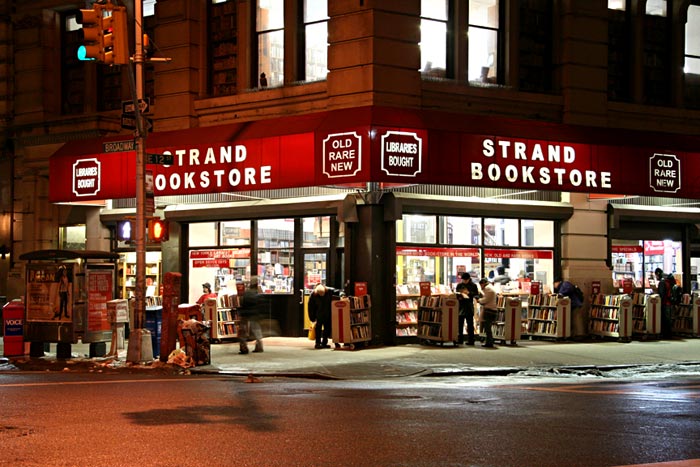
StrandIf I’m going to write about The Strand during February then I’m going to do it right. So “My Funny Valentine” starts to bleed into the shortest month with the carnival giving this red month an eerie air of celebration. Yet it is love and eros that resonates in peoples’ minds. And that is why I’m writing about The Strand—my darling, independent bookstore in New York City—where on the corner of 12th and Broadway I started to fall in love.

The Strand first opened its doors to book lovers in 1927 on Fourth Avenue as yet another bookstore on the legendary Book Row. Now, in 2013, it’s the only Book Row survivor, and can be found on 12th and Broadway covering 55,000 square feet with over 200 employees and more than 2.5 million used, new, and rare books. The owner, Nancy Bass Wyden, speaks of The Strand’s “18 Miles of Books” with great pride, something that is quite remarkable for a business that was, is, and probably always will be, family owned.

I first visited The Strand during the first time I stepped foot on the island of Manhattan. That was back in January of 2012, and on the tenth day of that month, I stood opposite the bookstore for a good ten minutes staring at the numerous trolleys with all the books that were about to fall off. These bookshelves-on-wheels sit right around the entrance, allowing passers-by to flick through them before, perhaps, having a hot chocolate at Max Brenner or joining the manic and eclectic crowd at Union Square. I’m horrified to admit that I must have stayed in the actual bookstore for two minutes at most—but that is for another time, another story—yet something kept taking me back again and again and again.

And again.

Maybe it’s the four floors that are filled with aisles and aisles of floor-to-ceiling bookshelves, a magical labyrinth that will surely leave you giddy with excitement as I can only describe being in The Strand as a treasure hunt where X marks multiple spots. Wooden shelves are abundant, the crammed books beckoning the bibliophile with their index finger to their secret garden. Or maybe it’s all the sections that are too many to list, where you might find yourself with your nose inside a heavy book as the hand of your lover is placed warmly on your lower back in the American History section on the first floor or in the Ocean/Marine Life in the basement. Personally, I think it’s the atmosphere that sits between a perfectly wonderful stale smell of books, pens, and memorabilia that moans into your ear as soon as you open the door.

I suggest listening to Polly Scattergood’s haunting cover of Minnelli’s “New York, New York” as you roam around their exquisite rare book collection on the third floor. Or possibly Simon & Garfunkel’s “The Only Living Boy In New York” while you’re gearing up for one of their many intense author events—heads up, Junot Diaz on the 10th of April at 7PM—and believe you me, they’re all worth it. What better soundtrack to fill your mind when you’re in a bookstore that makes you feel as if anything can happen?

I speak of New York fondly, one of my favourite memories lying in the heart of The Strand where I tried to find, unsuccessfully, H.D’s The Gift. The staff graciously helped me search for it—I toyed with the notion of them live-tweeting the hunt—but it was one book I could not tick off my thesis reading list at that moment. I made my way to the Economics section where a number of customers strolled around like they were home, and I found solace in the catacomb. That was when The Strand became a beacon for me; my beacon, my lighthouse shining the way.

This is where Billy Joel takes over—and it has to be Billy Joel with “New York State of Mind”—as on the tenth day of July I found myself on the verge of tears in front of Bukowski, Charles, in one of the many nooks and crannies that give the reader the safest hiding place in the world. This was a bookstore that offered you a warm embrace before presenting you with your own fairytale.

Essentially, The Strand isn’t just the greatest independent bookstore in the US of A. It is a body, mind, and soul experience. A way to fall in love all over again and learn how to breathe in a ruthless city that offers no second chances.


By Eleni Demetriou
an Associate Editor for Black Clock and an MFA Writing candidate at CalArts.

Pop-Hop: The evolution of the bookstore at its finest

As a writer and a reader there’s something I can’t/won’t/refuse to shake, and that’s a good bookstore. With the threat of e-books taking over as the popular form of publication, I tremble with rage at the thought that we might lose my favorite kind of business.

When I first moved to Los Angeles in 2008 I found it incredibly difficult to locate a good bookstore. I went so far as to follow half complete directions to a used bookstore somewhere between Malibu and some hills only to find it had been dissolved years before. Do you know that disappointment? Does it permeate your city too? I blame the Internet, I think it goes out of its way to forget bookstores still exist. I’m sure it’s intentional, and I hope someone more versed in conspiracy theory is already on this, because I don’t really have the time.

However, in spite of the Internet’s selective memory, I’ve managed to locate bookstores here and there throughout the last four years. From The Last Bookstore downtown to Iliad Bookshop in North Hollywood, the book business is hanging in there. Then there are the special places that are doing more than hanging in there, that are making their own distinct presence known by building a community, and one of those places is Pop-Hop Books & Print, “[a] bookshop, print studio & salon in the Highland Park neighborhood of Los Angeles”.

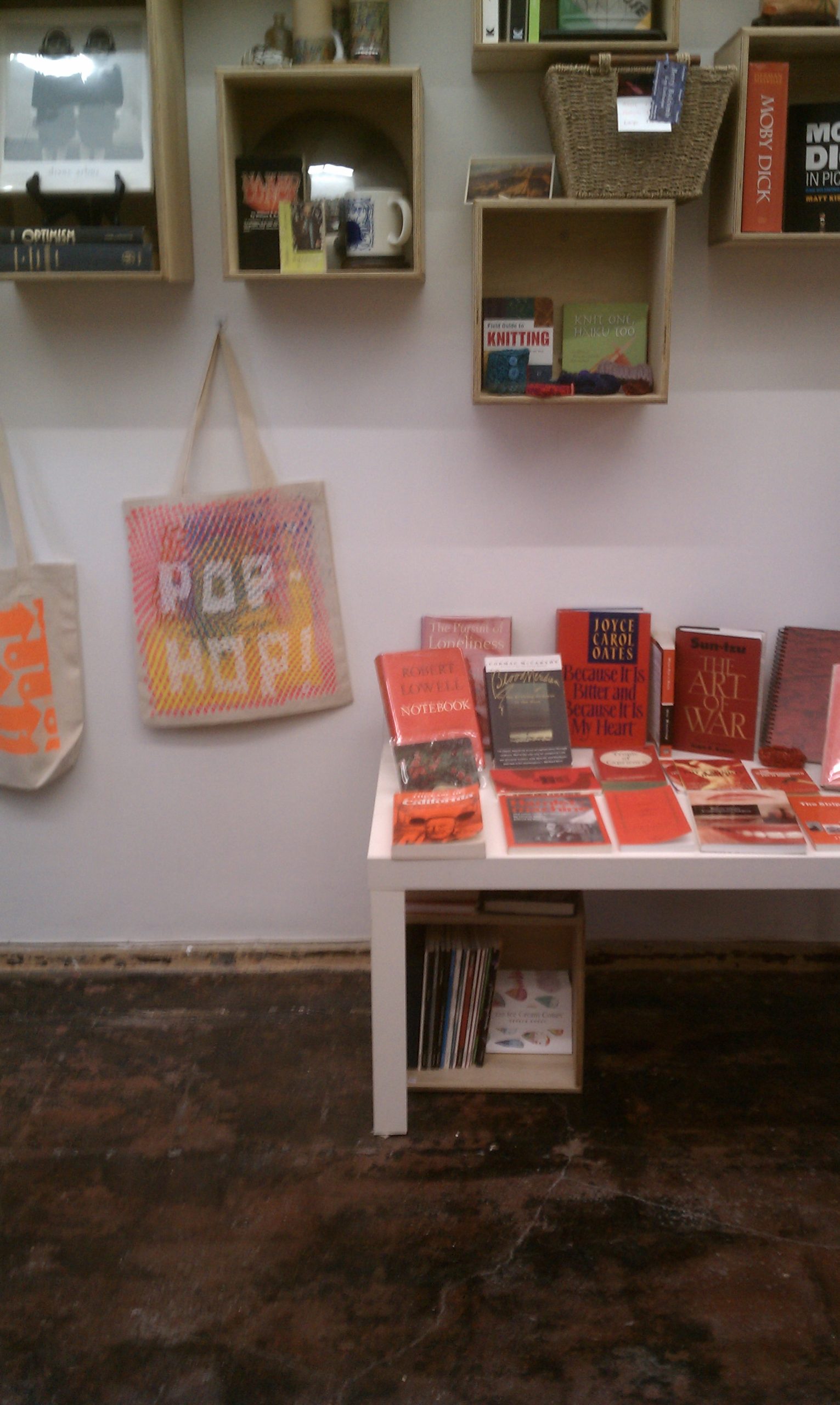
If you haven’t been to Pop-Hop yet, well shame on you, but really, you should make the trip. Recently opened in May 2012 by friends Robey Clark and Sarah Balcomb, Pop-Hop is what I dream my home library will look like someday. Sturdy shelves installed by friends line the right side of this narrow, long, and high ceilinged space. The shop gives off an air of clean and clear purpose. The white walls contrast with what might look like items from your grandmother’s attic. At first glance, to the non-bookish eye, the books and items gracing these shelves don’t seem all that special – mostly used, with a handful of newer books, and scattered lost objects. But these shelves are weighed down by something very specific. Love. Sarah loves books, you can see it in the way she has carefully chosen, organized, and alphabetized her shop, and in the little color coordinated display that lingers by the register. First editions pop up every other grab. Lovingly read books creak open to show you their unique stories and odd photos. You’ll find cookbooks, children’s stories both old and new, psychology and social science books, fiction, non-fiction, local handmade books, and maybe even something as unusual as an instruction book on the best ways to kiss a woman: titled The Art of Kissing (copyright 1936, reprinted in 1988).

This last example is why I have a particular affinity for Pop-Hop. I’m a person who will pick up old communist manifestos and books from the 1900s on how to learn Esperanto, and at Pop-Hop, Sarah displays this same affinity for the odd and rare little book. If you’re looking for a surprising read, or a gift for the book loving person in your life, Pop-Hop is the place to go.

You should also swing by if you’re looking for that yard sale item that’s escaped you, or fun handmade art by local artists. Scattered around the shelves, bits of scrap art mingle with very precious French mugs, and it’s not at all unusual to see very small screen-printing screens acting as bookends. Another aspect to the Pop-Hop shop is its screen-printing studio run by Robey. The walls are hung with bags, t-shirts, and baby clothes that were all screen-printed in house. They run weekend workshops where you can learn to screen print, or make a handmade book. Also on weekends they host story times for kids as well as readings and music performances open to the public, and participate in the NELA bi-weekly art walk. Basically their feet aren’t just wet, they’re soaked from all the activities they’ve both started and become involved with in only the first year of their existence. They’ve created an inviting open space where everyone is welcome, and they’re flourishing.

I appreciate what Pop-Hop does, that they’re helping to keep the printed book circulating and doing it with verve. Their unique and constant interaction with their neighborhood is creating a community, and a community with an appreciation for books and art. A community with this kind of appreciation isn’t going to let a place like Pop-Hop slip away in the oncoming storm of electronic books. Pop-Hop is a lesson in the adaptability of the bookstore, and it’s a lesson I hope other aspiring bookstore owners can pick up, make their own, and run with.


By Jessica Marie Felleman
an Associate Editor for Black Clock and an MFA Writing candidate at CalArts.

Green Apple Books: Independent Bookstores Just Won’t Quit

The first time I walked into Green Apple Books in San Francisco, I remember thinking, “Oh yeah. This is definitely a nice bookstore.”

My tepid response was put on hold once I realized I was in the annex to the bookstore which holds merely a drop of Green Apple’s ocean of a collection. Once I entered the main building a few doors down, I was speechless–my eyes darting back and forth as I tried my best to take it in all at once.

Green Apple Books is a bibliophile’s utopia–stacked wall-to-wall with books of every genre, every size, new and used, from leather bound to hardback to paperback, and not a Starbucks counter in sight. And an even bigger surprise: the employees are knowledgeable and will go out of their way to help you. I was floored when I asked for a specific title and the attractive man with the beard, flannel shirt, and tattoos led me to a section that to me had no clear sorting system and, with the greatest of ease, plucked the one copy of my book from a seemingly impenetrable wall of words.

This is what a bookstore is supposed to be. Sure, they have sizable sections for other things like music and DVDs, but at Green Apple, the appetizers, main entrees, and desserts are the books themselves. The smell of old books on wooden shelves fills your nose as you walk over creaky floorboards. A visitor feels transported away from the vibrant activity of Clement Street and the modern world into another dimension where books are still printed on paper, the word “kindle” only refers to fire, and people love the feel of rifling through pages and having tiny gusts of wind hit their faces.

The bookstore itself is a veritable labyrinth–this is fitting, as this neighborhood bookstore has been open for 45 years. What started off in 1967 as a store of 750 square feet has grown to ten times its size according to the store’s website. The evolution of the bookstore is made evident by the fact that they provide a map for those visitors who have lost their way while perusing through fiction and have somehow found themselves in the adorably titled “Granny Smith Room” which houses books on linguistics, philosophy, and anthropology.

Within the main building they have a second floor as well as a large children’s book area, all in addition to the annex housed a couple of doors down. Continuing with the apple theme, they have a “Red Delicious Room” with books on subjects like Eastern religion and birds. On the stairways are books grouped by deliciously quirky themes like “Deep Dogs,” which has titles like The Art of Racing in the Rain, “This is What Happens When You Don’t Eat Your Vegetables” with books like Tokyo Vice, and my personal favorite “Sexy Time” with such books as She Comes First.

To say that there’s something for everyone here would be trite. But entirely true. Max Segal, a San Francisco native, tells me, “When I first came to Green Apple as a kid, I thought it was a produce market. It wasn’t until later that I realized they do actually produce something–just something entirely different than I thought.”

Green Apple Books is so much more than just a store that sells books–to describe it as such would be too impersonal. And Green Apple is anything but impersonal. It is a neighborhood landmark, a longstanding independent bookstore that survived the most recent recession, a well of knowledge and entertainment, and a source of community pride.

You can lose yourself for hours in its book-lined aisles–just make sure you bring your good credit card. Because leaving empty-handed just ain’t gonna happen.


By Bel Poblador
an Associate Editor for Black Clock and an MFA Writing candidate at CalArts. She is a Los Angeles native, a lover of San Francisco, and an advocate of all things dog-related

Lie To Me, Mr. Keret

In a 2008 interview with the online magazine Words Without Borders, Etgar Keret explained that, “reality is what is in the back of your mind, it’s not what’s right in front of your eyes.” Even though many of the Israeli’s stories take place in his home country, he creates a fictional world, coming out of the hidden crannies of the mind, that sounds a lot like a slightly skewed description of our own neighborhoods and acquaintances. The fiction in Suddenly, A Knock on the Door (Farrar, Straus and Giroux), the recent collection of works translated by Nathan Englander, Sondra Silverston, and Miriam Shlesinger, feels particularly global and fantastic: almost all the stories either exist in or jump into a fabulist world of the subconscious, though feel rooted in everyday life.

In the first collection of Keret’s stories translated for an English-speaking audience, The Bus Driver Who Wanted to be God & Other Stories (The Toby Press, 2004), the stories were compiled from four different books published in Israel between 1992 and 2002; as in other books containing English translations of Keret’s stories like The Nimrod Flipout (Farrar, Straus and Giroux, 2006) and The Girl on the Fridge (Farrar, Straus and Giroux, 2008), the arrangement of The Bus Driver is based not on the author’s creative decisions but simply as a chronological survey of his work (or as a way to market the work as thoroughly as possible). So, if talking about Suddenly as a step forward in Keret’s work feels a bit specious, there is still a discernable evolution in Keret’s thematic focus.

Most of the stories in Bus Driver focus on the particular views and anxieties of Israeli society—most notably men and women coming to terms with their mandatory military service. In Bus Driver we do get “Kneller’s Happy Campers,” a piece that could be termed a novella and was published in Hebrew under its own title together with a few other stories. The tale describes a world that is basically an afterlife for suicides, but even these suicides are people from the Middle East who still worry about crossing into others’ territories, and the tone is not all that different from that of a graphic novel—the experience is highly visual, with strong descriptions of the society at Kneller’s camp, but the language of the story is reluctant to delve into the real depths of human nature.

Suddenly contains the entirety of a 2010 book published in Israel. It has characters of multiple nationalities with whom we can identify simply in their quest to navigate the vicissitudes of reality. Keret’s earlier stories teemed with tension from the Middle East (described as a place predicated towards violence and domination of the human spirit), but in Suddenly he is dealing with more encompassing issues of divorce, death, family, and finances. Here, the 45-year-old, known in his home country as a writer for a popular sketch comedy T.V. series and as a main contributor to a number of films, comics, and graphic novels, displays his most mature and insightful literary work to date.

Keret, married and moving into middle age, has developed a more nuanced understanding of life in general. While, in Bus Driver, he wrote about such charming things as a young boy who, even though he wants to buy a Bart Simpson doll, hesitates to break a piggy bank that has become like a pet (“Breaking the Pig”), in Suddenly Keret’s characters and plotlines play off the serious and ironic in a way that feels more epic; like in the story “Cheesus Christ,” a description of a murder at a fast food restaurant in the United States and its “butterfly effect.”

The collection’s eponymous opening story sets the stage for the thirty-five tales to come. We see a narrator named Etgar describing a predicament in which three burly men invade his home—two holding him at gunpoint, a third using a cleaver—and demand to be entertained with a story. The narrator struggles to be creative under the pressure. In his nervousness all he can do is relay the details of the present situation, to which one gunman grumbles, “That’s an eyewitness report. It’s exactly what’s happening here right now. Exactly what we’re trying to avoid.” His captors essentially ask him to lie, and the narrator fails. The story’s the perfect jumping off point for the collection; a web of fables that mimic reality and emanate from a place deep in the human subconscious.

In Suddenly we get a particular metaphor for conveying the complexities of an adult life; the men, women, and children of his stories continually lie to each other and even more often to themselves, just so that they can survive the cruelties of their fates. For Etgar Keret it seems creating fiction is not all that different from telling a lie.

The strength of Keret’s stories is in his loyalty to nuance—which is, admittedly, a pretty hard concept to illustrate. But Keret exhibits this nuance in the stigma inherent to lying juxtaposed with the joy of storytelling, and this juxtaposition only points to the complexity of our existence—the non-duality of good and evil, of cynicism and hope; a non-duality to which Suddenly attests.

In “Lieland” Keret gives us a character named Robbie who lies so much he is eventually made privy to a secret dimension, where the people and things created through the world’s prevarications reside. In this alternate world, Robbie comes face to face with his lies; he meets a physical manifestation of a bully he once created in order to get out of losing his mother’s milk money and of a sick dog that at one point got him out of trouble at work. The experience ultimately results in Robbie’s realization of his mistakes. This story, by bending our expectations of reality, demonstrates one of the metaphors that make Keret’s stories so successful. If his characters can create believable characters, the author works on a level that cannot help but draw the reader in. Just like a good lie, the fiction is most believable in its precise details.

The truth found in cynicism makes Keret’s writing even more enthralling. In “Lieland,” this tendency toward the negative is an essential aspect in creating a believable lie. As a character experiences, “It was much harder to make up positive lies. At least, if you wanted them to sound plausible. In general, if you tell people something bad, they buy right into it, because it strikes them as normal.” Keret understands that neither a lie nor a story can focus on either struggle or certainty, because reality is comprised of both.

Keret’s characters in Suddenly, though existing in a kind of dream world, often vacillate between morality (the truth) and poor decisions (the lie), so that the reader finishes a story with a strange feeling of melancholy coupled with an epiphany, as if, even though the world is tough and confrontational, at least we are all in it together. We find solace in the sort of world depicted in “Pick a Color,” where a disabled man meets God and discovers that He, too, is disabled, and the man realizes that our suffering can only make us feel blessed. Described in the engaging, colloquial voice of Keret, this world—even though it’s a funny, mixed-up place—contains our only hope for salvation.


By Chris Black
an Associate Editor for Black Clock and an MFA Writing candidate at CalArts

Book Soup: “Bookseller to The Great and Infamous”

There are some places in the world whose lore and history spark our imaginations and minds before we ever have a chance to see and experience them for ourselves. Yes, there is the Taj Mahal, the Eiffel Tower, the Great Pyramid of Giza, the Colosseum. But for those of us who love the written word, there are also bookstores that glow with a magical lure rivaling that of the Statue of Liberty or the Great Wall of China.

Editorial assistants Eleni Demetriou and Chris Black unequivocally agree that L.A.’s Book Soup is one of these literary meccas. For Eleni, it was an online find better than the ideal Match.com profile; for Chris, the homing beacon to his road trip from New York City. Their separate accounts on their first encounters with Book Soup read almost like love letters; fortunately for all of us, it’s a love that’s meant to be shared.

-Kyoung Kim


A Book Soup in West Hollywood


There isn’t much that you can do from approximately seven thousand miles away from West Hollywood – except maybe close your eyes and pretend that you’re there.

My fingers danced over the keyboard as I tangoed my way through the different bookstore websites, each one promising a neighbourhood bookshop that “fulfills your inner bookworm.” I’ll admit to rolling my eyes each time I read those words but mostly I just frowned at the amount of independent bookshops that had closed down due to the inability to compete with mega-monsters such as Barnes & Noble. Although I don’t usually discriminate against big chains, something clicked inside of me, and my loyalty was going to lie with a small independent bookshop.

Whichever one that might be.

And that’s when I clicked on Book Soup and its homepage stared at me from my laptop screen.

When certain things are meant to be, you can feel it. When you see something or enter a place, you can tell from the way that your heart will miss a beat or your mouth will twitch, that you are exactly where you’re supposed to be. That’s kind of how I felt and that’s when I knew I had found my bookshop.

Boasting existence since 1975, it’s still one of the leading independent (and last surviving) bookshops, its location being at the heart of (and I quote) “the infamous Sunset Strip.” As soon as I read the website’s About Me section, my mind began the scenario creation that it is known for. Truth be told, Book Soup was already high on badass points on my list. Especially as they stock “controversial non-fiction” books too – oh la la!

I took a minute and opened my iTunes – independent bookshops call for indie playlists – and click on Bon Iver to provide me with a soundtrack as I continue my virtual tour of Book Soup. Maybe if I closed my eyes and took a deep breath, the back of my eyelids would be my best friend and show me a Book Soup trailer. Maybe if I held my breath instead, I’d feel the different spines underneath my fingertips and smell the books, especially the ones that have yellow pages (and maybe Tom Waits suits Book Soup better anyway).

With floor to ceiling bookcases, signed titles and rare gems, I could feel myself getting giddy – my inner geek was already anticipating our first visit. Nodding to myself, I took a look at their promise of high profile author events. It was a rather impressive lineup and that was only for the next 10 days – and I kind of wished I’d be there for the Marc Wanamaker presentation – so I could only imagine what their monthly calendar looked like. I made a mental note to get to events early as reviews portrayed parking as a nightmare. To be honest, this was West Hollywood and even if I were to take everything that I heard with a pinch of salt, I’d still think of L.A. as a city where everyone drives everywhere.

Kind of like my hometown – sans the Hollywood celebrities.

I pursed my lips as I realised that I may seem a bit star-struck (have you seen Book Soup’s photographs that show off their celebrity clientele?) but there really are so many other books that people read that don’t have Hollywood celebrities as their author. To prove my point, I just used their search engine and stumbled upon a myriad of writers such as Seth Greenland, Mark Z. Danielewski, and Matthew Specktor (to name a few).

I switched between tabs on my internet browser, reading reviews about Book Soup and going on Google maps to find the nearest Starbucks (a mere 300 feet away) and I quickly realised that this was one of the best bookshops I’d never been to. It really did look like a friendly neighbourhood bookshop – just like the ones I had scoffed at minutes before – that looked like a safe haven in the middle of a very busy street. I guess Thomas Jefferson got it right when he said “I cannot live without books,” and this quote can be found on Book Soup’s blog.

Yes, Book Soup really was the best bookshop that I never had the privilege of visiting but it was something I’d look to rectify as soon as I touched down at Los Angeles International.

And I did. The smell, the floor to ceiling bookshelves, the great staff, and its amazing location makes Book Soup one of my favourite independent bookstores in Los Angeles.

It’s sometimes the smallest things in life that makes everything worthwhile, and knowing that I have a small escape in the middle of the hustle and bustle of the city makes me one happy girl. Book Soup, I’m yours.

Take it away Mr. Waits.

By Eleni Demetriou
an Editorial Assistant for Black Clock and an MFA Writing candidate at CalArts


Recipes in Hollywood Longevity


Book Soup has existed here on the Sunset Strip since 1975. It claims to be one of the few independent bookstores left in the L.A. area and has out-survived, among many things, a large Tower Records that once sat across the street and an entire chain of Borders Bookstores. On this, my first visit to Book Soup, I discover the charm that has kept customers swinging through the front door for 36 years.

Perhaps part of Book Soup’s longevity is due to its place among Hollywood institutions. Hollywood and the Sunset Strip figure prominently in my vision of L.A. as I leave New York, and start through the Rocky Mountain gateway town of Denver and into Phoenix. I drive west along Interstate 10, a straight shot through 115 degree heat, envisioning the longest straightaway in American interstate culture since the Okies caravanning along Route 66, until I wind through downtown on the 110 and exit the 101 at Vermont to end up in Hollywood for a new life in the driven metropolis of L.A.

My path takes me west down Sunset Boulevard, past the vintage aesthetics of Amoeba Music and the Cinerama Dome. The Laugh Factory. The Chateau Marmont – RIP John Belushi – until the Chateau fades away into the theme park appearance of Saddle Ranch. The Comedy Store. Mel’s Drive-In. Book Soup. The Viper Room – images of River Phoenix laying on the curb out front.

I take a cartoonish pan back to the crimped red letters spelling Book Soup, the place I’d been searching for since my final visit to the Strand Bookstore, which in turn claims to be the largest independent bookstore in the world, on Broadway in New York. But the shop on Sunset has a quaint front window, in which I initially see a display of cookbooks, all of which try to tell me a little more about Hollywood. In the window are On Booze, a collection of pieces by F. Scott Fitzgerald, 2000’s Kitchen Confidential by Mr. Anthony Bourdain, the hippest of all traveling chefs, and something called The Hungover Cookbook.

I finally enter. Judging by the name, I had imagined Book Soup to be just as big, just as confusing, and just as unwieldy as the Strand. And in some ways Book Soup does live up to its name. There are floor-to-ceiling bookshelves housing a hodgepodge of seemingly unorganized–at least at first glance–stacks of huge art books for a “really big coffee table,” travel books, “controversial” non-fiction, literary fiction, and the usual paper products such as cards and journals. There are no true paperback novels in Book Soup, and their bestseller list has very little in common with that of the New York Times. The closest thing I saw to a mainstream piece of fiction was George R.R. Martin’s A Song of Ice and Fire series. A piece of paper taped to the shelf reads, “It’s not TV, it’s Book Soup.”

But after circling the aisles a few times, I begin to see the organization, highlighted with a tremendous amount of handwritten notes – “HEY! Look at all this stuff!” – pointing in recommended directions. Sandwiched between sections on WWII and sports, a staff recommendation reads, “Check out this section for all you need to know about Marijuana.”

After such a long journey, it would be a crime to enter such a place and leave empty-handed, so I decide on a recent Chris Andrews translation of Roberto Bolaño titled The Skating Rink and a book by a French author named Boris Vian. This second translation, titled To Hell with the Ugly, is in the travel section, ironically filed under City of Angels. When I finally reach the register and hand the books to the blonde woman behind the counter, she seems genuinely impressed with my selections and actually talks to me about them. This certainly never happened at the Strand, and I realize there still exists a bookstore where the staff is not only as in love with books as their customers are, but actually pride themselves on being helpful – how wonderful to see an example of why Borders got too big for its britches.

As if I weren’t already smitten by her conversation, according to this elegant bookseller I had found a diamond in the rough. Although there are further stacks of the Vian book on a front table, as if the store is pushing it, I think, so what if they are?  It’s just another reason the store is special. The woman points to the back offices and tells me that another Book Soup employee, Tosh Berman, the book buyer/ publisher of TamTam books, has an exclusive to sell this French, Hollywood, Noir book. And again I get the feeling that I am experiencing something unique. The woman asks me if I have a Bolaño recommendation, and when I tell her I think Amulet is a good place to start, she actually seems to take me seriously. I get the impression she will tell her next customer what I have said. And how cool is that? Very cool.


By Chris Black
an Editorial Assistant for Black Clock and an MFA Writing candidate at CalArts


The Stages of Falling for the Deliberate Love of Humans: A review of Aimee Bender’s “Willful Creatures”

Reading Aimee Bender’s Willful Creatures is uniquely emboldening. The ride is all magic and turmoil in open air, and you finish smiling, face taut from being smacked with the full range of human capabilities. Bender shows us how we all have the potential to be willful, to act unreasonably or deliberately to a fault, and how doing so can be just as heartbreaking as it is inspiring. In this collection, Bender locates and exposes the multiple layers of what it means to truly act with willful intent. Her characters open up and move the reader to understanding his/her own desires. From a man who cannot see theperfect woman, to a pumpkinhead mother who cannot help her ironhead son sleep, to a woman weighed down by grief equaling exactly the same as seven potatoes, Bender’s characters bring you into their world and expel you just as quickly with a slight whiplash that is well worth it.

Separated into three parts, Willful Creatures acts as a coming-of-age tutor. A more apt title for “Part One” might be Childhood, as the characters in this section all share an immaturity. They are mean as they torture; they are stubborn as they defy themselves; and they underestimate their emotions as they act rashly. Watch the doomed men in “Death Watch” cry, run away, beat the ground, and then completely miss out on their own lessons. Detest the big man in “End of the Line” when, after he has committed many unthinkable deeds, he stops not through an understanding of his crimes, but from a renewed selfish feeling of entitlement. Scream at the driven girl in “Off” as she drowns all of her opportunity for greatness in stubborn games. Feel the pain of “Debbieland”–the pain that we bring to others in order to get rid of our own. Savor the familiar tingling in your hands from the urge to shake these characters, caress them, or push them down a flight of stairs.

Enter the lives of Bender’s characters in “Part Two” who feel older, but are yet still incompetent in their limbo-ridden world of indecision–who show us the weakness of being weak. An investigation of intimacy and emotion,“Motherfucker” leaves you wandering your own house of desire and all the memories of times you left it too widely open, thus missing out on something true. Captivated by the magic of a few moments of change, the characters in both “Fruits and Words” and “I Will Pick Out Your Ribs (from My Teeth)” suffer in all-too-familiar suspended weightless fields of danger and uncertainty, and make you wish they would break like poorly made plates, not out of malice, but as a way to redemption.

As in the Kübler-Ross model of the five stages of grief, the last section of Willful Creatures takes us through acceptance. Hold your breath while reading “Job’s Jobs” in which our hero has everything taken from him but still oozes that soul-crushing ability to love what he can do. Here, Bender finally lets you shout “TAKE THAT!” at God and shove his face in the human ability to continue striving for happiness in spite of any obstacles. In “The Case of the Salt and Pepper Shakers” Bender examines the equality that can be found in discord, and in “The Leading Man” she explores the process of self-discovery with the acceptance of every subsequent reveal. The characters in Part Three feel ancient, wise and self-assured compared to the volatile creatures in the first two sections. “Hymn,” a story of acceptance of perfection in a seemingly chaotic town where everyone can find a true purpose, finishes the book off like a perfectly sculpted tower of whipped cream. It is as unifying as a comfortable close hug between warring sisters.

To read Willful Creatures is to submerge oneself into the thick fiction of Aimee Bender’s creation, to swallow every story whole, to feel her characters tap at you from the inside as you digest them, and to glow in their aftereffects. It is an experience made for lovers and dedicated students of the human condition, and a revelation into what it means to be able to act with intent. Read it, feel yourself judged not worthy of the will you have, and then go out and be as unreasonably stubborn as you can possibly be.

By Jessica Marie Felleman
an Editorial Assistant for Black Clock and an MFA Writing candidate at CalArts

Fast Music and a Bulbous Book

I don’t have any charts or figures, but I suspect that many Black Clock readers have at least some (if not fairly intimate) knowledge of the music of the late, great Frank Zappa and his occasional collaborator / rival / co-conspirator in eccentricity, the (very recently) late, also great, Don Van Vliet, aka “Captaison Beefheart.” For those of you who may not already be eating dough in a polyethylene bag, the Zappa / Beefheart body can be somewhat challenging. Hermeneutic, absurd, confrontational, scatological, highly technical and radically experimental—few composers, popular or otherwise, have measured so much of the sonic unknown, or so thrillingly enervated familiar musical forms from blues and bebop to punk and modern classical (to name only a few) with the kind of diabolical cunning that requires both natural talent and years of practice. Their music suggests (to the suggestible listener) a radical poetics of transgression–an insistent critique of the assumptions that attend formal categories of music in particular, but also art-making in general, as well as the values which structure its production and consumption.

So just what am I saying? I’m saying there’s a lot to these guys, and whether you’re a hungry freak just poised to dive into their old black water, or are even now– as your eyes scan the page—making tender love to a vampire with a monkey on your knee, you ought to read Frank Zappa, Captain Beefheart and the Secret History of Maximalism by Michel Delville and Andrew Norris.

One of the most remarkable things about Delville and Norris’ book (expert exegeses of their challenging subjects aside) is the critical apparatus they assemble to contextualize the work of Zappa and Beefheart. Comprised of five chapters, each devoted to a salient motif in the iconoclasts’ considerable oeuvre, Delville and Norris’ readings exemplify immanent critique, illustrating the same playful abandon and intellectual elasticity in their analyses as was demonstrated by the musicians themselves. A chapter on commodity fetishism situates particularly Zappa in terms of Freud, Debord and Bataille and in the midst of a complex musico-literary conversation between (among many others) Gertrude Stein, Haryette Mullen, Erik Satie, and Arnold Schoenberg. Another explores the concept of the abject with Beefheart’s avant-blues as meditation on birth-trauma, situated at the crossroads of Julia Kristeva, Peggy Phelan, Samuel Beckett, Rousseau, and naturally, Robert Johnson. While at times, the net cast by the authors seems more like a few dozen homing missiles on wild trajectories according to their targets’ whimsy, the launch-pad is never quite out of sight. The picture may be teeming, but Delville and Norris’ framing of Zappa and Beefheart as contemporary progenitors of a kind of a “maximalism” in the tradition of Rabelais, Joyce and Pasolini, usefully focuses the discussion as well as presenting a compelling case for the authors’ own overflowing analyses. The maximalist work seems always as if it can only barely contain the ribald, primal exigencies of the body generating it, indeed, it is this primacy of the living body (both the flesh of producers / consumers and the “stuffs” of production, consumption, digestion, their urgency and constant interpenetration) which, according to Delville and Norris, defines maximalism.

Admittedly, this all probably sounds a bit nebulous, and while I doubt Zappa and Beefheart would begrudge me this, they would also undoubtedly demand the kind of rigor that Delville and Norris deliver. I highly recommend their work to any fans or curious readers interested in an excellent academic analysis of two giants of 20th century avant-garde music. In the meantime, listen up.

by Seth Blake
an Editorial Assistant for Black Clock and an MFA Writing candidate at CalArts

Weird Words

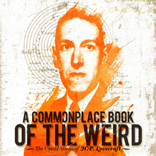
If you’re feeling the distinctly sharp absence of cults, exorcisms, and unnameable discomfort in your life, look no further than A Commonplace Book of the Weird: The Untold Stories of H.P. Lovecraft to soothe your aching void.

Creator of such oddities as the Cthulhu mythos (which has ravaged human hearts since the 1920s), and the fictional grimoire the Necronomicon (inspiration for a slew of literary hoaxes), Lovecraft left behind 221 unwritten stories of dread and mystery, just barely birthed in descriptions like:

142. Members of witch-cult were buried face downward. Man investigates ancestor in family tomb and finds disquieting condition.

106. A thing that sat on a sleeper’s chest. Gone in morning, but something left behind.

41. The Italians call Fear La figlia della Morte–the daughter of Death.

53. Hand of dead man writes.

Edited by Joseph Fink, A Commonplace Book of the Weird anthologizes the interpretations of a legion of authors whose intent was to carry Lovecraft’s darksome visions to completion. And so it was that Marcus Goodyear came to tell a tale of parents undead, F. Omar Telan wove a monstrous thing of an old seaside tavern, and Marta Rainer translated the strange tongue of number 214’s talking rock of Africa. For those who know what darkness breeds beneath the pitch-dark staircases of pyramids, or those who’ve ever known the nausea of losing their faces, this book will be an abyss most comforting. Letters skitter across trembling pages, below the smears of a title comprised of two blacked-out words we’ll never know, opposite drawings etched by ink-stained hands, and between the moaning white columns of poems invisible to human eyes.

There’s a lot to unearth here: horror, “experimental text art,” science fiction, and even a few stygian servings of comedy. You may find yourself lost, at times, in the foggy miasma of labyrinths inaccessible (love letters from aliens, vampire dogs in the distance, a clinging to one girl and Aleister Crowley as both disintegrate, something about a really disturbed plate), but more often than not, you’ll be deftly transported. Wrap your arms around the blissful dread inherent to deals made with the devil, and bask in the bruises left by forbidden knowledge and glitches in time.

Lovecraftian devotion to the monstrous and fantastic is well-reflected in the wide spectrum of pieces held in this enigmatic anthology. If Lovecraft is turning over in his grave, it’s to get a better look at the mirror. And if Cthulhu is listening from the depths of the sea, no doubt there’s a smile on its horrible face.

by Patricia Cram
an Editorial Assistant for Black Clock and an MFA Writing candidate at CalArts