
Singular, idiosyncratic and a little mysterious, Black Clock is one of America's leading literary journals.

Author Archive for Adriana Widdoes—

Living Well: Alisa Stein and the Healing Power of Art

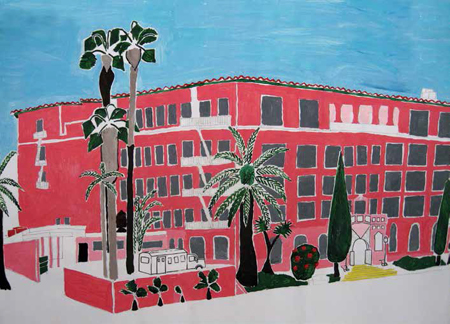
A portrait of Harbor View House by resident artist Ray Rodriguez

A portrait of Harbor View House by resident artist Ray Rodriguez

Among the first in the United States to champion the validity of outsider art were Janos Marton and Bolek Greczynki, two expat scholars out of Columbia University’s School of Visual Arts in the 1970s. Largely influenced by the idealistic, humanist approaches of artists and writers like Jean Dubuffet and André Breton, Marton and Greczynki later founded the first-ever art studio on the grounds of Creedmoor Psychiatric Hospital in Queens. This art studio, christened The Living Museum, sought to showcase the work of Creedmoor’s many untrained yet visionary patients, and was dedicated to the purposes of beauty and healing above all else.

 
Fifteen years ago, psychologist Dr. Israel Rubenstein flew out from Southern California to visit Creedmoor, and was so impressed by the hospital’s art studio that he decided to open a similar space at Harbor View House, an adult residential psychiatric facility in San Pedro. For the past four years, Alisa Stein has served as Art Director of The Living Museum Art Center at Harbor View House, a former racquetball court turned studio and gallery space for the Harbor View House residents—as well as anyone else who’d like to spend a morning chatting with the artists and viewing their work over a hot cup of fresh (free!) coffee, which is exactly how I first met Alisa Stein, as part of a class trip to the studio in one of Mady Schutzman’s graduate writing workshops at California Institute of the Arts. A few weeks later, I returned to the studio to talk one-on-one with Alisa about her work managing the atypical art space. The two of us discussed the psychological benefits of art-making, the realities of mental illness, and more.

ADRIANA WIDDOES: Who are the residents of Harbor View House and how do they get here?

ALISA STEIN: Everyone here has been diagnosed with a mental illness. In addition, they usually have drug and alcohol addictions, so prior to getting here most of them have lived on the streets—either on skid row or park benches. They usually have had some kind of altercation with the law or some other issue and end up at a psychiatric hospital in that way. Then from there they’re referred to living here at Harbor View House. But the number one reason for being here is mental illness. Most of our residents have schizophrenia or bipolar disorder.

AW: What do you think drives the residents of Harbor View House to create art?

AS: I think what drives them is that most of these people have never been accepted by society for whatever reason—whether that’s because of their mental illness or their addiction problems. Coming in here and being able to create gives them a sense of self worth that they can do something. They can make something that they can get recognized by. And that recognition is not just from a gallery or a museum. It’s also from me and other people who are working or living here. Because most of them have never been told that they were good at anything. They haven’t had a lot of success in their lives, so something as small as creating a tissue paper poinsettia can give them such a sense of self worth.

AW:
I agree that creating gives people a sense of purpose, and that’s not something special to people who suffer from mental illness either.

AS: It’s for everyone. We all want to feel creative. We all want to be able to do. People without a mental illness can get that feeling through many different avenues. But for people with mental illness it is so critical because they really lack so much support. Most of their families have just been tired by their illnesses and their addictions and the chaos that they cause, so they just sort of left them to be. So maybe creating tissue paper poinsettias doesn’t give them everything they need, but it’s still something. If they didn’t have that and had nothing instead, it would be even more traumatic.

AW: What are some of the obstacles for the artists that you work with here?

AS: One pretty common obstacle is that they are all on psychotropic drugs and some of them are heavily medicated. Just trying to function through a day when you’re taking 400mg of Lithium and 300mg of something else is difficult. It affects your sleeping and your eating. A lot of them are also trying to stay sober and unfortunately the neighborhood has a lot of drugs that are available. People have to fight off their demons just to not go outside and use. That is an obstacle. Some of the residents’ personalities here can be very volatile and sometimes the environment can be very unsafe, and they’ve got to deal with that. They might have a roommate who has stolen something or done something else bad. This is their home, but it can be a very difficult atmosphere.

AW: How do you experience the relationship between the Living Museum Art Center and the rest of the building, which is perhaps more clinically oriented?

AS: I think the art is such a blessing to this building. People come in and it’s like the oasis here. It has life, color and beauty. The building is otherwise pretty traditional in the sense that the walls are all white and it can feel very institutional. We try to hang art throughout the building and give it some life. The fact that the art wasn’t just done by some artist in downtown L.A. and is actually the art that has been created here gives it so much more meaning. When outsiders come to visit this place, they’re not expecting to see what they see in here, and it feels good to know that things are still going on here. Residents aren’t just milling around smoking cigarettes or lying in bed all day. They are actually producing something that gives the building life.

AW: Are you ever concerned that visitors might be coming to view the patients and not the art?

AS: I’ve never had that feeling. The artists actually really like it when they have visitors. They don’t feel that it’s an observation of them. I think they almost feel privileged that people are interested enough to come see what’s produced here and how this program works. It makes them feel good.

AW: Do you consider yourself an artist (trained or otherwise)?

AS: Not trained, not untrained. I am not an artist. I would say I’m a creative person, but the only F I got in school my whole entire life was when I got an F in art in 7th grade. My teacher at the time told me that I was the most uncreative person that she had ever met! I tell that story all the time. It really stuck with me, but lo and behold— I’m Art Director of a mental health facility creating projects. I think I’m artistic in the sense that I understand the elements of art, but I always tell my artists here that if they ask for help painting a portrait, I can’t.

AW: Do you think being untrained helps your dynamic with the artists working at LMAC?

AS: I do. I think their perception of me is as a leader and as someone who is able to explain and define things. I always tell them how talented they are—and they really are—and I think it’s a good balance. They have taught me a lot about art and drawing and painting. I feel they are not intimidated by me because 99% of the time I can’t out paint them and I can’t create something that looks lovelier than they can. It makes it a more comfortable atmosphere.

AW: How necessary do you feel art programs like LMAC are?

AS: Oh, they are so necessary. They are vital, and not just to provide an extracurricular activity; it has been proven that art-making enhances cognitive skills. There is just no downside to creating. It enhances people’s wellbeing tremendously. I see it first hand. I see the change in the artists’ expression. It just gives them a purpose to create something. That’s not something that anything else in their life offers them.

AW: Do you ever feel frustrated? Do you ever feel like what the art studio can provide the residents here is not enough?

AS: Of course. I feel frustrated when I’ve been working with an artist for 6 months and they’re really coming along and I can see some hope in their eyes and then I don’t see them for a month and I find out that they’ve started smoking crack again and are living on the streets. Then when they end up back at Harbor View they’re all beat up and we have to start from square one again. I get frustrated when I feel like all the work that an artist and I have been doing is lost in an instant. It’s hard to understand mental illness. It’s so different for everyone. Even the same diagnosis of schizophrenia can manifest so differently in each person— and it can be very frustrating. It’s frustrating when a 55-year-old woman doesn’t understand that she is making a poinsettia even though I’ve explained to her that a poinsettia’s leaves are red 15 times. That’s tough. But that woman did do something in the end. It’s all good—and she felt good about it.

AW: Is any of the art for sale?

AS: Yes, we do sell the art. 50% of the proceeds goes to the artist and 50% goes to buying supplies for the studio. Anyone who’s interested in purchasing something can view the art by contacting me and setting up an appointment. We don’t necessarily use the gallery for art sales or exhibits. It’s mostly just to showcase the larger pieces of art that artists have created here. We’ve tried in the past to open the gallery up to the outside, but because of its location on the third floor of the facility it’s difficult to get passersby up here. 95% of our sales happen in outside art galleries. We’ve exhibited in L.A. City Hall, Torrance Art Museum, Angels Gate Cultural Center—all various types of galleries.

The Living Museum Art Center is located at 921 S. Beacon Street in San Pedro, CA. To contact Alisa Stein, make a donation or become a volunteer, please visit the LMAC website.


By Adriana Widdoes

an Associate Editor for Black Clock and an MFA Writing candidate at CalArts
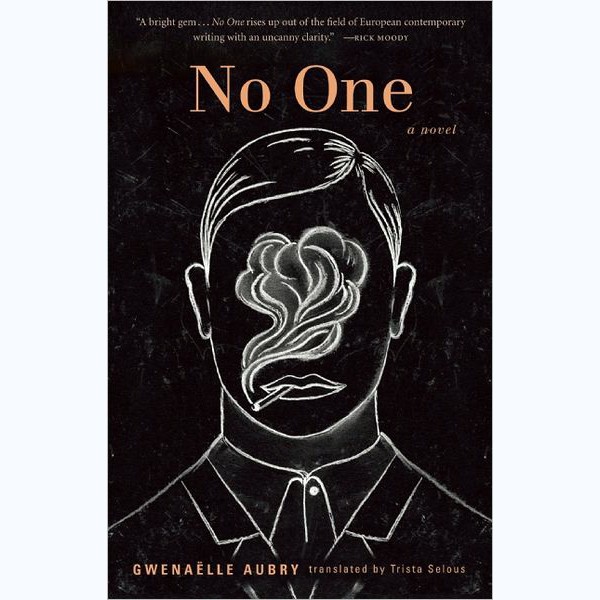
Peering Into the Void: A Review of Gwenaëlle Aubry’s “No One”

noonenovel“Here again I don’t know what, in all of this, is wisdom, what is madness.”

How do we write madness? What language can accurately encompass something as personal and unknowable as mental illness? In her latest book, No One, French philosopher and writer Gwenaëlle Aubry seeks to find that language. Piecing together her own fragile recollections with excerpts from the handwritten, autobiographical manuscript (titled The Melancholic Black Sheep) left behind by her late father with the note “to be novelized,” Aubry explores the life of a man who disappeared from view long before his death: Francois-Xavier Aubry, a once brilliant and distinguished Paris lawyer whose crippling bipolar disorder eventually left him a penniless drifter, in and out of mental institutions for most of his daughter’s life. At once lucid and mystifying, No One is Aubry’s beautifully wrought attempt at creating a portrait of someone whose internal reality she knew so little about, someone who, in the end, strived to be anyone but himself.

Were No One a conventional memoir in the popular American sense we might read Aubry’s story through detailed, chronological scenes in which each family member is cast as a distinct character. It seems necessary to note, however, that No One is the first of Aubry’s books to be translated into English, and in writing it Aubry appears acutely aware of the French literary tradition of “autofiction,” a contemporary genre that blurs the boundaries between autobiography and fiction. Much in the way we saw the life story of Roland Barthes presented to us in Roland Barthes (1977), No One favors compact and poetic philosophical ruminations over dialogue-centered prose. And perhaps also recalling Primo Levi’s The Periodic Table (1975), Aubry shapes her own memoir similarly: this time in dictionary form, with each letter of the alphabet offering another hopeful entryway into her father’s warped psyche.

From the clinically depressed poet/playwright Antonin Artaud to Woody Allen’s chameleon-like 1983 character Zelig, readers accompany Aubry through this idiosyncratic dictionary with curiosity, moving easily between both her father’s poignant, chaotic voice and her own of understated elegance. What we experience then is one author’s exquisite struggle to put a face to a man whose identity was forever unstable, preferring always to be, in his own words, “away from the guerillas of the past, unknown to all, without a label.” The result is a sparkling yet melancholy elegy, a restrained kind of mourning from a wounded daughter to her tragically afflicted father, full of grief and quiet love.

And while we can’t say for certain whether parts of Aubry’s memoir are indeed fictionalized, what is clear is the author’s interest in cultivating this energy of the unknown, something characteristic of autofiction in particular. Readers will notice immediately the contrast between Aubry’s rigidity of form and the cloudiness of her investigation into her father’s true persona, which, like the mental illness that took hold of it, evades, ever so slightly, all attempts at categorization, at being fully known. The task that Aubry has taken on in No One is undoubtedly a difficult one. But the form that she has chosen for her work provides a much-needed, albeit only somewhat helpful, structure in which to look at something formless. It isn’t until the book’s last pages that Aubry comes to a critical realization about her father: “I felt as though, having tried so hard to forget, my memory was now going mad. He didn’t want to remember, didn’t want to know.”

Perhaps it is this exact cloudiness, this frustration of memory and knowing that Aubry laments, that is the greatest triumph of No One. For in the end the truth that Aubry discovers is one even greater than that of her father’s story: It is the truth that madness can never be adequately contained. Though readers may fail to reach a precise explanation of what madness is, they have peered deep into the void along with the brave Aubry herself, who has thus achieved the ultimate act of filial devotion: She has spoken her father’s name, despite everything, again and again and again.

No One
Tin House Books (February 2012)
170 pages; $12.95

By Adriana Widdoes
an Editorial Assistant for Black Clock and an MFA Writing candidate at CalArts
Black Clock 16 Launch at The Last Bookstore

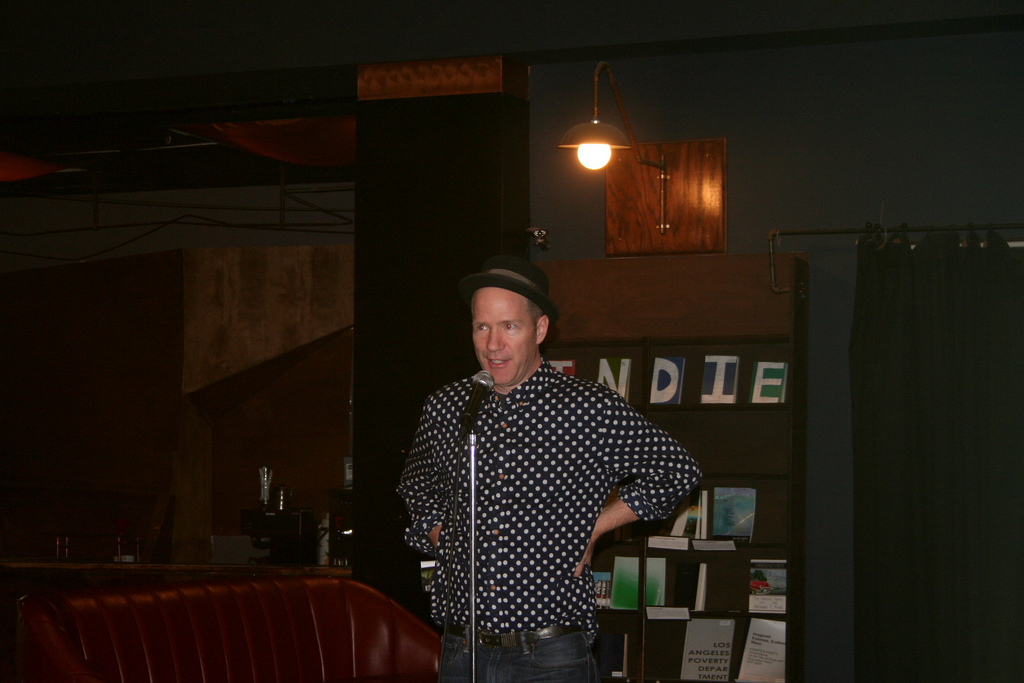
moody1Last Sunday, writers and readers alike convened at downtown L.A.’s The Last Bookstore to celebrate the much-anticipated release of Black Clock 16. Located in an old bank building fit with tall columns, dim lighting and an arched ceiling, the cathedral-like Last Bookstore hosts a massive collection of new and used books and vinyl records (many for as cheap as $1!) that requires seriously superhuman strength not to peruse for hours on end. What’s more, with such artful installations as its eerie flying typewriter sculpture and a walk-through tunnel made of books, The Last Bookstore offered Black Clock the perfect setting in which to launch its dystopic Issue No. 16. As KCRW’s Michael Silverblatt put it to the crowd on Sunday: “This is an entire issue of how we’re falling apart. Here at The Last Bookstore we can come together and not fall apart.”

Seats filled quickly and stragglers settled for standing room only as Black Clock Editor Steve Erickson took the stage to present the night’s readers. Up first was Claire Phillips (author of Black Market Babies and a previous contributor to Black Clock 15) reading the entirety of her short yet impactful story “Tubular,” a science fiction piece set in a disturbingly familiar, near-future Los Angeles which has succumbed to mass societal collapse after the 2010 B.P. oil spill. Attendees on Sunday listened intently as Phillips’ characters navigated their strange, new landscape with necessary wit and numbness, even in the face of 10-foot “land-faring mutant worms.”

Next was The Contortionist’s Handbook and Dermaphoria author Craig Clevenger, who read an excerpt from his short story “Chicken Wire” while clad in a pair of snakeskin cowboy boots. Also set in and around Los Angeles, “Chicken Wire” tells the ominously humorous story of Jimmy Wynn, a failed metal band guitarist turned cab driver who spends most of his time in the Mojave desert begging his rough-and-tumble customers to pay their fares. Fans should look out for Six Finger Films’ “Smoke & Mirrors,” a short written by Clevenger and based on a chapter of his current novel-in-progress, scheduled for release later this year.

Last in the line-up was Rick Moody, author of The Ice Storm and most recently, On Celestial Music: And Other Adventures in Listening. Before reading, Moody took a moment to affectionately warn the audience, “If you happen to be of the Red State persuasion, you might want to go get coffee now.” This turned out to be good advice in the end: Moody read from his latest piece of nonfiction, entitled “Election Diary 2012” and chock full of unforgettable, fiery opinions regarding our country’s most recent presidential election race. Last Sunday’s listeners were especially tickled by his November 25, 2011 entry, in which Moody engages in a lengthy imagining of Newt Gingrich wearing diapers.

As the event came to a close, attendees mingled with the night’s readers and Black Clock staff in the relaxed atmosphere of The Last Bookstore’s main floor before slowly filtering out onto the twilit streets of downtown L.A. It was a night that proved truly surreal. Just like the issue it celebrated.


By Adriana Widdoes
an Editorial Assistant for Black Clock and an MFA Writing candidate at CalArts

Crank Up the Volume: Carola Dibbell Discusses Two of Our Favorite Things

Carola_DibbellSome of fiction writer Carola Dibbell’s earliest work includes short stories in The Paris Review and The New Yorker. However, for those of us who cherish a smooth beat equally as expertly navigated syntax, Dibbell’s name might be most recognizable for the music writing that she published for years in The Village Voice, including essays reviewing several New York super-acts in their prime, such as Blondie, Run DMC, Lou Reed and Patti Smith. Now, in her latest piece of short fiction “Rini’s Child” (published in Black Clock 16, on shelves in February 2013), Dibbell has created the narrator Inez, whose unforgettable voice and unique dialect guides readers through a catastrophic near-future riddled with infertility, distrust and pandemic. Recently, Dibbell let us pick her brain about “Rini’s Child,” the subject of music and books and how these two favorite interests of ours might (or might not) influence each other.

BLACK CLOCK: You wrote rock criticism on and off for thirty years and have spoken before about the leakage between fiction and music writing. Can you explain what you mean by that? What role has music played in your fiction?

CAROLA DIBBELL:
In the early seventies, I was surprised and impressed by the rock writing in Dave Marsh’s and Lester Bangs’ Creem, and a little later in the Village Voice music section, edited by Robert Christgau, my husband. In this fledgling and disreputable form, you could be vulgar, personal, amateurish and formally ambitious all at once and actually be read. It gave me a chance to do things with the voice and tone and disorder I was already exploring in fiction that was not actually read. It took longer for me to bring those rock critic elements into my fiction except, I suppose, that writing about pop led me to contemplate genre fiction. Then, in the late nineties, when my fiction was going nowhere, I made a conscious decision to let the rock critic write the fiction, sort of, and the fiction changed a lot. Music itself is a different question, which I will get to later.

BLACK CLOCK: Do you think that music critics approach writing much differently than other writers?

CAROLA DIBBELL: I suppose I’ve read jazz or rock reviews that evoke rather than analyze their subject in a way book or film criticism is less likely to, but I wouldn’t want to generalize. It’s also true that describing a sound is a special kind of challenge. And reviewers of beat-driven music sometimes need to deal with the critical question of whether the piece under discussion makes you want to get up and move, which might not come up so much in other kinds of critical disciplines. Though it could.

BLACK CLOCK: In your latest story, “Rini’s Child,” the narrator, Inez, has a unique speech pattern. What particular genre of music, if any, did Inez’s speech develop from, and how has that music been specifically emulated within the story’s prose? Did you plan this in advance, or did it happen naturally while you were writing?

CAROLA DIBBELL:
I invented Inez for the novel “Rini’s Child” is adapted from, The Only Ones. I wanted a character who would work interestingly inside the premise, which is, briefly, reproductive experimentation in a dystopic setting, with the narrator a “donor” who ends up an unplanned mother. As a writer, I was getting sick of my arty bohemian protagonists, and as a parent dealing with onslaughts of standardized tests, I was also pondering intelligence. Inez’s voice is mainly about her as a character—apparently ignorant, possibly damaged, but extremely observant for all she expresses herself so awkwardly. I spent years loving punk, where stiffness was often a positive thing, so perhaps that influenced my vision of her stiffness and jerky rhythms, but my distaste for literary smoothness goes way back, and I am always messing with rhythms and rhythmic logic. While I was getting into the voice, one hip hop line kept rolling around my head: “My mind is playin tricks on me,” from the Geto Boys. Not sure it gets across written out, but spoken it has an almost but not quite conversational beat I wished I could incorporate into Inez’s flow. Don’t think I ever did, though. There was really a lot of trial and error while I figured out what I was doing, especially with the grammatical quirks.

When I was extracting “Rini’s Child” from a chapter in the novel, I did think about how songs work, especially the kind where the volume cranks way up in the last verse. But that build is also a convention in some science fiction stories—and, just to be clear, I thought more about Bruce Sterling and Ursula Le Guin than any kind of music as I conceived this project. Sometimes it’s more about the vision and ideas than the sound. Theodore Dreiser’s masterful gaffes and epic outsiderness. Doris Lessing’s courage. I actually think about her all the time.

BLACK CLOCK:
Did any other genres of music influence the way you construct your narratives? Any specific artists or groups that you’ve spent a lot of time listening to over the years?

CAROLA DIBBELL: There was a point in my life when I thought my literary voice was related to what female groups like the McGarrigles or the Roches were doing. These days, as my writing voice gets odder, I feel more affinities with Brazilian Tom Zé’s wavery, scratchy vocals, or possibly the Velvets’ offkeys and bluntness, but that’s pretty subjective if not totally out to lunch, and I’d be surprised if anyone even knew what I meant by it. I often like projects that use or simulate ambient sound, like Los Lobos’ work with Tchad Blake, or Cornershop, and I sometimes try to bring that feeling or flavor into my writing. I’m currently smitten with the great unknown Cincinnati band Wussy, who have almost nothing in common with what I do, except maybe low-rent settings.

BLACK CLOCK:
How about the other way around: has any literature affected the way you listen to music?

CAROLA DIBBELL:
There is a lot of chicken and egg in the influence question—and we haven’t even talked about cartoons and movies—but it’s possible my love of Dickens affected my taste for cockney punks.

BLACK CLOCK: When the word “prose” is used to describe fiction writing it might generally be assumed that the language is not particularly metrical, lyrical, or musical. However, your writing is obviously very sound conscious. Should we call it something other than “prose”?

CAROLA DIBBELL:
I think almost all prose has some music in it. I tend to prefer less obviously musical prose—Defoe over Fielding, Hammett over Chandler. Lists, facts. Detective procedurals. With some exceptions, if it’s not verse and has a plot, I call it fiction, and I hope that’s what I wrote in “Rini’s Child.” But I’m glad if readers notice and care about the rhythms, which I put so much work into. On the other hand, if they didn’t notice and liked the story for some other reason, I’m glad, too.

BLACK CLOCK: Do you actively listen to music while writing?

CAROLA DIBBELL: I never listen to music while writing and rarely while reading. In my daily life, though, it’s on pretty much all the time.

BLACK CLOCK: Are there any specific songs, artists, or albums that you think produce the same mood as the story’s language?

CAROLA DIBBELL:
There are certainly artists who make sounds that remind me of some of what I try to do. MIA using young aboriginal voices on Kala. Cornershop—say, Handcream for a Generation, and Los Lobos spinoff Latin Playboys as well as their Colossal Head. Pere Ubu’s dissonant and jerky Dub Housing. In spirit, the scuzz and scrappiness of Maureen Tucker’s solo work is on some kind of wavelength, and “Babydog,” from the Raincoats’ Looking in the Shadows, is a great song about infertility. But look. Why not just give Wussy’s Funeral Dress II a listen? What’s to lose?

BLACK CLOCK:
What are you working on now and where can we look for your writing in the future?

CAROLA DIBBELL: My agent is currently shopping The Only Ones. I’m feeling around a few new ideas but not sure what I’ll do next. It could be something quite different.


Carola Dibbell lives in the East Village with her husband, the critic Robert Christgau, and their daughter, Nina.


By Adriana Widdoes
an Editorial Assistant for Black Clock and an MFA Writing candidate at CalArts