Singular, idiosyncratic and a little mysterious, Black Clock is one of America's leading literary journals.

Archive for 2014—

Parallel Lives: Cynthia Carr and her Subject, David Wojnarowicz

-T.M Semrad 


New York journalist, Cynthia Carr writes from a place of personal history. In her recent book, Fire in the Belly, The Life and Times of David Wojnarowicz, Carr builds upon nights roaming the East Village streets during the 1980s. In 1984, she joined the Village Voice staff as a columnist and arts reporter. Other books include Our Town: A Heartland Lynching, a Haunted Town and the Hidden History of White America, and On Edge: Performance at the End of the Twentieth Century. Carr read from her work Fire in the Belly as part of the California Institute of the Arts Visiting Writers Series on September 25, 2014. David Wojnarowicz, was an East Village mixed media artist whose work includes installations, performance, collage and paintings that dealt with among other things AIDS. He died from AIDS in 1992. T.M. Semrad is an Associate Editor with Black Clock and an MFA Writing candidate at CalArts.

_

In Fire in the Belly: The Life and Times of David Wojnarowicz, Cynthia Carr’s journalist’s training stands out. Her lived experience in the East Village as arts reporter for the Village Voice is there in the wings, but she allows her subject center stage. While the text feels deeply personal, it never veers from biography to autobiography. The text is populated with colleagues, peers, friends she shares with its subject, East Village mixed media artist David Wojnarowicz. As you immerse yourself in the book’s intricately researched details, you feel her forming attachments to each new person she meets along the way so that the reading becomes an emotional journey.

In writing about Wojnarowicz, Carr chronicles family violence, the violence of government inaction in response to AIDS, the violence of politically motivated attacks, violence steeped in homophobia, in fear of the alien. Yet, she does not make Wojnarowicz a victim. Or a hero. He is culpable in his own destruction but not demonized. Wojnarowicz is afraid of the alien within. There is a tension between the man scared of personal rejection, the biographical myth maker and the artist more and more engaged in truth telling, in making the alien visible. This is the power in the work of Wojnarowicz and in his biography. Carr makes the alien visible, so much so that by the books end, as she takes you into a life ravaged by AIDS, you are checking the obituaries with her, with the community, to see who died of AIDS yesterday. She re-inscribes their names, their years of age, their death from AIDS. She surrounds this information with whitespace, with silence.

Carr writes of being warned against the task of writing a Wojnarowicz biography. The stories surrounding him appear to multiply in their contradictions into an impenetrable mythology. She’s not dismayed. She’s methodical. You get the sense she contacted every person who had a relationship with Wojnarowicz, discovers other relationships, contacts them. Persists in developing these contacts, developing her own relationships with the sources. For each narrative, she cites the source. When she divulges her inability to reach Wojnarowicz mother, you feel this is the only viewpoint missing though every other family members’ memory of the mother is presented. When memories contradict each other, Carr presents each contradiction one following the other. She allows them to stand next to each other, to reveal their differences so that the differences cease to be a contradiction and instead confirm the trauma they document.

Carr’s careful reportage is enhanced by her life in the empty store fronts transformed into performance spaces and galleries in the East Village. She tells us she is part of this same community, she shares this with Wojnarowicz. It is this sense of belonging, of being where she is meant to be that leads her to theVillage Voice to report on the East Village art scene. It will also lead her to David, to his bedside as he dies from AIDS, and to his story. Like Carr’s, Wojnarowicz’s life, as she writes it, appears to be one of chance, or possibly they are both moved by an unseen hand. Neither attends school to obtain their career or moves to the East Village for it or even really chooses it. Their life’s work appears to choose them. They immerse themselves in it, studying every aspect, learning their craft for its own sake. For both, their life is their work and their work is their life. There is no balance. It is personal. It is also political.

Carr documents Wojnarowicz’s shattered family. Then she moves on, moving chronologically from birth to death, but the shattered family isn’t left behind. Carr writes its influence on Wojnarowicz’s work and on his relationships. She makes the connections. She begins and doesn’t begin with Wojnarowicz’s birth. She begins chapter one in September, 1954, the month of his birth, but she precedes this with “The Truth: An Introduction,” which begins on the last day of November, 2010, the eve of World AIDS Day. In 2010, Wojnarowicz is dead and his art, a film, is ordered removed from the National Portrait Gallery’s exhibit, “Hide/Seek: Difference and Desire in American Portraiture.” Carr will not return directly to the attacks from the political right on Wojnarowicz and his work, until their proper chronological place in the text, attacks which alter or remove his work from the public’s view. Though, like the effects of his childhood and deeply entwined with both experiences, she will trace Wojnarowicz’s attempts to make visible that which is hidden, that which we choose not to confront, the truth we refuse to see.

―

As I read Fire in the Belly, I found myself wanting to talk to my husband. It brought up that which is newly visible to me, made me question my discomfort at difference as it relates to desire. I had often found myself at the edges of an art community, rarely within its midst, and rarely within a community whose art made visible gender as a construction until recently. My husband and I talked about our experience of AIDS. He tried to remember the people he knew or knew that knew somebody who died of AIDS, the truth nobody wanted to see. My husband, like Carr and Wojnarowicz, lived and worked “Downtown” in Manhattan though we were both more than a decade younger than Wojnarowicz.

He told me, “I was there in the late 80s, early 90s. I worked in bars and restaurants. A lot of the guys were gay. We hung out together. I knew of one guy that died, but we didn’t talk about it. We never talked about it. I never thought about it until just now.”

I tried to remember. I was in Los Angeles. I was in the art scene, the film world via relationships, a bystander. AIDS must have been there too, but it wasn’t. It wasn’t until I read Fire in the Belly that I attended to the obituaries. I tried to remember how many years back, just a few. I tried to find a record from a friend about her nephew, a friend, somebody I danced with, somebody who held my hand while I vomited island blue alcohol. He was found dead in his room. She didn’t know how long it had been before they found him. His AIDS drugs had stopped working, so he stopped taking them. He was depressed. He didn’t go to the doctor.

Johnathan Parra died of AIDS on February 23, 2012, at the age of 44 .

Carr writes, “He (Wojnarowicz) saw it (his work) as a way to speak his truth, a way to challenge or at least to illuminate what many accept as given.” And this is what Carr does beautifully, personally, politically in Fire in the Belly.

ROOTS: A GAME OF INVENTING WORDS

CalArts Writing Program alumni James Pianka launches a new narrative-driven, educational tabletop game for ages 12+, Roots.

68d4c0b74a61312097319f8b43dc2d1e_large

Roots is a game of inventing words. Players combine Prefix and Suffix cards to create new words, competing for the best connection to a Subject card. Whoever delivers the best explanation for their word captures that Subject card, gaining a potential piece of their secret Win condition. But stay sharp: players can manipulate each other’s progress with various Power cards, undermining opponents while advancing themselves. The result is narrative warfare in which the most creative, best spoken, and craftiest thrive.

We asked James if his time in the Writing Program at CalArts influenced the trajectory of this project…

“I actually designed Roots at CalArts – at least its prototype, anyway – for the Integrated Media concentration of my MFA. It lacked a win condition when I presented it to the faculty, even after a year of playtesting with friends and game design peers, because I wanted to hinge games on oral argumentation – as noodly and loose as speech is to legislate. Quantative systems are ubiquitous in games for their objectivity, but every kind we tried eclipsed the narrative that made the game worth playing. At a certain proximity to the end, players would just abandon aesthetic concerns for political strategy – and by necessity: voting for some submissions, despite visible brilliance, equated to throwing games. It was broken. Three or so months of dedicated design at Predicate balanced storytelling with competition. Quantity didn’t disappear, but we scrambled it, hiding a bunch of information from players and introducing new interactivity to add variance. The game’s core mechanic hefted the emphasis it always deserved, and nothing kicked its shins. It’s great to be in touch with CalArts about Roots as a piece, since games were just entering the conversation on campus. Animators, art & tech students, and writers in my year convened over the form, supported by faculty like Tom Leeser, Janice Lee, and Hillary Kapan. I hope the non-linearity that player choice provides continues to inspire ambitious thinkers.”

Find out more about Roots at https://www.kickstarter.com/projects/predicate/roots-a-game-of-inventing-words .

Steve Erickson Pays Tribute to Gabriel García Márquez

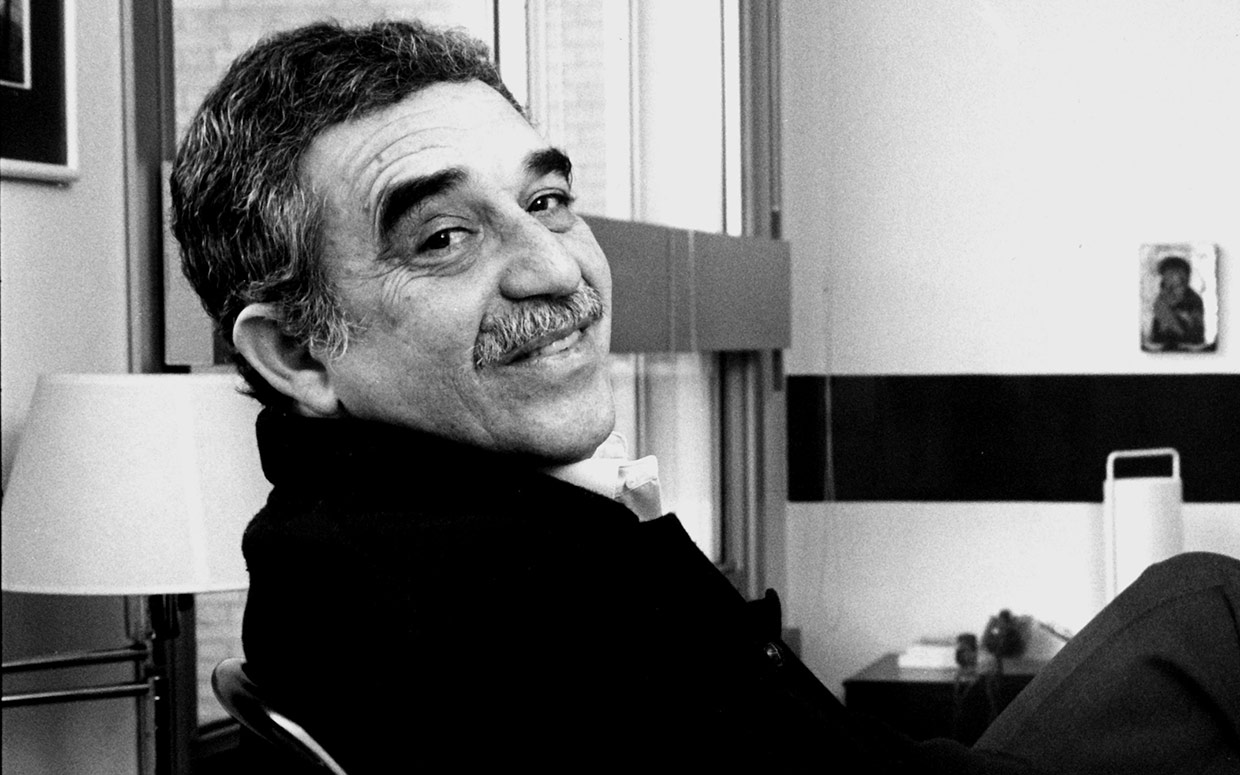
Gabriel-Garcia-Marquez-obit-ftr “One Hundred Years of Solitude didn’t just crystalize who García Márquez was, it crystalized who I was.”

At The American Prospect, novelist and Black Clock Editor-in-Chief Steve Erickson reflects on the author’s legacy, and the way his seminal novel “not only changed the modern imagination but staked a claim on its behalf.”

Living Well: Alisa Stein and the Healing Power of Art

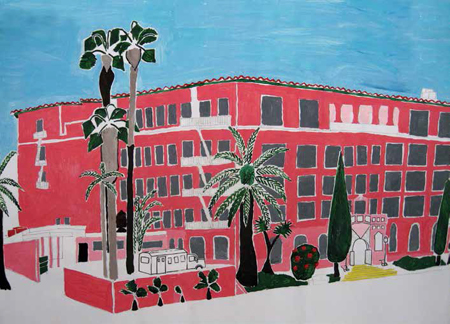
A portrait of Harbor View House by resident artist Ray Rodriguez

A portrait of Harbor View House by resident artist Ray Rodriguez

Among the first in the United States to champion the validity of outsider art were Janos Marton and Bolek Greczynki, two expat scholars out of Columbia University’s School of Visual Arts in the 1970s. Largely influenced by the idealistic, humanist approaches of artists and writers like Jean Dubuffet and André Breton, Marton and Greczynki later founded the first-ever art studio on the grounds of Creedmoor Psychiatric Hospital in Queens. This art studio, christened The Living Museum, sought to showcase the work of Creedmoor’s many untrained yet visionary patients, and was dedicated to the purposes of beauty and healing above all else.

 
Fifteen years ago, psychologist Dr. Israel Rubenstein flew out from Southern California to visit Creedmoor, and was so impressed by the hospital’s art studio that he decided to open a similar space at Harbor View House, an adult residential psychiatric facility in San Pedro. For the past four years, Alisa Stein has served as Art Director of The Living Museum Art Center at Harbor View House, a former racquetball court turned studio and gallery space for the Harbor View House residents—as well as anyone else who’d like to spend a morning chatting with the artists and viewing their work over a hot cup of fresh (free!) coffee, which is exactly how I first met Alisa Stein, as part of a class trip to the studio in one of Mady Schutzman’s graduate writing workshops at California Institute of the Arts. A few weeks later, I returned to the studio to talk one-on-one with Alisa about her work managing the atypical art space. The two of us discussed the psychological benefits of art-making, the realities of mental illness, and more.

ADRIANA WIDDOES: Who are the residents of Harbor View House and how do they get here?

ALISA STEIN: Everyone here has been diagnosed with a mental illness. In addition, they usually have drug and alcohol addictions, so prior to getting here most of them have lived on the streets—either on skid row or park benches. They usually have had some kind of altercation with the law or some other issue and end up at a psychiatric hospital in that way. Then from there they’re referred to living here at Harbor View House. But the number one reason for being here is mental illness. Most of our residents have schizophrenia or bipolar disorder.

AW: What do you think drives the residents of Harbor View House to create art?

AS: I think what drives them is that most of these people have never been accepted by society for whatever reason—whether that’s because of their mental illness or their addiction problems. Coming in here and being able to create gives them a sense of self worth that they can do something. They can make something that they can get recognized by. And that recognition is not just from a gallery or a museum. It’s also from me and other people who are working or living here. Because most of them have never been told that they were good at anything. They haven’t had a lot of success in their lives, so something as small as creating a tissue paper poinsettia can give them such a sense of self worth.

AW:
I agree that creating gives people a sense of purpose, and that’s not something special to people who suffer from mental illness either.

AS: It’s for everyone. We all want to feel creative. We all want to be able to do. People without a mental illness can get that feeling through many different avenues. But for people with mental illness it is so critical because they really lack so much support. Most of their families have just been tired by their illnesses and their addictions and the chaos that they cause, so they just sort of left them to be. So maybe creating tissue paper poinsettias doesn’t give them everything they need, but it’s still something. If they didn’t have that and had nothing instead, it would be even more traumatic.

AW: What are some of the obstacles for the artists that you work with here?

AS: One pretty common obstacle is that they are all on psychotropic drugs and some of them are heavily medicated. Just trying to function through a day when you’re taking 400mg of Lithium and 300mg of something else is difficult. It affects your sleeping and your eating. A lot of them are also trying to stay sober and unfortunately the neighborhood has a lot of drugs that are available. People have to fight off their demons just to not go outside and use. That is an obstacle. Some of the residents’ personalities here can be very volatile and sometimes the environment can be very unsafe, and they’ve got to deal with that. They might have a roommate who has stolen something or done something else bad. This is their home, but it can be a very difficult atmosphere.

AW: How do you experience the relationship between the Living Museum Art Center and the rest of the building, which is perhaps more clinically oriented?

AS: I think the art is such a blessing to this building. People come in and it’s like the oasis here. It has life, color and beauty. The building is otherwise pretty traditional in the sense that the walls are all white and it can feel very institutional. We try to hang art throughout the building and give it some life. The fact that the art wasn’t just done by some artist in downtown L.A. and is actually the art that has been created here gives it so much more meaning. When outsiders come to visit this place, they’re not expecting to see what they see in here, and it feels good to know that things are still going on here. Residents aren’t just milling around smoking cigarettes or lying in bed all day. They are actually producing something that gives the building life.

AW: Are you ever concerned that visitors might be coming to view the patients and not the art?

AS: I’ve never had that feeling. The artists actually really like it when they have visitors. They don’t feel that it’s an observation of them. I think they almost feel privileged that people are interested enough to come see what’s produced here and how this program works. It makes them feel good.

AW: Do you consider yourself an artist (trained or otherwise)?

AS: Not trained, not untrained. I am not an artist. I would say I’m a creative person, but the only F I got in school my whole entire life was when I got an F in art in 7th grade. My teacher at the time told me that I was the most uncreative person that she had ever met! I tell that story all the time. It really stuck with me, but lo and behold— I’m Art Director of a mental health facility creating projects. I think I’m artistic in the sense that I understand the elements of art, but I always tell my artists here that if they ask for help painting a portrait, I can’t.

AW: Do you think being untrained helps your dynamic with the artists working at LMAC?

AS: I do. I think their perception of me is as a leader and as someone who is able to explain and define things. I always tell them how talented they are—and they really are—and I think it’s a good balance. They have taught me a lot about art and drawing and painting. I feel they are not intimidated by me because 99% of the time I can’t out paint them and I can’t create something that looks lovelier than they can. It makes it a more comfortable atmosphere.

AW: How necessary do you feel art programs like LMAC are?

AS: Oh, they are so necessary. They are vital, and not just to provide an extracurricular activity; it has been proven that art-making enhances cognitive skills. There is just no downside to creating. It enhances people’s wellbeing tremendously. I see it first hand. I see the change in the artists’ expression. It just gives them a purpose to create something. That’s not something that anything else in their life offers them.

AW: Do you ever feel frustrated? Do you ever feel like what the art studio can provide the residents here is not enough?

AS: Of course. I feel frustrated when I’ve been working with an artist for 6 months and they’re really coming along and I can see some hope in their eyes and then I don’t see them for a month and I find out that they’ve started smoking crack again and are living on the streets. Then when they end up back at Harbor View they’re all beat up and we have to start from square one again. I get frustrated when I feel like all the work that an artist and I have been doing is lost in an instant. It’s hard to understand mental illness. It’s so different for everyone. Even the same diagnosis of schizophrenia can manifest so differently in each person— and it can be very frustrating. It’s frustrating when a 55-year-old woman doesn’t understand that she is making a poinsettia even though I’ve explained to her that a poinsettia’s leaves are red 15 times. That’s tough. But that woman did do something in the end. It’s all good—and she felt good about it.

AW: Is any of the art for sale?

AS: Yes, we do sell the art. 50% of the proceeds goes to the artist and 50% goes to buying supplies for the studio. Anyone who’s interested in purchasing something can view the art by contacting me and setting up an appointment. We don’t necessarily use the gallery for art sales or exhibits. It’s mostly just to showcase the larger pieces of art that artists have created here. We’ve tried in the past to open the gallery up to the outside, but because of its location on the third floor of the facility it’s difficult to get passersby up here. 95% of our sales happen in outside art galleries. We’ve exhibited in L.A. City Hall, Torrance Art Museum, Angels Gate Cultural Center—all various types of galleries.

The Living Museum Art Center is located at 921 S. Beacon Street in San Pedro, CA. To contact Alisa Stein, make a donation or become a volunteer, please visit the LMAC website.


By Adriana Widdoes

an Associate Editor for Black Clock and an MFA Writing candidate at CalArts