Singular, idiosyncratic and a little mysterious, Black Clock is one of America's leading literary journals.

Author Archive for Katie Manderfield—

SEE + HEAR + DO (2/09-2/16)

DAVID ULIN LITERARY LUNCHEON (2/9@12PM, LA)
when February 9, 2011 @ 12:00pm
where Wilshire Restaurant, 2454 Wilshire Blvd. Santa Monica, CA. 90403

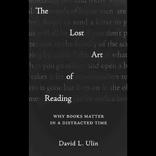
Diesel, A Bookstore in Brentwood is very excited to present a Literary Luncheon with acclaimed author David L. Ulin in celebration of his newest book, The Lost Art of Reading, a timely and important book about the value of reading in an increasingly digitized and distracted age.

David L. Ulin was the book editor for the Los Angeles Times for five years, and is currently the book critic for the Times. He is on the board of the National Book Critics Circle, and he writes regularly for the LA Weekly, Chicago Tribune, Newsday, and the Los Angeles Times. His work has also appeared in  the New York Times Book Review, the Atlantic Monthly, and the Nation, as well as on NPR’s All Things Considered.

Tickets are available for purchase at Diesel, A Bookstore in Brentwood (310-576-9960) and Diesel, A Bookstore in Malibu (310-456-9961). Tickets are $60 and include a signed copy of The Lost Art of Reading and lunch with David L. Ulin.

THE ONION EDITORS (02/10@8PM, LA)
when February 10, 2011 @ 8:00pm
where Royce Hall (UCLA Campus) 340 Royce Dr. Westwood, CA 90024

Deadpan satire and journalistic skill collide in the phenomenon that is The Onion. Founded in 1988 at the University of Wisconsin-Madison, the “fake news” newspaper is the notable precursor to such biting, faux-news programs as The Daily Show and The Colbert Report. Last year, The Onion News Network, an online send-up of 24-hour cable TV news, was named a Peabody Award winner and praised as “hilarious, trenchant and not infrequently hard to distinguish from the real thing.” Join current Onion editor Joe Randazzo and fellow staffers for a multimedia discussion on the state of media, politics and pop culture as they offer up insight into how the paper’s culture-skewering stories and hilarious headlines are created. $28-$48 ($15 UCLA students).

STEPHEN DOBYNS READING (02/12@7:30PM, LA)
when February 12, 2011 @ 7:30pm
where Beyond Baroque, 681 Venice Boulevard. Venice, CA 90291

Beyond Baroque proudly presents an evening with Guggenheim and NEA fellow, poet STEPHEN DOBYNS. Dobyns has published over ten volumes of poetry, including Concurring Beasts (1972), The Balthus Poems (1982), Cemetery Nights, (1987), Velocities: New and Selected Poems (1994), and Pallbearers Envying the One Who Rides (1999). “If there’s a consistency in any of the books, it’s the fact that I like a long line . . . [and] use the linebreak to affect the rhythm of the lines, to affect the rhythm of the poem.” Admission $7, students/seniors/children $5, members Free.

BLACK CLOCK 13 READING (02/13@5PM, LA)
when February 13, 2011 @ 5:00pm
where Skylight Books, 1818 N Vermont Ave, Los Angeles, CA 90027

Come join us as we celebrate Black Clock 13 at Skylight Books with readings by AIMEE BENDER, JANET FITCH, JONATHAN LETHEM, SUSAN STRAIGHT, and LISA TEASLEY with STEVE ERICKSON as emcee.  And buy a copy of 13 at the reading and receive an additional back issue of for FREE!  Free.

WANDA COLEMAN READING (2/16@TBA, LA)
when February 16, 2011 @ TBA
where Oxnard College, 4000 S. Rose Avenue, Oxnard, CA 93033

In celebration of African American History Month, National Book Award winner Wanda Coleman will read original poetry and prose focusing on the residuals of racism in our society and its subtleties, which continue to influence our culture. Free.

SEE + HEAR + DO (2/02-2/08)

KAREN RUSSELL (02/02@7pm, NYC)
when February 02, 2011 @ 7:00pm
where Book Court, 163 Court St. Brooklyn, NY 11201

Karen Russell (named one of The New Yorker’s Best 20 Writers Under 40) reads from her latest book, Swamplandia. Free.


LITERARY DEATH MATCH (2/02@8PM, DC)
when February 2, 2011 @ 8:00pm
where The Black Cat, 1811 14th St. NW, Washington, DC 20009

With enthusiasm tickling our brains, and patriotism in our hearts, Literary Death Match is thrilled to descend on the Nation’s Capital for our first-ever LDM D.C. event, sponsored by ModCloth and celebrating the inaugural issue of The Written Wardrobe.

Produced in conjunction with 826DC, the night’s AWP-centric event at The Black Cat will feature a fierce foursome of scribes, including world-class performance poet Regie Cabico, …The Written Wardrobe’s own nonfiction mastermind David Wanczyk, shock-good midwest cleverista Elena Passarello, and Moon Milk Review‘s sharp-penned founder Rae Bryant.

They’ll be judged by the dazzlingly blissful and multiple-award-winning author of How to Leave Hialeah Jennine Capó Crucet, actor extraordinaire Delaney Williams (a.k.a. Sergeant Jay Landsman from HBO’s The Wire), and Washington Post-er and former Q And Not U-er Chris Richards! $10 preorder; $25 T-shirt and entry.

KIDS OF THE BLACK HOLE: HOW LA HARDCORE CHANGED THE WORLD (02/03@7PM, LA)
when February 3, 2011 @ 7:00pm
where Book Soup, 8818 Sunset Blvd, W. Hollywood, CA 90069

A panel discussion in conjunction with the Steven Blush release of American Hardcore (Second Edition): A Tribal History. Featuring guests Steven Blush, Keith Morris (Circle Jerks, OFF!), Tony Cadena (Adolescents), Lisa Fancher (Frontier Records) and punk photographer Edward Colver (of the recent book Blight at the End of the Funnel).

Among the important figures who emerged from hardcore are Henry Rollins, Dave Grohl (of Nirvana and Foo Fighters), Ian MacKaye (of Fugazi), and the Beastie Boys. Hardcore’s legacy, however, continues to influence the do-it-yourself anti-commercial trend of independent record labels and touring networks. The author experienced hardcore firsthand as a promoter, record label owner, and radio DJ, and he intersperses the book’s oral histories with his informed commentary. Steven Blush’s “definitive treatment of Hardcore Punk” (Los Angeles Times) changed the way we look at Punk Rock. The Sony Picture Classics–distributed documentary American Hardcore premiered at the 2006 Sundance Film Festival. This revised and expanded second edition contains hundreds of new bands, thirty new interviews, flyers, a new chapter (“Destroy Babylon”), and a new art gallery with over 125 rare photos and images. Free.

CUNY WRITERS’ INSTITUTE READING (2/04@7PM, NYC)
when February 4, 2011 @ 7:00pm
where KGB Bar, 85 East 4th St, New York City 10003

Humera Afridi, moved to New York City in 2001 to pursue an MFA in Creative Writing at NYU, where she was the recipient of a New York Times Fellowship. Humera’s work has appeared, amongst other publications, in Pakistan’s news weekly, The Friday Times, The New York Times, and in the anthologies, Leaving Home (Oxford University, 2001), 110 Stories. New York Writes After September 11 (NYU Press 2002) and in And the World Changed (The Feminist Press, 2008).

Debora Kuan is a poet, writer, and art critic. She holds a BA from Princeton University and an MFA in poetry from the University of Iowa Writers’ Workshop. She is the recipient of a Fulbright media arts scholarship (Taiwan), University of Iowa Graduate Merit Fellowship, Bread Loaf Writers’ Conference work-study scholarship, and Pushcart Prize nomination. Her first poetry collection, XING, is forthcoming from Saturnalia Books in Fall 2011.

Martin Quinn was born in Limerick. After graduate study in engineering, he worked as a proprietary trader in currencies and fixed income in London and Greenwich, CT. His work has appeared in Arena and Esquire (UK). Free.

JOYCE FARMER READING (2/05@5PM, LA)
when February 5, 2011 @ 5:00pm
where Skylight Books, 1818 North Vermont Ave, Los Angeles, CA 90027

Joyce Farmer, together with Lyn Chevely, was the creator of Tits & Clits Comix in 1975. They had formed their own publishing company, Nanny Goat Productions, to counter the sexism they saw in male-produced underground comix of that time. Apart from Tits ‘n Clits, they also produced a comic about abortion, Abortion Eve, in 1973. Joyce also contributed to the other all-woman comix publication, Wimmen’s Comix. In 2000, Joyce Farmer published her work in magazine Zero-Zero. For the last decade-plus, Joyce has been working on her first long-form work, SPECIAL EXITS, a graphic memoir chronicling the decline of the author’s elderly parents’ health, their relationship with one another and with their their daughter, and how they cope with the day-to-day fragility of the most taxing time of their lives. She lives in Laguna Beach, CA. Free.

LITTLE HOUSE ON THE BOWERY SHOWCASE (2/06@4PM, LA)
when February 6, 2011 @ 4:00pm
where Book Soup, 8818 Sunset Blvd, W. Hollywood, CA 90069

Lonely Christopher presents and signs The Mechanics of Homosexual Intercourse with special guest Joseph Mattson (Empty The Sun) reading from Matthew Stokoe’s Cows and host Dennis Cooper.

The Mechanics of Homosexual Intercourse, a radical map of shortcomings in our daily experiences in the form of a debut story collection, presents thematically related windows into serious emotional trouble and monstrous love. Lonely Christopher combines a striking emotional grammar, reminiscent of Gertrude Stein’s Three Lives, with an unyielding imagination in the lovely/ugly architecture of his stories. Free.

BOOK GROUP DISCUSSES IN OTHER ROOMS, OTHER WONDERS (2/07@7PM, OAKLAND)
when February 7, 2011 @ 7:00pm
where Diesel, A Bookstore in Oakland, 5433 College Ave, Oakland, CA 94618

Diesel, a Bookstore in Oakland hosts Book Group #3 as they discuss In Other Rooms, Other Wonders by Daniyal Mueenuddin. Free.


ELIZABETH BISHOP AT 100 READING (2/08@7PM, NYC)
when February 8, 2011 @ 7:00pm
where Cooper Union, The Great Hall 7 E 7th Street, New York, NY 10003

(courtesy of The New Yorker): Twenty poets, including John Ashbery, Frank Bidart, Kimiko Hahn, and Marie Ponsot, each read their favorite Bishop poem on her hundredth birthday. Excerpts from a newly published volume of correspondence between the poet and this magazine will be read by Paul Muldoon, Alice Quinn, and Maria Tucci. For more information, call 212-254-9628 or visit poetrysociety.org.

AUTOBIOGRAPHY OF MARK TWAIN CELEBRATION (2/08@7PM, LA)
when February 8, 2011 @ 7:00pm
where Hammer Museum, 10899 Wilshire Blvd, Los Angeles, CA 90024

The Hammer Museum celebrates the publication of Mark Twain’s autobiography with Twain scholar and editor of the Mark Twain Project, Robert Hirst, who will discuss Twain’s life and work, followed by a panel discussion with Hal Holbrook,moderated by David Kipen, who will discuss Twain’s life and work, followed by a panel discussion with The discussion will be followed by a Q&A session with the audience. In addition there will be a reception with live music and a no-host bar in the courtyard, as well as a book signing.

Free tickets are required, and are available at the Billy Wilder Theater Box Office one hour prior to start time. Limit one ticket per person on a first come, first served basis. Hammer members receive priority seating, subject to availability. Reservations not accepted, RSVPs not required. Free.

How Kate Gale is Making L.A. the New Paris

Some could argue that if Kate Gale ever left Los Angeles, the city’s literary scene would be in dire straights. Not only is she the full-time Managing Editor and founder of Red Hen Press, the largest independent press in southern California, but Kate and her press host no less than four annual reading series in L.A.: Readings at the Ruskin, Conversations at the Geffen, Readings at Boston Court and The Annenberg Beach House series. (There is also a semi-annual Red Hen reading series in New York City.)  A former PENUSA President, she currently serves as President of the L.A. chapter of the American Composer’s Forum. She is on the board of A Room of Her Own Foundation, an organization that promotes and celebrates women writers and artists. She has edited four anthologies for Red Hen Press. And she has taught at several college writing programs throughout Los Angeles and beyond.

If that wasn’t enough, Kate is also an accomplished writer; her growing oeuvre includes four books of poetry, two novels, one children’s book, four librettos, and–fortunately for us–a contribution to Black Clock 6. For her work, she has received the Allen Ginsberg Poetry Award and fellowships from Mitchell Lathrop and The Claremont Graduate University.

Kate Gale is serious about literature and her presence in the literary landscape is profound. She took a breath to talk with Black Clock about independent publishing, editing, writing and literature in L.A.:

BLACK CLOCK: What was the motivation for establishing Red Hen Press?

KATE GALE: I wanted to make Red Hen a literary city and have a publishing company that would represent diverse voices from the wilder side of America. I wanted to make Paris happen here.

How did you envision the L.A. you wanted to mold? Do you see any of this in the city today?

No, we would need Shakespeare and Company to really be the literary city Paris was and what we have is Skylight Books which is grand, but I miss all three Duttons stores. I wanted writing happening, a humming of energy, literary salons, special hangouts for writers–of course, now we call those blogs–but seriously, we are wildly humming. We have literary mags, we have writers and we are tapping our keys and going to readings. We are a literary city. With wine.

Red Hen has a great presence in Los Angeles and is host to frequent author events and readings. What is your take on the L.A. literary community?

We’ve slowly built a presence here to the extent that there are a few people who are glad the press is here and seem to have respect for the press. David St. John is the one person in L.A. who I’ve met who has tried to make sure the press could stay here by trying to help me get a job in Los Angeles. I think it matters to him to have a press here. I have to say that I really love David for that. We have a great board and some supporters like Robert Wyman and Lisa Krueger who have helped keep the press going. The press needs to find a permanent space and hire permanent staff. We have a board member in N.Y. who is working with us on that. And I teach in Nebraska now, so that’s a start. The literary community here in Los Angeles is a bit ephemeral.

In what ways is LA ephemeral?

The L.A. community of writers is not all in one place very often. Maybe that’s why I think of us as being ephemeral. We’re split up. We can’t drive from the Westside to Pasadena because it takes so long; we’re stuck in our holes like rabbits, we never see each other.

It seems Red Hen Press is determined to advocate literacy throughout Los Angeles. How has the Writing in the Schools Program enhanced the press?

Our mission statement is all about building literacy, so we are committed to our Writing in the Schools Program which allows us to send writers into the school to teach. It makes us feel that we have come full circle when we can provide books and writing teachers in inner city schools.

Books are in need of promotion as of late. Has Red Hen been affected by the digitalization of literature? How do you feel about the move from print to screen?

It’s all good, it means for a greener printing world with smaller print runs and it means that there are more ways to publicize books with social networking and so on.

Social networking and the online literature boom has sparked a lot of new interest in independent publishing. How would you advise other entrepreneurs eager to start their own independent press?

Get together a book designer, an editor and a sales/marketing person. You need that person who understands money on board from the beginning. You have to raise money, sell books and understand business to run a press, and that piece is often left out. It can’t all be about the dreamers.

On that note, are there any hidden troubles independent publishers don’t often reveal about the process?

How alone it feels. You have to be able to raise the wheat yourself. It doesn’t feel like being part of a large supportive community, the writers often don’t understand how hard publishing is, but it’s also very clear and cold and quiet as you fly along alone in the dark.

And the hidden joys?

I love getting to meet certain fantastic writers. Li Young Lee has a presence, a quiet ticking hum in the universe. I’m glad I ate sushi with him on Sunset Boulevard.

The dream of starting an independent press is to publish work you see vital and important for the world to witness. Red Hen has a strong commitment to literary work. As Managing Editor of the press, what do you seek most in submitted manuscripts?

Edgy wild cool work that resonates for the literary world. Dark spaces, strange spaces, hollow electric fields, I want story that awakens.

Red Hen Press is synonymous with artistic integrity and authenticity. How would you guide the aspiring writer, committed to the same ideals, toward a well-published path?

Find time every week to write and then don’t do anything else. Write like you make love, like nothing else exists. Write on a schedule, mail work on a schedule, ignore rejections, breathe.

You have quite an accomplished list of publishing credits for your own work. What are you working on at the moment?

I’m finishing a memoir, I always work on poetry and then I’ll go back to my novel.

What do you hope the near future holds for your writing?

My book, Wild Horses, to be accepted and do well so that I can have the sensation of flying and feeling my wingtips touching other wings, so I know even when there’s air around me, I’m not alone.

Your contribution to Black Clock in Issue Six, “Echo Light,” is startling and beautiful. The piece really resonated with Black Clock’s mission to showcase innovative writing. Red Hen Press and Black Clock are similar in that both are committed to promoting cutting edge literature. Black Clock fans should find a natural lineage with the work published by the press. Which Red Hen Press authors would you recommend to fans of Black Clock?

Chris Abani, Percival Everett, Doug Kearney, Camille Dungy, Kate Coles, Brendan Constantine, Peggy Shumaker

Be sure to visit the Red Hen Press website and Kate Gale’s blog for more insight from the mind behind the press. If you are in Los Angeles and haven’t attended one of Red Hen Press’s readings, you should catch up: The next Red Hen event will feature David Mason, William Archila, and Alberto Rio at Pasadena’s Boston Court on November 15, 2010.

by Katie Manderfield
an MFA candidate at CalArts & Associate Editor for Black Clock constructing an experimental literary journal for women; her work has been published/ is forthcoming in Pindeldyboz, 3:AM, and dogmatika

Poems-For-All Free for All!

Poems-For-All is a fantastic literary project founded by Richard Hansen. Hansen prints poems in miniature-sized books and urges readers to spread them around. A full description of the project’s manifesto fills the backs of the little books. It reads:

“They’re scattered around town—on buses, trains, cabs, in restrooms, bars, left along with the tip; stuffed into a stranger’s back pocket. Whatever. Wherever. Small poems in small booklets half the size of a business card. A project of the 24th street irregular press, which cranks them out to be taken by the handful and scattered like seeds by those who want to see poetry grow in a barren cultural landscape.”

Poems-For-All is rooted in Sacramento, CA where Hansen and his wife run the used bookstore, The Book Collector. I interviewed Hansen about Poems-For-All to gain some insight into this intriguing bite-sized poetry project:

BLACK CLOCK: FREE?! What is the motivation behind offering the poems without cost?

RICHARD HANSEN: Everything, it seems, is for sale. I own a bookstore, I sell books. And I just wanted the project to be free of all those strings; I wanted their value, if they have any, to be derived by something other than cost. And I am totally freed of the burden of commerce. I don’t have to set a price, or collect coin. Again, I already do that in my bookstore. So, it’s a thrill to make little books of poetry and dispense them freely, and for free, for no other reason that it pleases me to do so.

What have been the positive and negative consequences of this?

Negative consequence: We are a value driven society. We try to ascribe monetary value to everything around us. And when something doesn’t have a monetary value it can often be taken for granted. Some equate free with “it must not be ‘worth’ anything.”

Positive consequence: The “return” from giving away little books of poetry is sweeter and more rewarding than any[thing] money can provide. Seeing the joy of discovery. Or hearing about it. It’s good karma, if you believe in it; kindness given with kindness returned. (Often in wonderfully intangible ways.)

Can you tell me a little about the submission process?

If I feel like a poem will work well in the project, it goes in regardless of what school of poetry it comes out of, or in what form it’s written. I take in submissions via email, the web form on the website, and mailed manuscripts. I find it easier to process and track digital submissions, so the email and web form submissions tend to move into publication faster. When I accept a poem it’s given a number. Every poem in the series has one. To the chagrin of many poets who’ve submitted, I don’t work them into published form sequentially. #1018 may get published before #987. The entire process is subjective and non linear.

The scattering around method is great! Have you found any of the poems in a really bizarre place, or have you heard of your poems reaching really far-off places? I’m sure the internet has contributed to a wider audience–can people receive poems internationally?

I put them in bizarre places. It’s my tradition, every time I travel, for example, to put the little book with Peter Orlovsky’s Writing Poems is a Saintly Thing (PFA #23) into the Gideon’s Bible in the hotel room. The poems do reach far-off places and people can and do request them from all over the world. I’ve sent books to Australia, Scotland, England, Germany, Pakistan, Israel, Canada. Even, Texas.

What is the impact you’ve seen as a result of the internet access?

Huge. References to the project appear in all manner of wonderful places around the net. And there’s the Poems-For-All website. Many folks find out about the project from the web.

How has this project contributed or connected to the bookstore you and your wife maintain?

The bookstore is the base of operations, if you will, for the project. It’s where people can find me, most days, to drop off submissions or pick up poems. There’s also a window display and a little display inside where folks can pick up random samples from the series. We have folding parties at the bookstore and poetry events related to the project there. I do a lot of the production at the store. It isn’t uncommon to have the paper cutter on the counter, building books when not helping customers. While Poems-For-All was never intended to be a marketing tool, it does indirectly help promote the bookstore. People who come looking for the little books sometimes become customers.

The bookstore is also the only place (currently) where you can get copies of Poems-For-All pointlessly small blank books. These are sold for 50¢ with all the money raised going to Loaves & Fishes, a local organization that helps the homeless. I’m surprised by how popular these have become and we’ve raised over $250 since this little sideline effort started six months ago.

I was wondering if you could tell me a bit more about the literary community you are a part of in Sacramento and the ways in which Poems-For-All contributes to it?

Sacramento has a diverse literary community with several established organizations. The Sacramento Poetry Center (SPC), for example, just celebrated its 30th anniversary. I’ve been on their board and presently do a lot of design work for them. And SPC has been very supportive of Poems-For-All. We just held an event there on March 1st, 2010 celebrating the local poets who’ve been published in the series. In addition to SPC’s Monday reading series, there are a number of others, including Poetry Unplugged on Thursdays, a Brown Bag lunchtime series at the library and the Rattlesnake press reading that takes place at my bookstore on second Wednesdays. I think Poems-For-All  is well received in Sacramento. There are over 50 local poets represented in the series, for example, and I’ve had the privilege of being allowed to include the project in a number of events. I’ve tried to make the project a ubiquitous presence in Sacramento; something complementary to all the wonderful things going on in the name of literature here.

What has been your motivation for starting Poems-For-All? How has the project transformed from an idea to an actual publication?

Curiosity started it all. I used to work at a company where I was in charge of ordering business cards. The printer would deliver them with scrap cardstock cut the size of the business card to fill out the boxes. Soon I had stacks and stacks of these little blank scraps of high quality paper. I just started folding them, playing with the idea: what if I could make these into little books? It’s pretty easy. I started publishing poems I wanted to share with others and the project grew from there.

My present motivation: I like being a Johnny Appleseed for poetry. I just want to scatter like seeds these little books of poetry. And encourage and help others who want to do the same.

Could you share some advice or insight for embarking on a successful small press project?

Love what you create. Whether it’s one book, a journal, a small press–make sure it’s something you’re going to want to be waist-deep in all the time. Projects like this can sap a lot of your time, money and energy away from other things. Know this before you begin. And make sure you, and your family, are going to be okay with it.

Seek out what others have done. Seeking out what others are doing is a great point of inspiration. Get excited by what you find out there and ask yourself what you can do to add to that excitement.

Innovate. Find ways to make the books of your press stand out. Consider moving beyond the conventional dimensions of the chapbook. And just because someone else is making tiny books doesn’t mean you can’t do it differently (or better.)

Flickr.com is a great resource for no-cost images for your covers and other photography needs. Many excellent photographers make wonderful imagery available under a creative commons copyright that often allows you to use the image with just an attribution. Use the advanced search features on Flickr to find CC images. Some photographers even allow you to use their work on publications that are for profit.

Scrounge. Get it cheap or free. Look for discounts from printers and ask for the scraps of paper that collect in the boxes around their cutting machine. Scour the bargain bins and closeout shelves at paper stores for interesting paper, etc. that you can use. Monitor Craigslist for folks who give away paper, printers, etc. (it sometimes amazes me what folks give away that’s useful to a small press publisher).

Eliminate the middleman. Do everything within your power to sell your books without having to go through a distributor. Work out direct arrangements with bookstores and other points of sale whenever possible. The best point of sale is the poet or writer doing an event that gets folks excited about, right then and there, buying the book.

The artwork is fantastic. Who designs it and what is the process?

I’ve designed the majority of the covers. Making them has been a great way for me to hone my graphic design skills. I enjoy the challenge of making each one unique.

Occasionally I’m aided with photos, images, or design ideas from the poet, but more often I just look to the poem to inspire the cover that’s going to complement it. When I first started, the covers were colored cardstock cut to the same dimensions as a business card—3.5” long, 2” tall—that had crude ink stamp markings on the front. Today I design the covers with Adobe Photoshop and then use InDesign to put them into a template that allows me to print them out ten-to-a-page on a letter-size sheet. Some covers are still created with black ink on white paper which I then apply on colored (and/or textured) paper to give the cover its ‘flavor.’

A few of the covers in the series are designed entirely by other people. I had the good fortune to meet linocut artist Marc Snyder who does his work at approximately the same size as a Poems-For-All cover. He suggested three Jean Arp poems for the series and then provided a linocut drawing  (the original artwork is actual size!) for their covers. He also did the same for a Kenneth Patchen poem.

In what ways has Poems-For-All been rewarding and satisfying?

The process of making them brings me joy. Designing their covers gives me joy. Seeing people’s reaction when they pick up or are given the little books makes me happy. I enjoy the collaborations between so many poets and artists. I’ve made friends because of them. I love thinking about the next book. With a series that never stops, the question is always “What’s next? What’s next?”

How do you think PFA has contributed to the literary community at large?

There are two ways to look at Poems-For-All books. They are either novel or novelty. I leave it up to those who discover them to decide which.

For more on this great project, be sure to visit Richard Hansen and his press at the Poems-For-All website.

by Katie Manderfield
an MFA candidate at CalArts, an editorial assistant for Black Clock, and is constructing an experimental literary journal for women; her work has been published or is forthcoming in Pindeldyboz, 3:AM, and dogmatika

image courtesy of Poems-For-All

In Sanity We Trust: How Literature Keeps L.A. (Relatively) Sane

‘Literary’ might not be the first adjective that comes to mind when describing the city of Los Angeles. But it should be. Sure, there’s Hollywood, the ‘industry’ (both film and porn), the celebrities, the hopeful Midwestern waiters and waitresses working various restaurants throughout the city. You know the L.A. Myth: Being discovered at LAX or the Chevron on Melrose. Becoming an overnight success. From all over the world, people flock to Los Angeles, hoping to benefit from its limitless possibilities. They cash their savings, stuff it into a white legal envelope and head to L.A. Five days later and a hundred dollars or so shorter, they arrive.

What is missing from the stereotypical image of Los Angeles is the literature that gives voice to its less optimistic outcomes. Often grim and sometimes dark, writers frequently portray the other Los Angeles—the one that’s a bit mysterious, that precisely opposes the illusion of glamour. Nathanael West, Raymond Chandler, Charles Bukowski, Joan Didion—without their narratives, L.A. might only be the perpetual and intangible fantasy Hollywood has falsely promised. Instead, literature allows Los Angeles to be multi-faceted; shaded and darkly nuanced. So much so that this city could hardly be what it is today without the stories in which it has starred.

Take Joan Didion’s Play It As It Lays, which chronicles the fame-induced ennui of movie star Maria, who struggles with the emptiness of success. Or Charles Bukowski’s chronically belligerent protagonists as they lose menial jobs, battle poverty, and chase women. While the showbiz side of Los Angeles touts unrealistic ideals of success and stardom, the literary side of the city paints a bleaker portrait. Add to the list Raymond Chandler’s gangsters, dangerous femme fatales, and corrupt policemen and it’s clear that this is not exactly the stuff dreams are made of. Stuff that probably wouldn’t procure a cross-country bus trip and an envelope stuffed with cash. So what then, is it worth?

A great deal. Imagine this place if it was only the concept of Hollywood. Only naive hopeful stars. Only celebrities. That is just not the Los Angeles I know. The L.A. I know is one of spotlighting helicopters; wailing police sirens; autonomic traffic; an overwhelming amount of people; the consistent smell of skunk, broken-in cars, a homeless epidemic, and a keening ability to decipher gang graffiti tags. I love my L.A., but it isn’t very glamorous. Success is slow. Fame amiss. I have yet to be discovered. I’ve seen a celebrity or two, but they both looked tired. Reality exists in my Los Angeles.

The city lies at the crux of this clashing of constructs. There’s the promise of stardom and the often-bleak reality its literature depicts. Los Angeles constantly shifts between these two spheres. Which explains why this city simultaneously attracts and repels me. It is at times beautiful, and at others grotesque. It is suddenly perfect and a moment later all wrong. It is a city in a constant state of confounding confliction. And if you catch it at the right time, you can see the real L.A., which is everything: the success, the squalor, the fame, the infamy, the power and the poverty. The underbelly is at the heart of Los Angeles just as much as the celebrity.

The gritty Los Angeles depicted is, put simply, better than any myth. The real L.A. is culture. It’s street cart oranges, cheap beer, food trucks. It’s the post office, the alleyway, the dive bar. This grit is what makes Los Angeles gleam. Because it’s what actually awaits you when you get here. And the result is an ideal atmosphere for creativity and imagination that is optimal terrain for writers. With an abundance of contradictions, juxtapositions and opposites, the city holds a wealth of inspiration. And in turn, stories of hardship and scandal allow L.A. to be accessed and understood—to exist just as much on the ground as in the clouds. And if this is the L.A. you come for, your white envelope might take you a bit farther than if you come looking for glamour.

Los Angeles’ literary heritage provides the anti-myth. The down-and-outs. The proclivity for dereliction. The dangers of excess. Without these stories, our conception of Los Angeles might be downright dull. Without Raymond Chandler’s noir or ‘The Poet Laureate of Skid Row’s’ vulgarity, what kind of L.A. would come to mind? Call it dark, dreary or depressing, but give it credit for the insight it provides. Because when I read Charles Bukowski’s Post Office, I know his L.A..

They might not warrant prestige or fame—they hardly even sell books—but these bleak stories, quite frankly, keep us grounded. And if there’s one thing we should turn to this city’s literature for, it’s sanity. Yes, sanity. Because it’s the truth; it’s L.A..

by Katie Manderfield
an MFA candidate at CalArts, an editorial assistant for
Black Clock, and is constructing an experimental literary journal for women; her work has been published or is forthcoming in Pindeldyboz, 3:AM, and dogmatika

image courtesy of ATomek

HENRY MILLER (+ ANIMAL COLLECTIVE) WAS HERE

Sometimes, when I’m stuck in a writing rut, I find myself surfing the Internet, imagining what it would be like to be one of the literary greats. My searches have included the likes of Anton Chekov, Nikolai Gogol, Samuel Beckett, Shelley Jackson, and Kierkegaard, to name a few. But by far, the most Googled author in my search history is Henry Miller. Perhaps because I think, rather subjectively, that he may be one of the greatest authors of all time and also partly because I find the pictures of him and Anais Nin on a beach somewhere fantastic, the racy covers of his books, and the bizarre videos of his pornography-plastered bathroom utterly fascinating (a quick Google search should serve my point). Which brings me to one of my most exciting finds as a result of writing procrastination: The Henry Miller Memorial Library.

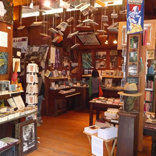
The Henry Miller Memorial Library is situated on Highway One (Pacific Coast Highway) in the picturesque Big Sur, California over-looking the Pacific Ocean. The library itself stands as a living homage to the late Henry Miller (and should you not know who Henry Miller is—I resist here admonishing you—he is the author of classics Tropic of Cancer and the Rosy Crucifixion among others.) This non-profit library teems with literary history and screams VISIT ME!

It’s said that when Henry Miller first visited Big Sur in 1944, upon arriving, he uttered, “Here I will find peace. Here I shall find strength to do the work I was meant to do.” He lived in Big Sur with his third wife and two children. Miller wrote; “Peace and solitude! I have had a taste of it, even here in America.”

Henry Miller was enormously influenced by the environment in Big Sur, California. Miller’s amorous fascination is best exemplified in his classic, Big Sur and the Oranges of Hieronymus Bosch, within which he wrote, “This place can be a paradise. It is now, for those who live it. But then will be another paradise, one in which all share, all participate. The only paradise, after all.” (pp. 403-404).

A man named Emil White can be thanked for producing the Henry Miller Memorial Library. White had been one of Miller’s closest friends. So close that should you flip through the last few pages of Big Sur and the Oranges of Hieronymus Bosch, you will find Miller’s dedicated inscription of the book which reads, “To Emil White of Anderson Creek one of the few friend who has never failed me …” (Big Sur and the Oranges of Hieronymous Bosch, 1957).

After having been deemed a revolutionary by the Hungarian Army and narrowly escaping death by firing squad, Emil White immigrated to the United States. White found a job at a bookstore and it is there that Henry Miller and Emil White met for the first time. White had been a huge fan of Miller’s, despite the fact that his work was relatively unknown in the United States at this time. Emil joined Miller in Big Sur after the author asked him to work as both his caretaker and personal secretary for five dollars a week.

Once settled in Big Sur, White took up painting and produced tour guide brochures for a living. It is said that the profit from these guides is what funded White’s founding of the library in 1987 after Henry Miller’s death. Emil White bought the property upon which the library now stands; an astonishing meadow gated with colossal redwoods. Upon Miller’s death, White decided to maintain the property to serve as a memorial to Henry Miller and as a haven for local artists to showcase their work. Emil stated in his will that his property would be an homage to the great author and to future scholarly research on Henry Miller.

Emil White’s wishes have been granted. Today, the library functions as so much more than a memorial. In 1997, it became accredited as an official 501(c)3 non-profit organization. It is a place of literature, music, culture and beauty. With an incredible outdoor performance stage, the library has been host to performances by Animal Collective, Neil Young, Patti Smith and Henry Rollins, to name a few. The library holds frequent workshops, readings, poetry slams, art exhibits, private events, and educational fairs.

In one of Emil White’s last interviews, he was asked if he had any regrets. He remarked, “I only wished I had moved to Big Sur sooner.” Three hours from San Francisco and six and a half from Los Angeles make this iconic library the perfect literary excursion. The library’s devotion to literature and to the work and life of great author Henry Miller solidifies it as an important literary place.

Surrounded by beauty and enveloped in a rich world of writers, poets, and artists, it may be the exact inspiration you need to finish that story and start your novel. Or maybe that’s the inspiration I need—nevertheless, I plan on making the scenic trip up there the first chance I get. And none of this could be possible without my daily dose of procrastination. Which is why I’ve included some links below; because discovery is important, no matter what you put off doing to get there. As Henry Miller once said, “Whatever there be of progress in life comes not through adaptation but through daring, through obeying the blind urge.” Exactly.

For more info on the exciting things taking place at the Henry Miller Library and about founder Emil White and Henry Miller, check out their website.  Also worth tuning into are NPR’s Bob Edwards interview Henry Miller Library Director Magnus Toren and this YouTube video which features the great Miller reminising about his favorite place.

by Katie Manderfield
an MFA candidate at CalArts, an editorial assistant for
Black Clock, and is constructing an experimental literary journal for women; her work has been published or is forthcoming in Pindeldyboz, 3:AM, and dogmatika

photography from The Henry Miller Memorial Library