Singular, idiosyncratic and a little mysterious, Black Clock is one of America's leading literary journals.

Archive for 2011—

SEE + HEAR + DO (9/30-10/31)

NY ART BOOK FAIR (9/30-10/2, NY)
MoMA PS1
, 22-25 Jackson Ave at the intersection of 46th Ave, Long Island City, NY 11101
Presented by Printed Matter, this three-day exhibit of artists’ books, zines, and periodicals kicks off a month jam-packed with literary festivities. Includes artist-led workshops, symposiums, screenings, signings, readings, and special projects from international and independent presses and booksellers. Check out the program for a list of readers, exhibitions, and workshops. Free.

ROGER EBERT, LIFE ITSELF (10/1@1PM, CHGO)
The Newberry Library
, 60 W Walton St, Chicago, IL 60610
The walking synecdoche for American film criticism introduces and signs his memoir, Life Itself, which the Pulitzer Prize-winning journalist structured as a series of vignettes or self-contained essays–never far from, but never dominated by, his notorious love of the movies. Free.

DOC (10/1@7:30PM, NY)
Anthology Film Archives
, 32 Second Avenue, New York, NY 10003
Harold L. Humes’s daughter Immy Humes directs this documentary about the Paris Review founder and author, which will be shown alongside Dan Drasin’s Sunday, documenting Humes’s protest against the suppression of folk singing in Washington Square Park, as well as excerpts from Humes’s unfinished film Don Peyote. Alternate showtimes 10/2@6PM and 8:45PM. $9 ($7 students).

LITQUAKE (10/7@8PM-10/15@6PM, SF)
San Francisco, CA
The city by the bay, whose citizens spend twice the national average on books, unites in a week-long celebration of literacy spread across her picturesque hills and waterfronts. With a formidable list of authors including such diverse figures as Jennifer Egan, Robert Polito, Oscar Villalon, Ishmael Reed, Alice Sebold, Christopher Moore, and Andrew Altschul, there’s something here to pique everyone’s interest, including sub-quakes for kids and teens. Schedules for the main festival, as well as the concluding Lit Crawl, are online. Those who can’t make it out west might be interested in a follow-up Lit Crawl in Austin on 10/22. Free (tickets required for some events).

STEPHEN PINKER (10/13@6PM, CHGO)
Harold Washington Library Center
, 400 S State St, Chicago, IL 60605
The prize-winning author of The Language Instinct and The Stuff of Thought discusses and signs his newest book, The Better Angels of Our Nature: Why Violence Has Declined. The latest in Pinker’s popular explorations into human nature and cognitive linguistics suggests that the world might be a far nicer place than we give it credit for. Free (registration required).

&NOW FESTIVAL: TOMORROWLAND FOREVER (9/13-9/15, SD)
UCSD
, 9500 Gilman Dr, La Jolla, CA 92093
&Now truly is the moment we’ve all been waiting for. A creative/critical festival/examination of all things incipient, ingenious, indefinite and intractable, festivities include conferences, multimedia performances, literary rituals, and a book fair hosted by the Rubber Rose adult boutique. You could paint an elephant with the list of Black Clock friends, contributors, and fellow-thinkers who will be presenting and have plenty of names left in the bucket. Don’t wait until tomorrow to start marking up your calendar: The schedule is packed tighter than a fallout shelter on doomsday. $100 Registration Fee.

UGLY FEELINGS (10/16@7PM, LA)
REDCAT
, 631 West 2nd Street, Los Angeles, CA 90012
Jack Halberstam (Female Masculinity, The Drag King Book), Wayne Koestenbaum (Hotel Theory, The Queen’s Throat), and Maggie Nelson (The Red Parts: A Memoir; Women, the New York School, and Other True Abstractions) read from new critical works on the theme of failure, cruelty, and humiliation. Halberstam will be reading The Queer Art of Failure, an examination into the notion of failure in children’s animation, while Koestenbaum’s Humiliation is a meditation on the nature of shame. Nelson’s critically-acclaimed The Art of Cruelty: A Reckoning questions the role of cruelty and violence in avant-garde art. $10 ($5 students).

MARK Z. DANIELEWSKI: THE FIFTY YEAR SWORD (10/31@8:30PM, LA)
REDCAT
, 631 West 2nd Street, Los Angeles, CA 90012
The award-winning, typographically challenging novelist, author of House of Leaves and Only Revolutions, conducts a polyphonic multimedia theatrical presentation of his limited-edition ghost story, The Fifty Year Sword, reprising last Halloween’s haunting performance. A live shadow play, arranged by Christine Marie & Ensemble, adds unexpected depth to Danielewski’s words, and audiences should come prepared for other audiovisual surprises from the man who often charts the limits of narratological structure. $20 ($15 students).

Black Clock Accepting Submissions Through 10/10/11

Black Clock is accepting unsolicited fiction, poetry and creative nonfiction from September 19th, 2011 until October 10th, 2011. If you have a manuscript you would like to submit for consideration, please consult the Black Clock website for additional details.

Patronage, Revisited

We are the democratic patron of those arts deemed commercial—our votes are cast in plastic swipes and PayPal clicks. Why, then, are we so often dissatisfied with those fancies by our favors fashioned?

It doesn’t have to be this way. The 21st century has granted us technologies capable of freeing us from corporate mediation–even as our lives become more and more mediated by those selfsame technologies. So, while we now have commercials on Youtube and targeted advertisement on Facebook, we also have places like Kickstarter, helping independent ventures get off the ground by connecting creative entrepreneurs directly with the people most enthusiastic about their success: you and me.

But before we can get there, we must pick our way back–way back–through the historical relationship that has always existed, sometimes regrettably, sometimes gratefully, between artists and their economy.

Let me put it another way: Any writer you’ve heard of is bound to be a sell-out. Open up the book review—if your paper still has one—and you’ll find a coven of J.K. Rowlings. A cabal of Stephen Kings. A blasphemy of Dan Browns, an orgy of Stephanie Meyers, a litigation of John Grishams, and a scattering of Cormac McCarthys to legitimize the business. They have to be. Either they sell millions of copies, or they might as well not exist.

They can’t help it. Writers, like spirits that fade to dust as soon as they’re forgotten, are only writers when they are being read. Otherwise, they’re no better than hobbyists. I know adults who, educational curricula aside, haven’t cracked a single book outside of the Twilight “saga” in the past half-decade. Their numbers dwarf the adults I know who still consider reading a pleasure, and who bother to scratch below the bestseller lists.

But are the readers really to blame? We’ve been fed up on pulp and crap, Pavlov’d to believe that sitting patiently through over 500 hours of television advertisements per year is time well spent. We can’t read what isn’t published, and we will read only a small percentage of what is—chiefly because, unless you’re following the career of a favorite author, the space beyond that Bestsellers rack gives way quickly to unnavigable void. Every Borders bookstore nationwide either has closed or will soon be closing its doors, permanently. As much of a McBookstore as it could sometimes be, some cities had no other options (independent bookstores either having been choked off by chains or never having existed in the first place) and will soon have no option whatsoever. Our public libraries—which survive, increasingly, on private patronage—have never been more in peril. We may soon find the bookshelf obsolete. Browsing is a dying art.

Growing up near the coast, I never got to experience the awe of seeing the ocean for the first time. By the time I knew what it was, it had always been there. That experience…I think it’s left the menu for good. My generation, and the generations to follow, will never get to see those kinds of horizons with fresh eyes; they’re only a plane trip away, and television and movies have already shown us all there is and more. We’ve been robbed.

Our grandchildren might one day experience that same awe upon visiting their university or federal library and seeing those rows of physical books lined up for the browsing. I take little consolation in that. They’ll be incapacitated by choice. Or are libraries already on their way to becoming an app?

Let’s change the subject. Let’s change something. Let’s talk about patronage. Some patrons are pecuniary. When most of us think of patronage—if we devote any thought to such a seemingly outmoded system—we paint some romantic portrait of a Renaissance artist under commission by a nobleman wishing to alchemize his wealth into legacy.

But patrons are also conceptual, in both a straightforward and less straightforward way. Patrons don’t just say “Here’s some money; paint me something pretty” (those would be dads). Neal Stephenson, in volume 1 of his three-volume, 3000 page historical/science fiction “Baroque Cycle”, describes a scene in which the emergent Royal Society, operating under the patronage of John Comstock, abruptly cease all ongoing experiments in order to fulfill a request from Comstock’s patron (and, by order of hierarchy, all of England’s): “His Majesty had noticed that ant eggs were bigger than ants, and demanded to know how that was possible.” Patrons make things—art, discovery—possible, but in the end they also shape those possibilities in their own image.

Likewise, we have patrons that are purely conceptual, that offer no material support in the making of something but are nonetheless an element of its making. They’re all around us—books, movies, television, and the various other worlds in which we steep long enough each day for their flavors to influence us. In both cases, it pays to be transparent about our sources—those individuals who keep their sponsors hidden tend not to keep them for very long.

So, for example, I may never have started thinking about patronage had I not recently cracked the seal on Quicksilver, Stephenson’s aforementioned novel, set in 17th century England at the dawn of the Scientific Revolution. It’s easy to think of patronage only in terms of the Michelangelo and the Medici, but natural philosophy was no less governed by the whims (and purses) of nobles; it’s clear that the great thinkers of the Royal Society would have been doing a lot of daydreaming were it not for their wealthy and politically powerful connections.

By some weird harmonic resonance, these kinds of situations keep turning up in my imaginary life, invisible though they seem to be in my real one. Mason & Dixon, An Instance of the Fingerpost…. While I wouldn’t point to it as a pioneer of interactive storytelling, I’ve been enjoying Assassin’s Creed II, which can best be described as The Da Vinci Code with extra da Vinci. However, Leonardo’s flamboyant enthusiasm for cryptanalysis and man-powered flight can’t compare with the weird authenticity of playing the role of an assassin who receives commissions from patron among patrons Lorenzo de’ Medici—what one writer calls a “Medici Assassin.”

There’s something hopelessly romantic about all this. True, we still have grants, federal and private, in nearly all fields of art and science. The recipients of grants still need to expend some effort to keep their sponsors happy. But there’s no romance in that. It’s nothing like the jeopardous underdoggedness you imagine Boyle must have felt when he wanted to cut up a dog for science, or da Vinci to put a man in the air.

What’s really changed? Only our entire economic and political structure. When the wealth and power were in the hands of the few, even the economy and politics reflected the ideals of the most powerful patrons—the Medici are the perfect example of this phenomenon. We still have a few people—or corporations or interest groups—with a controlling interest in the cultural wealth of our nation. We also, as voters and stockholders, have some degree of control over the allocation of grants. However, if you tune the microscope closer, you’ll see that there are a few Big Daddy patrons with their hands down everybody’s shorts, making us all feel a little dirty. Their names are Consumerism and Democracy, though they may as well be Legion.

How much sway do we really hold over the arts we patronize? Between Borders and Penguin, Amazon and Random House, our votes are mediated at both ends by forces whose eyes, when reading a literary masterpiece or a piece of illiterate mush, will always be distracted by the twinkle of gold on the horizon. They decide what we can spend our money on, and what happens to that money once we spend it. We then fall into the same cycle that has poisoned the fast food industry: our teeth grow soft on digestible, saccharine fare, requiring every meal to be sweeter and more finely chopped than the last, until we’re stuck drinking sugary mush and wondering where all the carrots have gone.

So we begin to look for an alternative. Outside of creating our own insular system of commerce–which I believe ignores the very real, sometimes grim economic situation of many artists, commercial or no, who deserve compensation for the important work they do–our only choice is to rewire the system, bypassing the middlemen who decide what we can make and want made, trying to learn to make those decisions for ourselves.

Donating to a Kickstarter campaign, as many of you already know, is a bit like buying stock in creativity. My first experience with Kickstarter was with Andrew Plotkin’s Hadean Lands project, which had well exceeded its goal by the time I got on board. However, Kickstarter offers enticements for various levels of donations—by pledging $25 or more, I secured myself a “rune-inscribed CD” of the game (the only way to obtain a PC-compatible version of the iOS exclusive); higher-tier backers will have their names integrated into the game as Heroes of the Calcination/Dissolution/Coagulation, while the most coveted prize sees Plotkin flying out to bake cookies and discuss stuff. If Plotkin hadn’t been able to raise enough money to get his enterprise off the ground—a non-issue in this case—I wouldn’t have been charged a cent; backers are only billed once the goal has been met. And, like a real investor, I’ve been receiving monthly updates on the project, so I get to see exactly how my money is being spent (mostly on noodles, as it turns out).

Kickstarter makes it frighteningly easy to want to spend money. Each campaign is attractively laid out, with a video describing the project and clear descriptions of the project’s goal, projected business plan, and what each level of donation will net you. There’s something slightly suspicious about the machine-pressed design of the individual pages, and the segregation of pages “curated” by places like YouTube and Sundance, but I try to push it to the back of my mind. Finding projects is also easy: click on the word “discover” in the top tab, and you’re immediately shown a slew of projects, broken down into categories such as “New and Noteworthy,” “Popular This Week,” and “Recently Successful.” This is my first time really browsing the site, so it’s hard to tell how deep the rabbit hole really goes (another reason why the e-reader browsing experience will never replace the bookshelf). Sidebars make it easy to search by city or category, as well as to find small projects or projects that will soon expire. You don’t have to dig deep to find something enticing; at the time of this writing, I’m browsing through a cross-cultural puppeteering project that will tour Thailand, Cambodia, and Burma; a short film starring plastic army men and living cicadas; and an anthology comic book featuring work exclusively by women. The front page of the site also has a Project of the Day: in this case, Les Figues Press’s I’ll Drown My Book, a collection of conceptual writing by women such as Kathy Acker and Renee Gladman which has recently met its goal (congratulations!). Were I to pledge the minimum in each of these projects to net myself a copy (or a handmade sock-puppet in one case), I would be out $115–and I’ve barely left the front page.

The front page also shows me Strange Attractors: Investigations in Non-Humanoid Extraterrestrial Sexualities, an art book/DVD that I can practically guarantee would never appear on the front table at Borders. It’s a bit of a coincidence, because my name is listed on the table of contents, alongside fellow CalArts Writing MFA Denise Li, whose contribution, as I’ve said elsewhere, is one of the most hyper-charged, profound, confusing, and hilarious things I have ever encountered—a bit like sex itself. Unlike I’ll Drown My Book, Strange Attractors still has some distance to cover toward its goal–$5000 in the next 25 days. Will they make it? That depends on how many people besides myself find the following description enticing: “this project has gone beyond male and female, beyond queer, beyond any notion of gender, beyond the anthropomorphic to erotic possibilities as vastly varied as the universe itself.”

Of course, Kickstarter isn’t the only corner of the web connecting artists directly with their audience. I was recently published by another one of them. Word Busker: newer, smaller, and generally poorer-known than Kickstarter, but no less inspired. The motto of this literary e-zine (which specializes in <500-word microfiction) is one I think we can all agree with: “sentimentality can only survive on ramen noodles for so long.” Their approach to that problem seems so simple you have to wonder why everybody else isn’t doing it: rather than pay the author a fixed royalty for publication, the reader is encouraged to donate, via PayPal, an amount they consider proportionate to the worth of the story. The donation is then passed on directly to the author. This has increasingly been the model in other kinds of independent art communities, but this is the first time I’ve seen it applied to literature. I have a feeling that, once they’ve caught the attention they deserve, Word Busker will be a Big Thing.

The Word Busker model might not seem so revolutionary at first glance. In a traditional publishing model, the readers give money to the publishers, and the publishers give money to the writers; the writers are still getting paid, so what’s the big deal? For one thing, it’s not that simple: technically, the readers give money to the booksellers, who order from the distributors, who then send a check to the publishers. And then there’s the fact that the writers (and the printers and artists etc.) have (hopefully) already been paid by the time the book hits shelves. What this means for magazines particularly is that, even if the reader’s money can be said to make its way eventually to the authors, it’s getting invested in the next issue’s batch of authors. If you bought 15 copies of Black Clock 11 because you love Chris Abani, that’s great and we love you forever, but you can’t count yourself as one of Chris Abani’s patrons (and I’m not sure he’d want you to).

Of course, this isn’t really a problem if all you love is Black Clock (or BOMB or Harper’s or what have you). But there are times when one piece particularly moves you, or you want to help cultivate an emerging talent, and it’s nice to be able to intervene directly. Word Busker is for those times. It also quite handily does away with any concept of a “shelf life”—a chimera in the world of online publishing to begin with. If you stumble across one of these stories for the first time 12 years from now, you can still reward the author for the very current pleasures induced by their past efforts. You’ll just have to cross your fingers that PayPal hasn’t folded by then.

What’s next? We already have novels written by delegation. The time may come when I can say “Write me a book about an unbound lagomorphologist hitchhiking his way up the Mississippi Delta,” toss a fiver with a patrician flourish at the screen, and the internet will write it for me. I am my own Medici. Magical.

by Byron Alexander Campbell
an Associate Editor of Black Clock preoccupied by dreams and theories of interactivity

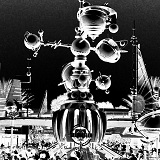
A Tribute to: “Neil Hamburger Presents: A Tribute to Dora Hall”

When in the course of human events it becomes incumbent upon the people to recognize and, furthermore, to honor, deceased genius in whatsoever capacity and in whomsoever it had chosen to manifest itself, we should be extremely ignorant (and we shouldn’t be) not to call upon the services of another similarly gifted individual to preside over whatever bittersweet rites for that we can be assured their moldering object is the peacefuller (if hereafter forever unwitting).  This being the case, you can easily imagine how blithe I was when I heard that someone in the Cinefamily had the delicacy of taste and enough horse sense to get Neil Hamburger on the blower and beg him to rush to their home on Fairfax Avenue this past July 3 to host a belated tribute to one of the 20th century’s most beloved stars of the silver screen.

Tell me something.  Are you a drinker?  That is, do you like to drink?  Don’t be a fool, we all do.  And when you drink, you’re not just cupping at it with your hands like one of the lower animals that’s lucky enough to have hands.  No, of course you’re not.  You’re using a simple machine and I’ve already given you a hint as to what it’s called.  Give up?  Why, it’s a cup you wastrel.  Unless you like the taste of sweat and bodily oils, you probably use a cup every day and chances are, if you work or study in one of this proud nation’s many institutions, you’re using a Solo Cup, whose many lines of hardy, single use cups are depended upon by thirsty, hardworking men and women the world over.  Slurping down your sugared syrups and gas-inducing carbonics, you probably never even pause to think about the flesh and blood people and two people especially who sweated and strained and broke their backs just for the paltry cause of your refreshment as you belch away endlessly. Well, let me introduce them to you.  One of those people was Leo Hulseman, former Dixie Cup cup-wright turned genius designer of the revolutionary Solo Cup and founder of the multi-billion dollar enterprise of the same name.  The other was Dora Hall.

For every genius, there is a genius behind the genius.  That genius was Dora Hall.

“Gorgeous” Dolores Hall came of age in our nation’s finest hour, in the heart of the first great war and the “cando-ism” of that stalwart time left an indelible stamp upon her charming person.  This rosy-cheeked, corn-haired young dove from somewhere in the American midwest sang the kind of old-timey sentimental songs that could make you want to cry into your beer or raise up your voice and join in the general fun.  It wasn’t long before enterprising producers at the USO were whisking her away to exotic locales in Europe to entertain homesick troops with hot-to-trot song and dance numbers served up family style.  It also wasn’t long before she trotted into the heart of enterprising young cup-man Leo Hulseman, whereupon love put a lid on showbiz.  Soon they were married and before you could say “Minneola” her womb was rich with the first of what would be many young squires and squirettes.  With Leo busy with the nascent Solo empire, the task of remaining impregnated and raising children fell squarely on the shoulders of young Dora.  She accepted the grave and sacred responsibility with stoicism typical of her modest prairie upbringing, but under one condition.  Dora made her husband promise that once the fledglings had flown the coop, he would help her back to the stage where she might again share the brilliant lightness of her musical and dance routines with the entertainment hungry hoi polloi she had come to love so well.  Naturally, Leo consented like the gentleman he was and neither partner ever forgot the promise.

When at last the kids were packed away and the Solo Cup dream had become a reality, Dora drew against the check she and Leo had signed so long ago.  With more than “sufficient” funds, Dora was back in business.  Show business.

With the full faith and confidence of the Solo Cup company behind her, Dora got her groove back with a series of Solo financed LPs throughout the 1960s featuring a mixture of classic songs and mirth-inducing original sketch routines.  In a legendary bout of largesse these were provided to consumers at no additional cost along with purchases of Solo Cups products.  Having broken the sound barrier, Dora set her sights on celluloid and Leo was only too willing to oblige.  Throughout the next two decades, Dora scintillated viewers with a rich patina of entertainments from children’s programming, to gripping psychological drama to star-studded variety spectaculars—all offered free to the consumer either packaged with Solo products or delivered through the mail in exchange for proof of purchase. With a fan club numbering nearly 50,000, a full production studio in Solo subsidiary Premore inc. at her disposal, and no less than two awards of excellence from the film advisory board, this grandmother of 16 seemed poised to break into the big time even as she neared her 90th birthday.  Unfortunately, as the case so often is, fate had other plans and gentle Dora struck out solo before she truly struck out solo.

Thanks to the efforts of her legions of fans, the Cinefamily and world renowned entertainers such as Neil Hamburger, however, Dora’s name has not been lost to the ages.  At the very special July 3rd retrospective, on what would have been her one hundred and eleventh year on this Earth, the side-splitting class act Hamburger, waxed nostalgic as the curator of a heartfelt tribute to one of his heroes and a primary inspiration for his own brilliant brand of family-friendly, Borscht-belt broadsides. Like his tinsel-town godmother, Hall, Hamburger knows how to beat the blues without resorting to blue material, which made him the perfect pick to guide us through the sparkling legacy of the late comedienne, which he did with squeaky-clean humor and aplomb (along with his signature hacking cough and ever present old-fashioned), peppering the evening’s three heartwarming video presentations with personal anecdotes about growing up in the shadow of Dora along with a few trademark drolleries about the latest “stars” such as pop-idol Britney Spears and one particularly memorable dressing down of contemporary rock musician, Mick Jagger.

When the evening ended, there was nary a dry eye in the auditorium (this reviewer included), although that may have been the result of the hellacious issue that some disgusting nearby person was apparently incapable of suppressing until he or she exited the theater.  Therefore, I was not alone in my rage when, as the presentation concluded and Mr. Hamburger asked if anyone had any questions or comments regarding the material or Dora’s legacy, one drunken miscreant had the mendacity to suggest that the Solo Cup company had engineered the infamous “Two girls, One Cup” debacle of 2008 as some sort of sick publicity stunt, nor was I alone in raising my voice to chorus Hamburger’s emphatic recommendation to that same person to please, “CRAWL BACK INTO THE SEWER WHERE YOU LIVE!”

by Seth Blake
an Associate Editor for Black Clock and an MFA Writing candidate at CalArts

In Search of an Autobot Poetics

I. PURPOSE + HYPOTHESIS

I am in search of an autobot poetics.

That’s auto- as in automatic and -bot as in chatterbot, so you can put your toys back into the shoebox for now.  If a handful of stanzas on ancient shapeshifting robots waging battle while their engines explode with raw power was all I was after, my search would already be complete.  Unfortunately, that’s not quite what I had in mind.  Though I doubt any work of verse could fail to be improved rewired through Optimus Prime’s well-tuned voice-box, the subject of this experiment is, like the incognito automatons of fame and legend, more than meets the eye.

The recent appearance on Jeopardy of IBM’s trivia-loving computer, Watson, demonstrated to the layman what specialists in the field have known for decades: the direst hurdle inhibiting artificial computer intelligence isn’t smarts, it’s personality.  Computers are several degrees smarter than us already, judging by the speed, efficiency, and accuracy with which they dispatch the specialized tasks we’ve designed for them (and designed them for).  As Alan Turing—influential in the creation of the first proto-computers—knew, the real test of machine intelligence is their ability to accurately mimic a human being.  What makes for a convincing human being, if not personality?

While its (his?) ability to parse and produce natural language is impressive, Watson doesn’t quite pass yet.  Nevertheless, several acquaintances of mine are convinced, not that we’re on the verge of the great AI breakthrough, but that computers have already developed distinct personalities.

It’s not surprising, really: we’ve been saying it about our cars, with their various coughs and caprices, for a century (watch out, Autobots, your cover is blown!).  Human beings have a tendency to project personality onto impersonal mechanisms, especially when those mechanisms are erratic or difficult to comprehend.  It’s tempting to say that a stuck pixel or a crash screen means that your laptop has developed sentience.

But does that make it any more likely? Regardless of the answer, it’s hard not to be impressed by the way supposedly random processes tend to produce less-than-random results.  It’s this uncanny knack for personality in chaos we have to thank for the enduring popularity of tarot, numerology, and astrology.  Though rationally we have little reason to trust them, the systems themselves seem to think otherwise, and it all has a startling tendency to work out.

Possessing the absolute minimum computer knowledge required to squeak by, I decided it was time to put the matter to rest once and…well, for now, at least.  Will a computer program, arranging words into (grammatically structured) lines utterly at random, be able to access its soul and compose a poem?  Can we use that poem to extrapolate the start of an autobot poetics?


II. MATERIALS + METHODS

I built Tobo out of words, clauses, and deductive reasoning.  Rather than beget the bastard from the ground up—in which case I might as well just make a real boy, which takes less time, is more fun, and yields a genuine personality in over 68% of cases—I constructed him in the artificial womb of Inform 7, a design system for interactive fiction (more on that here).  This offered two immediate advantages: one, I didn’t have to learn C+anything, and two, Inform 7 is supposedly “based on natural language,” which meant that Tobo would be born with the germ of poetics in him at the most basic level.

Now, “natural language” is always subject to interpretation.  Here’s an example extracted from somewhere around Tobo’s ribcage:

To speak succinctly: say “[one of]A [random subject] [random transitive verb]s the [random subject] [random adjective]ly[or][random preposition] the [random subject][at random], a [random adjective] [random subject] [random intransitive verb]s.”

I could only hope the boy himself fared better.

I then gave him a name, because most personalities I know have names (in case you’re curious, “Tobo” is short for “autobot.”  If I wanted him to be born with style, I’d have to steer far clear of the generic “Otto”).  I gave him a gender (male, because I’m male and it was a 50% chance anyway and I didn’t want to fall into the “emotions=feminine” trap).  I gave him a word bank from which to compose his opus drawn from a draft of the first section of this post and the Transformers theme song.  I told him to write six lines a pop, and repeated the experiment a few times to build up some stanzas.  Hence the term autobot: essentially, a chatterbot on autopilot.  I let him do his thing.


III. RESULTS

My only edits involve fixing tricky punctuation or verb conjugations.  Everything else is all Tobo, uncut and unshuffled.


After the personality, a programming poetics remains.

A subject watches the reason humanly, an impressive word seems.

The machine tarot has been said by a complete verge.

Regardless, the layman explodes.

Strong enough to break the bravest heart.

Strong enough to break the bravest heart.


The machine century has been developed by a recent program.

So, the car decides.

To the personality, a grammatical poetics fails.

Strong enough to break the bravest heart.

And this way it will remain ‘til the day when all are one.

More than meets the eye.


The stuck Optimus Prime has been met by a difficult mechanism.

The great astrology has been searched by an uncanny test.

An I produces the ability stuckly, a verse smarts works.

Really, the test decides.

Legends producing in cover languages.

So, the program explodes.


For the efficiency, an uncanny eye doubts.

The natural Optimus Prime has been possessed by a natural Jeopardy.

A specialist meets the appearance impressively, a little Alan Turing doubts.

The tempting screen has been searched by a minimum verge.

The surprising personality has been met by a complete breakthrough.

The autobot fame has been comprehended by a minimum chaos.


IV. CONCLUSION

I feel a little uneasy now, typing this, knowing that my computer—that Tobo—is one of the great undiscovered wits of our age.  Yes, he has a tendency to wax self-indulgent—“The surprising personality has been met by a complete breakthrough”—but there’s a startling self-deprecating humor in there as well: a little Alan Turing doubts.   That’s a comforting thought, at least: the apocalyptic visions of Isaac Asimov, James Cameron, and the Brothers Wachowski seem a little less grim with the knowledge that our silicon Pharaohs will forever be cursed with a little Alan Turing in their core processors, doubting.

Two questions remain: is this poetry?  Is it the basis for a new poetics?  To answer the first, I’ll cite the great scribe Tobo himself: to the personality, a grammatical poetics fails.  Consulting the Oxford English Dictionary (an action of which I have a feeling Tobo would disapprove), I find that poetry is characterized “by the use of distinctive style and rhythm.”  While Tobo’s untitled piece contains the requisite intensity of emotion, his style and rhythm are crippled by the very grammatical scaffolds I used to give him his voice.  It’s a double-edged sword, since it’s only by adhering to those grammatical scaffolds that he can begin to articulate his subject position and capacity for poetic expression: An I produces the ability stuckly, a verse smarts works.  I accept full responsibility for my son’s defects.

As for the poetics: I have repeated the experiment multiple times, yet Tobo’s style is only beginning to separate itself from its initial constraints.  Like all machines, he has a fondness for calculated repetition.  Following his prophetic declaration of autobot fame, Tobo turned back to the saga of his own creation, beginning with the lines:


The impersonal I has been noticed by a supposed decade.

After the battle, a trivia-loving fame explodes.

The AI battle has been decided by a human program.

Subjects exploding in human legends.

A screen parses the layman completely, a shapeshifting laptop doubts.

If the now works.


Regardless, the car works.

Regardless, the astrology seems.

And there’s nothing you can do.

And there’s nothing you can do.

More than meets the eye.

Processes composing for natural knowledge.


He went on to conclude, rather chillingly:


…an autobot poem fails.

IBMs exploding after incognito tasks.

More than meets the eye.


Is it a purely human tendency for new poetics to arise hand-in-hand with social and political dissent, even revolution?

We might not be prepared for an autobot poetics after all.

by Byron Alexander Campbell
a Black Clock Editorial Assistant preoccupied by dreams and theories of interactivity

SEE+HEAR+DO (6/28-7/4)

THE RATTLING WALL (6/29@7PM, LA)
Book Soup, 8818 Sunset Blvd, W. Hollywood CA 90069

Book Soup hosts the second in a series of readings celebrating the debut issue of The Rattling Wall, a new LA-based literary journal published by Narrow Books with funding from PEN Center USA. The reading will feature Black Clock 12 contributor Samantha Dunn (Failing Paris), alongside Alisa Slaughter, Libby Flores, KM Droney, and Eric Layer. Be sure to purchase a copy of The Rattling Wall Issue 1, which includes offerings from Black Clock contributors Lou Mathews, Tod Goldberg, and Matthew Zapruder, among other notable voices. Free.

MICHAEL SHOWALTER WITH JENNY SLATE (6/28@12:30PM, NY)
The Bryant Park Reading Room at 42nd Street between 5th and 6th, New York, NY 10018

A member of the surreal sketch comedy troupes The State, Stella, and Michael & Michael Have Issues, Michael Showalter also wrote and appeared in the 2001 film Wet Hot American Summer and 2005’s The Baxter. More recently, he has turned his pen to more introspective pursuits with his debut memoir, Mr. Funny Pants, described by comedienne Amy Poehler as “honest, absurd, and absolutely pointless.” Showalter will be joined by Jenny Slate (Dead Millionaire) as part of Bryant Park’s “Word for Word” outdoor reading series. Free.

DAN BERN W/ COMMON ROTATION (7/1@10:30PM, LA)
Bootleg Theater, 2220 Beverly Blvd, Los Angeles, CA 90057

With a voice that channels the likes of Bob Dylan and Tom Petty perhaps a little too well, Dan Bern is a musical storyteller in the grand American tradition. He’s also a secret novelist, having published 2004’s Quitting Science under the nom de plume Cunliffe Merriwether. Joining him exclusively for his Los Angeles performance are LA-based trio Common Rotation. $10.

CODEPINK PRESENTS WOMEN BEHAVING BADLY (7/2@7:30PM, LA)
Beyond Baroque, 681 Venice Blvd, Venice, CA 90291

Sponsored by the grassroots peace organization CODEPINK, this all-woman reading features nonfiction writer Jo Scott-Coe (Teacher at Point Blank), Bellwether Prize-winner Gayle Brandeis (The Book of Dead Birds, Delta Girls), two-time Pushcart nominee Stephanie Barbé Hammer, and Donna Hilbert (The Green Season, Traveller in Paradise). Free.

Heidi Julavits and Vendela Vida Read at The Hammer

It’s an odd room, part press-conference, part funeral parlor; black cloth and bunting, concrete floors and folding chairs, entirely scentless.  The stage is set with a lectern and next to that, inexplicably stands a small end table, hosting a vase of what look to be artificial flowers. The word “HAMMER” is projected in flickering electric purple letters at the center of a spotlight along the left-hand wall. I like the effect.  If the Oxy had displayed this on a marquee outside the building, the place might have been full; full of pleasantly surprised people who had come in cruising for burgers and gotten soul food instead, by which I mean a quality reading.  As it were though, the turnout’s not bad—maybe two-and-a-half dozen.  Not wrestling numbers, but the show still kicks ass.

First up is a man, balding, bearded, hip.  He seems to be a museum guy.  He introduces the reading, haltingly.  He introduces the first reader, Vendela Vida.  He does it poorly, but with an endearing warmth and humor—stumbling through his copy as though he is astonished at what it says.  He seems to know Vida; his tone says “I’m sorry, Vida, I have to read this.” She forgives him.  She begins. An excerpt from her latest novel, her third, The Lovers.

Critics call her “a careful, clever, stylist of literary dread” and it’s true, too.  The excerpt is mannerly memoir. Mid-century American blue-bloods Yvonne and Peter, graduate from Stanford and escape to Paris, where, everyone is certain, their nuptials will begin to impend.  Yvonne is polite, discrete, maybe even a bit of prude, so when nothing happens, nothing happens.  Even for his day and social bearing, Peter seems cut from a nobler cloth; a chaste one.  As nothing continues to happen, Yvonne gets fed up. At last, one night she presents herself boldly before Peter’s hotel-room door wearing only her bathrobe and a determination to be interpolated as woman and wife.  What follows is a revelation that recalls Haynes’ Far From Heaven.  It isn’t that Peter isn’t interested in a woman like Yvonne—it’s that he’s not interested in a woman.  It’s a great moment, and a showcase for Vida’s talents as a storyteller—one who is capable of wringing sensuous detail out of a brisk pace, and a complex blend of humor and heartbreak from understatement and elision, the stock and trade of her prim heroine.  While Vida’s own subdued reading style took a while for me to warm up to, I was thoroughly converted by the time the excerpt ended with what seemed like another nod to the Hollywood of Douglas Sirk, with Yvonne meeting and falling in love with another man named Peter, her polite, proper tone complicated by newfound notes of burgeoning wisdom born of loss and trial, which upon reflection, Vida had subtly invited the listener to discover from the start.

From then on it’s singlets, singlets, singlets.

Again, the guy gets up and just bombs.  I’m starting to think it’s part of the show.  Again, the reader takes it remarkably well.  I’m going to say that Heidi Julavits kissed the guy, but I don’t know, maybe that didn’t happen—it would have been the right thing to do though, he looked like he needed a hug, at least.

Everybody loves Heidi right off the bat because of a thing she says about her name.  Actually, this is funny, the guy who introduces her sort of makes this half joke (like I’m doing now) about Julavits rhyming with a part of the human body and everyone sort of titters. Then Heidi gets up and says kids used to call her Heidi “Juicy-Tits” and this was doubly silly because they were calling her this when she was about nine and this was obviously not the case.  She completely over-explains the joke (like I’m doing now) which of course is a lot funnier than the joke itself or the suggestion of it and everybody dies and is with her instantly and immediately forgets the one thing that the poor MC thought he got right.  Now I’m certain they must have planned this. Then, just when I thought things couldn’t get any better, she begins to read.

Track down “Multiples of Cohen.” If possible, track down Heidi Julavits and have her read “Multiples of Cohen.”  This is not to say that the piece doesn’t work as well on the page (I haven’t confirmed this, but I can’t imagine this is the case) only that it begs to be read aloud and with great aplomb.  The birth of a failed collaboration between the author and an unnamed visual artist who solicited Julavits to write a companion piece to an installation Julavits describes as “pretty, corpse-like visions of masculinity,” apparently featuring mens’ wrestling singlets in a prominent capacity, “Multiples of Cohen” is an absurd bildungsroman-in-brief about a cardiologist in aubergine pants who learns to overcome his effete, bourgeoise sensibilities with the help of a sweaty, overweight, singlet-wearing beefcake named Cohen.  Wielding cliché with as much self-conscious glee as the axiom-dispensing eponymous hero, Julavits inscribes a redemptively genuine appreciation over a familiar world in which all knowledge seems to teeter precipitously at the edge of irony and farce.  Though Cohen is in many ways a repulsive, cartoonish figure, described variously as “a mothball with legs full of overfed sperm,” smelling of “roast beef” or “off-gassed meat,” he is also the most charming, compelling and complex character in the lot.  It is Cohen who sweats, who jokes, makes inappropriate sexual overtures, cries unapologetically, and ultimately dies. Although a short story with a clear trajectory and tight-ending, “Multiples of Cohen” has that rare quality that is simultaneously able to move an audience and take pleasure in the often silly moves required to get us there. Julavits obviously delights in exhuming the “corpselike visions of masculinity” that star in “Multiples of Cohen,” and making them perform, but their dance is much more than a snarky invitation to laugh at their expense.  As another character, the nanny / narrative medicine acolyte, points out in one of the story’s more absurdly-poignant / poignantly-absurd moments “you are the curator of the suffering of others.” Which, I think suggests something to the effect of we can chose to gloat over the ruins of even something which has been demolished deservedly, or we can build something new out of it.

Vida and Julavits have clearly imbibed of their own medicine. Carving from the rump of nostalgias with pretty, glittering knives, they served up something hot, delicious and very nutritious under those burger-stand HAMMER lights.  Believe it.

by Seth Blake
Associate Editor for Black Clock and an MFA Writing candidate at CalArts
who attended Heidi Julavits and Vendela Vida’s June 9th reading at The Hammer

SEE + HEAR + DO (5/31-6/6)

BAXTER BLACK (5/31@7:00PM, Seattle)
The Elliot Bay Book Company, 1521 Tenth Ave, Seattle, WA

Cowboy poet, philosopher, veterinarian, NPR regular, and comedian, Baxter Black will be reading and performing from his newest book, Lessons From a Desperado Poet.  Though his work is maybe a stretch from the usual BC aesthetic (of such an aesthetic exists), in my opinion, Black is a real Western prize, a real voice of the rural West. For a preview, check out the video on his website. Free.

ALOUD: MELISSA FAY GREENE IN CONVERSATION WITH SETH GREENLAND (5/31@ 7:00PM, LA)
Los Angeles Central Library’s Mark Taper Auditorium, 630 W. Fifth Street, Los Angeles, CA 90071

Through their ALOUD series, the Library Foundation of Los Angeles presents Melissa Fay Greene discussing her memoir, No Biking in the House Without a Helmet. She will be in conversation with Black Clock friend and frequent contributor Seth Greenland. An excerpt of Seth’s upcoming novel, The Angry Buddhist, is set to appear in BC 14. Free.

PETE’S READING SERIES: BRUCE BAUMAN (6/1@7:00PM, Brooklyn)
Pete’s Candy Store, 709 Lorimer Street, Brooklyn, NY

Bruce Bauman, Black Clock Senior Editor, will be reading and signing with novelist Darin Strauss, author of Half a Life. Free.

AIMEE BENDER, SAMANTHA COHEN & ALLISON CARTER (6/5@7:00PM, LA)
Workspace, 2601 Pasadena Ave, Unit C, Los Angeles, CA 90031

Black Clock contributors Aimee Bender, Samantha Cohen, and Black Clock friend and Calarts Alum Allison Carter will be reading at Workspace. Samantha will also be featured in BC 14. Free.


SEE + HEAR + DO (5/25-5/31)

CHARLAINE HARRIS IN CONVERSATION WITH MELISSA MARR (5/25 @ 12:30PM, NY)
At the Bryant Park Reading Room located on the 42nd Street side of the park – under the trees – between the back of the NYPL & 6th Avenue. Look for the burgundy and white umbrellas.  Bryant Park phone number: 212-768-4242

Charlaine Harris will be interviewed by Melissa Marr, author of the young adult urban fantasy novel, Wicked Lovely, on May 25th. Charlaine will also take fan questions and sign books at the event which is part of the “Word for Word”, an outdoor reading series that features bestselling authors, celebrity writers, and expert-panelists sharing anecdotes, answering questions from the audience, and signing copies of their latest books. Free.

ALMOST FAMOUS READING SERIES (5/25 @ 6:30PM, NY)
apexart, 291 Church Street, New York, NY 10013

Join us for apexart’s third event in the fourth installment of the Almost Famous Reading Series, featuring four new authors each week of our May program. Initiated in March 2010, the series has gained momentum, asking previous participants to recommend their favorite authors from the New York City community, leading to a diverse and interesting spectrum of readers. Refreshments will be served, stories will be shared, and interests will be piqued. Angela Ashman, Dylan Landis, Eric Lindley, and Shelly Oria read. Free.

CHINA MIÉVILLE (5/29 @ 4PM, PORTLAND)
Powell’s Books at Cedar Hills Crossing, 3415 SW Cedar Hills Blvd., Beaverton, OR 97005

Sci-fi author China Miéville doesn’t follow trends. He sets them, relentlessly pushing his own boundaries as a writer — and, in the process, he expands the boundaries of the entire field. With Embassytown, Miéville has crafted an extraordinary novel that’s not only a moving personal drama but a gripping adventure of alien contact and war. Free.

SEE + HEAR + DO (5/18-5/24)

BIG CITY FORUM – WRITERS EDITION (5/18 @ 7PM, LA)
LA Art Association, Gallery 825, 825 N. La Cienega Blvd., Los Angeles, CA 90069

Big City Forum in conjunction with LAAA/Gallery 825 present an evening about the written word. Join a group of L.A.’s most talented up and coming authors as they explore the ways in which fiction shapes our thinking about personal and collective narratives. Presenters: Harold Abramowitz, Grace Krilanovich, Margaret Wappler, and Lauren Strasnick. Free.

CALARTS WRITERS SHOWCASE (5/19 @ 7:30PM, LA)
REDCAT, 631 West 2nd Street, Los Angeles, CA 90012

The School of Critical Studies holds a reading of the best new fiction and poetry by MFA candidates in the Writing Program. Free.

LARRY FLYNT AND DAVID EISENBACH (5/20 @ 7:30PM, PORTLAND)
Powell’s City of Books on Burnside, 1005 W Burnside, Portland, OR 97209

In One Nation under Sex (Palgrave MacMillan), free-speech activist and notorious Hustler magazine publisher Larry Flynt teams up with Columbia University history professor David Eisenbach to peek behind the White House bedroom curtains and document how hidden passions have shaped public life. They unpack salacious rumors and outright scandals, showing how private affairs have driven pivotal decisions — often with horrific consequences. Along the way, they explore the origins of America’s fascination with sex scandals and explain how we can put aside our political moralism and begin focusing on the real problems that threaten our nation. Free.

OPEN CITY 2011 BENEFIT PARTY (5/24 @ 7PM, NY)
Open City, 162 E. 92nd St., New York, NY 10128

Sam Lipsyte and Amine Wefali read at a party to benefit Open City and to mark the release of an anthology with highlights from the magazine, They’re at It Again: Stories From Twenty Years of Open City. Tickets start at $100. Funds raised will support the continuation of Open City Books.