Singular, idiosyncratic and a little mysterious, Black Clock is one of America's leading literary journals.

Author Archive for Kyoung Kim—

James Franco options Steve Erickson’s “Zeroville”

Variety‘s Jeff Sneider reports:

James Franco has optioned feature film rights to Steve Erickson’s 2007 novel Zeroville and will develop the project under his Rabbit Bandini Prods. banner with an eye to direct the pic.

Franco will produce with Miles Levy and Vince Jolivette, though there are currently no plans for the thesp to star. The trio are eyeing an early 2012 start date.

The darkly comic story follows Ike “Vikar” Jerome, a 24-year-old student who arrives in Hollywood in 1969 with dreams of breaking into the movie business, which is in the midst of a seismic shift as the decline of studios gives way to the rise of independent directors. Jerome, who has tattoos of “A Place in the Sun” stars Montgomery Clift and Elizabeth Taylor on his head, becomes a successful film editor and embarks on a Hollywood journey that ends in both tragedy and discovery.

Characters in the book include Robert De Niro, Brian De Palma, Ryan O’Neal, John Milius, Margot Kidder, Ali McGraw, Paul Schrader and the ghost of Clift.

Zeroville was named one of the best novels of 2007 by Newsweek, the Washington Post BookWorld and the Los Angeles Times Book Review, among others.

Franco is set to play the title role in Disney’s Oz: The Great and Powerful, which starts filming this summer. He next stars in David Gordon Green’s comedy Your Highness, which Universal releases April 8, and also toplines 20th Century Fox’s Rise of the Apes.

Erickson’s next novel, These Dreams of You, will be published by Europa in February.

Franco is repped by CAA and James/Levy Management.

Contact Jeff Sneider at [email protected]

Black Clock 13 Reading (02/13@5PM, LA)

when February 13, 2011 @ 5:00pm
where Skylight Books, 1818 N Vermont Ave, Los Angeles, CA 90027

Admission is free.

Come join us as we celebrate Black Clock 13 at Skylight Books with readings by AIMEE BENDER, JANET FITCH, JONATHAN LETHEM, SUSAN STRAIGHT, and LISA TEASLEY with STEVE ERICKSON as emcee.

Buy a copy of 13 at the reading and receive an additional back issue of for FREE!

Best Music Writing 2010 Reading (12/15@7PM, LA)

when December 15, 2010 @ 7:00pm
where 826LA-Venice, 685 Venice Blvd, Los Angeles, CA

Admission is free.

You’re invited to the Los Angeles Best Music Writing 2010 reading hosted by Guest Editor Ann Powers and featuring 2010 contributors Nikki Darling, Josh Kun, Randall Roberts, Mark Swed, and Michelle Tea.

Almost Famous Reading Series (12/12@2pm, NYC)

when December 12, 2010 @ 2:00pm
where apexart, 291 Church Street, New York, NY 10013, 212-431-5270

Admission is free.

Black Clock contributor John Haskell will be reading with Aaron Garretson, Fiona Maazel, Syreeta McFadden, Tao Lin, and Emma Straub at apexart’s third edition of the Almost Famous Reading Series.

Aaron Garretson was shortlisted for the Best American Nonrequired Reading 2009, and has twice been nominated for the Pushcart Prize.

John Haskell was awarded a 2009 Guggenheim award, and has taught writing and literature at Columbia, Cal Arts, and the University of Leipzig.

Tao Lin is the author of six books of fiction and poetry, the most recent of which is Richard Yates (Melville House, 2010).

Fiona Maazel is the winner of the Bard Prize for Fiction in 2009. Her work has appeared in The New York Times, The Village Voice, Bomb, and elsewhere.

Syreeta McFadden is the managing editor of Union Station Magazine and her writing has appeared in The New York Times, Religion Dispatches, Black Commentator and elsewhere.

Emma Straub‘s writing has appeared in The Paris Review Daily, 52 Stories, Gargoyle, and elsewhere. Her next short story collection will be published in February 2011.

Black Clock 13

A good mix-tape isn’t a collection of greatest hits. Rather it provides the revelation of familiar work placed in different contexts and thereby rendered new. “From the beginning,” writes editor Steve Erickson in Black Clock 13‘s introduction, “this is a magazine that has sought to define itself by its voices, and to that end, this particular issue means not to be a ‘best-of’ but an autobiographical document of what the magazine has been so far.” Black Clock’s biggest issue yet, lucky number 13 is a self-portrait, amassing from the previous twelve issues more than thirty visions and sensibilities representing the magazine’s constant evolution since its inception in 2004.

In Black Clock 13, we are pleased to bring you work by the following authors:

AIMEE BENDER On a Saturday Afternoon
TOM CARSON Katmandu
SAMUEL R. DELANY A Conversation
DON DELILLO Woman in the Distance
ROBERT EISELE Threnodies
STEVE ERICKSON The Art of the Mix-Tape
BRIAN EVENSON Invisible Box
MONICA FERRELL The Third One
JANET FITCH Room 721
ANDREW HULTKRANS Revolution Blues
SHELLEY JACKSON Here is the Church
HEIDI JULAVITS The Eternal Helen
JONATHAN LETHEM Monster Eyes
GREIL MARCUS This is How the Past Turns Up
LOU MATHEWS The Moon Reaches Down for Me Like the Fist in a Siqueiros Painting
JOSEPH MCELROY Annals of Plagiary
ANGE MLINKO Art Hotels and the Global Café
ALBERT MOBILIO Emergency Ruin
RICK MOODY The Republican Diaries
REBECCA NEWBERGER GOLDSTEIN The Afterlife of Skeptics
GEOFF NICHOLSON A Walk Around the World
ROBERT POLITO Paris Hilton Calls on Jesus
RICHARD POWERS Over the Limit
NINA REVOYR Charlie and Me
HOWARD A. RODMAN The Double-Goer
JOANNA SCOTT The Sting of Irrelevancy
DARCEY STEINKE Milk
SUSAN STRAIGHT Her Royal Highness
LISA TEASLEY Joie de Vivre
LYNNE TILLMAN Later
MICHAEL VENTURA A Strange Up-Flinging
DIANA WAGMAN The Five Elements of Noir
EMILY WHITE The Romance

Black Clock is published semi-annually by the CalArts MFA Writing Program. One-year subscription (2 issues): $20. Single issue cover price:$13. To subscribe, consult Black Clock‘s subscription agent fictionondemand.com or write to [email protected]. For more information see blackclock.org.

Write with Aimee Bender (11/17@10am, online)

when November 17, 2010, 10AM until 100 posts
where Thumbscribes.com

In the Exquisite Shorts project, Black Clock contributor Aimee Bender gets the ball rolling with the first line of a story on Thumbscribes.com, then it’s your/our job to complete the narrative in 300 character increments.  After it reaches 100 contributions, the final will be available for reading pleasure on Thumbscribes and on Electric Literature’s Outlet Blog. Getting to the requisite number of posts won’t take long, so hustle to get in the game now!

We, the Frankenstein

“We, the Frankenstein” explores the (im)possibilities of collaborative writing.

Collaboration.  A no-brainer for musicians, a hot topic for visual artists, but for writers, an act that is considered more whimsy than Serious Work.  Take the Exquisite Corpse—the regularly-described “avant-garde parlour game” that is most often employed as a standard icebreaker in writing classes, educational tool for developing teamwork, a nerdy drinking game, and on occasion, a ruse to publish a whimsical book full of famous contributors that makes for great holiday gifting—or fan fiction, which no matter the breadth and depth of the writing, is still considered that: fan fiction.

It’s somewhat ironic that in the modern Western literary world, generally speaking, collaborative writing is viewed as novelty or even with a certain amount of derision.  After all, the elemental role of editors—whether professionals, friends, or family—in producing a work is rarely questioned.  And some of the most influential and important literature in history is the product of collaboration; the Bible comes to mind, as does any collection of myths, folklore, or fairytales I can think of.

So why the skepticism towards collaborative writing?  Is it because modern day writers are just selfish jerks?  Perhaps it has to do in part with the romantic notion of the writer as lone wolf, holed-up off the grid, door closed to the outside world, scribbling into isolated dirty madness.  As one who deeply values the quiet individual time to think and process at my own pace that writing provides, I am the first to admit that aspects of this caricature are not wholly mythic (though I would argue, like Katie Manderfield, that writing is more sane-making than not), but I don’t believe the insular tendencies of the writer personality or even creative differences explains all of it.

Anyone who has worked with anyone else can attest to the basic logistical difficulties of true collaboration.  Whether deciding on a place to meet for dinner or trying to resolve the conflict in the Middle East, collaboration requires an incredible amount of shared time, coordination, and communication.  Then there’s the fact that unlike other art forms, writing is traditionally equated to one linear thread of words and punctuation (present something beyond this definition, and for better or worse, like it or not, you’re politely moved into the nebulous world of experimental writing or text art, but I digress).  On first glance, the singular line-quality of writing may not seem like such an added challenge to collaboration.  But imagine twelve blind-folded, one-armed cooks with different palates and cooking styles who’ve signed up to making the ultimate carrot soup; now imagine eleven of them waiting in a line for the twelfth to finish chopping one carrot at a time before the next one can move onto the next step (yes, kind of like the cooking relay on Top Chef, but with one arm! one burner! self-imposed time limits! no $125,000 at stake!).  The set-up is not only fraught with the usual minefields that come when working with others, but it also presents additional opportunities for bottlenecking, losing momentum and interest, and boiling over with frustration and impatience.

That is unless, I am optimistically told, you live in the telepresent 21st century where the writer, though still sitting behind a triple-locked door, works furiously at a keyboard by the glow of a computer screen open to the vast insta-community of the wired world, where the act of writing with others abounds formally and informally on Twitter, Facebook, fan sites, via email, apps, and wikis, and now through emerging platforms– including MixedInk, MakeLiterature, One Million Monkeys, Protagonize, and Thumbscribes–developed for the expressed purpose of generating collaborative work.  Unless you live under a luddite rock (which, if you are reading this, presumably you don’t), you already know of the lucrative phenomenon of Twitter novels in Japan which has received wide coverage since the trend boomed into best-sellerdom a few years ago, and Slate’s “The People’s Inaugural,” which was developed using MixedInk and created by 456 Slate members, and Neil Gaiman’s book project of 1000 tweets for BBC Audio Books America serve as only two examples of more mainstream forays into group writing.

However, again, despite the Japanese success stories, techno-buzz, and countless projects in process at this very moment, the fact still remains that collaborative writing has yet to gain traction as something more than trend or experiment in the Western literary scene.  Which goes back to the original question: Why the skepticism towards collaborative writing?  Or if not skepticism, the reservation to take it seriously?  What constitutes collaborative writing?  What is its appeal and/or lack of appeal?  What does it satisfy or leave us wanting?  As writers?  As readers?  Is it really so different from “non-collaborative” writing?  If so, how?  If not, why the hullabaloo in making the distinction?  And in the end, so what?

I am curious, if not to answer then at least to explore these questions on collaborative writing by picking the brains of those who do it, those who read it, and those who facilitate it, and–with the help of Thumbscribes, who’s courageously agreed to partner with Black Clock and our idiosyncratic ways in this rabbit hole of a series–by trying it out myself, or rather, ourself.

by Kyoung Kim
Deputy Managing Editor of Black Clock

David L. Ulin on “The Lost Art of Reading” (10/27@7:30PM, LA)

when October 27, 2010 @ 7:30pm
where Skylight Books, 1818 N Vermont Ave, Los Angeles, CA 90027 (313) 660-1175

Admission is free.

Black Clock Roving Genius and Editor-At-Large and contributor David L. Ulin will discuss and sign his new book on the importance of reading in a digital culture, The Lost Art of Reading.

From the Skylight Books website: Reading is a revolutionary act, an act of engagement in a culture that wants us to disengage. In The Lost Art of Reading, David L. Ulin asks a number of timely questions — why is literature important? What does it offer, especially now? Blending commentary with memoir, Ulin addresses the importance of the simple act of reading in an increasingly digital culture. Reading a book, flipping through hard pages, or shuffling them on screen — it doesn’t matter. The key is the act of reading, the seriousness and depth. Ulin emphasizes the importance of reflection and pause allowed by stopping to read a book, and the focus required to let the mind run free in a world that is not one’s own. Far from preaching to the choir, The Lost Art of Reading is a call to arms, or rather, pages.

David L. Ulin was book editor of the Los Angeles Times from 2005–2010. He is the author of The Myth of Solid Ground: Earthquakes, Prediction, and the Fault Line Between Reason and Faith (Viking, 2004; Penguin, 2005), selected as a Best Book of 2004 by the San Francisco Chronicle and the Chicago Tribune. He has edited two anthologies of Southern California literature: Another City: Writing from Los Angeles (City Lights, 2001), a Los Angeles Times Book Review Best Book of 2001; and Writing Los Angeles: A Literary Anthology (Library of America, 2002), which received a California Book Award from the Commonwealth Club of California, and was selected by the Los Angeles Times Book Review as a Best of the Best for 2002. He has written for The Atlantic Monthly, The Nation, The New York Times Book Review, LA Weekly, Los Angeles, and National Public Radio’s All Things Considered; his essay “The Half-Birthday of the Apocalypse” was nominated for a 2004 Pushcart Prize. For the 2008–2009 academic year, he was a visiting professor in the MFA in creative writing program at the California Institute of the Arts. Currently, he teaches in USC’s Masters of Professional Writing program, and in the low residency MFA in creative writing program at the University of California, Riverside’s Palm Desert Graduate Center.

John Haskell, Gary Lutz, and Ben Marcus Read (10/6@6pm)

when October 6, 2010 @ 6:00pm
where The Center for Fiction, 17 E 47th Street, NY, NY 10017, 212-755-6710

Admission is free.

Black Clock authors John Haskell and Ben Marcus will be reading fiction with Gary Lutz at The Center for Fiction’s gorgeous Mercantile Library in New York City.

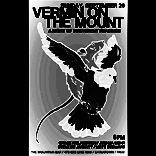
Vermin on the Mount: A Night of Irreverent Readings (9/26@8PM)

when September 26, 2010 @ 8:00pm
where The Mountain Bar, 475 Gin Ling Way, Los Angeles, CA 90027 (313) 660-1175

Admission is free.

Black Clock 4 and 7 contributor Grace Krilanovich reads with Steve De Jarnat, Joshua Mohr, and Matt Stewart at the next Vermin on the Mount reading.