Singular, idiosyncratic and a little mysterious, Black Clock is one of America's leading literary journals.

Archive for the ‘Parallel’ Category—

ROOTS: A GAME OF INVENTING WORDS

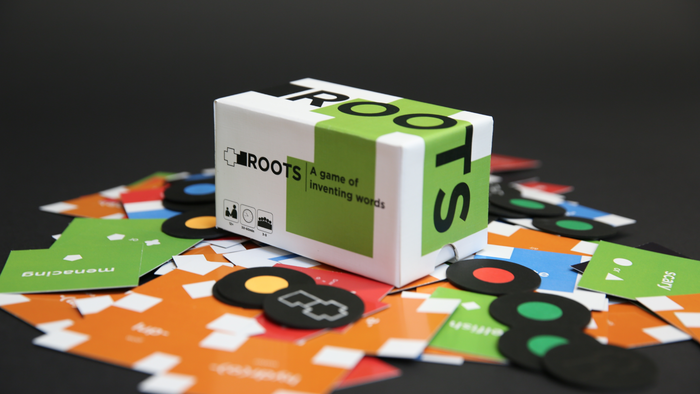
CalArts Writing Program alumni James Pianka launches a new narrative-driven, educational tabletop game for ages 12+, Roots.

68d4c0b74a61312097319f8b43dc2d1e_large

Roots is a game of inventing words. Players combine Prefix and Suffix cards to create new words, competing for the best connection to a Subject card. Whoever delivers the best explanation for their word captures that Subject card, gaining a potential piece of their secret Win condition. But stay sharp: players can manipulate each other’s progress with various Power cards, undermining opponents while advancing themselves. The result is narrative warfare in which the most creative, best spoken, and craftiest thrive.

We asked James if his time in the Writing Program at CalArts influenced the trajectory of this project…

“I actually designed Roots at CalArts – at least its prototype, anyway – for the Integrated Media concentration of my MFA. It lacked a win condition when I presented it to the faculty, even after a year of playtesting with friends and game design peers, because I wanted to hinge games on oral argumentation – as noodly and loose as speech is to legislate. Quantative systems are ubiquitous in games for their objectivity, but every kind we tried eclipsed the narrative that made the game worth playing. At a certain proximity to the end, players would just abandon aesthetic concerns for political strategy – and by necessity: voting for some submissions, despite visible brilliance, equated to throwing games. It was broken. Three or so months of dedicated design at Predicate balanced storytelling with competition. Quantity didn’t disappear, but we scrambled it, hiding a bunch of information from players and introducing new interactivity to add variance. The game’s core mechanic hefted the emphasis it always deserved, and nothing kicked its shins. It’s great to be in touch with CalArts about Roots as a piece, since games were just entering the conversation on campus. Animators, art & tech students, and writers in my year convened over the form, supported by faculty like Tom Leeser, Janice Lee, and Hillary Kapan. I hope the non-linearity that player choice provides continues to inspire ambitious thinkers.”

Find out more about Roots at https://www.kickstarter.com/projects/predicate/roots-a-game-of-inventing-words .

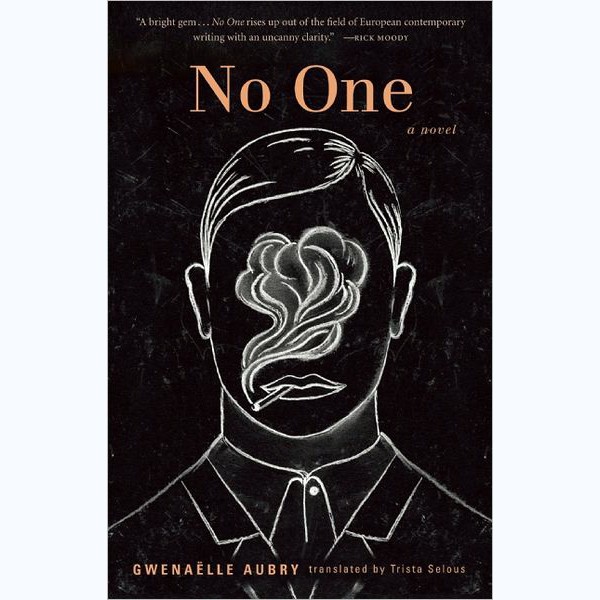
Peering Into the Void: A Review of Gwenaëlle Aubry’s “No One”

noonenovel“Here again I don’t know what, in all of this, is wisdom, what is madness.”

How do we write madness? What language can accurately encompass something as personal and unknowable as mental illness? In her latest book, No One, French philosopher and writer Gwenaëlle Aubry seeks to find that language. Piecing together her own fragile recollections with excerpts from the handwritten, autobiographical manuscript (titled The Melancholic Black Sheep) left behind by her late father with the note “to be novelized,” Aubry explores the life of a man who disappeared from view long before his death: Francois-Xavier Aubry, a once brilliant and distinguished Paris lawyer whose crippling bipolar disorder eventually left him a penniless drifter, in and out of mental institutions for most of his daughter’s life. At once lucid and mystifying, No One is Aubry’s beautifully wrought attempt at creating a portrait of someone whose internal reality she knew so little about, someone who, in the end, strived to be anyone but himself.

Were No One a conventional memoir in the popular American sense we might read Aubry’s story through detailed, chronological scenes in which each family member is cast as a distinct character. It seems necessary to note, however, that No One is the first of Aubry’s books to be translated into English, and in writing it Aubry appears acutely aware of the French literary tradition of “autofiction,” a contemporary genre that blurs the boundaries between autobiography and fiction. Much in the way we saw the life story of Roland Barthes presented to us in Roland Barthes (1977), No One favors compact and poetic philosophical ruminations over dialogue-centered prose. And perhaps also recalling Primo Levi’s The Periodic Table (1975), Aubry shapes her own memoir similarly: this time in dictionary form, with each letter of the alphabet offering another hopeful entryway into her father’s warped psyche.

From the clinically depressed poet/playwright Antonin Artaud to Woody Allen’s chameleon-like 1983 character Zelig, readers accompany Aubry through this idiosyncratic dictionary with curiosity, moving easily between both her father’s poignant, chaotic voice and her own of understated elegance. What we experience then is one author’s exquisite struggle to put a face to a man whose identity was forever unstable, preferring always to be, in his own words, “away from the guerillas of the past, unknown to all, without a label.” The result is a sparkling yet melancholy elegy, a restrained kind of mourning from a wounded daughter to her tragically afflicted father, full of grief and quiet love.

And while we can’t say for certain whether parts of Aubry’s memoir are indeed fictionalized, what is clear is the author’s interest in cultivating this energy of the unknown, something characteristic of autofiction in particular. Readers will notice immediately the contrast between Aubry’s rigidity of form and the cloudiness of her investigation into her father’s true persona, which, like the mental illness that took hold of it, evades, ever so slightly, all attempts at categorization, at being fully known. The task that Aubry has taken on in No One is undoubtedly a difficult one. But the form that she has chosen for her work provides a much-needed, albeit only somewhat helpful, structure in which to look at something formless. It isn’t until the book’s last pages that Aubry comes to a critical realization about her father: “I felt as though, having tried so hard to forget, my memory was now going mad. He didn’t want to remember, didn’t want to know.”

Perhaps it is this exact cloudiness, this frustration of memory and knowing that Aubry laments, that is the greatest triumph of No One. For in the end the truth that Aubry discovers is one even greater than that of her father’s story: It is the truth that madness can never be adequately contained. Though readers may fail to reach a precise explanation of what madness is, they have peered deep into the void along with the brave Aubry herself, who has thus achieved the ultimate act of filial devotion: She has spoken her father’s name, despite everything, again and again and again.

No One
Tin House Books (February 2012)
170 pages; $12.95

By Adriana Widdoes
an Editorial Assistant for Black Clock and an MFA Writing candidate at CalArts

Tick Tock: I Wrote This For You

It was the only time I had taken a Metro-North train from Grand Central up to New Rochelle alone. It was the 4th of August 2012 (a Saturday night), and that’s when it all began.

My days in New York City were winding down fast and I was trying to comprehend how my summer had just flown by. Interning at BOMB magazine in Brooklyn for three months, as well as celebrating my 24th birthday on the Upper West Side on a rainy July day, was not something I had planned. But I’d be quite the disappointment of a Fitzgerald-worshipping, aspiring young writer if I didn’t spend at least some time being inspired in New York. Plus, Bruce, my short story instructor-slash-senior editor, is a firm believer in being young, and crazy, and just living in New York (or Paris) in your 20s.

I just never thought I’d end up falling in love with New York City.

The temperature on the train was ridiculously low, and I vaguely remember wishing I was back in Los Angeles where I could just get in my car and have complete control over the temperature instead of cursing at myself for not bringing a hoodie or a cardigan or something, when I realised I was staring at a man’s hands holding a couple of magazines. In hindsight, I must have come off as a stalker, but honestly, he was holding Black Clock #13. Our mixtape.

The only natural next step in my process of thought was to imagine Black Clock and BOMB dancing together a very elegant waltz on a pink cloud. The male lead being Black Clock in this scenario, and maybe I was onto something with BOMB magazine—being the artist’s voice since 1981—a graceful female artist that is oozing the sex appeal of Jessica Rabbit—while Black Clock is ‘singular, idiosyncratic, and a little mysterious’ since 2004 (perhaps channelling Humphrey Bogart). In true star-crossed lovers fashion, BOMB and Black Clock find themselves in each other; small, fractured pieces of their souls found in the pulse of their printed words. (New York City’s love affair with Los Angeles beautifully overcoming the distance between them).

Surely BOMB is Catherine, Maria, Padmé, Princess Diana to Black Clock’s Heathcliff, Tony, Anakin, Dodi Fayed, the difference lying in the swanlike grace of the quiet exchange that can be found in both magazines’ contributors lists. Steve Erickson, Bruce Bauman, Lynne Tillman, Jonathan Lethem, Rick Moody, Don DeLillo . . .

There is no tragic ending in this metaphor. There are, instead, stolen kisses at reading events (perhaps most notably at the McNally Jackson reading in March 2012 for Black Clock #15, where Lynne Tillman read from her piece “Two Serious Ladies: The Film” as Black Clock staff listened through the bookshelves); a quick exchange of glances via blog posts on upcoming events; even passing notes as contributors press light pecks between issues. (Or perhaps their love affair—soundtrack by Hans Zimmer—is sidetracking me.) My point being, if Black Clock had a delectable soulmate, it would be BOMB. (2,972 miles apart if we take the I-80 East from CalArts to Brooklyn.)

With the continuing trend of bookstores declining in the USA—a further 2% decrease from 30,4000 in 2011 to 29,795 in 2012—and the American Bookstores Association having 1,900 member stores (500 member stores fewer than in 2002), with eReaders on the rise, and fanfiction writers becoming  overnight sensations, my heart reverberates between two decades. Here I am, in the land where u’s have no place being next to o’s, and my favourite love story is written between the pages of two magazines that live on the two coasts. Their feelings are echoed and reflected in Editor’s Choices, in the breaths of line breaks and italics, and interviews. Where the short stories and poems that can be found in Black Clock share the same intimacy and give off the aura of BOMB’s First Proof. Where Artist on Artist interviews shine with contributors from the West Coast magazine.

Ultimately, Betsy Sussler and Steve Erickson have been transforming, pushing, and re-writing artistic and literary boundaries since 1981 and 2004, respectively, both providing readers with works of art.

So to the guy who was on that Metro-North train that night—thank you. Thank you for reminding me that a little love for the written word can go a long way.

I got off at Pelham.
 

By Eleni Demetriou
an Associate Editor for Black Clock and an MFA Writing candidate at CalArts

Jonathan Lethem Experiences “They Live”

They LiveI didn’t watch John Carpenter’s They Live. I’m not a buff by any standard. Intentionally, even as I anticipated the book’s arrival, I declined the free opportunity to see  this film. But I have read Jonathan Lethem’s They Live. My interest stemmed from my Lethem fandom and a single description printed in size 18 serif font atop the front cover of this book: it reads, “A Novel Approach to Cinema.” My curiosity was snagged wondering at the narrative innovations Lethem could offer in a book of criticism. Other descriptions are similar, if not quite as stimulating. About their new Deep Focus series, of which this work is the first of two so far, Soft Skull Press promises it will present, “…long form criticism that’s relentlessly provocative and entertaining.” And in “Note to Approach I,” set as a preface, Lethem himself describes the piece matter-of-factly, writing “This is the first monograph on They Live.”

Above all, this book represents Lethem’s repeated viewings of They Live articulated through stream-of-consciousness probes on anything from the implied homosexuality of the characters, Los Angeles as its-unnamed-self, RayBan Wayfarers (or, as Lethem points out as the likely case in this movie, their drugstore rip-offs), to diving into racial, Marxist, and generic motifs. The quick introduction, a poetic and prophetic day-after reaction—entitled “What You’ll Recall of the Dream in the Morning”—renders the experience of this book as it does the movie more aptly than any review ever could.

A street preacher’s warning and a pirate television broadcast.
The demolition by riot policemen, helicopters, and bulldozers of an open-air homeless-persons’ compound in a vast vacant lot.
A brazen assault on a ghetto church.
A hero, a wrestler garbed as a construction worker.
A pair of sunglasses that reveals yuppies as alien ghouls.
A chilly, enigmatic beauty, her intentions toward our hero unknown.
The black guy and the white guy. They begin in distrust, but soon learn they’ve got enemies in common. From that point they’ll cover each other’s backs.
Machine-gun fire in a television studio.
A surprise with tits.

But, above all, two sequences…

That is to say, this is Lethem’s experience and this will be your experience too.

Lethem’s writing is, as usual, amazingly pleasurable. Free-associative though rarely tangential, it constantly compels forward movement by refreshing readers on what feels most like every peculiarity of the movie. “RayBan Waferers … had been established as a specifically eighties movie icon…” Or: “At the height of the colorization crisis, a rumor spread that Ted Turner intended to colorize the Kansas sequences in The Wizard of Oz…” Yet all these observations are tightly situated  in the narrative of They Live itself.  That is, the book literally follows the movie’s established discourse. Once the premises are settled, we start at “0:00” and move toward the movie’s conclusion at “1:30:21,” and to help check the two mediums when need be, run time is often cued—“(2:18)” or “(1:02:05).” Also, though this is a work of criticism, Lethem often presents the movie’s shots and sequences as fictional scenes. “Garbed in default blue-collar duds and wearing a back-pack, Nada picks his way out of the distance, across the tracks, toward us … our hero strolls into the story’s frame through the civilization’s back doors, unnoticed, an entrance simultaneously suggesting modesty of means, self-reliant competency, wraithlike anonymity, and (at least to begin) neutrality…” The overall effect is that of a novel stealing the film’s diegetic. That is to say, a novel whose narrator is embedded within the movie itself. (Not many other books give background music).

This was my reason for picking up the book: I’d imagined a work truly adapted from film, appropriating not only the plot but any trope of action and science-fiction movies or even film code.  I’d imagined a perspective not unlike that in Robbe-Grillet’s Jealousy, an ultimately distant view that treats the characters with seemingly complete objectivity, but made “fun” by the popcorn content. Why not, at a minimum, leave open the narrative hooks or even help produce rather than squelch them even before they come up? Here’s an example: in the section titled “Villainous Vehicles (22:40),” Lethem writes of helicopters, “Nada will later be killed by a sniper shot from one.” Is this your friend ruining the end of the story or is this Lethem purposely deflating the narrative so as to direct your full attention to his own “reading” of the film? Ultimately, as B-movies go, They Live is, in the best Roger Corman tradition, a film of ideas. Had I watched it, I would have understood this in my anticipation. Thus arises the need to expand, explain, and explicate. Another note that Lethem provides on helicopters is this: “So, in They Live’s ironclad us-versus-them scheme, the director’s affiliation with his persecuting machines points to a subliminal ambivalence, or even complicity.” Ultimately, this book becomes one of ideas that exist on so many slippery levels that… it, in many ways, re-enacts its own version of these events and becomes the movie as hoped for, as previewed or advertised, as promised.

For this reader the total effect is that of an awed (odd) epic of an 1980s America that could only be retold precisely this way. It drew me in entirely—I set the book down only once to wrap myself in more blankets as my heater recently died—so by the end, I was completely rewarded, just as any reader is upon discovering an new manner in which fiction momentarily demystifies our world.  “Put on the @*#!ing glasses.”

by Justus Caudell
an Editorial Assistant for Black Clock and an MFA Writing candidate at CalArts

Landfall in NZ

If Black Clock had a foreign older uncle, it would be Landfall of Otago University Press. Founded in 1947, it is New Zealand’s oldest literary magazine. Landfall publishes two, often theme-driven, magazines a year featuring New Zealand’s best contemporary writers – their poetry, prose, and essays – as well as artwork in full color.

Also like Black Clock, Landfall works beyond the stories and poems it publishes – it provides an art-object readers can hold and experience in their hands. The art and captivating layout of each issue saturate the senses with visual and tactile beauty on par with the textual that simply cannot be conveyed on a screen. In so doing, Landfall challenges the print is dead theorists who consider magazines little more than justified text on tree bark.

In a world where the CEO of Amazon can promote the Kindle and the hope of a “paperless society” without destroying his career in bookselling, print magazines such as Landfall and Black Clock inevitably find themselves in the same boat — a beautiful boat, which we’re all proud of and devoted to, but one that consistently faces the challenges of ebooks and an unstable publishing world. It’s heartening to know that in a city over six thousand miles away, a magazine akin to our own continues not only to endure but thrive despite these obstacles.

by Diana Arterian
who is currently earning her MFA in Poetry at CalArts and assists California Poet Laureate Carol Muske-Dukes;
her self-published chapbook
First Wind is available at Skylight Books

image from Landfall