Singular, idiosyncratic and a little mysterious, Black Clock is one of America's leading literary journals.

Archive for 2012—

Further Moore: A Birthday Tribute to a Comic-Book Magus

On his way home from a long day of teaching high-school English in North Hollywood, he decided to stop at the comic-book store. He picked up a comic called Snakes & Ladders, Eddie Campbell’s illustrated adaptation of a spoken-word performance by Alan Moore. (Later, he discovered there was a Snakes & Ladders CD.) Moore had presented his intricate and delirious historical-cosmological monologue in London’s Red Lion Square on April 10. April 10 was his birthday. He took it as an omen and purchased the comic book. Snakes & Ladders may have been obscure, but the name Alan Moore certainly wasn’t. Along with Neil Gaiman and Grant Morrison, he was one of the triumvirate of comic-book visionaries whose writing had been vital to his late teens and twenties.

An occultist and anarchist with an abiding distrust of the heroic and a grim predilection for the dystopian, Moore had penned a number of illustrious comic books. In Saga of the Swamp Thing, he endowed the eponymous palustrine creature with an all-too-human soul. Watchmen demolished the mythology of the superhero and introduced one of his most unforgettable characters with one of the most sublime of all comic-book monikers, Rorschach, named after that blurry psychoanalytic blot out of which you dredge images residing within your unconscious. With V For Vendetta, Moore resurrected the spirit of Guy Fawkes, the man who attempted to blow up Parliament (“Remember, remember the fifth of November”) and later provided a “face” for “Anonymous” hackers and the protesters of Occupy. Moore’s portrait of The Joker as a dark trickster in The Killing Joke preceded Heath Ledger and Christopher Nolan’s by two decades. From Hell surveyed the psychogeographic terrain haunted by Jack the Ripper. The League of Extraordinary Gentlemen recruited its adventurers from Moore’s voracious excavation of the vast trophy room of Victorian literature. A whole host of hermetic sources were brought to bear in the 32-issue Tarot inspired-feminist-Kabbalistic-apocalyptic-who-knows-what-else odyssey Promethea. Then there was Lost Girls, concerning the erotic escapades of Wendy from Peter Pan, Alice from Adventures in Wonderland and Through the Looking-Glass, and Dorothy from The Wizard of Oz when they meet up in an Austrian hotel on the eve of the First World War. Moore had thought deeply and profoundly about heroes, stories, cities, politics, history, theology, pornography, and, beneath it all, humanity. Nothing human was alien to him.

This comic-book magus was ungovernably ambitious, beguilingly learned, relentlessly immersive, extravagantly, even exasperatingly referential and, impossible to ignore, fantastically, formidably unshorn. With his wizardly beard, Moore had the look of a man who couldn’t wait to be an eccentric old geezer or nutter. But wasn’t the entire history of England bestrewn with brilliant nutters? Who was the one who proclaimed: “I must Create a System, or be enslav’d by another Man’s/I will not Reason & Compare: my business is to Create”? It was that 18th-century graphic novelist William Blake.

He found that he shared with Moore admiration for and fascinations with many of the same authors and nutters—David Lindsay, H.P. Lovecraft, Mervyn Peake, Thomas Pynchon, Iain Sinclair. He was impressed by how Moore explored the idea that superheroes and villains were forged out of trauma even as he acknowledged that the resulting transformations from these wounds were ludicrously unlikely. “People I’m sure have had their parents killed in front of their eyes,” Moore said in an interview. “I think that would probably lead to a life in analysis and probably all sorts of personal problems. It probably won’t lead to you becoming a bat-themed vigilante.” Moore underwent his own esoteric transformation, became a different sort of conjurer with words when, on his fortieth birthday, Moore declared himself a magician. He claimed to be worshipping a forgotten Roman snake god answering to the name Glycon. Among his many projects he was said to be at work on a grimoire, his own manual of magic.

The day after poring over Snakes & Ladders and casting his mind back through all the worlds Moore had introduced to him over the years, the class he taught—on Samuel Taylor Coleridge’s “Kubla Khan,” as it happened—would take a number of peculiar turns. He opened his class with what he thought would be received as a liberatory proclamation (or was it actually an incantation?):

“TODAY, YOU ARE NO LONGER HIGH-SCHOOL STUDENTS. YOU ARE ROMANTIC POETS, FEARLESS EXPLORERS AND CARTOGRAPHERS OF THE IMAGINATION.”

A few students seemed to smile or nod their heads in approval. Many tittered, rolled their eyes, or gaped openly, embarrassed for the nutter who had now materialized before them at the front of their classroom. How swiftly do some opposing systems of the world collide!

So remember, remember the 18th of November. Happy 59th birthday, Alan Moore.

Read at 826LA, November 18, 2012
 

By Anthony Miller
an Editor-at-Large of Black Clock

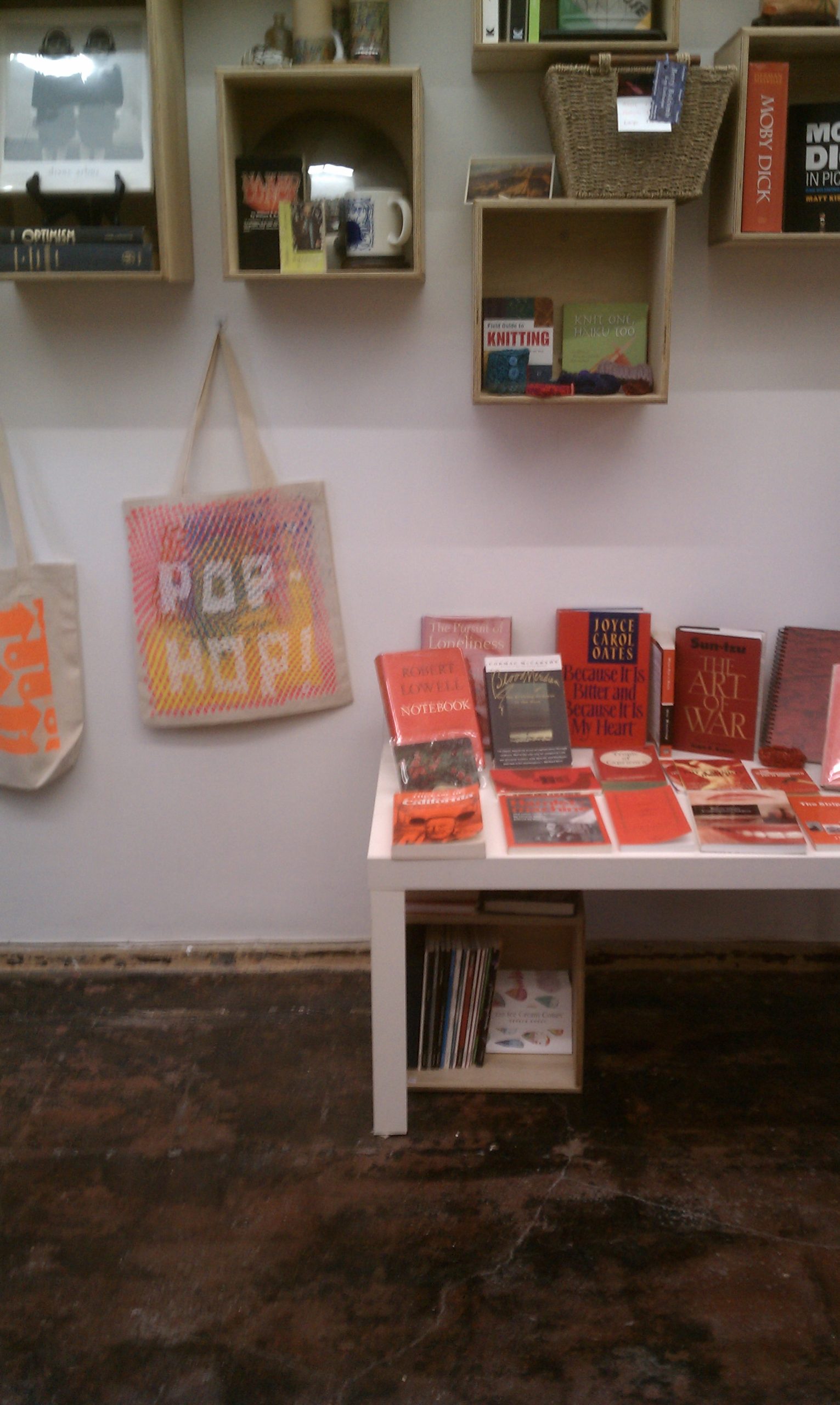
Pop-Hop: The evolution of the bookstore at its finest

As a writer and a reader there’s something I can’t/won’t/refuse to shake, and that’s a good bookstore. With the threat of e-books taking over as the popular form of publication, I tremble with rage at the thought that we might lose my favorite kind of business.

When I first moved to Los Angeles in 2008 I found it incredibly difficult to locate a good bookstore. I went so far as to follow half complete directions to a used bookstore somewhere between Malibu and some hills only to find it had been dissolved years before. Do you know that disappointment? Does it permeate your city too? I blame the Internet, I think it goes out of its way to forget bookstores still exist. I’m sure it’s intentional, and I hope someone more versed in conspiracy theory is already on this, because I don’t really have the time.

However, in spite of the Internet’s selective memory, I’ve managed to locate bookstores here and there throughout the last four years. From The Last Bookstore downtown to Iliad Bookshop in North Hollywood, the book business is hanging in there. Then there are the special places that are doing more than hanging in there, that are making their own distinct presence known by building a community, and one of those places is Pop-Hop Books & Print, “[a] bookshop, print studio & salon in the Highland Park neighborhood of Los Angeles”.

If you haven’t been to Pop-Hop yet, well shame on you, but really, you should make the trip. Recently opened in May 2012 by friends Robey Clark and Sarah Balcomb, Pop-Hop is what I dream my home library will look like someday. Sturdy shelves installed by friends line the right side of this narrow, long, and high ceilinged space. The shop gives off an air of clean and clear purpose. The white walls contrast with what might look like items from your grandmother’s attic. At first glance, to the non-bookish eye, the books and items gracing these shelves don’t seem all that special – mostly used, with a handful of newer books, and scattered lost objects. But these shelves are weighed down by something very specific. Love. Sarah loves books, you can see it in the way she has carefully chosen, organized, and alphabetized her shop, and in the little color coordinated display that lingers by the register. First editions pop up every other grab. Lovingly read books creak open to show you their unique stories and odd photos. You’ll find cookbooks, children’s stories both old and new, psychology and social science books, fiction, non-fiction, local handmade books, and maybe even something as unusual as an instruction book on the best ways to kiss a woman: titled The Art of Kissing (copyright 1936, reprinted in 1988).

This last example is why I have a particular affinity for Pop-Hop. I’m a person who will pick up old communist manifestos and books from the 1900s on how to learn Esperanto, and at Pop-Hop, Sarah displays this same affinity for the odd and rare little book. If you’re looking for a surprising read, or a gift for the book loving person in your life, Pop-Hop is the place to go.

You should also swing by if you’re looking for that yard sale item that’s escaped you, or fun handmade art by local artists. Scattered around the shelves, bits of scrap art mingle with very precious French mugs, and it’s not at all unusual to see very small screen-printing screens acting as bookends. Another aspect to the Pop-Hop shop is its screen-printing studio run by Robey. The walls are hung with bags, t-shirts, and baby clothes that were all screen-printed in house. They run weekend workshops where you can learn to screen print, or make a handmade book. Also on weekends they host story times for kids as well as readings and music performances open to the public, and participate in the NELA bi-weekly art walk. Basically their feet aren’t just wet, they’re soaked from all the activities they’ve both started and become involved with in only the first year of their existence. They’ve created an inviting open space where everyone is welcome, and they’re flourishing.

I appreciate what Pop-Hop does, that they’re helping to keep the printed book circulating and doing it with verve. Their unique and constant interaction with their neighborhood is creating a community, and a community with an appreciation for books and art. A community with this kind of appreciation isn’t going to let a place like Pop-Hop slip away in the oncoming storm of electronic books. Pop-Hop is a lesson in the adaptability of the bookstore, and it’s a lesson I hope other aspiring bookstore owners can pick up, make their own, and run with.


By Jessica Marie Felleman
an Associate Editor for Black Clock and an MFA Writing candidate at CalArts.

Monster Mashup: The Union of Books and Music

At the risk of flogging a dead horse I haven’t ridden, I’ll relay some recent news. Beyond how bad or boring (or potentially great) Fifty Shades of Grey is, inside one will find myriad references to classical composers. Or so I’ve heard. Also, I’ve read that EMI Classics, in an obviously gluttonous but altogether wise move, is releasing a reading soundtrack. Something to enjoy sonically while you relish E L James’s Twilight fan-fiction adapted book. This all got me thinking, what music do we listen to while we read?  What do we hear when reading? Does it make any difference?

When I asked my sister what she listens to while reading she responded, “I listen to the Wicked soundtrack while I’m reading Wicked. And you should listen to classical music while you’re doing the Sunday crossword puzzle because you need to listen to smarty-pants stuff for that.”

She’s a voracious e-reader. She tore through the Dragon Tattoo series in a week of lunch breaks. The Hunger Games series she finished in a weekend. All this reading in silence.

Despite her jokes, she admitted she listened to nothing while reading. I was and am baffled. Silence is nosy and distracting. But on it went. Many friends, to my surprise, read in that non-place with nothing to keep pace, no friends but the characters. Many said they didn’t read. Only some were joking.

I’m sure there are plenty of studies about children engaging their latent genius via Beethoven or something. Whatever . . . All I know is there’s no way we’re going to make it as readers in this alleged silence–full of city sounds, buses and freeway traffic, garbage collectors and arguing neighbors. And if you happen to live in the country, don’t count yourself out. What of the crickets, the wind, the mental lists of things not yet accomplished, the fears that will probably soon be realized? No. Silence is not an option.

This morning I tried pairing the instrumental tracks from Trojan’s Reggae Chill-Out box set to William H. Gass’s In the Heart of the Heart of the Country. No dice. But also, no surprise. I bounced around: Erik Satie is too somber somehow, Yann Tiersen too lively. J Dilla, just silly. So, back to the Trojan collection. And it worked, they clicked: I read. Time and/or patience are sometimes all you need.

Forcing the union canwork. Sometimes a larger contrast can be best. Perhaps too appropriately I’d been listening to Ennio Morricone’s score to Once Upon a Time in the West while hobbling through Cormac McCarthy’s Blood Meridian. Only when I needed to define ocotillo or pyracanthra or any of the other hundreds of terms and words I’d never before encountered did I notice how funny it was, sitting pajama-clad in the sun, looking up what an ignis fatuus was while that haunting harmonica clashed with the manicured lawn, the mother persuading her children into her SUV, the city-allocated outsized bins of recycling, yard waste, trash. Loud city things that almost made me give up what I thought would be the perfect mixture of music and story.

I got through it, but the whole scene, day after day, felt silly. Like I was standing in the yard ready to draw a pistol on a passing Acura. So let’s mix it up, I thought. Henry Miller’s Sexus is the first of his books that has in it no French. How vaguely funny then that I’d chose Julie Doiron’s Desormais, tonally, a terribly sad album. Seeing as how I can comprehend but a handful of French words and phrases, and Doiron’s vocals, all in French on Desormais save one English track I omitted, the typically intrusive human voice is no bother. I’ve also found this to be true with much bossa nova and more occasionally tropicalia. The mood of Desormais isn’t the mood of Sexus. It took hours of listening to Doiron’s 2001 release while reading Miller’s 1962 novel for them to wed in a way that wasn’t catching me up. And when they finally did they were inseparable. Moments away from their partner were grueling, pointless. The paranormally calm sixth track from Doiron’s album does nothing for me now.  It’s become inextricably fused with Miller’s description of the Bronx.  I’m listening to it presently.  As the especially staccato guitar intro plays I see nothing but Miller borrowing money from this or that person . . . and a man across the street whacking weeds with his weed-whacker.

This amalgamated, rhetorical relationship has both its benefits and its disadvantages. For instance, I doubt I’ll again be able to consider anything but Raskolnikov wishing his family would leave him the hell alone each time I hear “My Angel Rocks Back And Forth” from Four Tet’s 2003 album Rounds. At the same time, when I want to hear his multi-layered complaints for solitude, that’s the song I put on.  I imagine the synesthetes have something to say about all this.

Pairings I have proven to work:

  • William Gibson’s Burning Chrome and Nathan Johnson’s score to Brick
  • Kelly Link’s Stranger Things Happen and Dirty Three’s Cinder
  • Anne-Marie Kinney’s Radio Iris and Kazumasa Hashimoto’s score to Tokyo Sonata.


Some records do double duty. Cliff Martinez’s score for Drive pulled me through the cold worlds of J.G Ballard’s Crash as well as Don DeLillo’s Cosmoplis, the latter tempered with shuffled Throbbing Gristle and Whitehouse albums, but only after a few drinks. Finally, as fun or funny as you think it might be to read Poe and listen to “Monster Mash” on repeat, it isn’t. It’s stupid and you feel stupid doing it.

To read a version of this discussion in practice, from the horses’ mouths if you will, I highly suggest checking out David Gutowski’s Largehearted Boy. There you’ll find, as is stated on the site: “Book Notes, which has authors create a mixtape relating to their latest book; Note Books, where musicians I admire explore their literary side; Soundtracked, where directors and composers discuss their film’s soundtrack; and The Largehearted Boy Cross-Cultural Media Exchange Program, where authors interview musicians (and vice-versa).”

Perhaps the most relevant of these features is “Book Notes,” with participants that include Ben Ehrenreich, Ben Lerner, Blake Butler, Aimee Bender, Eileen Myles, Jeff VanderMeer, Grace Krilanovich, Rosanne Cash, Sam Lipsyte, Matthew Specktor, Brian Evenson, Amelia Gray, Veronica Gonzalez, Bret Easton Ellis, Dana Spiotta, the list goes on.

Almost everyone I’ve mentioned this concern to says, in one way or another, I should shut up and try to get some work done. Well, to them I say: yes I will. I’m sorry to have wasted your time . . .

. . . but when in doubt always put on Chopin’s Nocturnes.


By Patrick Benjamin
an Associate Editor for Black Clock and an MFA Writing candidate at CalArts.

Green Apple Books: Independent Bookstores Just Won’t Quit

The first time I walked into Green Apple Books in San Francisco, I remember thinking, “Oh yeah. This is definitely a nice bookstore.”

My tepid response was put on hold once I realized I was in the annex to the bookstore which holds merely a drop of Green Apple’s ocean of a collection. Once I entered the main building a few doors down, I was speechless–my eyes darting back and forth as I tried my best to take it in all at once.

Green Apple Books is a bibliophile’s utopia–stacked wall-to-wall with books of every genre, every size, new and used, from leather bound to hardback to paperback, and not a Starbucks counter in sight. And an even bigger surprise: the employees are knowledgeable and will go out of their way to help you. I was floored when I asked for a specific title and the attractive man with the beard, flannel shirt, and tattoos led me to a section that to me had no clear sorting system and, with the greatest of ease, plucked the one copy of my book from a seemingly impenetrable wall of words.

This is what a bookstore is supposed to be. Sure, they have sizable sections for other things like music and DVDs, but at Green Apple, the appetizers, main entrees, and desserts are the books themselves. The smell of old books on wooden shelves fills your nose as you walk over creaky floorboards. A visitor feels transported away from the vibrant activity of Clement Street and the modern world into another dimension where books are still printed on paper, the word “kindle” only refers to fire, and people love the feel of rifling through pages and having tiny gusts of wind hit their faces.

The bookstore itself is a veritable labyrinth–this is fitting, as this neighborhood bookstore has been open for 45 years. What started off in 1967 as a store of 750 square feet has grown to ten times its size according to the store’s website. The evolution of the bookstore is made evident by the fact that they provide a map for those visitors who have lost their way while perusing through fiction and have somehow found themselves in the adorably titled “Granny Smith Room” which houses books on linguistics, philosophy, and anthropology.

Within the main building they have a second floor as well as a large children’s book area, all in addition to the annex housed a couple of doors down. Continuing with the apple theme, they have a “Red Delicious Room” with books on subjects like Eastern religion and birds. On the stairways are books grouped by deliciously quirky themes like “Deep Dogs,” which has titles like The Art of Racing in the Rain, “This is What Happens When You Don’t Eat Your Vegetables” with books like Tokyo Vice, and my personal favorite “Sexy Time” with such books as She Comes First.

To say that there’s something for everyone here would be trite. But entirely true. Max Segal, a San Francisco native, tells me, “When I first came to Green Apple as a kid, I thought it was a produce market. It wasn’t until later that I realized they do actually produce something–just something entirely different than I thought.”

Green Apple Books is so much more than just a store that sells books–to describe it as such would be too impersonal. And Green Apple is anything but impersonal. It is a neighborhood landmark, a longstanding independent bookstore that survived the most recent recession, a well of knowledge and entertainment, and a source of community pride.

You can lose yourself for hours in its book-lined aisles–just make sure you bring your good credit card. Because leaving empty-handed just ain’t gonna happen.


By Bel Poblador
an Associate Editor for Black Clock and an MFA Writing candidate at CalArts. She is a Los Angeles native, a lover of San Francisco, and an advocate of all things dog-related

Tick Tock: I Wrote This For You

It was the only time I had taken a Metro-North train from Grand Central up to New Rochelle alone. It was the 4th of August 2012 (a Saturday night), and that’s when it all began.

My days in New York City were winding down fast and I was trying to comprehend how my summer had just flown by. Interning at BOMB magazine in Brooklyn for three months, as well as celebrating my 24th birthday on the Upper West Side on a rainy July day, was not something I had planned. But I’d be quite the disappointment of a Fitzgerald-worshipping, aspiring young writer if I didn’t spend at least some time being inspired in New York. Plus, Bruce, my short story instructor-slash-senior editor, is a firm believer in being young, and crazy, and just living in New York (or Paris) in your 20s.

I just never thought I’d end up falling in love with New York City.

The temperature on the train was ridiculously low, and I vaguely remember wishing I was back in Los Angeles where I could just get in my car and have complete control over the temperature instead of cursing at myself for not bringing a hoodie or a cardigan or something, when I realised I was staring at a man’s hands holding a couple of magazines. In hindsight, I must have come off as a stalker, but honestly, he was holding Black Clock #13. Our mixtape.

The only natural next step in my process of thought was to imagine Black Clock and BOMB dancing together a very elegant waltz on a pink cloud. The male lead being Black Clock in this scenario, and maybe I was onto something with BOMB magazine—being the artist’s voice since 1981—a graceful female artist that is oozing the sex appeal of Jessica Rabbit—while Black Clock is ‘singular, idiosyncratic, and a little mysterious’ since 2004 (perhaps channelling Humphrey Bogart). In true star-crossed lovers fashion, BOMB and Black Clock find themselves in each other; small, fractured pieces of their souls found in the pulse of their printed words. (New York City’s love affair with Los Angeles beautifully overcoming the distance between them).

Surely BOMB is Catherine, Maria, Padmé, Princess Diana to Black Clock’s Heathcliff, Tony, Anakin, Dodi Fayed, the difference lying in the swanlike grace of the quiet exchange that can be found in both magazines’ contributors lists. Steve Erickson, Bruce Bauman, Lynne Tillman, Jonathan Lethem, Rick Moody, Don DeLillo . . .

There is no tragic ending in this metaphor. There are, instead, stolen kisses at reading events (perhaps most notably at the McNally Jackson reading in March 2012 for Black Clock #15, where Lynne Tillman read from her piece “Two Serious Ladies: The Film” as Black Clock staff listened through the bookshelves); a quick exchange of glances via blog posts on upcoming events; even passing notes as contributors press light pecks between issues. (Or perhaps their love affair—soundtrack by Hans Zimmer—is sidetracking me.) My point being, if Black Clock had a delectable soulmate, it would be BOMB. (2,972 miles apart if we take the I-80 East from CalArts to Brooklyn.)

With the continuing trend of bookstores declining in the USA—a further 2% decrease from 30,4000 in 2011 to 29,795 in 2012—and the American Bookstores Association having 1,900 member stores (500 member stores fewer than in 2002), with eReaders on the rise, and fanfiction writers becoming  overnight sensations, my heart reverberates between two decades. Here I am, in the land where u’s have no place being next to o’s, and my favourite love story is written between the pages of two magazines that live on the two coasts. Their feelings are echoed and reflected in Editor’s Choices, in the breaths of line breaks and italics, and interviews. Where the short stories and poems that can be found in Black Clock share the same intimacy and give off the aura of BOMB’s First Proof. Where Artist on Artist interviews shine with contributors from the West Coast magazine.

Ultimately, Betsy Sussler and Steve Erickson have been transforming, pushing, and re-writing artistic and literary boundaries since 1981 and 2004, respectively, both providing readers with works of art.

So to the guy who was on that Metro-North train that night—thank you. Thank you for reminding me that a little love for the written word can go a long way.

I got off at Pelham.
 

By Eleni Demetriou
an Associate Editor for Black Clock and an MFA Writing candidate at CalArts

Lie To Me, Mr. Keret

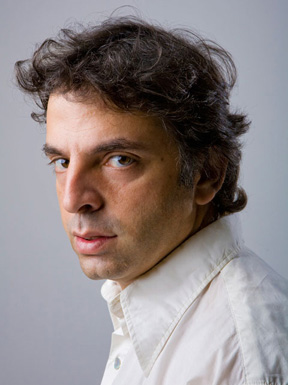
In a 2008 interview with the online magazine Words Without Borders, Etgar Keret explained that, “reality is what is in the back of your mind, it’s not what’s right in front of your eyes.” Even though many of the Israeli’s stories take place in his home country, he creates a fictional world, coming out of the hidden crannies of the mind, that sounds a lot like a slightly skewed description of our own neighborhoods and acquaintances. The fiction in Suddenly, A Knock on the Door (Farrar, Straus and Giroux), the recent collection of works translated by Nathan Englander, Sondra Silverston, and Miriam Shlesinger, feels particularly global and fantastic: almost all the stories either exist in or jump into a fabulist world of the subconscious, though feel rooted in everyday life.

In the first collection of Keret’s stories translated for an English-speaking audience, The Bus Driver Who Wanted to be God & Other Stories (The Toby Press, 2004), the stories were compiled from four different books published in Israel between 1992 and 2002; as in other books containing English translations of Keret’s stories like The Nimrod Flipout (Farrar, Straus and Giroux, 2006) and The Girl on the Fridge (Farrar, Straus and Giroux, 2008), the arrangement of The Bus Driver is based not on the author’s creative decisions but simply as a chronological survey of his work (or as a way to market the work as thoroughly as possible). So, if talking about Suddenly as a step forward in Keret’s work feels a bit specious, there is still a discernable evolution in Keret’s thematic focus.

Most of the stories in Bus Driver focus on the particular views and anxieties of Israeli society—most notably men and women coming to terms with their mandatory military service. In Bus Driver we do get “Kneller’s Happy Campers,” a piece that could be termed a novella and was published in Hebrew under its own title together with a few other stories. The tale describes a world that is basically an afterlife for suicides, but even these suicides are people from the Middle East who still worry about crossing into others’ territories, and the tone is not all that different from that of a graphic novel—the experience is highly visual, with strong descriptions of the society at Kneller’s camp, but the language of the story is reluctant to delve into the real depths of human nature.

Suddenly contains the entirety of a 2010 book published in Israel. It has characters of multiple nationalities with whom we can identify simply in their quest to navigate the vicissitudes of reality. Keret’s earlier stories teemed with tension from the Middle East (described as a place predicated towards violence and domination of the human spirit), but in Suddenly he is dealing with more encompassing issues of divorce, death, family, and finances. Here, the 45-year-old, known in his home country as a writer for a popular sketch comedy T.V. series and as a main contributor to a number of films, comics, and graphic novels, displays his most mature and insightful literary work to date.

Keret, married and moving into middle age, has developed a more nuanced understanding of life in general. While, in Bus Driver, he wrote about such charming things as a young boy who, even though he wants to buy a Bart Simpson doll, hesitates to break a piggy bank that has become like a pet (“Breaking the Pig”), in Suddenly Keret’s characters and plotlines play off the serious and ironic in a way that feels more epic; like in the story “Cheesus Christ,” a description of a murder at a fast food restaurant in the United States and its “butterfly effect.”

The collection’s eponymous opening story sets the stage for the thirty-five tales to come. We see a narrator named Etgar describing a predicament in which three burly men invade his home—two holding him at gunpoint, a third using a cleaver—and demand to be entertained with a story. The narrator struggles to be creative under the pressure. In his nervousness all he can do is relay the details of the present situation, to which one gunman grumbles, “That’s an eyewitness report. It’s exactly what’s happening here right now. Exactly what we’re trying to avoid.” His captors essentially ask him to lie, and the narrator fails. The story’s the perfect jumping off point for the collection; a web of fables that mimic reality and emanate from a place deep in the human subconscious.

In Suddenly we get a particular metaphor for conveying the complexities of an adult life; the men, women, and children of his stories continually lie to each other and even more often to themselves, just so that they can survive the cruelties of their fates. For Etgar Keret it seems creating fiction is not all that different from telling a lie.

The strength of Keret’s stories is in his loyalty to nuance—which is, admittedly, a pretty hard concept to illustrate. But Keret exhibits this nuance in the stigma inherent to lying juxtaposed with the joy of storytelling, and this juxtaposition only points to the complexity of our existence—the non-duality of good and evil, of cynicism and hope; a non-duality to which Suddenly attests.

In “Lieland” Keret gives us a character named Robbie who lies so much he is eventually made privy to a secret dimension, where the people and things created through the world’s prevarications reside. In this alternate world, Robbie comes face to face with his lies; he meets a physical manifestation of a bully he once created in order to get out of losing his mother’s milk money and of a sick dog that at one point got him out of trouble at work. The experience ultimately results in Robbie’s realization of his mistakes. This story, by bending our expectations of reality, demonstrates one of the metaphors that make Keret’s stories so successful. If his characters can create believable characters, the author works on a level that cannot help but draw the reader in. Just like a good lie, the fiction is most believable in its precise details.

The truth found in cynicism makes Keret’s writing even more enthralling. In “Lieland,” this tendency toward the negative is an essential aspect in creating a believable lie. As a character experiences, “It was much harder to make up positive lies. At least, if you wanted them to sound plausible. In general, if you tell people something bad, they buy right into it, because it strikes them as normal.” Keret understands that neither a lie nor a story can focus on either struggle or certainty, because reality is comprised of both.

Keret’s characters in Suddenly, though existing in a kind of dream world, often vacillate between morality (the truth) and poor decisions (the lie), so that the reader finishes a story with a strange feeling of melancholy coupled with an epiphany, as if, even though the world is tough and confrontational, at least we are all in it together. We find solace in the sort of world depicted in “Pick a Color,” where a disabled man meets God and discovers that He, too, is disabled, and the man realizes that our suffering can only make us feel blessed. Described in the engaging, colloquial voice of Keret, this world—even though it’s a funny, mixed-up place—contains our only hope for salvation.


By Chris Black
an Associate Editor for Black Clock and an MFA Writing candidate at CalArts

The Anthony Miller Interview: Part One


Black Clock Editor-at-Large Anthony Miller is participating in Literary Death Match tonight, September 6th. If I were a betting man, and if there existed a sports book that released odds on semi-competitive literary events, my money would be on Miller. His contribution to the most recent issue of Black Clock, “A History of the Cinema 1920-2014,” is the sort of writing meant to pulverize the LDM competition. Each entry in the alternative timeline packs a sharp, nearly deadpan punch, like a Steven Wright one-liner. They are paraprosdokians that bend the dry rhetoric of most film histories into fantastically absurd contortions. Ronald Reagan stars in The Maltese Falcon; Alejandro Jodorowsky directs the megahit Dune; and John Cassavetes adapts Pynchon. As Miller explains below, in the first part of our two-part interview (part two can be found here), his timeline is “a love letter to timelines and the kinds of stories timelines tell.”

Besides Black Clock, he has written for Bookforum, LA Weekly, Los Angeles CityBeat, and Poets & Writers, and is currently at work on a novel and “a book about encyclopedic novels and secret histories.” The back of issue 15 enigmatically identifies him as its “conceptual progenitor.” In all of his Black Clock work, Miller uses short, mostly nonfictional essays to tell stories as strange and expansive as any novel. His pieces are punch-drunk valentines, heart-shaped capsules dedicated to preserving and celebrating obscure, beloved cultural flotsam and jetsam, both high and low. Safire’s Political Dictionary; David Foster Wallace’s tennis writing; Chris Farley’s Oscar-winning turn as Fatty Arbuckle (Black Clock issues 9, 12, and 15 respectively). What do these things all have in common? There’s an obvious through-line connecting everything Miller has written. But those connections aren’t really identifiable; they’re more intuitive or synaptic, like a game of black magic or Justice Potter Stewart’s definition of pornography. You can’t necessarily define it, but you just know an Anthony Miller subject – whether it’s an encyclopedia of political history, postmodern sports analysis, or an impossible pop-cultural moment – when you see it. You will see it when he reads tonight at Busby’s East.

As much as it’s a love letter to movies, the piece also feels like a send-up of the way people have written about movies, especially with its stern, wrought title, “A History of the Cinema: 1920-2014.” Why start at 1920, with Caligari, and end at 2014, with Nicole Holofcener’s post-feminist remake of The Maltese Falcon?

I appreciate that you read it as a love letter to cinema. It’s also a love letter to timelines and the kinds of stories timelines tell, whether it’s in the appendix of a book or on a museum wall. As for the title, it was the only thing I could have called it. The dates were simply where I began and ended in this particular version. Among the many film books on my shelf is A Concise History of the Cinema, Volume 1, edited by Peter Cowie (The Tantivy Press, 1971), which I consulted a few times during the writing of my chronology.

I considered creating not just an alternate timeline of the movies but an alternate timeline of science, one in which film stocks and cinema projection were invented in 1850. The resulting Mathew Brady, Alexander Gardner and Timothy O’Sullivan films of the Civil War were so gruesome that they forever altered our consciousness about war and violence. Then I realized that was absurdly Pollyannaish and the whole concept of an entirely other universe was too complex and multifaceted for a mere timeline. Maybe I’ll do it in a novel—and throw in some vampires. That’s the ticket to writing a bestseller these days, isn’t it?

Finally, not that I was thinking about this at the time, but Caligari is an expressionist movie about a mad somnambulist. What better way to usher us into a kind of cinematic dreamworld?

I feel like one of the pleasures of reading your piece is how it speculates on the idea of this secret, disappearing history becoming the dominant one–if Louise Brooks had become the biggest star of the thirties, if Uncle Boonmee became a Disneyland ride, etc. (It also feels in a way like this great, big inside joke.) How and why did you choose each of these events?

The real challenge was just how many directions I could have gone, just how many tentacles this beast had. I wanted to be authoritative, but eventually realized that would be a trap. My choices were definitely not random but they were, ultimately, utterly subjective. That’s the beauty of speculative histories: Everybody’s world would look completely different. Steve [Erickson, Black Clock Editor-in-Chief] really wanted me to make Idris Elba the star of Tarantino’s James Bond movie, and I refused. No disrespect to Stringer Bell—The Wire is one of the great TV shows—but even though he might have been 007 in Steve’s crypto-cinematic consciousness, this was my timeline and I didn’t envision it that way.

If the timeline can be read, as you say, as a “great, big inside joke,” it’s one that’s made up of little jokes, or at least knowing nods in certain directions. In my universe, it’s Manny Farber, not Pauline Kael, who picks up the first National Book Award for film criticism. (Kael becomes an actress in Altman’s Nashville and other seminal films of the 1970s.) Books such as The Dolly Dolly Spy, A Confederacy of Dunces, and Flicker have their moment on the big screen. I found places for obscure filmmakers like Joycelin Shrager, whom I borrowed from an entrancing Thomas M. Disch short story I read in a collection called Hollywood Unreel.

Steve wanted the timeline to serve as the introduction, the portal, the wormhole to this issue. It’s like Zack Snyder’s alternative-history credit sequence for Watchmen (unquestionably the best thing about that misbegotten film) where we see moments in twentieth-century history transformed by the presence of superheroes. The Louise Brooks entry was one of my first. Her decision to play the lead alongside James Cagney in The Public Enemy was one of the scenarios described to potential Black Clock 15 contributors to give them a sense of the issue we were imagining. It seemed like an easy way to alter an entire decade with one actress.

The Uncle Boonmee entry—one of the very last entries to find its way into the timeline—originated because I figured Apichatpong “Joe” Weerasethakul shares a certain fanciful sensibility with Walt Disney. There’s a jungle setting, a talking catfish, a princess, and a monkey ghost—think of it as “The Wonderful World of Weerasethakul.” Wouldn’t you be far more curious to climb aboard an Uncle Boonmee ride than a Transformers ride?

All the entries feel like pieces in a giant, intricate puzzle; each date contingent on the next. What was the process of getting those pieces to fit together?

It demanded a basic curatorial sensibility that is demanded of all writers: not too many films from any one genre, not too many films from any particular decade. I edited for rhythm, sequencing short and long listings. With only a few exceptions, each director was assigned a single film. You wanted a more profound answer than that, didn’t you? Really, it was a practical problem—a jigsaw puzzle, like you said.

Initially, the timeline was MUCH longer. (I would like to find a home for the more extended timeline, one that would cast out beyond the cinema.) I tested a number of entries out on my very patient friends; the ones that got the best reactions, I kept. One reader later described the timeline as “fantasy football for film nerds.” It was great fun to contemplate how an invented film or a recasting of an existing one could alter the course of cinema, whether it was a minor shift or a seismic realignment. After a conversation with Bruce [Bauman, Black Clock Senior Editor] about recasting The Wizard of Oz, we decided it would be funny if Bill “Bojangles” Robinson played the Scarecrow to Shirley Temple’s Dorothy. In 1980, this would then convince Michael Jackson, who felt he hadn’t done enough in The Wiz to eradicate Robinson’s minstrelsy, to accept a role as a gay man in A Chorus Line. (His potential participation in A Chorus Line is mentioned in John Jeremiah Sullivan’s phenomenal essay “Michael” in Pulphead.) I also deliberately preserved a few real films within my timeline.

At first, I created entries as they came to me, with little regard for chronology. I had a number of different tracks running at once: The Movies That Might Have Been, The Sequels That Never Were, Movies From Novels and Movies, Movies About Richard Francis Burton (who makes an appearance in my essay in Black Clock 4). I worked in some entries based on some of the other stories in the issue including (with the author’s extremely kind permission) Geoff Nicholson’s truly brilliant inspiration of casting Buster Keaton to star in Andy Warhol’s Read. I had an inkling of what Mark Z. Danielewski was doing with “Clip 4” and incorporated and embellished details about the mysterious filmmaker Darc as I saw fit. On the flipside, a number of the films from my timeline make scattered appearances in “Clip 4.”

Which of these movies would you have most liked to have seen actually happen?

So many of them: Sergei Eisenstein’s Unterwelt, Orson Welles’s Heart of Darkness, Maya Deren’s Spellbound, Jean-Luc Godard’s Ubik, John Boorman’s The Third Policeman, Jacques Rivette’s Life A User’s Manual, the Wachowskis’s Invisibles trilogy, Terrence Malick’s Zoolander prequel Hansel. I shouldn’t forget Shaft in Space or any of the Matt Helm movies with Elvis Presley.

Of the ones that actually had the tiniest foothold in our reality, I have to go with Jodorowsky’s Dune. For one thing, you wouldn’t have to get high to enjoy it. I say this as an enormous David Lynch fan who back in 1984 saw a midnight preview of Dune where we received a double-sided glossary of “Dune Terminology.” (I still have it.) Lynch would have given us Ronnie Rocket instead. I think Jodorowsky would have made the ultimate psychedelic epic. His Dune would have been a work of genius or a crime against cinema. Either way, it would have been unforgettable.

By Sam Freilich
an Editorial Assistant for Black Clock and an MFA Writing candidate at CalArts

Not Your Momma’s Demon Theater

PhantasmagoriaI am often frightened in New York City. It might not appear so, but honestly, I’ve turned into a half-hearted hypochondriac who subsists on a white-collar diet of cute acronyms and frequent pings from beyond my cube walls. I am agitated when I excessively sweat or am sweated on, crushed when I think of the distance between myself and my parents’ bounty (read: their palm-treeed homestead and plentiful foodstuffs), and feel put-upon when the smell of fresh piss reaches my nostrils before 9 a.m.

Phantasmagoria, a New York-based, literary event series and the brainchild of one Leland Pitts-Gonzalez, is not reminiscent of the New York that, after more than two years of living here, still unsettles my bones – rather, it is the kind of assaulting experience that presses against my whole body, and upon quiet desistance, makes me want to say, “What the fuck just happened?”

“I like doing readings, but I often feel like they’re simply another vehicle to advertise the written text. I’d like to help elevate ‘the reading’ to a more engaging art-form,” says Pitts-Gonzalez, who read a selection from his novel, The Blood Poetry, and collaborated with others, including dancer and choreographer Belinda He, to create a two-part, theatrical piece involving a medical diagnostic and several psychosis induced “visions” contorting between the chairs of a tightly-packed audience.

Held on August 8th at KGB Bar, a literary watering hole and the type of place you’d expect to witness a bloodletting, Phantasmagoria began with the curtains drawn, a single desk light, and a microphone that may or may not have actually worked.

Nick Dillenburg, the event’s unofficial, official MC had me cringing for my Californian brethren, Natalie Mitchell delivered one meeeean, Margaret Hamilton-esque cackle, and Seth Michael May proved that he is anything but spotlight-adverse, enduring acupuncture needles straight to the dome for over thirty minutes. This is the same man who, while donning a hospital gown over his trousers, allowed me to share a neighboring booth, citing that he “has no friends,” before the reading. Thank you, again.

Rachel Sherman delivered a demure rendition of her novel in progress, Your House Without You In It, and was followed by a putrid, cacophonic selection from Grace Krilanovich’s debut novel, The Orange Eats Creeps.

So what can we expect from the players of subsequent installments of Phantasmagoria? “I always feel that what is normally considered literary or “serious” fiction has to follow certain conventions: generally tasteful, socially-conscious, and reality-based,” says Pitts-Gonzalez. “However, I want to support a variety of literary styles. Personally, I’m drawn to artists who can shock me into new a form of understanding whether it’s a type of character, voice, or an idea.”

Phantasmagoria: Language & Technology of Suffering, a newfangled series of happenings that integrates dark fiction, digital art and film, and performance, is next available for your most demented viewing and listening pleasure at WORD bookstore in Brooklyn on August 29.

By Ashley Tomeck
Ashley Tomeck is a working-class girl making her dreams come true in the ‘Big City’ — partly by throwing her tiny hat into the air at every possible moment

Literary Death Match: Bringing Bookish Cool to a City Near You

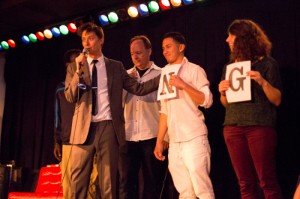
Todd Zuniga on stage with volunteers. Spot the Black Clock 15 contributor! (photo by Jason Gutierrez, courtesy of Literary Death Match)

On Tuesday, June 5, 2012, I felt cool.

I was in the company of some amazing writers at Busby’s East: Trinie Dalton, Dylan Hicks, Moshe Kasher, and Black Clock‘s own Anne-Marie Kinney.

But that’s not really why I felt cool.

I’ve always been aware and embraced the fact that I’ve never been, and probably will never be, what some would label as “mainstream cool” in Los Angeles.

As a child growing up in L.A., I wasn’t athletic or popular. I started wearing glasses in 2nd grade, and I prided myself on borrowing the maximum number of books possible from my local public library. As an undergrad not much changed: I didn’t like drinking games and felt out of place at Hollywood clubs. Even now, as an MFA student, the Writing department is in an area set apart from the main building. Event bartenders comment that writers are tame in comparison with the rowdier art students.

As I’ve begun to integrate myself into the writing community, I’ve noticed that there’s an expectation of how readings are commonly run. Literary aficionados will gather together to listen to writers read from their work. The event takes place in a lecture hall, museum, bookstore–or even a bar. The writers read, the guests listen, there’s applause, sometimes libations, maybe some book signage, followed by departure.

But then, Literary Death Match (LDM) happened.

A NERF gun, people talking about panties, guests clearly drunk, a judge mentions LSD, and ohmydeargod is that Michael C. Hall from Dexter?

It seemed that, in the midst of my first year of grad school, where I rarely spent evenings doing much other than homework, I’d somehow stumbled into the cool club, and I wasn’t sure what to make of it.

According to their website, “Literary Death Match, co-created by Todd Zuniga, marries the literary and performative aspects of Def Poetry Jam, rapier-witted quips of American Idol‘s judging (without any meanness), and the ridiculousness and hilarity of Double Dare.”

A standard LDM evening: four writers, each representing a literary publication or organization, read for seven minutes in front of an audience, as well as three judges of varying fame and funniness. Each round consists of two writers reading their work, and the winner of each round gets to go on to the final where the champ of the evening is decided by a battle of wits, know-how, brute strength–basically, a feat that would very loosely fall under the title of “literary.” I’m unsure if it’s protocol for fame-inclined members of society, like perhaps Michael C. Hall, to wander through LDM of their own accord. I’ll get back to you on that one.

The event’s name points to the hybrid entertainmentbeast attendees are about to experience. “Literary” and “Death Match” aren’t words many would immediately think to mash up.

I love that Zuniga helps create an event in which writers, literature fans, and non-literature fans alike are reminded of a seemingly obvious but oft-forgotten fact: words can be fun, yo. And he does this while wearing a tie and shooting NERF darts at four talented writers, ranging from the up-and-coming to the well-established.

Literature can be beautiful and inspiring, but it can also be absurd and pointless and just pure unadulterated fun. The writers who participated in this round of LDM enjoyed being able to entertain, interact with the audience, and be silly as well.

When Kinney–runner-up to LDM’s champion of the evening, Kasher–was asked what the match meant to her literary career, she responded with the apropos, “You know…nothing.” When Kasher was asked the same question, he commented, “I started writing to crush other writers.” On the sidelines, Michael C. Hall gently threw back his head in laughter, and I marveled at his strong jawline while munching on curly fries.

The three guest comedian judges were having just as much fun as the writers and audience members. Eliza Skinner, who was judging on Literary Merit, responded many times with a succinct and at times perplexed, “Good. Good job.” Eliza Coupe, judge of Performance, had a thing for the writers’ hands. Justin Ian Daniels, judging on Intangibles, let it be known outright that he had “no business being here,” as he sipped from his glass of red wine.

That was the great thing: it was okay. It was all okay. The judges didn’t know exactly how they should judge, and the writers didn’t seem to care how they were being judged.

But it was still so absurdly fun!

Whether guests want to focus on symbolism or tone in the readings or just drink themselves into a stupor and marvel at the fact that Michael C. Hall isn’t as tall as he seems when he’s hacking at bad guys on Dexter–well, both options are available.

For a moment, I caught a glimpse into another world: a world in which I could invite my non-writing friends to a literary event and not have them quickly decline. A world where guys who look like they auditioned to be on Jersey Shore could rub elbows with guys who decline invitations to go out so they can write. A world in which celebrities actually choose to hang out with writers instead of going to Chateau Marmont.

So, Michael C. Hall, call me. We can carpool to the next Literary Death Match in my VW Golf. I’ll pick you up, and I promise you won’t have to help pay for gas.


By Bel Poblador
an Editorial Assistant for Black Clock and an MFA Writing candidate at CalArts. She is a Los Angeles native, a lover of San Francisco, and an advocate of all things dog-related

LAist on Black Clock 15 Reading at Mandrake (with photos!)

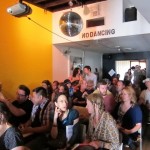
If you couldn’t make it to Sunday’s reading, find out what you missed at LAist.

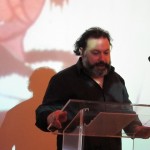
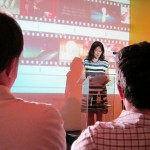
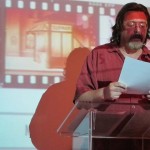
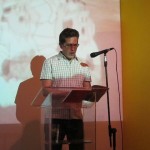
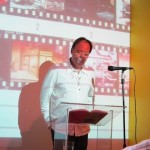
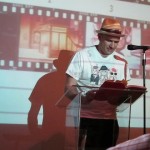
Photos above courtesy of Katie Manderfield and LAist.