Singular, idiosyncratic and a little mysterious, Black Clock is one of America's leading literary journals.

Archive for the ‘Look Out’ Category—

Skylight Books: Los Angeles’ Neighborhood Lit Shop

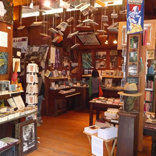
Before Black Clock 12 ‘s release reading in September, editors Bruce Bauman and Steve Erickson looked at each other—this was one the first meetings with the new interns—and agreed Skylight Books was one of the few, good independent book stores around. Really, they couldn’t think of others that have survived Amazon, Barnes and Noble, and the well-told condition of the publishing world nearly as well. In the recent “Best Of” issue, LA Weekly pitched Skylight as the “Indie-est Indie Bookstore,” topping Book Soup based mostly on its high-falutin’—“the Botoxed celebs, and the hellish parking situation, and the almost certain fact that you will have a ticket for not rotating your wheels toward the curb upon your return”—location. This is not to criticize—being new to L.A., I sometimes find myself enamored by the Botoxed celebs—as Book Soup does many similar things for contemporary reading as Skylight, and my one dig against Skylight, like Book Soup, is the parking situation. Maybe this is an L.A. dig. Steve and Bruce both pointed this out too: Be sure to go early if headed to one of the store’s many events. That said, above all, be sure to check out the events. The bookstore manages to bring tons of great authors to read and discuss their works. Even a cursory glance at the store’s calendar will show Skylight is constantly hosting a diverse group of artists. In the last two months, they’ve had James Ellroy, Tao Lin, Rick Moody, and even Judd Apatow to name a few. Yet, Skylight manages, as they claim, to be “what a neighborhood book store should be.”

“The neighborhood is trendy,” this is what a Hollywood local told me, “Yeah, kind of artsy, I guess.” The nearest Borders is two miles away. The nearest Starbucks, respectively, is at the end of the block, far from Skylight and businesses like Pyschobabble Café, Squaresville, Fred 62 (after the reading, a fellow CalArts MFA student said, “Man, you’ve got to eat there. It’s like a big thing,” so we went) and PopKiller. Yet, Skylight is far from trendy. They’re real and concerned. Just read the online reviews or go in and ask if it’s the culture of the neighborhood that’s made them so unique. They’ll say, “Well, I hope it’s actually that we’ve got a level of expertise.” This was my experience. Skylight is simultaneously from the Los Feliz neighborhood and beyond it, encompassing all of Los Angeles—they brought in Judd Apatow, remember—to become the city’s best vehicle to a national and international literary world. This is the feeling I get as I go. This comes just before the optimistic (is this a fallacy?) realization people do read books that aren’t written by Sarah Palin, Snookie, or Mario Lopez and even that there’s a productive literary culture still creating art. It’s intimidating, reassuring, and exciting for a young writer. I think: This is why I have come to Los Angeles to study. There’s opportunity—and maybe this is a fallacy too, but like the last it’s something I have to live on—if you want to work to find it. But this is about Skylight.

Like most real bookstores—this is told to me because my undergraduate college experience was spent in orders from Hastings and Amazon—employees have personalized favorite lists that are easy to delve into. This isn’t unlike the science behind Pandora or, sadly I admit, Amazon—“You might also like…”—just more intimate. I think even Borders is doing something like this now. Of course, independent bookstores did it first, but even in the rural, off-grid manner that my parents raised me in almost no independent bookstores existed. If I didn’t order a book through the Northwest Public Library or if neither my mom nor dad had it, I didn’t read it. So in ways, experiencing Skylight is new and nostalgic. They’ve got a collection of zines—available online because this is how a small bookstore survives—and chapbooks. They’ve a full collection of L.A. literature. They’ve a collection of real poets: Recently, Eileen Myles was in and now signed copies of her new novel, Inferno (A Poet’s Novel), are available on the shelves. They even have a special section for L.A. poets. Through talking with one of the workers, I got turned onto a great book by Pat Lawrence, Bedford, I’m confident I would never found otherwise. Not only do people here read; L.A. reads a lot. Skylight—I get this as I ask, “Excuse me, is this seat taken?”—is a knowledgeable community center celebrating literature.

For the Black Clock 12 reading there was standing room only. Bruce thanked everyone for coming(I think he said “Wow.”) and tossed up that Steve was probably somewhere enjoying a black russian before telling how the manager who’d just introduced him was a CalArts alum. This isn’t a shout out to CalArts. I just think it speaks to the community. Skylight is a neighborhood bookstore, welcoming, comfortable—there’s a tree inside, a high, domelike wood ceiling with skylights, and an open arrangement of shelves that invite movement—and intelligent but hip. Our reading was on a Sunday. The Post Office across the street was closed, so parking was free if only with a small risk; my other experiences have been cruising the side streets for a meter but if you’re of the mind, try L.A.’s metro (red line stop at Sunset and Vermont). But please don’t be deterred by parking. The effort is worth it. It’s not a tourist trap promising so much that seems aggressively used up by the time you make it. It’s Bruce giving away Black Clock garb to anyone who can answer: “Who was the only pitcher to ever throw a no-hitter on acid?” It’s Tod Goldberg rasping about golf and character Kip’s struggle with The Yips. It’s Paul Cullum reading his piece, “Why I Hate Sports” for all those who aren’t fanatics. It’s the comment from the front row, “Who scheduled this the same time as the best [football] game of the day?” just after Monica Carter spins Brett Farve’s thoughts during the biggest game of his literally endless career. There’s fulfillment and hope. It makes me realize a romantic thought about the culture of writing isn’t too ridiculous because there’s something intangible shared at Skylight that talks to that.

by Justus Caudell
an Editorial Assistant for Black Clock and an MFA Writing candidate at CalArts
33 1/3: Not Just for Gramophones Anymore

For many writers, music plays a healthy role in our writing process (HUGE role, in this writer’s case).  Whether spurring the first flicker of an idea, forming the soundtrack to the tale we set out to tell, or used as a helper to click into the weepy/depressed/energetic/lovesick mood we seek to capture in words, music is often the key; it is the format that is able to get us into a moment or feeling, invoking memories of our own in just about three minutes.  Just a chorus and a few verses married to the perfect arrangement of instruments, that’s all a singer-songwriter needs.  (It’s almost enough to invoke envy, isn’t it?)
When looking for inspiration, many of us have our old standbys, an album that hits just the right chord, the one we never tire of and never goads us to hit SKIP.  For me it might be a James Morrison record, maybe some Rilo Kiley, or if I’m having one of those days, The White Album.  Whichever record it is for you, it’s the one that leads to endless inspiration.  We imagine the experiences the singer is emoting, remembering and reliving.  With a little bit of luck, the album sweeps us away, enticing us to dream up a story linking the songs.  Maybe you, like me, imagine it like a series of music videos, the same characters appearing, track to track.  Or maybe you imagine it in words.

The book series 33 1/3 caters to these imaginings, and many more.  In 33 1/3, each volume explores a single album and is written by a single author, many of them telling the story the album has inspired in themselves, while others take a glance at the album of choice from an insider’s look or from a cultural commentator’s standpoint.  The series, published by Continuum International Publishing Group and edited by David Barker, is so named for the speed of an LP album: 33 1/3 revolutions per minute.  To date, 33 1/3 has published 74 volumes covering albums by everyone from The Beatles to Nas and Nirvana, even Celine Dion.  The publication’s blog not only makes available excerpts from upcoming volumes, but posts articles and promotes writing about music.  And, occasionally, they hold contests.  Their latest tied into the release of Highway to Hell by Joe Bonomo: In 500 words or less, tell why you love (or hate) AC/DC.  What might’ve been waiting for you if your AC/DC love/hate story was chosen as the winner?  Well, a personalized copy of Bonomo’s book, of course.

Though many favorites—such as Bob Dylan’s Highway 61 Revisited, ABBA Gold: Greatest Hits and Exile on Main St. by The Rolling Stones—have already been written on and published by 33 1/3 authors, and proposal submissions to be a part of the 33 1/3 project are currently closed, there’s nothing to stop all of us from letting those and other albums inspire our next writing venture.

If you’re new to the 33 1/3 series, check out veteran Black Clock author Andrew Hultkrans’s take on Love’s Forever Changes.  Looking for a music writing fix to get you started?  Download a copy of Black Clock 2, our “lost music of the imagination” issue to get your creative juices flowing.  Or, if you would like to see some music integrated into your everyday Black Clock reading, check out Mallory Farrugia’s post, “Listen to BC 11,” where she has compiled a playlist to go along with the issue.

by Rachel Kolb
an Editorial Assistant for Black Clock and an MFA Writing candidate at CalArts

The Word Made Flesh

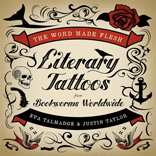
Clustered in glittering bundles of memory, words have the power to stay with us, resonant and guiding. In rising numbers, some of us are choosing to keep these words in more than just our heads. Editors Eva Talmadge and Justin Taylor recently released The Word Made Flesh: Literary Tattoos from Bookworms Worldwide, a collection of over 150 photographs documenting the power that words have on our bodies. Alongside the rich imagery showing us everything from illustrations to portraits of authors to scrolling lines of verse, we also get the back-stories from the bearers, giving testimony for the choices they have made. Tempting us further:

The Word Made Flesh is part collection of photographs, part literary anthology written on skin. Special features include a reprint of a short story by Donald Barthelme (along with the tattoo it inspired on the author’s daughter), an interview with Brian Evenson about seeing his own work tattooed on someone else, Shelley Jackson’s SKIN Project and Rick Moody’s Shelley Jackson tattoo, Jonathan Lethem’s homage to Philip K. Dick, Tao Lin’s Tao Lin tattoo, and much much more.

On their blog, Talmadge and Taylor share with us a new literary tattoo every day, demonstrating that the internet, like the world, is studded with inky literati. There are some for whom visiting a library is a sufficient sojourn with the written word, but there are others for whom the library is carried in their skin, and the preservation happens most bodily, with a tattoo gun and a bouquet of the right words.

by Patricia Cram
an Editorial Assistant for Black Clock and an MFA Writing candidate at CalArts

Miller Walks

millerwalks.com

Cool in general and of particular interest to Henry Miller fans, this site uses Google Maps to chart out Henry Miller’s adventures, from his ramblings in Clichy to Paris to New York, and everywhere in between. Google’s street-view feature allows you to zoom in and take a contemporary stroll through Miller’s old stomping grounds. The site is also updated with academic tidbits, essays, and archival marginalia about Miller and his coterie.

by Doug Matus
a writer from Texas who now lives in Los Angeles

Marc Fitten’s Indie 100

indie100mfitten.wordpress.com

Marc Fitten is on a quest. He’s taking a cross-country road trip, visiting one-hundred independent bookstores, and documenting the process on a blog. As of this posting, he’s over halfway there, having most recently visited bookstore number sixty-five, Kramerbooks & Afterwords Cafe in Washington, D.C.. Fitten’s already made his sweep through Los Angeles, and it’s interesting to read his final impressions in light of an initial biased confession in which he admits, “I didn’t expect much in the way of Los Angeles bookstores after the bonanza by the Bay, but…”.

by Doug Matus
a writer from Texas who now lives in Los Angeles

The PIP (Project for Innovative Poetry) Blog

pippoetry.blogspot.com

This blog is maintained by Douglas Messerli, publisher of Green Integer Books. Green Integer is an independent and innovative press based in Los Angeles that has an enormous catalogue and excellent design aesthetic. The blog focuses on twentieth century poets, established but for the most part obscure, whose innovative work Messerli feels deserves a wider readership. Many of them have not been translated into English, or only haphazardly, so the blog is of special interest to fans of international literature.

by Doug Matus
a writer from Texas who now lives in Los Angeles

image is of the similarly-named but very different Pip from Charles Dickens’ Great Expectations

Being Born

www.bornmagazine.org

Born Magazine would make any Marxist proud. Its meshing of media and text — the collaborative volunteer outcomes of artists, writers, musicians, and other creative types — is rendered and wrought at times with tenderness, at times with brashness, and is never boring.

The second issue of Born Magazine is particularly captivating. My personal favorite is the work “Zoology” done by Sasha West and Ernesto Lavendera. The subtle sort of interaction that it requires allows the viewer to have this sort of light participation: comfortable, no decisions, except whether to go on, and I couldn’t imagine not wanting to read the provoking text to the last.

by Sara Gerot
a writer and an Associate Editor of Black Clock

image of Karl Marx happy after reading Born Magazine

mid)rib

Spartan in design and mysterious in origin as only a web-based poetry magazine can be, mid)rib has published five issues of interesting, enigmatic, and occasionally indecipherable poetry with nothing more than two names and a Gmail address on the masthead. The apparently DIY character of the site is balanced, however, by the consistent high quality of the material presented, and by a careful, clean design. One gets the feeling that mid)rib is created not by mad geniuses, but by academics in exile—gone, indeed, a bit mad. If Dr. Moreau had created magazines rather than monsters, this one could well have had a place on the island. Indeed, “The Island of Dr. Toupee” from issue two defines a reoccurring theme for the magazine—that of an experiment, (which may be poetry or modernity, or something else altogether) gone horribly awry.

mid)rib’s editorial aesthetic embraces the austere, the dense, the translated and the untranslatable. The magazine’s name is swiped from botany (the midrib is the central vein of a leaf) and many of the poems reflect a certain scientific bent—as if they are pages from a complete poetic classification of the world. Cross-disciplinary and generative work seems to have become increasingly a focus for the magazine. While mid)rib remains first and foremost a poetry magazine, recent issues have included fiction, artwork, translations, videos, and some decidedly indefinable amalgamations of some or all of the above.

Like any good online poetry zine, mid)rib’s production schedule is a thing quite unknowable, but new issues are well worth watching out for. The current five should provide more than enough material to last us through the wait.

by Emily Kiernan
a native of the decaying Pennsylvania steel town from the Billy Joel song, who writes about islands, vaudeville, implacable but unjustified feelings of abandonment, the West, and places that aren’t the way she remembered them

image from mid)rib

HENRY MILLER (+ ANIMAL COLLECTIVE) WAS HERE

Sometimes, when I’m stuck in a writing rut, I find myself surfing the Internet, imagining what it would be like to be one of the literary greats. My searches have included the likes of Anton Chekov, Nikolai Gogol, Samuel Beckett, Shelley Jackson, and Kierkegaard, to name a few. But by far, the most Googled author in my search history is Henry Miller. Perhaps because I think, rather subjectively, that he may be one of the greatest authors of all time and also partly because I find the pictures of him and Anais Nin on a beach somewhere fantastic, the racy covers of his books, and the bizarre videos of his pornography-plastered bathroom utterly fascinating (a quick Google search should serve my point). Which brings me to one of my most exciting finds as a result of writing procrastination: The Henry Miller Memorial Library.

The Henry Miller Memorial Library is situated on Highway One (Pacific Coast Highway) in the picturesque Big Sur, California over-looking the Pacific Ocean. The library itself stands as a living homage to the late Henry Miller (and should you not know who Henry Miller is—I resist here admonishing you—he is the author of classics Tropic of Cancer and the Rosy Crucifixion among others.) This non-profit library teems with literary history and screams VISIT ME!

It’s said that when Henry Miller first visited Big Sur in 1944, upon arriving, he uttered, “Here I will find peace. Here I shall find strength to do the work I was meant to do.” He lived in Big Sur with his third wife and two children. Miller wrote; “Peace and solitude! I have had a taste of it, even here in America.”

Henry Miller was enormously influenced by the environment in Big Sur, California. Miller’s amorous fascination is best exemplified in his classic, Big Sur and the Oranges of Hieronymus Bosch, within which he wrote, “This place can be a paradise. It is now, for those who live it. But then will be another paradise, one in which all share, all participate. The only paradise, after all.” (pp. 403-404).

A man named Emil White can be thanked for producing the Henry Miller Memorial Library. White had been one of Miller’s closest friends. So close that should you flip through the last few pages of Big Sur and the Oranges of Hieronymus Bosch, you will find Miller’s dedicated inscription of the book which reads, “To Emil White of Anderson Creek one of the few friend who has never failed me …” (Big Sur and the Oranges of Hieronymous Bosch, 1957).

After having been deemed a revolutionary by the Hungarian Army and narrowly escaping death by firing squad, Emil White immigrated to the United States. White found a job at a bookstore and it is there that Henry Miller and Emil White met for the first time. White had been a huge fan of Miller’s, despite the fact that his work was relatively unknown in the United States at this time. Emil joined Miller in Big Sur after the author asked him to work as both his caretaker and personal secretary for five dollars a week.

Once settled in Big Sur, White took up painting and produced tour guide brochures for a living. It is said that the profit from these guides is what funded White’s founding of the library in 1987 after Henry Miller’s death. Emil White bought the property upon which the library now stands; an astonishing meadow gated with colossal redwoods. Upon Miller’s death, White decided to maintain the property to serve as a memorial to Henry Miller and as a haven for local artists to showcase their work. Emil stated in his will that his property would be an homage to the great author and to future scholarly research on Henry Miller.

Emil White’s wishes have been granted. Today, the library functions as so much more than a memorial. In 1997, it became accredited as an official 501(c)3 non-profit organization. It is a place of literature, music, culture and beauty. With an incredible outdoor performance stage, the library has been host to performances by Animal Collective, Neil Young, Patti Smith and Henry Rollins, to name a few. The library holds frequent workshops, readings, poetry slams, art exhibits, private events, and educational fairs.

In one of Emil White’s last interviews, he was asked if he had any regrets. He remarked, “I only wished I had moved to Big Sur sooner.” Three hours from San Francisco and six and a half from Los Angeles make this iconic library the perfect literary excursion. The library’s devotion to literature and to the work and life of great author Henry Miller solidifies it as an important literary place.

Surrounded by beauty and enveloped in a rich world of writers, poets, and artists, it may be the exact inspiration you need to finish that story and start your novel. Or maybe that’s the inspiration I need—nevertheless, I plan on making the scenic trip up there the first chance I get. And none of this could be possible without my daily dose of procrastination. Which is why I’ve included some links below; because discovery is important, no matter what you put off doing to get there. As Henry Miller once said, “Whatever there be of progress in life comes not through adaptation but through daring, through obeying the blind urge.” Exactly.

For more info on the exciting things taking place at the Henry Miller Library and about founder Emil White and Henry Miller, check out their website.  Also worth tuning into are NPR’s Bob Edwards interview Henry Miller Library Director Magnus Toren and this YouTube video which features the great Miller reminising about his favorite place.

by Katie Manderfield
an MFA candidate at CalArts, an editorial assistant for
Black Clock, and is constructing an experimental literary journal for women; her work has been published or is forthcoming in Pindeldyboz, 3:AM, and dogmatika

photography from The Henry Miller Memorial Library

frieze Magazine’s “Ideal Syllabus” Series

On the prowl for new reads, I discovered a gold mine of literary insight in an unlikely place—in an art magazine. To be fair, frieze Magazine is known to be on the cutting edge of arts and culture, and I often look their way for some of the most provoking and relevant writing being published in contemporary periodicals, critical or not, “art-genre” or not. Their “Ideal Syllabus” series is, in their words, an ongoing series that “asks an artist, curator or writer to list the books that have influenced them.” Contributors include writer and academic Maria Fusco, visual artist Carol Bove, and painter Monika Baer, to name a few. Though at first expecting to see manifestos, philosophy, or other canonized essays (which indeed populate several if not many of the subjects’ lists), I perked up when I came to Tom McCarthy’s list of books—a bounty of fiction.

McCarthy, whose artistic pursuits include the spearheading of an avant-garde organization and a novel (the highly touted Remainder) and a critical study of the work of Hergé, shows a compelling appreciation for both narrative classicism and innovation, with his colorful—dare I say good humored?—sequencing of titles. Praise for Maurice Sendak’s Where the Wild Things Are is sandwiched in between Conrad’s Heart of Darkness and Joyce’s Finnegans Wake. The Adventures of Tintin made the list, as did Pynchon’s chef d’oeuvre. He hails The Sound and the Fury as the “single best novel ever written.” And although I don’t share McCarthy’s enthusiasm for all of his picks, I was absolutely inspired to investigate those that were foreign to me⎯most notably, Alain Robbe-Grillet’s The Voyeur.

You can find the article series in print and online at www.frieze.com/magazine.

by Mallory Farrugia
a writer and freelance editor living in Venice, CA