Singular, idiosyncratic and a little mysterious, Black Clock is one of America's leading literary journals.

Author Archive for Doug Matus—

Poets as Prophets

Literature as it is generally defined–works of creative prose and poetry–has become an obsolete and irrelevant art for the average American. Recent statistics prove this beyond any doubt. A much-publicized study in 2007 found that, in the preceding year, one in four Americans had not read a single book.[1] Even those that do read tend to stay away from literary works; in a separate study, fewer than half of American adults stated that they ever read literary titles.[2] For young adults, the findings are even more depressing: more than half of all Americans aged 18-24 admit to never reading any kind of book for pleasure.[3] Compare this to the average of five hours per day spent watching television, and literature’s decline makes some sense.[4] Nefarious as television may seem, however, no one forces people to spend nearly a third of their waking hours passively engaged before it, rather than reading. That the choice is so commonly made to pass over books, to consider reading “boring” or “pointless,” indicates some deeper shift in the way Americans relate to literature, and especially poetry, which a scant ten percent of people read. (Gifford)

Almost twenty years ago, Dana Gioia, poet and eventual chairman of the National Endowment for the Arts, bemoaned the irrelevance of poetry in contemporary America, and identified several reasons for its decline.[5] The most important is also the most obvious, especially for those invested in poetry, and Gioia states it in the first sentence of his essay: “American poetry now belongs to a subculture.” Poetry, and creative writing in general, has migrated firmly into the realm of academia, and has thus divorced itself from the daily realities of most Americans. Poetry is largely composed and read within the same closed group: MFAs or other students of creative writing, generating reams of material that never reaches a wider audience. There may still be some cultural mystique attached to the label of ‘writer’ or ‘poet’, but “as individual artists they are almost invisible” (Gioia).

Much of this can be attributed to the post-WWII boom of creative writing programs, through which a student can begin a career path with none of the usual instability historically associated with writing. Rather than living or dying by publication, writers, once credentialed, can theoretically expect to find employment as a teacher of creative writing themselves. Ironically, though less Americans read now than ever, the rise of MFA programs has brought about a veritable explosion of literary production. In 2009, there were 822 creative writing programs in America alone.[6] If each of those programs only admit five to ten new students per year, that’s a production of 60,000 professional writers per decade—many of whom will seek to publish within the pages of literary magazines, which are themselves a dwindling industry. Due to a shrinking audience, the average literary magazine now publishes scarcely 1500 copies of each issue. The collision of these two numbers–60,000 new writers every decade, 1500 annual copies of each typical forum for these writers’ productions—suggests that “no one is reading all this newly produced literature—not even the writers themselves. And with that in mind, writers have become less and less interested in reaching out to readers” (Genoways).

Here there can be seen the confluence of two elements which, together, have created the perfect storm for literature’s decline: a reading public made continually smaller through the encroachment of alternative entertainments, like television, and a rapidly-expanding writing class hermetically sealed in an insular world that cannot support the weight of their publications. These factors herald a general cheapening of the written word, both in terms of how the public values it, and the diluting effect of an exponentially increasing output. Both are negative effects of the democratization of literature, a process that Jacques Rancière identifies as having started in the mid-19th century.[7]

Literature, being comprised of the language that we speak, is inextricably imbedded in and reflective of the world in which it is written. Therefore, as political realities have evolved, so has literature, along with its place and function in society. Rancière identifies this phenomenon as “the politics of literature,” and defines it as, “literature … involved in [the] partition of the visible and the sayable, in [the] intertwining of being, doing and saying that frames a polemical common world” (10). When literature began to reflect in itself the rise of social democratic institutions at the beginning of the 19th century, its very nature changed. This change was crystallized in the mid-19th century in the works of Gustave Flaubert, whose “disregard for any difference between high and low subject matters, for any hierarchy between foreground and background, and ultimately between men and things, was the hallmark of democracy” (12). This marked a distinct break with the classical rhetorical distinctions outlined in Aristotle’s poetics, which elevate the noble art of poetic writing above the base art of historical writing, reflecting a hierarchal sensibility that also places action–deeds and speeches–in the province of persons upon a higher plane than those “who do nothing but ‘live’, who are enclosed in the sphere of a reproductive and meaning-less life” (13). With Aristotle, and continuing through the Renaissance, Elizabethan era, and early Enlightenment, “there was a homology between the rationality of poetic fiction and the intelligibility of human actions, conceived of as an adequation between ways of being, ways of doing and ways of speaking” (13). The functions of literature were thus divided into a hierarchal scheme, defined by the role and intent of the speaker or writer. Ecclesiastical writings, composed by a priest, were meant to improve the spirit; the speech of a rhetorician inspired listeners and spurred them to action; poetry, seen as a transcendent art, revealed hidden layers of reality. Each of these functions had a proper language of its own, and differed from everyday speech in the same way that a Shakespearean king’s manner of speaking differed from that of a peasant.

Rancière defines this system of writing as the “representational regime”, which “was based on a definite idea of the speech-act” (14). At the core of the representational system was “the idea of speaking as using words to produce appropriate aims: specific moves in the souls and motions of bodies” (15). The collapse of the hierarchal system in society brought with it a collapse of the hierarchal organization of language, and thus an end to any definite performative aspect. “The rules and hierarchies of representation hung onto a definite link between saying and doing . . . the highest accomplishment of human action was supposed to be the action made by speaking itself” (15).

In the democratic regime of literature, exemplified by Flaubert and continuing into the present, the “connection between meaning and willing” (15) is utterly dismissed; the writer becomes anybody, as does the reader, and the original function of literature goes into abeyance. Rancière sees democratic literature as composed of “mute letters,” which speak “to anybody, without knowing to whom it had to speak, and to whom it had not” (14). Signaling the end of the age of rhetoric, meaning as communicated through literature is no longer a meeting between two distinct wills. It becomes “a relationship between signs and other signs” (15). The realistic novel exemplifies this new purpose for literature, which presents the entire spectrum of mundane activity as a fabric of signs that, once put on display, are open to decipherment. Language itself has no voice, but provides testimony to the current state of the world, the objective truth of things, instead of the subjective communications of orators. “The words of literature . . . display and decipher the signs and symptoms written in a ‘mute writing’ on the body of things and in the fabric of language” (17). Rancière cites the fabric of literature as comprised of a Balzacian “curiosity shop,” in which all images are equal, “sensitive form[s] that [are] a fabric of signs. All these objects [wear] a history on their body,” in which the realist writer “displays the fossils and heiroglyphs of history and civilization” (19).

We can see this phenomenon manifested clearly in the current vogue for literature that showcases the reality, or soul, of the age. This trend covers the entire literary spectrum, from the works of Nobel laureates, like Orhan Pamuk and Herta Muller, who state their intent as holding a mirror to the society they write from, to the grossly personal and self-reflexive phenomenon of “confessional” literature, in the glut of popular memoirs like Eat, Pray, Love, Million Little Pieces, and Angela’s Ashes. The problem with finding any meaning in such literature, when literature has been divested of the ability to communicate its own meaning, is that the attempts at critical explanation rely upon the same system of “mute letters,” or signs, that support the practice of literature itself (20). “Explaining close-to-hand realities as phantasmagorias bearing witness to the hidden truth of a society, this pattern of intelligibility [is] the invention of literature itself” (20).

Some writers, specifically the literary Modernists, like James Joyce and Samuel Beckett, saw through this charade, the pointlessness of signs pointing to signs, and sought to make literature that existed only for its own sake, without any pretense of meaning. This kind of writing “would no longer be the silent language engraved in the flesh of material things. It would fit the radical muteness of things, which have neither will nor meaning. It would express . . . the nonsense of life in general” (22). The democratization of language had laid bare the infinite materials of language and experience and divorced them from any imbued communicative capability. The writer is left with two options: literature that “covert[s] any scrap of everyday life into a sign of history” (23), or literature that says, and thus accomplishes, nothing at all. The illusion that the former pursuit may bear any transformative benefit–may truly teach anything–becomes subject to the paradox of an interpretation causing the transformation of the interpreted object. This is, as Rancière puts its, the “contradiction of literature” (23).

It becomes obvious why literature’s importance has waned in contemporary society: literature no longer does anything. People do not need literature to frame their experience of a shared world. For this they have political commentators, movies, and television. In order for literature to regain value in the minds of the public, writers must reclaim for themselves something of the hierarchal prestige that preceded our current, fully democratized state. Literature must become again the vessel for specialized communication, for knowledge that exists perfectly outside of the common experience. At the end of the 19th century, the French poet Arthur Rimbaud attempted to create a new type of literature that would not simply reflect life, or the meaninglessness inherent in life, but reveal life more clearly to itself, and “change the self-interpretation of life into a new kind of poem, taking part in the framing of a new world and a new collective life” (22). Rimbaud called for a new literature that would no longer describe the world as it appears, but instead leap ahead of it, in advance of life, to reveal the ultimate communality of all things, and the shades of reality hidden beneath the dross of mundane experience. “He called for poems filled with numbers and harmony, for a language open to the five sense, a language of the soul for the soul, containing everything – smells, sounds and colors. This idea of a poetry of the future was in line with the romantic idea of ancient Greek poetry as the music of a collective body” (22).

The importance of this for the continued relevance of literature, and the need for it in our firmly grounded, realist era, cannot be overstated. Rimbaud, in his revolutionary poetics, sought to resuscitate an ancient, visionary purpose for poetry, first exemplified in the Greek Orphic tradition, and carried through the traditions of early Christianity in the mystical writings of Catholic Saints. These two strains, while seemingly divergent in their theology, can be seen as reconciled in their poetic message and intent, and unified in the writings and life of Arthur Rimbaud himself.

by Doug Matus
a writer from Texas who now lives in Los Angeles

____________________________________________________________________________________

[1] Fram, Alan. “One in Four Read No Books Last Year.” The Washington Post 21 Aug. 2007.
[2] Gifford, Sally. “Literary Reading in Dramatic Decline.” National Endowment for the Arts. 8 July 2004. Web. 23 Feb. 2010. <http://www.nea.gov/news/news04/ReadingAtRisk.html>
[3] Allen, Erin. “Americans Read, Understand Less.” Library of Congress. June 2008. Web. 23 Feb. 2010. <http://www.loc.gov/loc/lcib/0806/reading.html>
[4] Semuels, Alana. “Television Viewing at All-Time High.” The Los Angeles Times 24 Feb. 2009.
[5] Gioia, Dana. “Can Poetry Matter?” The Atlantic Monthly May 1991: 94-106.
[6] Genoways, Ted. “The Death of Fiction?” Mother Jones Jan. 2010. Web.
[7] Rancière, Jacques. “The Politics of Literature.” SubStance 33.1 (2004): 10-24. Project Muse. Web.
SEE + HEAR + DO (2/24-3/01)

SMOKING TYPEWRITERS (2/24@7PM, SF)
where
City Lights Books, 261 Columbus Ave., San Francisco, CA 94133

How did the New Left uprising of the 1960s happen? What caused millions of young people-many of them affluent and college educated-to suddenly decide that American society needed to be completely overhauled? In Smoking Typewriters: The Sixties Underground Press and the Rise of Alternative Media in America, historian John McMillian shows that one answer to these questions can be found in the emergence of a dynamic underground press in the 1960s. Following the lead of papers like the Los Angeles Free Press, the East Village Other, and the Berkeley Barb, young people across the country launched hundreds of mimeographed pamphlets and flyers, small press magazines, and underground newspapers. McMillian pays special attention to the ways underground newspapers fostered a sense of community and played a vital role in shaping the New Left’s highly democratic “movement culture.” Free.

JONATHAN EVISON (2/25@7PM, LA)
where
Book Soup, 8818 Sunset Blvd., Los Angeles, CA 90069

Jonathan Evison reads from and signs his highly anticipated new novel West of Here, which has been getting great early buzz. Free.

CONTRIBUTORS TO SLAKE ISSUE 2: CROSSING OVER (2/26@5PM, LA)
where
Skylight Books, 1818 N. Vermont Ave., Los Angeles, CA 90027

An event to celebrate the release of the much-anticipated second issue of this Los Angeles literary journal. Whether you’re a devotee of the journal already or this is your first exposure to Slake, stop by and see for yourself what people are getting so excited about! Elizabeth Banicki, Ben Ehrenreich, Yxta Maya Murray, Sam Slovick, and Slake publisher Joe Donnelly will be reading from their selected pieces. Free.

FANGIRLS: COMICS AND POETRY (2/27@7:30PM, Los Angeles)
where
Beyond Baroque, 681 Venice Blvd, Los Angeles CA 90291

Move over fanboys! XOCHITL-JULISA BERMEJO hosts an all-female lineup of writers showing off their superhuman strengths in poetry, nonfiction, and fiction. The kickass justice league includes: JEANNINE HALL GAILEY, CONSUELO FLORES, RAMONA PILAR GONZALES, and ANGELA BROMMEL. Free.

SEE + HEAR + DO (2/17-2/23)

TIM KREIDER (2/17@7PM, NYC)
where Strand Bookstore, 828 Broadway, New York, NY 10003

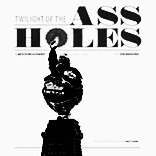
Tim Kreider has been called “extremely extremely f-ing good” (David Foster Wallace), “an iconoclast in the purest sense of the word” (Matt Taibbi) and “the funniest person alive” (Jennifer Finney Boylan). Join him for the release of his latest collection, Twilight of the Assholes. In a slideshow, talk and Q&A, he’ll wax nostalgic about the endearing atrocities and deadly foibles of the Bush administration and have a fond chuckle over the deadpan haplessness of Obama and the fascist antics of the tea party. Free.

SIDESHOW GOSHKO (2/18@7PM, NYC)
where KGB Bar, 85 East 4th St. New York, NY 10003

Award-winning storyteller Leslie Goshko (Manhattan Monologue Slam Champion, NY Fringe Excellence Award, Sirius XM), invites some of NY’s top writers and storytellers to share true, bizarre tales about their lives. There’s live accordion music, a challenging trivia game, and a free wine giveaway where one lucky audience member will walk away with their very own bottle of Sideshow Sauce! Tonight’s stellar lineup includes stories from: Steve Burns (former host of Blue’s Clues), Jim O’Grady (New York Times, Moth GrandSlam Champion), Eugene Ashton-Gonzalez (NY Confidential, The Moth) Free.

RALPH SASSONE (2/19@5PM, LA)
where Book Soup, 8818 Sunset Blvd. W. Hollywood, CA 90069

Ralph Sassone discusses and signs The Intimates A powerful and compassionate debut novel about friendship and how it helps shape us into the people we are…  The Intimates is a brilliant and deeply moving first novel about the varieties of romance. Spanning years and continents, beginnings and endings, it is about two gifted and striving people who discover themselves in the reflection they see in each other, and how their affinity anchors them at critical points in their lives… Full of indelible characters, engrossing situations, and observations as sharply witty as they are lovely and profound, The Intimates renders the wonders and disappointments of becoming an adult, the thrills and mesmerizing illusions of sex, and the secrets we keep from others and ourselves as we struggle to locate our true character. The Intimates marks the emergence of a remarkable new voice. Free.

FEATHERLESS: TISA BRYANT, AMANDA ACKERMAN, JESSICA PIAZZA (2/20@7:30pm, LA)
where Wordspace, 3191 Casitas Ave. #156, Los Angeles, CA

Bryant, Ackerman, and Piazza read and discuss their poetry and fiction. Free.

LITERARY VAUDEVILL: WAYBE WHITE (2/22@8PM, LA)
where Largo at the Coronet, 366 N. La Cienega Blvd., Los Angeles, CA 90048

Join Wayne for a show where he’ll discuss his life, his work, his influences and his many experiences as a painter, illustrator, puppeteer, cartoonist, designer, art director, set designer and Southerner. Admission is $10.

MARJORIE PERLOFF: THE MADNES SOF THE UNEXPECTED (2/23@6:30PM, NYC)
where The James Gallery, 365 Fifth Avenue, New York, NY

Legendary in the worlds of both art and literature, Marjorie Perloff will give the second Keynote Address for Caesura, a series of events in the James Gallery which will invite artists and scholars as well as the public to reflect on a research question or methodology that is of mutual concern. Perloff has chosen Marcel Duchamp and the issue of the “aesthetic” in his entry for the Salon of the Independents of 1917 as her subject. Marjorie Perloff is Professor Emerita of English at Stanford University and currently scholar-in-residence at the University of Southern California. She is the author of numerous books on modern and contemporary poetry, including most recently Unoriginal Genius: Poetry by Other Means in the New Century. Free.

Walking LA: Chinatown

This is part of a series of literary meditations on that rare urban pastime of exploring Los Angeles on foot.

Ethnic neighborhoods are as American as apple pie–or pad thai, chop suey, or tacos–and Los Angeles’s Chinatown is a prime example of this. A conflation of demolished old and manufactured new, Italian and Chinese immigrant cultures and histories, traditional recipes and innovative cuisine, cryptic apothecaries and contemporary art galleries, Chinatown is not only a quintessential American urban exercise in contrasts, but a classic example of the rich, complicated, and oft-contradictory fallout of reinvention that is Los Angeles.

L.A. is a beautiful, lush city, but it was not always like this; one has to remember that most of the flora, even the palm trees, were imported, and the City of Angels is as much an artificial production as any Hollywood blockbuster. Without a water redirection program that is truly gargantuan in its scope and scale—not to mention controversial–Los Angeles as we know it would simply not exist. Leveled in 1939 to make room for the construction of Union Station, the original Chinatown, which was established in the 1880s, was the victim of a similar lust for development. Chinese residents were resettled and the development of “New Chinatown” emphasized a kitschy adherence to stereotypical tourist expectations. In a sense, New Chinatown was just another Hollywood set, constructed around a large, “authentic” Central Plaza complete with Chinese style palaces and tiny side streets with names like “Gin Ling Way” and “Bamboo Lane.”

So it’s no accident that Roman Polanski’s 1974 classic film about the political intrigue around L.A. water rights and land distribution—disputes that grew more and more contentious as the metropolis bloomed in its desert confines—was set in and titled, well, Chinatown. It’s hard to say whether Polanski’s immortalized Chinatown’s neo-noir reputation or vice versa.  The historical reasons for Chinatown’s association with noir are twofold: Angelenos, who were raised on tales of “the exotic Orient” and Charlie Chan movies, flocked to the neighborhood for a taste of folkloric intrigue and mystique; secondly, the spectral presence of an entrenched local Italian mafia created atmospheric undercurrent of intrigue for decades.  The most obvious remnant of the old Italian stamp on the neighborhood is the famous Little Joe’s Italian American restaurant, which stands at the corner of Broadway and College. Though currently shuttered, the restaurant was a local fixture for over seventy-six years.  It is fitting that Little Joe’s stands at the north end of Chinatown, just a few blocks away from the official entrance: a massive steelwork archway that features two dueling Chinese dragons, complete with fog emitters for a touch of ‘authenticity.’

Chinatown extends for several blocks in either direction, but College Street is the principal thoroughfare and main attraction. On weekends, Chinatown is crawling with tourists, to the extent that one must weigh the benefits of a right turn against the likely demolition of several ambling, clueless, photo-snappers. On Saturdays it becomes clear why the New Chinatown is the way it is: it’s a theme park. The cheap souvenir shops do steady business in machine manufactured buddhas, cheap paper fans, and other claptrap.

The most striking aspects of the Chinatown experience are the smells. It seems like every other storefront is a cookery of some sort, most of which proudly display their products in the open air or behind a storefront window. Whole Cantonese ducks roll on spits, bronzed and perfect, dripping juices like the cumulative attention of so many hungry eyes makes them sweat from nervousness. To find the best dim sum, one has to venture into one of the small open-air malls, and follow the nostrils past electronics and toys stores, insurance agencies and salons. The street signs in Chinatown are all bilingual, many of the store signs are not, and menus are often the source of hilarious mistranslations. Ever been curious to try “human pickles?” Me neither. Another item worth investigation is one of the large tea and herb vendors, like P.C.T. Ginseng and Herbs. The casual customer will become overwhelmed by the sheer variety of herbs, medicines, and victuals on offer here, not to mention the creativity of the hypochondriac element displayed through the proliferation of so many cures.

But let’s be honest. Dim sum and ducks are all fine and good, as are authentic herb stores, but what keeps an individual pounding the same sidewalks over again, after an initial cursory exploration, is the presence of unique and interesting bars. Chinatown’s Mountain Bar more than fits the bill. Part of its charm is its inscrutability. The posted hours are 6pm-2am, but they may as well be “whenever-whenever.” One must show up on faith, and if the stars are aligned, the doors of the Mountain Bar will open. Located in the Central Plaza, there is no sign, but it is strangely hard to miss. Sandwiched between two atrocious souvenir shops, its charm beams forth unimpeded.

The Mountain Bar is blessed with a striking interior. Chinese themed decor and embellishments are illuminated in soft red light, such that the late drinker feels he/she has descended into the heart of the world’s depravity. Bartenders and fellow patrons take on a sinister air in the shadowy, Tartarusan splendor of the Mountain Bar, and one almost expects to see Jack Nicholson and Faye Dunaway hunched toward each other in a corner booth. The Mountain Bar also hosts periodic literary readings, which is another mark in its favor; it is a typical destination for locals newly freed from the confines of a gallery opening, of which Chinatown hosts dozens in any given month.

Contemporary art galleries abound in the small streets around Central Plaza, and are a source of much of the nightlife in and around the area. I’m not entirely sure how “Chinese” it all is, but it’s nice nonetheless. In a sense, Chinatown could stand as a microcosm for Los Angeles, that glorious epitome of all contradictions. But that might be over thinking it; it’s best probably to settle in over a pint at the Mountain Bar and forget all about it; after all, Jake, it’s Chinatown.

by Doug Matus
a writer from Texas who now lives in Los Angeles

Miller Walks

millerwalks.com

Cool in general and of particular interest to Henry Miller fans, this site uses Google Maps to chart out Henry Miller’s adventures, from his ramblings in Clichy to Paris to New York, and everywhere in between. Google’s street-view feature allows you to zoom in and take a contemporary stroll through Miller’s old stomping grounds. The site is also updated with academic tidbits, essays, and archival marginalia about Miller and his coterie.

by Doug Matus
a writer from Texas who now lives in Los Angeles

Walking LA

This is the first in a series of literary meditations on that rare urban pastime of exploring Los Angeles on foot.

L.A. has a reputation as a driver’s city.  I know this, because I’ve read it described elsewhere, endlessly, in peoples’ reflections on the place; and also, because of my first experience of L.A., which came through an old girlfriend who once laughed in my face when I asked her if there were any cool bars or coffee shops within ‘walking distance’ of her house. There are certain things that contribute to L.A.’s demarcation in this regard. First of all, the place is huge; it’s an official “mega-city,” with the metropolitan area comprising almost 500 square miles and containing nearly 15 million souls. Whether you were born and raised in Watts or the OC, chances are that, when asked in polite conversation where you’re from, you’ll respond “L.A.” But who would be willing to hoof the distance between these two areas? Public transport is insufficient. As a new transplant, I’ve seen more shuttered subway stops than functioning ones, and the prospect of navigating a bus system in a place where single streets can stretch for 24 miles (Sunset Blvd.), or the famous highway system regularly suffers the daily glut of seven million cars, leaves me anxious and uninspired. Public transport, in order to be successful, has to be fast and easy. In L.A., it is neither of these, which leaves most residents with no option but to hop behind the wheel, and add their presence to the communal cluster of the 110, 5, 10, or 101.

In reality, L.A. is an imminently walkable city, at least within the neighborhood regions that comprise it. Los Angeles is a city, of course, and an immensely large one; but it is also a conglomerate of individual communities, many of which feel like autonomous regions and have much to offer the foot-bound voyager. So how do we find our feet in this great mecca of urban development? Easy. By putting our feet on the ground, and breaking the city down into the neighborhood elements that comprise its body and soul. There’s a lot of history here, and for such a vehicular city, a vibrant street culture, with food vendors, pedestrians, small storefronts, and a rich visual texture of beautiful buildings, graffiti, flora, and vistas to reward the urban spelunker. In this series of essays I will explore the practice of walking L.A., a project that I hope will endear me more to this strange place that inspires such intense reactions of love and hate. A secondary goal will be to root out the variegated strands of literary culture persistent here at the end of our continent. As Henry Miller stated, great literature is born of the streets; yet Los Angeles, the entertainment capital of the world, has never possessed in the popular imagination a literary heritage comparable to, say, New York. Of course, as with everything here, appearances are deceiving. The great writers of Los Angeles – Chandler, Fante, Bukowski – have all celebrated the city in microcosm, and to read their writings without an awareness of place is to miss half the point. Los Angeles is beautiful and complex, and bears the attention of prolonged study. This fact was made apparent to me continually in the course of my first walk, which centered around the city’s historic Pueblo center.

It was a fantastically beautiful day. This is not strange, noting the locale, but worth mention due to the effervescence the sunshine extracts from the clean white lines of the downtown architecture, interspersed with the oases of public gardens and parks. Los Angeles is a fascinating city architecturally. In the past few decades, attention has been drawn to the fabrication of monolithic wonders, like the Frank Gehry designed Disney Concert Hall. As a city of spectacle, though, L.A. has always been the sight of showy building accomplishment, from the stately halls of public administration to the boutique wonders of homes in the hills. At the center of it all is one of its true stone wonders: Union Station, a New Mission monolith built to much fanfare in 1930 that continues to provide the beginning and end to many West Coast experiences.

If Los Angeles is the Paris of the Americas (and why not?), then Union Station is its Gare Saint-Lazare. This beauteous terminal has been amply represented in cinema and literature, and can serve as a useful representation of the city it serves. Union Station would seem intimidating. After all, it is the downtown transportation hub that links a massive city to its equally massive airport, LAX. Union Station is also an Amtrak and bus terminal, with direct service up and down the West Coast, and east to Texas. It is not intimidating, however; neither its majestic mission facade, rising next to the similarly designed USPS Terminal Annex, nor its generous interior layout. I parked my motorcycle across the street (one must, of course, drive to walk here), entered through the front doors, and was immediately greeted with a splendor of space: a direct line, defined in polished oak and vaulted ceilings, from the curb, straight through the waiting area, to the terminals and bus station. To the left of the entryway, barred to foot-traffic but eminently viewable, is the old ticket-hall, a huge room with a mighty row of art-deco counters, polished marble floors, and paneled-wood ceilings. Its grandiosity and enforced barrenness inspired thoughts of tragic, sudden departures, a teary movie heroine in shades of celluloid buying the first ticket to nowhere, with everyone wearing hats and smoking cigarettes. Opposite this is a nice-looking bar (too early in the day for me to sample, but I’m sure a welcome retreat for weary travelers) and a breezeway that leads to a garden and shuttered restaurant. The gardens that bookend this main area are massive and lush, the kind of arboreal design indulgence one doesn’t find very much out East. The shuttered restaurant is ghostly and romantic, like an old wedding photo. A sign advertised it as available for filming.

The Pueblo lies roughly across the street from Union Station, a fitting welcome for new visitors to the city. The Pueblo was the center of the first incarnation of L.A., El Pueblo de Nuestra Senora la Reina de los Angeles del Rio de Porciuncula, founded in 1781. I’m not sure when the settlement’s name was shortened to “Los Angeles,” but I imagine it came as a relief to natives whose querents would fall asleep during the answer to the question of “Where are you from?” The Pueblo area later became the site of the city’s first Chinatown; hence the references to “New Chinatown,” in regard to the current district. The history of L.A.’s Chinatown, and its reason for relocation, are detailed at the Chinese-American Museum, right off the main Pueblo plaza. Apparently, the original Chinatown was leveled and the residents forcibly removed for the construction of the Union Station I so eulogize in the preceding paragraph.

From my perspective, the two most interesting landmarks on the Pueblo Plaza are La Placita and the Avila Adobe. La Placita was L.A.’s first established church, in 1814, and still provides a full range of services. I walked into the little chapel, where a golden icon was on display behind the altar, and a group of elderly folk were knelt at various pews in quiet prayer and reflection. At the opposite end was an impressive depiction of the crucified Christ, enclosed in a glass coffin and surrounded by a heap of flowers. A couple of people waited in line to pay homage and perform silent reflection. It takes an advanced cynic not to respect the spirit of such a place; such disconnect is out of my reach.

Across the Plaza from La Placita is Olvera Street. This narrow passage, lined with souvenir and trinket shops, is the home of many historic buildings, including the Avila Adobe, built in 1821, and recognized as L.A.’s oldest surviving residence. The place is fairly palatial, with several large rooms surrounding a contained garden; it was constructed by one of the first settlers to make their fortune in ranching, and was later used as the U.S. Army headquarters during the Mexican-American War. Olvera St., with its shaded, brick-paved confines, empties out onto E. Cesar Chavez, one of modern downtown’s main thoroughfares. The contrast between the quiet, adobe lined lanes of the Plaza and the traffic signals and exhaust of the City of Commuters is profound, but a necessary reminder of the L.A.’s depth and complexity. In the words of Emerson, “Do I contradict myself? Well, I contradict myself. I contain multitudes.” So it can be that a city centered around a driving culture can reveal so much to the sidewalk wanderer.

by Doug Matus
a writer from Texas who now lives in Los Angeles

Wyatt Mason’s Sentences

www.harpers.org/subjects/Sentences#complete-archive

This is the archive of a now-defunct Harper’s blog once maintained by Wyatt Mason, who is most famous as the authoritative translator of Rimbaud’s complete works.  Mason used The Sentence as the starting point to ruminate on everything from the evil thoughts of man and the power of empathy, to disastrous fictions.  Though no longer updated, as with all things quality, Mason’s fascinating swarm of literary-related writing is ageless and fun to delve into at any time.

by Doug Matus
a writer from Texas who now lives in Los Angeles

Marc Fitten’s Indie 100

indie100mfitten.wordpress.com

Marc Fitten is on a quest. He’s taking a cross-country road trip, visiting one-hundred independent bookstores, and documenting the process on a blog. As of this posting, he’s over halfway there, having most recently visited bookstore number sixty-five, Kramerbooks & Afterwords Cafe in Washington, D.C.. Fitten’s already made his sweep through Los Angeles, and it’s interesting to read his final impressions in light of an initial biased confession in which he admits, “I didn’t expect much in the way of Los Angeles bookstores after the bonanza by the Bay, but…”.

by Doug Matus
a writer from Texas who now lives in Los Angeles

The PIP (Project for Innovative Poetry) Blog

pippoetry.blogspot.com

This blog is maintained by Douglas Messerli, publisher of Green Integer Books. Green Integer is an independent and innovative press based in Los Angeles that has an enormous catalogue and excellent design aesthetic. The blog focuses on twentieth century poets, established but for the most part obscure, whose innovative work Messerli feels deserves a wider readership. Many of them have not been translated into English, or only haphazardly, so the blog is of special interest to fans of international literature.

by Doug Matus
a writer from Texas who now lives in Los Angeles

image is of the similarly-named but very different Pip from Charles Dickens’ Great Expectations

The Soul of a Man

i’ve got too many girlfriends
who’d be cool chicks if they weren’t such cunts
Ah, bowl of dicks,
they mean nothin, baby.
It was Halloween on the blue Nile, you know how it gets.
i’ll deposit the pictures i took in my spank bank.
the female form looks best behind a shower curtain.

i feel worse than i’ve ever felt.
____________________ all i want is whiskey cigarettes and records. and to not wake up tomorrow.
____________________ dear lord, give me the strength to get the fuck out of town
____________________ and by strength i mean money.
____________________ pick me up take me out fuck me up.

____________________ if i could only put the wood to a quality broad
____________________ then get breakfast and clean laundry
____________________ then i’d be ready
____________________ to rape and pillage the world

I. PURPOSE + HYPOTHESIS

Lyric poetry as it is currently defined – a brief, polished statement of intense emotion – was a form cemented in the Romantic period of the 19th century. Lyric poetry existed long before that, of course; some of the oldest extant examples of Greek verse were considered “lyric,” in that they were short pieces composed for accompaniment with a lyre. The form originated among ancient writers who wished to spurn the grandiose requirements of the epic form, or the tight constraints of the elegy or trochaic and iambic, which were public forms, written for recitation at specific occasions. The lyric poem as private expression reached its apotheosis in the sonnets of Shakespeare, and was subsequently popularized by a roster of immortals: poets like John Donne, Andrew Marvell, Goethe, Keats, Byron, Wordsworth, Tennyson and Baudelaire. Where is the lyric form now, though? The Modernists reviled the form, and while it was briefly revived in the confessional works of mid-century writers like Sylvia Plath, Anne Sexton, John Berryman, and Robert Lowell, it has certainly fallen out of fashion among the vanguard of compositional practice. My hypothesis is that, while lyric poetry no longer dominates the institutionalized study or practice of the art of poetry, lyrical expression has seeped irrevocably into the mainstream of popular culture, through the prevalence of outlets like twitter and the facebook “status update.”

Venues like these have opened up an avenue of personal expression in which the sharer displays to the world their private thoughts, joys, torments, or inanities. A constriction is placed upon length, and the well-crafted status update can grant an air of import to the most banal of everyday occurrences. That anyone should consider their own private thoughts worthy of public consumption has always been the motivating force behind lyric composition. As such, the rolling status update can be seen as a sort of fragmented lyric poem, an ongoing exposition of crafted, emotive sharing. My purpose in this experiment is to display this through the creation of poem comprised entirely of another person’s status updates. The intent in utilizing an anonymous person’s outpourings is to showcase the lyricism inherent in this form, without falling back on artificial poesy.

II. MATERIALS + METHODS

I chose a single person from my “friends” whose status updates are often evocative or amusing. Using Facebook’s archives of this person’s posts (nothing ever disappears from Facebook) I traveled back through the months and extracted updates according to whim. Once I had amassed a certain amount  of material, I arranged a poem. Not a single word has been cut from or added to the original updates.

III. RESULTS

Please see above.

IV. CONCLUSION

Profundity is everywhere. The final product revealed, in concentrated form, the thought cycles and relative emotional state of the updater.

by Doug Matus
a writer from Texas who now lives in Los Angeles