
 It’s an odd room, part press-conference, part funeral parlor; black cloth and bunting, concrete floors and folding chairs, entirely scentless. The stage is set with a lectern and next to that, inexplicably stands a small end table, hosting a vase of what look to be artificial flowers. The word “HAMMER” is projected in flickering electric purple letters at the center of a spotlight along the left-hand wall. I like the effect. If the Oxy had displayed this on a marquee outside the building, the place might have been full; full of pleasantly surprised people who had come in cruising for burgers and gotten soul food instead, by which I mean a quality reading. As it were though, the turnout’s not bad—maybe two-and-a-half dozen. Not wrestling numbers, but the show still kicks ass.
First up is a man, balding, bearded, hip. He seems to be a museum guy. He introduces the reading, haltingly. He introduces the first reader, Vendela Vida. He does it poorly, but with an endearing warmth and humor—stumbling through his copy as though he is astonished at what it says. He seems to know Vida; his tone says “I’m sorry, Vida, I have to read this.” She forgives him. She begins. An excerpt from her latest novel, her third, The Lovers.
Critics call her “a careful, clever, stylist of literary dread” and it’s true, too. The excerpt is mannerly memoir. Mid-century American blue-bloods Yvonne and Peter, graduate from Stanford and escape to Paris, where, everyone is certain, their nuptials will begin to impend. Yvonne is polite, discrete, maybe even a bit of prude, so when nothing happens, nothing happens. Even for his day and social bearing, Peter seems cut from a nobler cloth; a chaste one. As nothing continues to happen, Yvonne gets fed up. At last, one night she presents herself boldly before Peter’s hotel-room door wearing only her bathrobe and a determination to be interpolated as woman and wife. What follows is a revelation that recalls Haynes’ Far From Heaven. It isn’t that Peter isn’t interested in a woman like Yvonne—it’s that he’s not interested in a woman. It’s a great moment, and a showcase for Vida’s talents as a storyteller—one who is capable of wringing sensuous detail out of a brisk pace, and a complex blend of humor and heartbreak from understatement and elision, the stock and trade of her prim heroine. While Vida’s own subdued reading style took a while for me to warm up to, I was thoroughly converted by the time the excerpt ended with what seemed like another nod to the Hollywood of Douglas Sirk, with Yvonne meeting and falling in love with another man named Peter, her polite, proper tone complicated by newfound notes of burgeoning wisdom born of loss and trial, which upon reflection, Vida had subtly invited the listener to discover from the start.
From then on it’s singlets, singlets, singlets.
Again, the guy gets up and just bombs. I’m starting to think it’s part of the show. Again, the reader takes it remarkably well. I’m going to say that Heidi Julavits kissed the guy, but I don’t know, maybe that didn’t happen—it would have been the right thing to do though, he looked like he needed a hug, at least.
Everybody loves Heidi right off the bat because of a thing she says about her name. Actually, this is funny, the guy who introduces her sort of makes this half joke (like I’m doing now) about Julavits rhyming with a part of the human body and everyone sort of titters. Then Heidi gets up and says kids used to call her Heidi “Juicy-Tits” and this was doubly silly because they were calling her this when she was about nine and this was obviously not the case. She completely over-explains the joke (like I’m doing now) which of course is a lot funnier than the joke itself or the suggestion of it and everybody dies and is with her instantly and immediately forgets the one thing that the poor MC thought he got right. Now I’m certain they must have planned this. Then, just when I thought things couldn’t get any better, she begins to read.
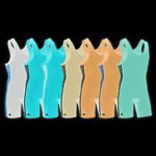
Track down “Multiples of Cohen.” If possible, track down Heidi Julavits and have her read “Multiples of Cohen.” This is not to say that the piece doesn’t work as well on the page (I haven’t confirmed this, but I can’t imagine this is the case) only that it begs to be read aloud and with great aplomb. The birth of a failed collaboration between the author and an unnamed visual artist who solicited Julavits to write a companion piece to an installation Julavits describes as “pretty, corpse-like visions of masculinity,” apparently featuring mens’ wrestling singlets in a prominent capacity, “Multiples of Cohen” is an absurd bildungsroman-in-brief about a cardiologist in aubergine pants who learns to overcome his effete, bourgeoise sensibilities with the help of a sweaty, overweight, singlet-wearing beefcake named Cohen. Wielding cliché with as much self-conscious glee as the axiom-dispensing eponymous hero, Julavits inscribes a redemptively genuine appreciation over a familiar world in which all knowledge seems to teeter precipitously at the edge of irony and farce. Though Cohen is in many ways a repulsive, cartoonish figure, described variously as “a mothball with legs full of overfed sperm,” smelling of “roast beef” or “off-gassed meat,” he is also the most charming, compelling and complex character in the lot. It is Cohen who sweats, who jokes, makes inappropriate sexual overtures, cries unapologetically, and ultimately dies. Although a short story with a clear trajectory and tight-ending, “Multiples of Cohen” has that rare quality that is simultaneously able to move an audience and take pleasure in the often silly moves required to get us there. Julavits obviously delights in exhuming the “corpselike visions of masculinity” that star in “Multiples of Cohen,” and making them perform, but their dance is much more than a snarky invitation to laugh at their expense. As another character, the nanny / narrative medicine acolyte, points out in one of the story’s more absurdly-poignant / poignantly-absurd moments “you are the curator of the suffering of others.” Which, I think suggests something to the effect of we can chose to gloat over the ruins of even something which has been demolished deservedly, or we can build something new out of it.
Vida and Julavits have clearly imbibed of their own medicine. Carving from the rump of nostalgias with pretty, glittering knives, they served up something hot, delicious and very nutritious under those burger-stand HAMMER lights. Believe it.
by Seth Blake
Associate Editor for Black Clock and an MFA Writing candidate at CalArts
who attended Heidi Julavits and Vendela Vida’s June 9th reading at The Hammer
