Singular, idiosyncratic and a little mysterious, Black Clock is one of America's leading literary journals.

Archive for 2012—

Black Clock 15 OST

Black Clock contributor Howard Hampton (issues 4 and 15) has compiled a soundtrack for the sweeping epic (during which no one will be seated!) that is our latest issue. Fire up your Maxwellian demon or tune into your imagination and viddy what scenes may come.

Black Clock 15
The soundtrack album that never was!

Compiled by Howard Hampton*


1. “Waiting for My Man,” The Yardbirds [from the film Kaleidoscope]

2. “Hankuri,” Mad Man Jaga [from the film A Clockwork Orange]

3. “America (She Can’t Say No),” Throwing Muses [from the film The Crying of Lot 49]

4. “Indifference,” Robert Plant [from the film The Monkey Wrench Gang]

5. “The Shadow World,” Sun Ra [from the film Elvis vs. Cthulhu]

6. “Stranger in My Home Town,” Elvis Presley [from the film Elvis vs. Cthulhu]

7. “Katrina,” James Blood Ulmer [from the film Katrina, Academy Award winner Best Picture, Song, and Director, Charles Burnett, 2009]

8. “Mother,” Lou Reed [from the film Baz Luhrmann’s Intolerance]

9. “Who Killed Marilyn?” The Misfits [from the film Hollywood Babylon]

10. “Stagger Lee,” Joan Baez [from the film Shaft in Space]

11. “Darktown Strutter’s Ball” / ”I’ve Got a Feeling,” Maria McKee [from the film A Confederacy of Dunces]

12. “A Cottage for Sale,” James Brown [from the film The Honeymoon Killers]

13. “War with My Soul,” Raven [from the film Ronnie Rocket]

14. “A Minute and Two Seconds,” John Cage [from the film Uncanny X-Men]

15. “See No Evil,” Wild Flag [from the film Angel Archer]

16. “Dead Flowers,” Ronnie Lane’s Slim Chance [from the film Maximum Dogbreath]

17. “Going Down the Road Feeling Bad,” The Carolina Chocolate Drops [from the film The Life of the Party]

18. “Pale Blue Eyes,” Laurie Anderson with Lou Reed [from the film The Lovely Bones]

19. “Tea for Two,” The Comedian Harmonists [from the film Kill Bill vol. 1]

20. “Face Place,” The Slits [from the film Who Killed Bambi]

21. “Let’s Submerge,” X-Ray Spex [from the film The Invisibles: Entropy in the UK]

22. “Year One,” X [from the film Footloose]

23. “I’m a Robot,” Miles Davis [from the film Tron]

*Almost all songs are from concert bootlegs or out-of-print albums that can be found on the internet by anyone with a modicum of ingenuity, a search engine, and a bit-torrent client.

Claire Phillips on Channeling Valerie Solanas

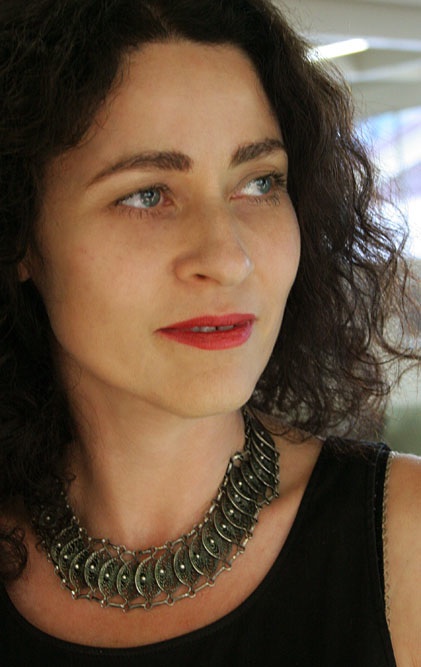
Claire Phillips, author of the novella Black Market Babies (11th Hour), presently teaches writing at UC Irvine, and is Visiting Faculty in the MFA Writing Program at CalArts. Her fiction can be heard at the KQED Writers’ Block, and her novel, The Story of Dora, is due out in June, 2013 (Paradox).

In this interview, Phillips discusses the experience of taking on the voice of Valerie Solanas for Black Clock 15, the influence of Second Wave feminism, and the pleasures of “drecky TV.”

BLACK CLOCK: In your piece, Invisible Woman, you write from the perspective of Valerie Solanas, best known for her SCUM Manifesto, as well as for shooting Andy Warhol. What prompted you to take on her voice?

CLAIRE PHILLIPS: I have been a fan of the SCUM Manifesto since my first introduction to this seminal radical text when I was seventeen years old and attending my first Women’s Studies course at San Francisco State University. Later on, when I self-published Black Market Babies and sold my first 250 copies to Ron Turner of Last Gasp Books (distributor of R. Crumb), I was given the option of turning some of the cash into credit for books they distributed. Excited to have found myself in the clutches of this purveyor of low-brow art, I browsed their warehouse shelves looking for excitement. The SCUM Manifesto, published by AK Press, was one such find.  I had kept it through several moves, rereading it, noting the excellent acerbic wit and continuing relevance of this satiric tract. Wishing I, too, could string together words with such dynamism and force.

When Steve Erickson invited me to participate in this genius issue, I knew I needed to conceive of something singular because of the roster of writers who would inevitably be asked to participate. Solanas’s story immediately came to mind. Tragic and violent, yet perversely brave in her observations, she suited me fine. Having grown up in the ’70s in suburban New Jersey, where every woman was a stay-at-home housewife and dull, dull, dull, I found Solanas’s salvo a necessary voice in the dark.

BLACK CLOCK: Was there a point where you decided to switch from Solanas’ make-believe letters addressed to Warhol to allowing the reader to read the script she sends him?

CLAIRE PHILLIPS: I wanted to start with letters to Andy Warhol because I’d been sort of annoyed by The Andy Warhol Diaries when they appeared excerpted in the New York Times in the mid ’90s. I was living in New York at the time and was pained by how enthralled with money and class Warhol appeared in these diary entries. Solanas’s letters would be a rebuttal of sorts. Prior to this I had been musing on rewriting Invisible Man. Steve mentioned in his email request to the writers that we could include any medium – letters, reviews, scripts, etc.  Naturally I wanted to cover as much ground as possible. I had written a couple of scripts during my post-graduate haze and deemed it time to employ these chops. Once I researched Warhol’s diaries, I discovered that they were not as unwholesome as made out by the NYT. In fact, I was hard pressed to find, among the thousands of entries, Warhol’s sad and fawning musings on Jackie O’s every non-gesture. The rancor wore off, and I veered naturally in other directions. First in the Open Letter to SCUM Participants, based on such a letter. Then, happily, onto the script of The Invisible Woman. Luckily Steve suggested that Invisible Woman be the title instead of my original choice, “The Solanas Letters,” which didn’t make sense beyond the story’s originating point.

BLACK CLOCK: The third person narratorial voice in your book Black Market Babies is clearly having fun telling the book’s story. In Invisible Woman, as Solanas, you seem to employ a connected method. Both seem to be pulling from dark but amusing places. Was Invisible Woman a departure from your other works as far as perspective and research?

CLAIRE PHILLIPS: Yes, I shocked myself with this voice. Early on, when my writing progressed from poetry to fiction, I vowed not to write in first person. I didn’t want to write a coming-of-age story (not exactly) and I didn’t trust my “I”. Didn’t think it was strong enough, or something. Writing inevitably holds these surprises. You limit yourself, and then suddenly, you find buried treasure. In Black Market Babies the story is strongly voiced through an ironic over-the-shoulder narrator until you get to the final sections of the book, when Helvetica Thistle-Brun tells the story of selling her baby on the black market in order to pay for her PhD (ha!) A critic for The Village Voice declared this the best part of the book–the best writing stylistically–and I would have to agree.  That I found myself once again working unwittingly in the first person inspired in me feelings of both ecstasy and dread. Ecstatic to be working in uncharted territories, uneasy to discover previous limits rendered null and void. As far as connected narration goes, yes, I think I work more linearly than I first did. But this isn’t to say I may not once again employ a more circular or purposely disjunctive form. I’ve told myself I won’t do it again, won’t work so explosively–which means it’s out there somewhere.

BLACK CLOCK: In a previous exchange, you mentioned the influence of Second Wave feminism. What of that period made its way into this story?

CLAIRE PHILLIPS: Probably one of the most exciting parts of writing this story was doing the research. I picked up Alice Echols’s seminal work, Daring to Be Bad: Radical Feminism in America, 1967-1975. Echols is a fantastic, clear-eyed historian. What I discovered, revisiting this time period, was the rich variety of radical activist groups of slightly differing philosophies and agendas. The New York Radical Feminists. Cell 16. The Red Stockings. The Feminists. The names alone give reason to pause. After her attempted murder of Andy Warhol in 1968, Solanas became the cause célèbre of these vanguard groups. According to Sara Evans, reading the SCUM Manifesto was “the first order of business” for celibates and karate aficionados of the radical group Cell 16. She wasn’t just the “slightly mad and kooky, well-meaning but inevitably misguided” version of Solanas portrayed in I Shot Andy Warhol. (Don’t get me wrong: I love that movie.) What I mean is: Solanas wasn’t a lone voice of misandry. She was an activist whose parodic manifesto sparked change on the national stage. A fire had been lit. I tried to incorporate this when Valerie writes her Open Letter to SCUM Participants in The Village Voice. In this alternate timeline, by remaining “underground” at a private psychiatric hospital in a bid to win over Hollywood (Warhol’s unrealized dream), she’s missing out on some pretty groundbreaking radical protests: most notably the NYRW Miss America Protest. She should be out there leading the revolution against institutionalized “sexism,” working for the “degendering of society.” Not sucking down tranqs and lithium in mind-numbing amounts. This should have been her moment. Hence, the letter involving her coterie Hollywood-style in the revising of her film script: she’s got the feeling she better not go solo, that she had better branch out if she is to remain relevant.

BLACK CLOCK: As a satirist and a fictionalist, how do you feel Invisible Woman speaks to feminism both on the whole and to whatever anyone might call modern feminism?

CLAIRE PHILLIPS: I began this piece like practically everything I write: focused on the budget crisis in education in California. The loss of access to Women Studies classes in this era is inevitable, as are the losses for many of the gains fought for in the early ’70s. Last year, California turned away 250,000 people from the state college system. 250,000 people. I can’t even fathom this. Without my first classes in Women Studies, in Experimental Writing and Poetry, I don’t know where I would be. And perhaps this speaks to modern feminism, where women’s rights become, more broadly speaking, integrated into the struggle for economic and social equality, access to education, to health care, and other basic rights.

More prosaically, women still struggle with issues of identity, work and power, almost in the same way they did in the ’70s. Whether they are bartering back-seat mothering for stay-at-home bourgeois privileges or struggling with ambivalence over inclusion in “the world-at-large.”  So I guess this kind of aggression undergirds certain privileged “female trouble.”

Teaching Joanna Russ’s 1970s feminist SF novel The Female Man this semester, I was surprised and also relieved to discover that my female students found the themes of female actualization and independence still pertinent. In fact, I was very careful to suggest that perhaps it wasn’t so relevant anymore, in order not to color my students’ sensibility with my own. It was revelatory. I expected the women to find the motifs to be outdated and the men to be slightly put-off. This was not the case. Just the opposite.

BLACK CLOCK: The almost preschool-esque scatological language found in Invisible Woman seems to push the boundaries of what Solanas might write. What inspired the use of this puerile vocabulary?

CLAIRE PHILLIPS: The puerile language is strictly a response to Solanas’s writing. Her play Up Your Ass, which Warhol famously refused to produce or return to her, incorporated many scatological remarks. Solanas engaged in this speak, I believe, in order to don the swagger and agency of the male writer/artist whom ironically she held in great contempt. As we all know, the scatological holds particular sway over young boys obsessed by poopy talk. “South Park,” for instance. In garnering the respect of a phallocentric world, how could she resist? This was undoubtedly an essential part of her satire. As it would be mine if I had the guts!

The toughest decision writing this was how much to cop Valerie Solanas’s voice. The superlative, incandescent writing of SCUM was beyond my reach. But not her poopy quips. I could manage that. Also, don’t forget that great scene in I Shot Andy Warhol in which she is accused by Warhol and Factory hangers-on of being an undercover cop, to which she unzips her fly, framing her bared pubes with her hands and remarks witheringly: “Yeah, and this is my badge.” Utterly fearless and funny. I don’t think any part of the body was off limits for Valerie.

BLACK CLOCK: This may be an unfair question, which is maybe why I’ll ask it: What do you think Solanas would think of Invisible Woman if she were alive to experience it?

CLAIRE PHILLIPS: Very fair. She might have been pleased I gave her a lecturer position at SFSU. I think this might have made up for those feelings of invisibility–but, of course, not enough to truly take the edge off. The hardest thing for Solanas would be to confront her mental illness. Even before you’ve read her post-Warhol interviews with The Village Voice, it’s pretty clear Valerie was suffering from some kind of paranoid psychosis. She was undoubtedly psychotic when she chose to shoot Warhol and associates.  When I wrote this, I wanted to incorporate the horror of this affliction. I felt it was expressly important, particularly when making jokes at her expense–going underground as a paranoid schizophrenic for instance. I don’t know if she would read through the lines of this story and get this. In truth, Valerie Solanas died in a hotel in the Tenderloin poor and alone, and no doubt psychotic. This is a terrible fate. I don’t know if she had consistent access to medication. Perhaps it wouldn’t have helped. Those weren’t great times for the treatment of chemical imbalances. Marge Piercy’s Woman on the Edge of Time is perfect confirmation.

BLACK CLOCK: I’ve heard you have a book coming out next year. What’s that all about?

CLAIRE PHILLIPS: The Story of Dora is about a cyborg whose orgasms predict the stock market for her financier husband, Wade Park.  It’s basically my response to the prediction machines engineered by physicists for Wall Street, and was written mostly prior to the Subprime Debacle. The novel is due out in June 2013, in collaboration with Dutch photographer Monica Nouwens to be part of an exhibition at FOAM Museum in Amsterdam. This project has been in the works for several years. We think we’ve got it sewn up now. We’ll see. The collaboration itself is loose. Based on years of creative dialog between Nouwens and myself. About the thrills and spills of living in Los Angeles. Bohemia. Economic insecurity. And architecture.

BLACK CLOCK: What are some of your favorite films and why?

CLAIRE PHILLIPS: When Steve asked us to include our favorite film as part of our biographical notes to this issue, I decided to include The Highway Patrolman (El Patrullero) directed by Alex Cox because I thought it captured the spirit of my favorite type of writing/drama, and perhaps the spirit of Invisible Woman. It’s also underrated and underexposed, and just out on DVD finally since it’s 1991 film debut.

El Patrullero is about a highway patrolman living and working in rural Mexico, where corruption is systemic and there is little to no hope of creating a just and ordered society, or of having an economic future beyond the deep tentacle reach of crime. The protagonist of the movie, played by Roberto Sosa, is a petite man whose woes are some of the most tragic ever committed to celluloid barring flicks of war and genocide. Even so, this petite man with accumulating troubles is unbearably funny to watch, and just as tender. This is what I relish most. When a story is unbearably sad yet funny, and true to a political reality. The Assassination of Richard Nixon was also a brave work that didn’t receive much attention. Soderbergh’s The Girlfriend Experience, written and filmed during the latest Wall Street debacle, is also a recent stand-out film. Through the latest digital technologies, he catalogs our Gilded Age redux with the thrilling immediacy of a documentary. Big. Beautiful. And bad.

That said I don’t get out to see many films these days–I drive so much. Instead I end up staying home, watching lots of drecky TV. Like Revenge, Downton Abbey, Head Case, reruns of Absolutely Fabulous in order not to lose my mind. If I don’t laugh, I’m miserable. Oh, and the science fiction show Fringe. I adore the updated character of the “mad scientist” who is literally mad, a schizophrenic who has engineered his own insanity (and cure), who is brilliant and able to solve the latest biotech mysteries. Wish I’d thought of that.

BLACK CLOCK: Are you working on a piece of fiction? What’s next?

CLAIRE PHILLIPS: I’m finishing a book of satire based on the recession, oil spills, and fantasy. If all goes right, I should get time to finish this summer.

After that I think I’ll go back to angry women.


Phillips joins fellow Black Clock 15 contributors Anthony Miller, Mark Z. Danielewski, Jonathan Lethem, Geoff Nicholson and Matthew Specktor for a reading at Mandrake this Sunday, April 29th at 2:00pm.


By Patrick Benjamin
an Editorial Assistant for Black Clock and an MFA Writing candidate at CalArts

Book Soup: “Bookseller to The Great and Infamous”

There are some places in the world whose lore and history spark our imaginations and minds before we ever have a chance to see and experience them for ourselves. Yes, there is the Taj Mahal, the Eiffel Tower, the Great Pyramid of Giza, the Colosseum. But for those of us who love the written word, there are also bookstores that glow with a magical lure rivaling that of the Statue of Liberty or the Great Wall of China.

Editorial assistants Eleni Demetriou and Chris Black unequivocally agree that L.A.’s Book Soup is one of these literary meccas. For Eleni, it was an online find better than the ideal Match.com profile; for Chris, the homing beacon to his road trip from New York City. Their separate accounts on their first encounters with Book Soup read almost like love letters; fortunately for all of us, it’s a love that’s meant to be shared.

-Kyoung Kim


A Book Soup in West Hollywood


There isn’t much that you can do from approximately seven thousand miles away from West Hollywood – except maybe close your eyes and pretend that you’re there.

My fingers danced over the keyboard as I tangoed my way through the different bookstore websites, each one promising a neighbourhood bookshop that “fulfills your inner bookworm.” I’ll admit to rolling my eyes each time I read those words but mostly I just frowned at the amount of independent bookshops that had closed down due to the inability to compete with mega-monsters such as Barnes & Noble. Although I don’t usually discriminate against big chains, something clicked inside of me, and my loyalty was going to lie with a small independent bookshop.

Whichever one that might be.

And that’s when I clicked on Book Soup and its homepage stared at me from my laptop screen.

When certain things are meant to be, you can feel it. When you see something or enter a place, you can tell from the way that your heart will miss a beat or your mouth will twitch, that you are exactly where you’re supposed to be. That’s kind of how I felt and that’s when I knew I had found my bookshop.

Boasting existence since 1975, it’s still one of the leading independent (and last surviving) bookshops, its location being at the heart of (and I quote) “the infamous Sunset Strip.” As soon as I read the website’s About Me section, my mind began the scenario creation that it is known for. Truth be told, Book Soup was already high on badass points on my list. Especially as they stock “controversial non-fiction” books too – oh la la!

I took a minute and opened my iTunes – independent bookshops call for indie playlists – and click on Bon Iver to provide me with a soundtrack as I continue my virtual tour of Book Soup. Maybe if I closed my eyes and took a deep breath, the back of my eyelids would be my best friend and show me a Book Soup trailer. Maybe if I held my breath instead, I’d feel the different spines underneath my fingertips and smell the books, especially the ones that have yellow pages (and maybe Tom Waits suits Book Soup better anyway).

With floor to ceiling bookcases, signed titles and rare gems, I could feel myself getting giddy – my inner geek was already anticipating our first visit. Nodding to myself, I took a look at their promise of high profile author events. It was a rather impressive lineup and that was only for the next 10 days – and I kind of wished I’d be there for the Marc Wanamaker presentation – so I could only imagine what their monthly calendar looked like. I made a mental note to get to events early as reviews portrayed parking as a nightmare. To be honest, this was West Hollywood and even if I were to take everything that I heard with a pinch of salt, I’d still think of L.A. as a city where everyone drives everywhere.

Kind of like my hometown – sans the Hollywood celebrities.

I pursed my lips as I realised that I may seem a bit star-struck (have you seen Book Soup’s photographs that show off their celebrity clientele?) but there really are so many other books that people read that don’t have Hollywood celebrities as their author. To prove my point, I just used their search engine and stumbled upon a myriad of writers such as Seth Greenland, Mark Z. Danielewski, and Matthew Specktor (to name a few).

I switched between tabs on my internet browser, reading reviews about Book Soup and going on Google maps to find the nearest Starbucks (a mere 300 feet away) and I quickly realised that this was one of the best bookshops I’d never been to. It really did look like a friendly neighbourhood bookshop – just like the ones I had scoffed at minutes before – that looked like a safe haven in the middle of a very busy street. I guess Thomas Jefferson got it right when he said “I cannot live without books,” and this quote can be found on Book Soup’s blog.

Yes, Book Soup really was the best bookshop that I never had the privilege of visiting but it was something I’d look to rectify as soon as I touched down at Los Angeles International.

And I did. The smell, the floor to ceiling bookshelves, the great staff, and its amazing location makes Book Soup one of my favourite independent bookstores in Los Angeles.

It’s sometimes the smallest things in life that makes everything worthwhile, and knowing that I have a small escape in the middle of the hustle and bustle of the city makes me one happy girl. Book Soup, I’m yours.

Take it away Mr. Waits.

By Eleni Demetriou
an Editorial Assistant for Black Clock and an MFA Writing candidate at CalArts


Recipes in Hollywood Longevity


Book Soup has existed here on the Sunset Strip since 1975. It claims to be one of the few independent bookstores left in the L.A. area and has out-survived, among many things, a large Tower Records that once sat across the street and an entire chain of Borders Bookstores. On this, my first visit to Book Soup, I discover the charm that has kept customers swinging through the front door for 36 years.

Perhaps part of Book Soup’s longevity is due to its place among Hollywood institutions. Hollywood and the Sunset Strip figure prominently in my vision of L.A. as I leave New York, and start through the Rocky Mountain gateway town of Denver and into Phoenix. I drive west along Interstate 10, a straight shot through 115 degree heat, envisioning the longest straightaway in American interstate culture since the Okies caravanning along Route 66, until I wind through downtown on the 110 and exit the 101 at Vermont to end up in Hollywood for a new life in the driven metropolis of L.A.

My path takes me west down Sunset Boulevard, past the vintage aesthetics of Amoeba Music and the Cinerama Dome. The Laugh Factory. The Chateau Marmont – RIP John Belushi – until the Chateau fades away into the theme park appearance of Saddle Ranch. The Comedy Store. Mel’s Drive-In. Book Soup. The Viper Room – images of River Phoenix laying on the curb out front.

I take a cartoonish pan back to the crimped red letters spelling Book Soup, the place I’d been searching for since my final visit to the Strand Bookstore, which in turn claims to be the largest independent bookstore in the world, on Broadway in New York. But the shop on Sunset has a quaint front window, in which I initially see a display of cookbooks, all of which try to tell me a little more about Hollywood. In the window are On Booze, a collection of pieces by F. Scott Fitzgerald, 2000’s Kitchen Confidential by Mr. Anthony Bourdain, the hippest of all traveling chefs, and something called The Hungover Cookbook.

I finally enter. Judging by the name, I had imagined Book Soup to be just as big, just as confusing, and just as unwieldy as the Strand. And in some ways Book Soup does live up to its name. There are floor-to-ceiling bookshelves housing a hodgepodge of seemingly unorganized–at least at first glance–stacks of huge art books for a “really big coffee table,” travel books, “controversial” non-fiction, literary fiction, and the usual paper products such as cards and journals. There are no true paperback novels in Book Soup, and their bestseller list has very little in common with that of the New York Times. The closest thing I saw to a mainstream piece of fiction was George R.R. Martin’s A Song of Ice and Fire series. A piece of paper taped to the shelf reads, “It’s not TV, it’s Book Soup.”

But after circling the aisles a few times, I begin to see the organization, highlighted with a tremendous amount of handwritten notes – “HEY! Look at all this stuff!” – pointing in recommended directions. Sandwiched between sections on WWII and sports, a staff recommendation reads, “Check out this section for all you need to know about Marijuana.”

After such a long journey, it would be a crime to enter such a place and leave empty-handed, so I decide on a recent Chris Andrews translation of Roberto Bolaño titled The Skating Rink and a book by a French author named Boris Vian. This second translation, titled To Hell with the Ugly, is in the travel section, ironically filed under City of Angels. When I finally reach the register and hand the books to the blonde woman behind the counter, she seems genuinely impressed with my selections and actually talks to me about them. This certainly never happened at the Strand, and I realize there still exists a bookstore where the staff is not only as in love with books as their customers are, but actually pride themselves on being helpful – how wonderful to see an example of why Borders got too big for its britches.

As if I weren’t already smitten by her conversation, according to this elegant bookseller I had found a diamond in the rough. Although there are further stacks of the Vian book on a front table, as if the store is pushing it, I think, so what if they are?  It’s just another reason the store is special. The woman points to the back offices and tells me that another Book Soup employee, Tosh Berman, the book buyer/ publisher of TamTam books, has an exclusive to sell this French, Hollywood, Noir book. And again I get the feeling that I am experiencing something unique. The woman asks me if I have a Bolaño recommendation, and when I tell her I think Amulet is a good place to start, she actually seems to take me seriously. I get the impression she will tell her next customer what I have said. And how cool is that? Very cool.


By Chris Black
an Editorial Assistant for Black Clock and an MFA Writing candidate at CalArts


Look for Black Clock Contributors at the Los Angeles Times Festival of Books

Black Clock contributors past and present will be speaking on panels ranging from “Fiction: California Dreamin’” to “Narrative in a Digital Age” at this weekend’s Los Angeles Times Festival of Books. See the official Program Guide for details.

Aimee Bender (Issues 1, 7, 13)
Samantha Dunn (Issues 2, 4 12)
Ben Ehrenreich (Issues 3, 9)
Steve Erickson (Editor-in-Chief)
Janet Fitch (Issues 7, 13)
Tod Goldberg (Issue 12)
Seth Greenland (Issues 7, 9, 14)
Denise Hamilton (Issue 10)
Tara Ison (Issues 7, 14)
Carolyn Kellogg (Issue 12)
Anne-Marie Kinney (Production Editor; Issue 12)
Orli Low (Managing Editor)
Tom Lutz (Issue 11)
Brighde Mullins (Issue 6)
Richard Rayner (Issue 12)
Rachel Resnick (Issues 3, 5 ,7)
Nina Revoyr (Issues 12, 13)
Rob Roberge (Issue 11)
Matthew Specktor (Issue 15)
Dana Spiotta (Issue 10)
Susan Straight (Issues 5, 8, 11, 13)
Kenneth Turan (Issue 4)
David L. Ulin (Editor-at-Large; Issues 2, 4, 9, 12)
Oscar Villalon (Issue 12)
Diana Wagman (Issues 10, 13)
Margaret Wappler (Issue 7)
Matthew Zapruder (Issue 12)

And visit Black Clock at booth number 206!

Black Clock Editor Steve Erickson’s Just-Published Novel is “These Dreams of You” (Europa Editions)


“Truly electrifying. In its gorgeous, vivid prose and its acutely sensitive soul, These Dreams of You shows us just what a novel can still do in our own crazy times.”
The Boston Globe

“Beautiful, elegiac…threads and characters serendipitously stumble through a missing-link chain of coincidences, with mazes and labyrinths both real and imagined…a complex and imaginative literary tapestry about family and identity.”
Kirkus (starred review)


“Actions echo across time, continents and realities…a series of endless, astounding tessellations….”
The New York Times Book Review

“Erickson is superb at striking emotional notes, conjuring up historical figures, and ruminating on race and identity....These Dreams of You pushes against the idea of the novel as a stagnated medium by flexing its own vitality.”
Bookforum

“Magnificent. These Dreams of You is a big novel of big ideas — emotionally capacious and desperately relevant. As readers rush headlong toward its climax, they may feel as if they have emerged from something like a fever dream, as torrents of ideas and images wash over them (read in as few sittings as possible for maximum effect).”
New York Journal of Books

Appearances:

Thursday, February 16, 7 p.m.: Los Angeles Downtown Central Library, ALOUD with Percival Everett (www.lfla.org/event-detail/688/Percival-Everett-and-Steve-Erickson).

Wednesday, February 22, 7:30 p.m.: Skylight Books, Los Angeles (www.skylightbooks.com/event/steve-erickson-reads-and-signs-his-novel-these-dreams-you).

Monday, February 27, 7 p.m.: Elliott Bay, Seattle (www.elliottbaybook.com/node/events/feb12/erickson)

Tuesday, February 28, 7 p.m.: Tosca Café, San Francisco (www.litquake.org/calendar-of-events/event/steve-erickson-at-the-epicenter)

Tuesday, March 27, 7 p.m.: BookCourt, Brooklyn

The Stages of Falling for the Deliberate Love of Humans: A review of Aimee Bender’s “Willful Creatures”

Reading Aimee Bender’s Willful Creatures is uniquely emboldening. The ride is all magic and turmoil in open air, and you finish smiling, face taut from being smacked with the full range of human capabilities. Bender shows us how we all have the potential to be willful, to act unreasonably or deliberately to a fault, and how doing so can be just as heartbreaking as it is inspiring. In this collection, Bender locates and exposes the multiple layers of what it means to truly act with willful intent. Her characters open up and move the reader to understanding his/her own desires. From a man who cannot see theperfect woman, to a pumpkinhead mother who cannot help her ironhead son sleep, to a woman weighed down by grief equaling exactly the same as seven potatoes, Bender’s characters bring you into their world and expel you just as quickly with a slight whiplash that is well worth it.

Separated into three parts, Willful Creatures acts as a coming-of-age tutor. A more apt title for “Part One” might be Childhood, as the characters in this section all share an immaturity. They are mean as they torture; they are stubborn as they defy themselves; and they underestimate their emotions as they act rashly. Watch the doomed men in “Death Watch” cry, run away, beat the ground, and then completely miss out on their own lessons. Detest the big man in “End of the Line” when, after he has committed many unthinkable deeds, he stops not through an understanding of his crimes, but from a renewed selfish feeling of entitlement. Scream at the driven girl in “Off” as she drowns all of her opportunity for greatness in stubborn games. Feel the pain of “Debbieland”–the pain that we bring to others in order to get rid of our own. Savor the familiar tingling in your hands from the urge to shake these characters, caress them, or push them down a flight of stairs.

Enter the lives of Bender’s characters in “Part Two” who feel older, but are yet still incompetent in their limbo-ridden world of indecision–who show us the weakness of being weak. An investigation of intimacy and emotion,“Motherfucker” leaves you wandering your own house of desire and all the memories of times you left it too widely open, thus missing out on something true. Captivated by the magic of a few moments of change, the characters in both “Fruits and Words” and “I Will Pick Out Your Ribs (from My Teeth)” suffer in all-too-familiar suspended weightless fields of danger and uncertainty, and make you wish they would break like poorly made plates, not out of malice, but as a way to redemption.

As in the Kübler-Ross model of the five stages of grief, the last section of Willful Creatures takes us through acceptance. Hold your breath while reading “Job’s Jobs” in which our hero has everything taken from him but still oozes that soul-crushing ability to love what he can do. Here, Bender finally lets you shout “TAKE THAT!” at God and shove his face in the human ability to continue striving for happiness in spite of any obstacles. In “The Case of the Salt and Pepper Shakers” Bender examines the equality that can be found in discord, and in “The Leading Man” she explores the process of self-discovery with the acceptance of every subsequent reveal. The characters in Part Three feel ancient, wise and self-assured compared to the volatile creatures in the first two sections. “Hymn,” a story of acceptance of perfection in a seemingly chaotic town where everyone can find a true purpose, finishes the book off like a perfectly sculpted tower of whipped cream. It is as unifying as a comfortable close hug between warring sisters.

To read Willful Creatures is to submerge oneself into the thick fiction of Aimee Bender’s creation, to swallow every story whole, to feel her characters tap at you from the inside as you digest them, and to glow in their aftereffects. It is an experience made for lovers and dedicated students of the human condition, and a revelation into what it means to be able to act with intent. Read it, feel yourself judged not worthy of the will you have, and then go out and be as unreasonably stubborn as you can possibly be.

By Jessica Marie Felleman
an Editorial Assistant for Black Clock and an MFA Writing candidate at CalArts