Singular, idiosyncratic and a little mysterious, Black Clock is one of America's leading literary journals.

Archive for 2010—

Sitting for a Spell with Francesca Lia Block

An author of tales that court the poetic through the lives of those who inhabit edges and in-betweens, Francesca Lia Block is prolific and steadfast in her drive to give voice to those who could use a little more noise. Best known for her groundbreaking Weetzie Bat books (also known as the Dangerous Angels series) in which characters transcend stereotypes and prejudice within a fertile, magical realist landscape, Block writes what have been deemed “contemporary fairy tales with an edge” that have garnered her no small amount of controversy. For her work, she’s received the Margaret A. Edwards Lifetime Achievement Award and the Phoenix Award, as well as opportunities to develop a show for MTV and a screenplay to put Weetzie Bat on the big screen. No one else makes Los Angeles—where Block has spent very nearly her entire life—and the maladies of modern life so tangibly mythic, so paradoxically abrasive and fecund. Black Clock had a chance to speak to Block this summer about what makes her tick.

BLACK CLOCK: Your work is full of subcultural presence, and illuminates both the gritty and the mystical in those who eschew the mainstream. How do DIY and punk ethics, specifically, influence your life and your work?

FRANCESCA LIA BLOCK: I was a teenager in the late seventies and the culture didn’t excite me until punk came into my life. I remember seeing the Go-Go’s at the Whiskey when they were little punks playing really fast and rough while the boys slammed in front of the stage. It changed me in some important way. I felt that you could be a beautiful girl but also as wild and tough and free and alive as the boys, that you could be an artist and not be perfect, that you could be different and still find your people, that you didn’t have to listen to Styx and Journey and wear expensive jeans and have long shiny blond hair. I’ve loved alternative culture, in all its forms, ever since.

The city of Los Angeles has figured prominently in your writing. Do you think any other cities in the world could feed your creativity as much as L.A. has?

I think that wherever I would have grown up would have fed my creativity because I think I basically would have died if I didn’t get to write. In fact, the more sterile my environment the more necessary it might have been for me to find magic in it. That said, L.A. is the perfect city for me because it is so full of toxic beauty and that contrast really feeds my work.

You have characters with names like “My Secret Agent Lover Man” and “Witch Baby;” you have books with titles like The Magic of Forgetting and Missing Angel Juan. What guides you when you’re dreaming up names?

I choose names mostly from my subconscious but also from things I see around me. Like My Secret Agent Lover Man came from graffiti written between the tiles in the grout at the UC Berkeley library. “My Secret Agent Lover Man you will never read this.”  There are names everywhere, inside of us and outside of us, waiting to be discovered.

I’ve read that you use Tarot cards in your writing process—can you explain how this works for you?

The ancient, iconic images of the Tarot can be very inspiring. I feel tapped into a collective unconscious when I use them.

Your writing is often a sensual feast, rich with unexpected flavors and images. What feeds your senses when you’re writing?

The things I love–people, flowers, music, food, movement, dance, art, sculpture. I am constantly grateful to my senses, especially after suffering some severe vision loss lately.

What do you think it is about Weetzie Bat, your most infamous character, that allows her to remain relevant over twenty years after her first appearance in print? Is it her? Is it you? Is it your ability to slink into any of social media’s dresses, be it Twitter, Blogspot, or Facebook, and flaunt it?

It’s not me. It’s all her. I tapped into something with that character–a quality in certain young girls who see the magic and beauty and wonder in the world around them no matter what. They see it more, perhaps, the more they have suffered. They keep coming, each new generation. I was once that girl and I still have some of her in me. Yes, I use social media to remind people about her but she has taken on a life of her own as a reflection of some of my students, my readers, my muses (often these are all the same young women).

What’s your response to people who believe fiction to be indulgent, and thereby of little consequence?

Firsthand experience: fiction saves lives.

by Patricia Cram
an Editorial Assistant for Black Clock and an MFA Writing candidate at CalArts

Black Clock 12 Reading (9/19@5PM IN LA)

when September 19, 2010 @ 5:00pm
where Skylight Books, 1818 N Vermont Ave, Los Angeles, CA 90027 (313) 660-1175

Admission is free.

Come join us as we celebrate Black Clock 12 with contributors Monica Carter, Paul Cullum, Samantha Dunn, Tod Goldberg, Richard Rayner, and Nina Revoyr at Skylight Books!

Black Clock 12 takes you out to the ball game, where obsessions abound inside and outside the white lines. In these stories, essays and poems, the demarcation between winning and losing, humor and sadness is blurred; in sports, whether participating, watching or …rejecting, you discover who you are and who you’re not. As the writers in Black Clock know, the game may be played under bright lights but it’s in the crevices of darkness where the true game is found, because sports lie beyond the pleasure principle.

MONICA CARTER, a 2010 PEN USA Emerging Voices Fellow and 2010 Lambda Emerging LGBT Voices Fellow, has also been published in Pale Fire. She is working on her novel, Eating the Apple, set in 1930s Manhattan, which tells the story of an aging, alcoholic lesbian writer caught in a love triangle.

PAUL CULLUM is a freelance writer living in the Silver Lake region of Los Angeles. He has written extensively for the L.A. Weekly, New York Times, Los Angeles Times, Variety, the Hollywood Reporter, Stop Smiling, Arthur, and hundreds of tiny magazines that pay comically little. His Los Angeles Times West Magazine story on the Mexican Midget Rodeo was anthologized in The Best American Sports Writing 2007, published by Houghton Mifflin. His essay “Why I Hate Sports” is his first for Black Clock.

SAMANTHA DUNN is the author of several books, including the novel Failing Paris and the memoir Not By Accident: Reconstructing a Careless Life. She teaches in the UCLA Writers Program.

TOD GOLDBERG is the author of seven books of fiction, including the novels Living Dead Girl, a finalist for the Los Angeles Times Book Prize, Fake Liar Cheat, and the popular Burn Notice series, as well as
the short story collections Simplify and, most recently, Other Resort Cities. He lives in La Quinta, CA, where he directs UC-Riverside’s low residency MFA program in Creative Writing & Writing for the Performing Arts.

RICHARD RAYNER, born in England, now lives in Los Angeles. His books include the nonfiction book A Bright and Guilty Place, the memoir The Blue Suit and the novels The Cloud Sketcher, L.A. Without a Map, and Murder Book. His work has appeared in the New Yorker, the New York Times, and many other publications.

NINA REVOYR is the author of three novels, including Southland, a Los Angeles Times “Best Book of 2003,” and The Age of Dreaming, a finalist for the 2008 Los Angeles Times Book Prize. Her new novel, Wingshooters, will be published in 2011.

More information at www.blackclock.org and at www.skylightbooks.com/event

Jonathan Lethem Goes West

To his fans, Jonathan Lethem is one who always pushes into new avenues of form and genre, of kidnapping kangaroos and scouring the Zendo for a killer, and he is certainly synonymous with New York. With novels like Motherless Brooklyn and The Fortress of Solitude that have so deeply imbibed into their pages the grit of New York City, it is impossible to separate the two. Chronic City, Lethem’s latest novel, returns to New York once more, but this spring he is set to do the unthinkable. Brooklyn will be sure to bemoan turning Lethemless in 2011 when he trades in New York for Los Angeles as the Roy E. Disney Professor in Creative Writing at Pomona College.

BLACK CLOCK: You have had a long relationship with Black Clock, dating back to the first issue. What was your initial draw to the magazine and what has kept you coming back?

JONATHAN LETHEM: So simple: I’m a fan of Steve Erickson’s, going back to before I’d published fiction myself, and well before I had the luck of becoming his friend as well. Only “fan” puts it too gently: Steve’s accumulating shelf is of the great flares burning out there, lighting up the landscape, and when I heard from him that he wanted me involved in his magazine, I couldn’t imagine saying no. That it turned out to be a really singular and strange and effective publishing adventure wasn’t any kind of surprise. It’s made a great home for some work that might not have fit anywhere else, and a couple of the pieces that were effectively ‘commissioned’ for Black Clock are among my favorite of my recent short works.

Last year you did a series of readings in which you read the entirety of your newest novel, Chronic City, over eight days in New York City. A pretty astonishing task, one that makes my vocal chords ache in sympathy. How did it work out? Is it something you would like to do again?

It was a great one-of-a-kind experience, and I’d never do it again. I made the decision based on several terrific misunderstandings with myself and the actual length of the book.

On your website (http://www.jonathanlethem.com) you have a project running called Promiscuous Stories, where you welcome other artists to lift your stories and lyrics. Art influences art like nothing else can, and I believe it to be a vital part of the creative process. How did you come to the decision to “let go” of some of your work? What sort of response have you gotten?

Well, of course there’s been all variety of results by now, as was pretty much inevitable given the shotgun-blast/messages-in-bottles nature of the internet, and the project itself: good art, bad art, interesting attempts, unfinished works of great intrigue and promise, a few altered careers and opinions. Also, needless to say, loads of people have ignored the whole thing outright, as they were always also welcome to do. A theater troupe in Chicago actually renamed themselves The Plagiarists based on the thing. And there’s a very exciting “anthology film” in the works. But the important thing to say about the kind of letting go that I did on the site is that it isn’t actually an original or particularly unusual gesture. In fact, writers (and other artists) are constantly giving other artists (often filmmakers) “free options” on things all the time, without making a big deal of it. And, conversely, artists of all kinds (including writers) are taking the resources and inspiration and even the plot details they need for their own work from the work of others, without even asking, let alone seeking a formal permission–also without making a big deal of it. What my project consists of is framing these activities so they become visible. Making a big–or at least a medium–deal of it, in order to make a political point that these aren’t shameful or incidental or wayward transmissions, but in fact something to celebrate as central to art practice per se.

You have a strong opinion on “plagiarism;” can you speak a little about that?

I use the word provocatively, trying to nudge people into seeing how few of the “borrowings” they’ve been invited to become incensed about really are worth the name. Palming someone else’s efforts off as your own, covertly and lazily–even this isn’t much of a moral disaster. And most people witch-hunted as plagiarists are doing something much more honest, interesting, worthwhile, and inspiring than that.

Which writers and artists have influenced your work?

Too many to mention. A new one every day. A few go right to the bone of my work: Kafka, Hitchcock, Lewis Carroll.

It seems that everyone I speak to about Lionel in Motherless Brooklyn finds something they identify with in his ticcing. I have caught myself doing Lionel-like tics in my day-to-day life. Did you recognize ticcing as a universal act, something that many could potentially relate to? What inspired this decision on his character?

I’m always looking for metaphors that can serve as a net to catch every meaning that wanders past. Tourette’s, while I was writing that book, became a lens for contemplating zones of myself, areas of human culture, streets of Brooklyn, and aspects of human voicing I was fascinated with trying to bring to the page: insults, jokes, self-revelation in the form Freudian slips, etc. Lionel’s condition certainly also became a kind of weird verbal machine, too, for producing ticcishness in myself and others. He goes on making that impression, a decade later–I guess I got lucky.

Rumor is that Edward Norton is set to adapt, direct and star in Motherless Brooklyn. (An absolutely brilliant choice, I think.) What has been your experience with the adaptation so far? Are there any plans for future adaptations for the big screen or otherwise?

I mostly stay away from the work–or non-work–that goes on when my books enter the film adaptation process. It usually isn’t something I can be particularly helpful with. And the frustrations that go with that work get under my skin very easily. So, I don’t know where the Motherless Brooklyn project stands, or if it stands at all. It might be on its knees. Or taking a nap. Some other books have new dance partners just now: Fortress of Solitude, As She Climbed Across the Table, Gun with Occasional Music and Girl in Landscape. It all sounds very exciting, and it arouses all sorts of silly feelings in the author, but what we’re really contemplating consists of someone else’s–several someones–improbable and mostly excruciating art-attempts. I wish them all well.

Music comes up often in your work. You Don’t Love Me Yet surrounds a band of struggling musicians. In The Fortress of Solitude, life is very nearly dictated by music. You also had the enviable chance to interview Mister Bob Dylan himself. How does music serve your writing?

I use music as an emotional touchstone for my writing (and not only for my writing). I listen to it constantly. At the very least it keeps me still for my work, which is no small thing. At its frequent best it reminds me of who I am and why I bother. I can only hope that a handful of readers are drawn into a projected relationship to one or another of my books anywhere near as rich as my projected relationship with, say, Mister Bob Dylan. It’s actually creepy to talk about these things, but they’re what we all wish for.

The writing of liner notes takes place in both The Fortress of Solitude and Chronic City. Is it your secret ambition to be a writer of such notes?

Either that or a philatelist.

Crossing genres is something you often do, moving through genres from work to work and many times merging them in a single work. In some stores your books can be found in general fiction, others mystery or science fiction. What do you think of genre boundaries? Is genre something that you dwell on during the writing process? Is there an area you would like to explore more deeply?

I started out quite naively excited about the idea of “genres,” but by now it seems more like a matter for critics than for writers–and mostly, alas, a matter for critics to mishandle. It’s at least a very confusing term to bring into descriptions of what it is I (consciously) set out to do in my work. I draw tremendous energy from all sorts of what I like to call ‘vernacular culture’–comics, animation, pulp crime and science fiction writing, rock and roll, etc.–and always will, but the sorts of novels I like to read, and write, have always been all over the high-low map, as well as drifting in and out of the publishing categories that most people are talking about when they use the word “genre.” For me, I see genres where others don’t, and vice versa. The “academic satire” (I wrote one in As She Climbed Across the Table) is a form as precise as a sonnet–now, there’s a genre. Whereas what gets jumbled up in the publishing category of SF–dystopias both evocative and pedantic, vicarious power fantasies, grindingly earnest advocacy for space exploration, etc.–doesn’t make any literary-critical sense as a “genre” — it’s more like a tradition, or an “area” (or, prestige-wise, a backwater, which is a wearisome matter to combat, but also to pretend to ignore). So, what do I think of boundaries? Useless. Descriptions, that’s what I like–fresh descriptions more than tired or received ones. But descriptions come after the fact.

It’s no secret that New York is your home. Many of your novels take place in the City, picking up different cliques to center each. Often, the City is much more than a setting, becoming a fully rounded character. As someone who has yet to have the chance to visit the City, can you describe what about New York has served as a muse for you?

Just as we write this, Claremont California is about to be my home. Which may be my best excuse, if there’s any excuse, for dodging your question. I’ve spent so many fictional pages trying to evoke–not encompass–the contradictory and ambivalent force of my ongoing reaction to that place, and to my being “from” that place, that it doesn’t feel good to me to try to come up with some reductive paraphrase. I did so too many times in the past. But you should visit.

Your latest work, Chronic City returns to New York. Can you speak about it and its eclectic cast?

I wanted to make an absurd snapshot of Manhattan in the middle of the “aughts,” and then blow it up and explore it meticulously, lavishly–my first joke about the book was that I wanted to write the book Gogol would have if he’d been commissioned to novelize Saul Steinberg’s famous New Yorker cover (the one showing the Upper West Side in the foreground, the midwest and China in the background). The disparity between the grim depth of the historical facts surrounding the way we lived between 9/11 and the economic meltdown, and the amnesiac cartoon thinness of how many of us actually lived in those years. Which sounds very punitive, doesn’t it? But as for the eclectic cast, I loved and love them all. I feel very forgiving towards even the worst of them.

For those aspiring writers, can you discuss your experience with publishing and your journey as a writer so far?

Oh, I’ve been absurdly lucky in my journey, which puts me in no position to help anyone else with theirs. Except I’d say how important it is, from the permanently and in many ways rightly defiant and embattled stance of an artist in a capitalist system, to remember that now, more than ever, the people you’ll meet in publishing are doing what they’re doing out of sheer love. If they were into exploitation, they’d find another career.

What is up next for you?

I’m publishing a tiny book about John Carpenter’s They Live in the Fall. Just barely in time to accredit myself as a “Los Angeles writer,” I hope.

by Rachel Kolb
an MFA Writing candidate at CalArts

Brad Schreiber + Steven Roby Tour with Jimi Hendrix! (9/17-10/08)

when September 17 – October 8, 2010
where CA, OR, WA

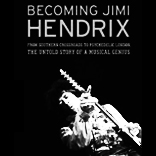
Black Clock 12 contributor Brad Schreiber and Steven Roby read from and discuss their latest book.  Becoming Jimi Hendrix is the first biography of Hendrix’s formative years and received 3.5 of 4 stars from Rolling Stone.  “Most important,” according to Rolling Stone, “[Roby and Schreiber’s] book shows how Greenwich Village was crucial to Hendrix’s 1966 breakthrough.”

Sept 17, 7:30pm
Skylight Books
Los Angeles, CA

Sept 23, 7:30pm
Powell’s Book Store (Hawthorne)
Portland, OR

Sept 25, 7:00pm
Elliott Bay Book Company
Seattle, WA

October 8, 7:00pm
Book Passage
Corte Madera, CA

Seth Greenland Everywhere

Seth Greenland is a success wherever he goes, from plays, to television and movies, and novels. Google him and find out he was an original blogger for The Huffington Post or follow him on Twitter to learn he’s just played a gay polygamist at a table reading of Big Love—he writes and produces on this year’s season—or that his third novel, The Angry Buddhist, has just sold in France. His first two books, The Bones (Bloomsbury 2005) and Shining City (Bloomsbury 2008), were both quickly optioned by movie studios. A television writer fed up with the hollow art he is forced to create to survive, an angry comedian trying to fulfill his personal philosophy of burn, burn, burn, a widowed grandmother finding solace in medical marijuana and pole-dancing, and an everyday couple hit hard by economic turbulence to whom luck is granted with inheritance of a prostitution ring are only some of the characters who inhabit Greenland’s literary world. Though some critics deem his fiction satire, Greenland disagrees, and frankly, so do we. His fiction, both timely and relevant, artfully extricates the absurd from the everyday and paints through characters who are almost instantly recognizable while constantly alive. This is not a sales pitch: just read him and you’ll see. Greenland’s wit is unmatched suggesting a personality almost ubiquitously connected to the world in which we all live.

BLACK CLOCK: You have had success as a playwright, a screenwriter for both television and movies, and now novels. Do you see this as an accidental evolution of your artistic career or simply the means of survival for a modern, professional writer?  What’s next?

SETH GREENLAND: My career has been largely unplanned but to say it was “accidental” doesn’t quite get it right, either. I started out as a writer of mediocre fiction in college. Probably not much worse than what others were doing, but my work certainly didn’t show vivid promise. I was an English major as an undergraduate and to me there was no higher form of creative expression than the novel. If I thought I had the talent at the time, I would have pursued a career as a novelist, but I’m getting ahead of myself. Since I was a lover of movies (or “films” as we called them in the seventies) and I thought I might like to make them, I earned an MFA from NYU film school and set out to be François Truffaut. Unfortunately, that job was taken. Through happenstance, I found myself writing for television shows in Los Angeles. I didn’t care for the work I was employed to do and hightailed it back to New York where I began getting hired to write screenplays for what were intended to be independent films. These scripts generally wound up in the drawers of the producers who had paid for them since they were often unable to find financing. This was a source of endless consternation. You pour your heart into something and its readership consists of your agent, two producers, eight assistants (all of whom think they could have done it better), and ten financing companies.  Since I had always enjoyed going to the theater, I thought I might try writing plays. This worked out well for a while. I began getting higher paid screenwriting work and that subsidized my theater career, although to call what I was doing in theater a “career” would be a slight exaggeration since that implies a certain base income; hobby was more like it. Getting these plays produced on main stages at regional theaters involved an arduous, multi-year process of development, readings, more development, a workshop and then, if the artistic director was having a good day and the moon was in the seventh house, your play might finally get produced. This routine became tiresome to me, and I concluded that the time had come to try my hand at writing a novel. I recently finished my third one, titled The Angry Buddhist, thanks for asking. When I’ve done money gigs, I’ve always simultaneously worked on something I’ve cared deeply about. This is what has allowed me to survive as a writer. That and a willingness to always try something new.

For Shining City you made your own short trailer starring you as you, your aunt as your aunt, and several girls as prostitutes. Clearly you aren’t shy of marketing. What motivated the clip and will you make another for your new novel?

What motivated me to do the video was simple math. Innumerable books are published each year, by authors famous and unknown, all of them vying for limited media oxygen. Anything an author can do to call attention to his or her book, short of self-immolation in front of the Pentagon, is fair game. Your publisher will generally do as little as possible and hope you won’t notice and bother them about it. Hence, the video, which can become a story in itself. The one for Shining City was featured in an NPR piece about book videos and that brought more attention to the book.  I attribute most of the sales of Shining City to the video. So will I do one for The Angry Buddhist? Most likely. Either that or I’ll just toss caution to the wind and self-immolate in front of the Pentagon. The era of sitting back and letting the world discover your brilliance on its own is over, alas.

Bloomsbury isn’t to blame for the lack of marketing effort, is it? Will The Angry Buddhist be published by the same company?

No, it’s not Bloomsbury’s fault. It’s endemic to the business. I will restrain myself from boring you with why this is so. As for who will publish The Angry Buddhist in North America, that is still to be determined since we will not be offering the rights for sale until after the summer.

You’ve mentioned before that you had quick success finding your publisher, and both of your earlier books were also quickly picked-up by movie companies—The Bones by Sony and Shining City by Warner Brothers. Did that stem from more hustle on your part? What’s the status on both screenplays?

My novels being optioned by movie studios had very little to do with my “hustle.” Getting movie people interested in my books is not one of my superpowers. I have good representation and that is their area. As for the status of the screenplays, The Bones is in turnaround (translation: Sony is not going to make it), and Shining City is in active development at Warner Brothers.

Your involvement with screenwriting and novels has given you a curious position. Do you see any sort of influence that one medium has on the other or any other connections between contemporary fiction and film? Do you see any elements of either bleed from one to the other in your own writing?

Movies boil the idea of what a novel is to its essence: a coherent, forward-moving narrative where you want to find out what happens next. Each medium has an impact upon the other. Novels have always influenced filmmaking since they’ve provided story fodder since the beginning of the medium. The balance of action and reflection that is built into movies is borrowed from novels as well. And today you can see the influence of movies on novels, particularly in genre works where the stripped down storytelling is highly filmic and especially in graphic novels, which use film grammar and are like storyboards for movies. You can see the influence of the novel in television, too, particularly on cable series, where each season of a show will often have a novel-like arc. The one quality I notice from my career as a dramatist that bleeds into my novels is my liberal employment of dialogue which I try to use to advance the plot as often as I can.

What advice would you give young writers struggling to write good dialogue?

In writing novels, where I am generally attempting some version of naturalism, what I try to do is approximate real speech without imitating it. Real speech, with its stops, starts, and stutter steps, repetitions, tics, and digressions is easy enough to mimic but lacks urgency on the page. So the trick is to capture something that sounds like real speech but actually isn’t entirely real, by virtue of being more economical and focused. Another thing I try to get right is the rhythm between my characters. It’s the rare writer who can sustain an aria from one character while another just stands there and listens. For a dialogue-driven scene to be interesting it helps to have characters interrupt, ask questions, augment what someone else is saying, argue their point, anything to make the scene feel more alive. Finally, the characters should not sound alike. Try to give each of the characters a unique voice so that—even if the line doesn’t end with “John said” or “Mary said”—the reader will have a pretty good idea of who spoke it. A final note on this subject: There’s a terrific crime novel written by George V. Higgins called The Friends of Eddie Coyle. Writing students will benefit from taking a look at this book because the story is told almost entirely in dialogue and Higgins is a master.

Does a short piece like “Al Agonistes,” from Black Clock 9, which is written entirely in Al Gore’s interior monologue, develop from a single piece of dialogue? To that end, how do you pick what you write about?

During the run-up to the 2008 election I wrote a series of satirical monologues in the voice of John McCain for The Huffington Post. When the chance to do a political piece for Black Clock came up, I wanted to do an interior monologue in another politician’s voice. The “Al Agonistes” piece came from wanting to write in the voice of an individual whom the chattering class no longer deemed relevant, someone who felt ill-used. Gore is fascinating to me because he’s a guy who was elected President but never allowed to serve. Not to be too heavy, but his tragedy is our collective tragedy. I thought he was a great subject and worthy of a much longer piece. The man is a walking novel. I tip my hat to him.

Insofar as your question as to how I choose what I write about pertains to novels. I write about what interests me, what I think I can go on about at some length. If I have a strong opinion on the subject or an aspect of the characters or the world, that helps. And if I have a certain degree of passion about it, that can help, too. In terms of how I choose what to write about among the variegated ideas vying for my attention at any given time, that’s a process of elimination. Most of the time, I have a number of ideas whirling around in my head, some with great potential, some with less potential, still others that I would never mention out loud. They wax and wane individually over time, some gaining more heft, others diminishing. When one of them begins to feel substantial enough that I can begin writing with a good head of steam, that’s when I know I’m ready to get to work on it.

What inspired the Smart Tarts in Shining City? And is it too early to ask about The Angry Buddhist?

The Smart Tarts were inspired by an article I read in the Los Angeles Times sometime around 2005. A middle class couple in the South Bay with two young kids had been busted for running a prostitution ring out of the kitchen of their suburban home. On the surface they had this normal, bourgeois life, but of course there was far more going on than met the eye. Their plight struck me as a resonant metaphor for what was going on economically in the country and an indication of the extent to which people would go in order to survive (and this was before the economic meltdown). And, needless to say, I thought the whole thing was darkly funny.

The Angry Buddhist came about because I wanted to write about the political climate without telling a straightforward political story. The book is set during the week leading up to a Congressional election. A Congressman is running for re-election and something goes spectacularly wrong for him. The novel is about what people will do in order to survive in a world where morals are situational. All three of my books have been about that, actually.

What draws you to this theme?

I’m interested in the idea of situational morals because it’s a remarkably rich, relatable area. And it’s something people deal with in their lives every day.  When someone reads a book about an ordinary person who finds themselves in a moral gray area, it’s natural to ask what you—the reader—would do in a similar situation. How would you react, would you make the same decisions, or different ones, and what lines would you be willing to cross? Do I think morals are situational, per se? I probably do, actually. An example: Do I believe in stealing? Or course not. Would I, like Jean Valjean in Les Miserables, steal to feed my family if they were starving? Absolutely. But would I become a pimp, like Marcus Ripps in order to feed them? Probably not. A psychiatrist would have to weigh in on the distinction, but there it is. I’m interested in exploring the idea of right and wrong, the idea of where these notions spring from, and the price paid for the decisions we make. To me, there is nothing more fascinating.

Your novels juxtapose dark humor with very human, very real concerns. One example that comes to mind is in Shining City when your characters find themselves with a dead body and a serious need to dispose of it; as the scenario plays out, the experience is highly-bonding for the two characters. How do you find the balance between, as one review put it, “the preposterous and the plausible,” and, further than that, the satirical and the soulful?

Finding the balance is tricky because the slightest misstep can take a scene from “playing as inspired” to “playing as implausible.” What I try to do is ground my characters in genuine human emotions, and let those emotions play out in the wilder situations. I often place myself in the center of the action and try to imagine what I would do were I to find myself in similar circumstances. In the case of Marcus Ripps, his wife Jan, and the dead body in Shining City, I don’t think anything they do either behaviorally or emotionally is implausible or inconsistent with who they are as characters. Surprising, perhaps, but not inconsistent. Some critics have called my books satires but I consider myself more of a realist than a satirist. Reality, truth be told, has caught up to satire but some people still haven’t noticed.

How so?

The notion that reality has caught up to satire, all you have to do is look around. The television show Jersey Shore, the mainstreaming of pornography, Sarah Palin, the Tea Party, The Birthers, the absurd things believed by conspiracy theorists on both the right and the left…great swaths of the country have accepted greatly exaggerated ideas, ideas that are completely ridiculous in some cases (Obama is a Muslim? Really?), as real and this leaves little room in which the satirist can maneuver. As I mentioned earlier, Shining City was actually inspired by a middle class couple with two kids in suburban Los Angeles who were running a call girl ring out of their kitchen. Yes, there are embellishments in the book, but the basic story is as real as the economic environment that inspired the couple to get into the sex business. So when people write that it’s a satire, I lift an eyebrow.

Do you see anything new, in art in general and in your writing, burgeoning from this?

I think that these things, while on one level horribly depressing, are all terrific fodder for fiction (at least it’s good for something). So, yes, I do see valuable art emerging from it. It’s the artists’ role to comment on this stuff and there is no shortage of craziness on which to comment, to explicate, and–not to be pedantic, but–to draw lessons from.

The mentioned NPR interview, “In a World…Where Books Are Hyped Like Movies” by Jesse Baker, may be found at www.npr.org. Seth Greenland’s trailer, and other videos, may be found on his website, www.sethgreenland.com, along with a list of upcoming events he will be attending.

by Justus Caudell
an MFA Writing candidate at CalArts

Grace Krilanovich + Joshua Mohr Read (9/09@7:30PM in LA)

when September 9, 2010 @ 7:30PM
where Skylight Books, 1818 N Vermont Ave, Los Angeles, CA 90027 (313) 660-1175

Admission is free.

Black Clock contributor Grace Krilanovich reads from her debut novel, The Orange Creeps, which we loved so much we published excerpts from it in Issue 4 AND Issue 7.  Fellow Two Dollar Radio author Joshua Mohr reads from his new highly-praised book, Termite Parade.

Grace Krilanovich has been a MacDowell Colony Fellow, and a finalist for the Starcherone Prize. Her first book, The Orange Eats Creeps, is the only novel to be excerpted twice in Black Clock.

Joshua Mohr is the author of the novel Some Things that Meant the World to Me, which was a San Francisco Chronicle bestseller and one of Oprah Magazine‘s Top 10 reads of 2009. His second novel, the newly released Termite Parade, has been called “No small achievement” by The New York Times Book Review. He has an MFA from the University of San Francisco and has published numerous short stories and essays in publications such as 7×7, the Bay Guardian, Zyzzyva, The Rumpus, Other Voices, the Cimarron Review, Gulf Coast and Pleiades, among many others. He lives in San Francisco and teaches fiction writing. Please visit him at joshuamohr.net.

More information is available on the Skylight Books website.

Rick Moody Reads (9/01@7:30PM in LA)

when September 1, 2010 @ 7:30PM
where Skylight Books, 1818 N Vermont Ave, Los Angeles, CA 90027 (313) 660-1175

Admission is free.

Rick Moody—Black Clock contributor (Issues 1, 2, 4, and 9) and award-winning author of Black Veil, Demonology, The Diviners, Garden State, The Ice Storm, Purple America, and Right Livelihoods—reads from his new novel The Four Fingers of Death.

“The book is entertaining and often poignant, probing the limits of technology, consciousness, and language in the face of grief.” — The New Yorker

“The Four Fingers of Death reads […] like a 700-page Kurt Vonnegut book.” — Time Out New York

Making a Space with Brian Evenson

Brian Evenson is owed some karmic rewards.  The publication of his first novel, Altmann’s Tongue, generated enough controversy to oust him from his teaching position at Brigham Young University, rattle his faith, and sever close personal relationships.  Asked to stop publishing or risk censure from the Mormon community, Evenson opted to keep writing, leaving his position and his family behind.

Since that decision, however, Evenson has garnered a wealth of awards and critical success, including an O. Henry Award for his short story “Two Brothers” and International Horror Guild Awards for The Wavering Knife and The Open Curtain.  Known as a writer who defies easy classification, he has received equal recognition from both literary and genre presses.  And the payback just keeps coming: Evenson’s latest novel, Last Days, won the 2010 ALA/RUSA Prize for Best Horror Novel; his work has been adapted into a variety of other media–most recently a stage version of Father of Lies; to date, his writing has appeared in four of twelve issues of Black Clock; and he currently serves as both a professor and director of the Literary Arts Program at Brown University.

Evenson’s work, though consistently divisive and occasionally iconoclastic, demands to be read.  An aura of mystery, in the oldest sense, permeates his writing, fueled by symbolism that seems to function outside rationality and violence that is incomprehensibly rational.  Characters with innocuously simple names enact atavistically simple motivations as they drift through uncertain, but curiously familiar, settings.  “The Munich Window” features one of the most despicable yet irresistible narrators seen since Nabokov, and Last Days takes readers on a harrowing trek through an underground world of obsession and self-mutilation.  In a recent review of short story collection Fugue States, Steve D. Owen called Evenson “the contemporary inheritor of the newest irrealist tradition” for the epistemological incertitude that permeates his writing.  Recently, Black Clock was able to chat with Evenson and explore the methods and motivations behind his work.

BLACK CLOCK: Your novel, Father of Lies, recently received a stage adaptation by director Jose Zayas.  How was that experience for you?

BRIAN EVENSON: It’s always amazing for me when someone adapts my work in one form or another, just because it creates possibilities for it that I maybe didn’t see.  There’re things a play can do that aren’t really possible in a work of fiction.  I’m afraid I haven’t seen Jose’s adaptation yet because the only days it was up were when I was out of the country, but I’ve heard only good things about the performance from friends who saw it.  I’m very excited to watch it on DVD: I’ve heard he’s done some very interesting things with darkness and staging and with the intimacy of the performance.  But I’m always for adaptations.  When Zak Sally adapted a story of mine into a comic, for instance, it was really great.  The other kinds of adaptations I’ve had, ranging from electronic music to radio plays to an experimental opera, I’ve been really happy about.

When you’re writing, do you ever picture what it would be like if it were adapted into a different medium?  The visual aspects of it?

I think a lot of my work is very visual, so I do have a pretty clear visual sense of what’s going on with a story.  But I don’t think I ever sit down and think, “Oh, this would make a great movie, this would make a great this or that.”  There have been four or five short films made based on my stories, and it’s sometimes really interesting to see how different the visual ideas the director has are from the ideas that I had in writing the story. But I’ve also been very happy with those adaptations as well.  I think that it just expands the work.  Obviously there’s a lot of openness in my work.  There’s an attempt on my part to make a space that people can enter into and make their own.

That’s an interesting concept.  Do you want to talk about that for a little bit?

I think there are different ways to think about writing.  One thing that I try to do is think about writing as something that serves as a catalyst, that connects to the reader, and the reader ends up completing the story in some ways, filling it in.  As a result I think there’s a lot of ambiguity and openness in my work.  Even though there are strong visual components, it’s work that demands active participation on the part of the reader.

Does that ambiguity arise from your particular approach to writing?  Do you sit down and say “I’m going to write such-and-such a story” or do you try to leave it more open for yourself as well?

Any time I have a clear idea where a story’s going before I’m close to the end, I usually don’t finish it, just because I get bored with it.  So yes, I think part of the process for me is trying to do something that feels at least a little bit new to me as I’m writing it.  I want a story that’s holding my interest, or a moment along the way that surprises me,  or that I don’t know where it came from, that seems to have tapped into something that I don’t really understand completely.  As a reader, I’m really interested in work that upsets the easy definitions I have for how a story should work.  I like fiction that does things that I can’t predict, but that does them so artfully that they seem natural and necessary at the same time as they seem surprising.  So I think that as a writer what I’m trying to do is get to a place where the story is something the reader is really involved in, but sometimes caught off guard by, or turned over by, or disrupted by in some way or another.

Earlier, you put this concept together of creating a space that the reader can enter into.  I’ve noticed that in a lot of your recent work especially there is a lot of imagery involving geometric, enclosed spaces.  Is that part of why that imagery recurs in your writing?

I think it might be partly that.  I’ve always been interested in the notion of enclosed spaces and characters that are put in a position of trauma, or put in a position where they don’t quite understand what’s going on around them.  I like the notion of being trapped, and the notion of being in a space that one either does or doesn’t understand very well but that one has to deal with.  I think those are things that always come up in my work.  I think part of it is the influence of Beckett.  I really love what he does in his work in terms of the almost geometrical quality of the descriptions, and how you have in something like The Lost Ones a very careful description of a space and of a cylinder.  But you also have that in a lot of his work.  In something like Company, you have these moments where the descriptions seem almost geometrical.  For me, I’m not really sure where that’s coming from or what that’s about exactly.  It may be partly that my mother is an architect.  I think it’s really an interest in spaces and the way in which we function in relation to spaces.  It’s partly an interest in dwelling, and houses, and things like that, but it’s also an interest in how many spaces just feel constricted and restrained.

If you had it completely figured out, I’m sure it wouldn’t be as interesting for either you or the reader.

I’m sure that’s right.  Gaston Bachelard has a book called The Poetics of Space in which he talks about the relationship of spaces, and my interest may be partly coming from that and from phenomenology as well.

Other than philosophy and Beckett, do you have any other influences outside of prose fiction?  Beckett wrote some prose but he was also a playwright.

Well, a lot of the Beckett work I’m really interested in is the prose: I think he does some amazing things in his novels.  But I came to his plays first.  And someone like Thomas Bernard is similar—someone who is as well known for his plays as for his fiction, but does really interesting things in both.  He’s really interesting to me both as a playwright and as a fiction writer.  Same with Friedrich Dürrenmatt.  And I read a lot of contemporary poetry, the poetry of my colleagues at Brown of course but also a great many others, ranging from well-known poets like Ashbery and Creeley to lesser known people.  I don’t know if the influences are as direct there, but I’m very interested in language and the way in which language can be manipulated, and poetry’s taught me a lot about that.  And film has been a huge influence as well.

Any specific films?

When I was quite a bit younger, I saw Blue Velvet, the David Lynch film, and that was really unlike anything else I’d ever seen.  It really blew wide open the notion for me of what was possible with film.  Since then, I’ve come across a lot of other films that I’m interested in in different ways.  But that one was a film that I came to very young, and it was pretty important.

And that also has that famous scene where Kyle Machlachlan’s character’s hiding in the closet; there’s that entrapment there as well.

Yeah, that definitely has that.  That particular scene I think is pretty amazing.  Fritz Lang’s M and The Testament of Dr. Mabuse were two other films I watched early on and have watched repeatedly.  They’re very important to me as well.  Michael Haneke’s films too.

I wanted to ask you about the controversy that surrounded your first published book, Altmann’s Tongue.  It was a pretty major controversy that altered your life in a lot of ways.  Do you think it’s helped shape the writer you’ve become since then?

Yes.  Just to give people a sense of the controversy, my first book was published while I was a professor at Brigham Young University, which is a Mormon school.  At this point I’m an ex-Mormon, but at the time I was Mormon.  There was a student there who was not one of my students who sent an anonymous note to a Mormon Church leader saying that my book Altmann’s Tongue was evil, and that it should be banned and that anyone who had written it shouldn’t be allowed to teach at BYU.  The university called me on the carpet and asked me to explain the book, and I did my best to do so.  Then as time went on it became clear that they just wanted me to stop writing.  And then the anonymous letter was released to the press and it became a pretty major controversy.  At the time it was really irritating and traumatic, because it was my first job out of graduate school, I’d been at the school not very long when this happened, probably about a year if that. I really had to start the process of deciding if I was going to stay, and, if I was going to stay, if I was going to stop writing.  Because they said to me directly that they didn’t want me to continue with writing the work I was doing.  But then I found a job at Oklahoma State, and left, and have gone on from there to have a very productive university career.  At the time it was hard, because I was supporting a young family, trying to figure out what to do, but in retrospect what it did for me, which I think was very important, was that it made me realize that people really would respond strongly to what I did, either positively or negatively.  So I got the sense very early on that what I did as a writer mattered.  I think most writers go through their career without necessarily feeling that, at least to the extent I did.  It made me think very carefully about every word, it made me really conscious about what I was doing, and ultimately I think it was a kind of gift.  To begin as a writer really feeling like what I was doing mattered and would have consequences.

That’s a great take on it.

(laughs) Yeah, it’s something that over time I’ve come to feel more and more.  It’s partly because as time goes on, the trauma associated with that whole experience has faded a lot.

At the time, when you were writing Altmann’s Tongue, did you have any notion that it would be considered at all dangerous or evil?

I was a little surprised by that, partly because when I interviewed for the job I’d mentioned Altmann’s Tongue and explained what I was doing.  The interview committee had said to me, “Well, is there sex in the book?”  And I’d said, “No, there’s not actually much sex at all in the book.”  And they said, “Well, as long as it’s just violence it’ll be okay.”  So I went into the experience thinking that I’d checked and made sure that I was doing something that could at least be considered acceptable.  So it did catch me a little bit off-guard.  And in terms of violence, there are all sorts of books that are quite a bit more violent than Altmann’s Tongue.  But the violence in Altmann’s Tongue is very deliberately done in such a way as to be unsettling.  It’s not movie violence.  One thing I was interested in doing was trying to restore a sense of violence as something that disrupts the social order and destroys the individuals that practice it, violence as something truly disturbing.  And in that sense, I think that the response I got to the book from the Mormon community showed me that in fact I’d succeeded in doing that, that I’d made violence threatening again, rather than something that you could just say “Oh, if it’s just violent, it’s no big deal.”

Is that something that you’re still working on in your writing?

I don’t think it’s something I’m working on as much at this point, at least not primarily.  There have been moments since Altmann’s Tongue where I’ve been interested in exploring issues of violence, and I think there’s a thread of violence that runs through my work, but the stuff I’m more interested in at this point is trauma, and the psychology of trauma, and how people respond to difficult situations.  It’s closely related, but there’s a little difference in emphasis and, consequently, a little more psychological depth.

To shift gears a little bit, you’ve recently written a few books in established franchises under the name B.K. Evenson.  Because you’re publishing under a different name, even though it is another form of your actual name, it seems as though you want to keep it separate from your other work.  What’s the distinction you’re trying to create between that and your other fiction?

It’s not that I want to keep it utterly separate; I just want a slight distinction.  I didn’t use a pseudonym, I just used my initials and last name, and I think it’s because when I started doing these things—I’ve done three things now: one is an Aliens book based on the movie Aliens, I did a short story for the video game Halo, and I just published last week Dead Space: Martyr, which is based on the video game Dead Space—it was partly that at first I thought, “Well, there are going to be people who are interested in these books who aren’t interested as much in my other fiction and vice versa, so I’ll put them all under the name B.K. Evenson so that if they liked the Dead Space book they can find the other things like it.”  But the thing that I found when I was writing them was that even they’re probably not quite as complicated as much of my literary fiction (partly because I’m working with a pre-existing property, there are certain rules that they want me to follow), the themes and the ideas that are dealt with in those three pieces are really very much part of my universe.  So there are scenes in Dead Space: Martyr that are pretty directly connected to what I’m doing.  It just happens that there are also twisted and reanimated dead.  It’s a different take.  It’s very similar; I’m not ashamed of those books, but I also think that they’re not necessarily the things I’m going to be remembered for, if I’m remembered at all.  At the same time, I spent a lot of time trying to make the Dead Space novel the best video game novel out there.

When you were writing those books, you said that it’s simpler in some ways.  Is it sort of a relief to be able to work within an already established universe, or are you itching to get back to your more personal projects?

One of the reasons I’ve started doing these is because while the school year’s going on—I’m the Chair of the Creative Writing Program at Brown right now—it’s sometimes pretty hard for me to find the time to do sustained writing.  If I’ve started something, it works really well; otherwise, it’s pretty difficult.  But with these books, the people I work with want me to do an outline first, so I do an outline that ends up being fifteen or twenty pages.  So I have a kind of structure that I can work with.  And they’re also really fun to write, and I can give myself permission to think of it as something that I’m doing for fun, that doesn’t seem like work.  So they’re books that I can write when school’s going on and when I have all these other administrative things that are taking up my time.

I’ve read before that you had an, uh, memorable experience of the first Alien movie when you were younger.  Are you also a fan of the Halo and Dead Space universes, or is that more something that you saw as a good fit for your style of writing and your ideas?

The Aliens book really did fit incredibly well.  The first movie in particular something I grew up with.  I remember the first time I watched it, and there are moments in that movie I think are still really amazing. I’d played Halo, and was interested in it, and had an idea for something I could do which would be somewhat different than what other people had done with Halo stuff in the past.  So that became interesting to me, to think about how can you take this pre-existing thing and move it in a new direction.  I do this with genre in my more literary work as well.  Some of my work responds to genre, whether it’s horror or something else, in a very direct way.  And then with the Dead Space game, I think it’s an amazingly horrifying game, and really fun to play, and I’d played it in advance of being asked to write the novel.  It seemed like a really natural fit: I could immediately see ways in which I could find a space for myself within the format of the Dead Space world.  And the other thing I loved about Dead Space is that there’s this weird religious component to it, and that seemed like a good fit for some of the things I do.  Religious strangeness is never too far away from my work.  Like how Last Days is grounded in this notion of a crazy religious cult.

This may sound like a bit of a left-field question, but in Japan in the 1920’s, and then later in postwar Japan, there was an art movement known as Erotic Grotesque Nonsense.  That specific movement is pretty contained in that area of the world, but I think I can detect a similar interplay between the erotic, the grotesque, and the absurd/nonsensical in some of your work.  For instance, in “Eye” from Altmann’s Tongue and in “Invisible Box,” which was featured in Black Clock 7 and is included in Fugue State as well.  Do you see those three elements working together in your writing in any way?

The grotesque is always there, I think.  In almost everything I do, the grotesque is present.  The erotic is there in some pieces, and not in others.  Obviously “Invisible Box” is playing around with that pretty directly, and “Eye” is doing it as well, in two very different ways.  The thing about “Invisible Box” is that you start in a space that seems like it’s funny, and then it gets stranger and stranger.  I don’t know the Erotic Grotesque Nonsense movement from Japan, so it’s hard for me to know how to respond directly to that, but at the same time I am really fascinated by someone like Hans Bellmer, who does stuff with doll parts and erotic drawings that are also very, very strange.  So yeah, I think there is some presence there.

A lot of your work can be described with “sub-” words: subconscious, although I know you don’t really agree with the concept; subversive; subjective; subterranean; finally, subdermal is a great descriptor for many of your stories.  There isn’t exactly a question here, but can you talk about some aspects of your writing that occur below the surface?

I mentioned before that when I’m actually working on a story if I know where it’s going and have a sense of how it’s going to play out, I’m not that interested in it.  When a story’s working really well, I become very connected to the process of thinking about the language of the story, in the sense that I allow my conscious mind to be distracted by the language of the story and the way in which the language is working.  And that opens something else up, and allows certain things to organize themselves or certain things to happen that wouldn’t necessarily happen otherwise.  As you’ve mentioned, I’m a little bit uncomfortable with the word “subconscious.”  It’s not that I don’t believe that there’s something that exists below the conscious mind, it’s just that I question the formal way in which we think about it.  It’s partly that that word, “subconscious,” culturally has so much baggage that goes along with it.  But at the same time, I really do feel that good writing for me is something that accesses something that exists that is very hard to get at in other ways.  Outside of artistic media, it’s very hard to get at.  For me, when a story’s really working well, something is going on with the language, and the rhythm, and the sound of the piece, as well as the way in which different regimes of meaning are crosscutting, that ends up connecting to the reader on a subdermal or subterranean—whatever you want to call it—level, that kind of plugs into you in a different way than information does.  And that’s what I’m interested in: thinking about writing as something that’s intensive or affective, as something that is short-circuiting some of the things that are seen as the norm for us in terms of our day-to-day confrontation with language.

Is that part of the reason that you draw influences from the horror genre?

Probably, yeah.  I think it’s partly just that horror is so interested in mood, and creating a certain kind of mood.  It’s a very curious genre.  Horror for me is really defined by creating a certain kind of mood.  And that mood, also, when it’s done at its best, ties into basic fears that we have and explores things that we generally leave covered up.  My work has always had one foot in literature and one foot in horror, and it’s really interested not in being in one camp or the other, but in straddling and trying to use as many different sorts of things as I can to create an effect for the reader that’s intensive in the same way that experience is intensive.  I think that fiction can be experiential.  You feel, when you read a story that’s intense and very good, that you’ve actually experienced something.  Good fiction should be able to have that effect, should be able to increase your heart rate, should be able to make you feel like you’ve lived through something.

You’ve been a frequent contributor to Black Clock.  What is it about the magazine that draws you back?

There are several things.  One is the design of the magazine:  I think it’s incredibly nice-looking, very beautifully done.  I also think that Steve Erickson, the editor, has made great choices and has good taste.  So I always feel like I’m in exceptionally good company when I’m in Black Clock.  One of the appeals for me is knowing, even if I don’t know for sure who’s going to be in the issue, that I’m going to like the work that’s there, and that I’m going to respect the aesthetic that’s been used to assemble the work.  It’s that, as much as anything.

by Byron Alexander Campbell
an MFA candidate at CalArts

Cultural Capital vs. Just Plain Capital

This is the third in the “The Real Economics of the Purely Imaginary” series, which circles some very large, very unwieldy, and–for precisely these reasons–very tantalizing questions about knowledge, creativity, teaching, writing, and the university.

I was in the bookstore last night.  Not the indie bookstore that also sells used records–the chain bookstore that also sells lattes.  I should have known better.  Of all the places people go to make themselves feel bad–the gym, home for Christmas, swimsuit shopping, whatever–the chain bookstore, to me, is the worst.  Viewing the shelves filled with political screed, chick lit, and coffee table trophies is an efficient way to a) ruin the nice feeling that comes after a productive day, and b) convert the blah feeling that comes after a nonproductive day into a serious downward spiral.  Is this true just for me, or do other writers experience this?  Granted, it’s easy to make me feel bad.  Like Bridget Jones, I already feel like an idiot most of the time.  (The difference between me and Bridge, though, is that she gets to say “I feel like an idiot” to a sexy, successful lawyer who wants to take her… out for dinner and a movie.  Also, Bridge has a fun career in television.  But I digress.)  Writers who are at peace with what they do, even if they labor in obscurity, may not agree with me about the deleterious effects of a trip to Borders or Barnes & Noble.  But if their self esteem soars after a trip to the big box bookstore, they are probably either famous, possessed of a healthy body image, capable of writing brilliant first drafts, or some combination of the above.  They sound like lovely people.  But I’m not talking about healthy self esteem this week; I’m talking about masochism.

The chain bookstore makes me–and probably you, and probably every writer you know–feel bad because, it seems, every idiot with a word processor and spellcheck can publish a book.  Every idiot, that is, except us.  But more importantly, this big fancy bookstore presents a weird paradox.  On the one hand, we all know, if we read the news online once in a while, that the publishing industry is in steep decline.  Sales are down and shrinking, publishing houses–even the big ones–can’t stay in the black, and if an arty little tome happens to make it to print, Lord knows what compromising acts the publisher had to do to finance it.  (Probably sign with Joe the Plumber.)  People don’t buy books–not the good ones; people don’t read books–again, not the good ones, unless Oprah tells them to; and it’s not long before books make like dinosaurs and retreat underground where they will wait millions of years until humans unearth them and use them as fuel.  But how is one to believe in this doomsday narrative when strolling through several huge, carpeted, air-conditioned levels of retail space, filled with thousands, if not millions of books?

But then one tries to find the poetry section.  At my local Barnes & Noble, poetry occupied one measly section of shelf in a tumbleweed-strewn corner of the store.  There was the requisite Emily Dickinson and the Robert Frost, but most of the section was a mix of pseudo-Norton Anthologies and utter trash–Great Poems of the English Language, 1000 Poems to Read to Children, Poems for World Peace, How Many White Male Poets Can Dance on the Head of a Pin?, Vampire Poetry Through the Ages, Pastor Bob’s Christian Inspirational Poems for Young Girls.  If shelf space is a measure of what people buy–and by extension, obviously, a measure of what people read–only college syllabi or the flimsiest marketing ploys might coerce, or dupe, the unsuspecting consumer into buying a book of poems.

And this state of affair holds true outside the poetry ghetto.  For example: if it’s something thrilling and weird people want, why are The Girl With the Dragon Tattoo books topping bestseller lists and not, say, Lucy Corin’s astonishing Everyday Psychokillers?  (For the record, I read The Girl with the Dragon Tattoo, and I loved it.  A good laugh was exactly what I needed that day.)  Yes, I’m ranting.  And yes, I probably would have been better off skipping Barnes & Noble and instead trooping across the street to Pequod’s Pizza, where I could have eaten myself into either oblivion or a better mood.  But it seems that the choices for writers are:  1) crank out some marketable crap, which may in fact get you grocery money, 2) write what sustains you, at which point you may as well put it in a drawer or line your kid’s hamster’s terrarium with it, or 3) day job and quiet desperation, followed by the inevitable shooting spree in the exurbs.

Clearly this is not a new viewpoint I’m proffering here.  But if you want to think about what actually constitutes cultural capital, or the real economics of the purely imaginary, or score any points for the “An English degree is not a fatuous waste of time” side of the debate, you’ll need to take my rant at least semi-seriously.  Really, why should anyone spend time attempting to read, write, produce, discuss, and engage with literature, considering the mulch that passes for books these days?

The problem, as I see it, is that literature is a gentleman’s pursuit–and we no longer have gentlemen.  That is, a class of independently wealthy, well-educated, and erudite men (and yes, historically, letters have been a man’s game) who can afford to invest their time in artifacts which have no commercial value–unless, that is, we look at the university English department.  For instance: one highly-paid woman in my department runs the composition program.  Translation: her program purports (practical outcomes are another matter) to teach students a measurable, practical skill, which they will need in their toolkit in order to succeed the next four years of their lives–how to write papers in college.  Although this professor does respectable and necessary work, is widely published, and oversees a program that ensures every single student who graduates from the university will take at least one course in the English department (their freshman comp course), hers is not regarded as an intellectually or artistically high-status position.  In fact, without her program, the size of the department, and its share of funds, would probably shrink dramatically.

By contrast:  A highly-paid male professor, who oversees a more intellectual aspect of the department, writes books containing arguments about obscure bodies of literature and obscure schools of thought–arguments which can have a real-world effect only in a lit-nerd’s wildest utopian fantasies.  Translation: no practical skills here, but high pay and very high prestige.  I’m making no claims about who works harder or who deserves more respect–both professors work very hard, both on their own research and in their engagements with students.  But the male professor gets a higher payout, both in salary and in prestige.

Which one is the gentleman, and which one is the worker?

I’m not arguing for commercial value as a measure of actual or absolute value, by the way.  If I were, I’d have recommended Stieg Larson over Lucy Corin.  I’m also not faulting or valorizing either professor for teaching and researching what he/she teaches and researches.  I’m also going to step aside from gender questions, because, while I do think there is a gender bias at work, my main point isn’t about gender inequality.  The inequality I want to point out would remain the same whether both professors in this example were female, or both male, or if the higher paid professor were female and the lower paid professor were male.

There is a distinct hierarchy visible here in the kind of literary work that is valued and in how that value is shown.  I wonder, also, if this imbalance doesn’t have some link to the way literary value plays out at Barnes & Noble.  After all, the two situations look like mirror images of each other.  On the university side: work of practical value, which is intended for all students to access or engage in, gets less pay and less prestige, while work of little practical value, intended for a elite few, gets more pay and more prestige.  On the bookstore side: work intended for the elite few–that is, work with what we might call great cultural value–brings in little money, and takes up little shelf space, while work of perhaps lower cultural value dominates the store and brings in the most money.

This is fine for the bookstore.  The bookstore is a business.  It measures value in money, and so in the world of the bookstore, poetry, or erudite fiction, and so on, are less valuable and treated accordingly.  But the university is not a business–at least, it does not purport to be, despite the fact that more and more universities are adopting business practices in order to try and balance their budgets.  The university’s economy is primarily one of cultural capital–prestige, intellectual worth, social cultural value.  These values, by definition, are not supposed to be measured with money.  In fact, they are supposed to defy any attempt at stamping a dollar sign on them.  Intellectual, cultural, social, artistic merit–these things are supposedly priceless.  Yet the university uses money to measure and reward the acquisition, production, and proliferation of cultural capital.  Isn’t this a problematic mash-up of economies?  What it means, in real-world terms, is that a system of cultural and intellectual inequalities–that is, a system that values different kinds of work differently in a prestige economy–replicates and perpetuates those inequalities in a money economy.  It’s fine, I suppose, in the abstract, for different kinds of academic and intellectual work to achieve different levels of status and prestige in the cultural capital arena.  But when these inequalities are reflected financially, it is no longer an abstract problem or a problem in an imaginary economy, and to my way of thinking, it’s no longer fine.

by Jenn Hawe
who lives, writes, and cooks in Chicago

Resident Anti-Hero at Pronoia (7/31)

Black Clock 12 contributor, muay thai warrior and self-described “disgruntled storyteller, professional lyricist, and literary guerrilla eco-thug” Dante Zúñiga-West will be performing as a member of Resident Anti-Hero at this year’s Pronoia Festival in Arkansas, July 30 – August 1.

Pronoia (being both the cosmological and moral opposite of paranoia) is “a litter-free weekend of great music focused on community, sustainability, art, spirituality, and education.”  Festivities will be held at Byrd’s Adventure Center in Ozark, AR.  In addition to music, workshops and consciousness-raising events, attendees will be offered all the recreational amenities of the park (zip lines, hiking, kayaking and more), which is located in the Mulberry River Valley within the Ozark National Forest.  For additional information, visit: http://www.myspace.com/pronoiafest.

Resident Anti-Hero’s music has been called “dystopic mythopoesis,” “militantly off-the-grid,” and as presenting “a model, mostly imaginary but grounded in the facts many of us dare not contemplate, for a sustainable and still uniquely American post-civilization experience.”  You can learn more about the Anti-Hero Underground at http://www.residentantihero.com/.