Singular, idiosyncratic and a little mysterious, Black Clock is one of America's leading literary journals.

Archive for 2010—

Write with Aimee Bender (11/17@10am, online)

when November 17, 2010, 10AM until 100 posts
where Thumbscribes.com

In the Exquisite Shorts project, Black Clock contributor Aimee Bender gets the ball rolling with the first line of a story on Thumbscribes.com, then it’s your/our job to complete the narrative in 300 character increments.  After it reaches 100 contributions, the final will be available for reading pleasure on Thumbscribes and on Electric Literature’s Outlet Blog. Getting to the requisite number of posts won’t take long, so hustle to get in the game now!

Regrets, He Has a Few: Bruce Bauman on Anxiety, History + Fiction

Often funny, occasionally heartbreaking and always revelatory, Bruce Bauman puts deep character-driven narratives through their proverbial paces, playing with conventions of form, genre and conceptions of history. His writing, which runs the literary and journalistic gamut, has appeared in the L.A. Times, Salon, BOMB, Bookforum, numerous anthologies, and literary magazines, and has garnered Bauman the City of Los Angeles Award in Literature, the UNESCO/Aschberg Bursary in Literature, and grants from the Durfee Foundation and the Jewish Communal Fund, among others. The author of the novel And The Word Was–the story of physician Neil Downs, an expatriate New Yorker who travels to India following the dramatic death of his only son–is currently at work on his new book Broken Sleep, which will be published by Other Press. Bauman is also an adjunct professor in the CalArts MFA Writing Program and the Senior Editor of our very own Black Clock.

BLACK CLOCK: Much of your work seems to comment on history and time; individuals’ dynamic relationships with both their own pasts, others’ perceptions and the official record. I’m curious about what draws you to and informs your treatment of these complex subjects.

BRUCE BAUMAN: First, thanks for your compliments and your very thoughtful questions. They made me aware again why interviews are good for my ego but hard on my brain, which leads me to your question. My sentiment is the inverse of Piaf’s “I regret nothing”–I regret everything. I don’t think I’ve gone one day in my life without regretting something I’ve said or done. (I’m already wondering if I will regret this answer.) So, for that reason, and by extension, my characters are always haunted by their actions and their pasts.

I started writing a diary as a teenager. Aside from tedious whining about my failures with girls and in sports, I chronicled my nightmares/dreams. It was also a rant of teenaged angst and anger. Lennon’s song, “Gimme Some Truth”–pretty ironic coming from such a notorious myth-maker–that primal scream against all the bullshit really resonated with me and millions of others. I thought I could find truth. Now, I’m not even sure how to define truth. I don’t believe in any objective truth. There is always more mystery. Questions left unanswered.

Still, fiction became my road to truth. How to wade through our perceptions or deceptions is my challenge. All successful relationships are complicated in their own way. Often, they are based on unstated negotiations, compromises and social contracts. When these negotiations break down or our mythological selves are exposed, the relationships become uniquely unsuccessful and crisis hits. That’s a starting point for much if not all of my fiction. There’s a line in my novel-in-progress, Broken Sleep, that might be relevant here: One person’s version of history is another person’s version of an incomplete truth.

In Word, Sarah and Neil each tell the other a “lie” that they think will protect the other from major pain–which turns out to be a horrible course to take. Yet there are also secrets that each still holds that work to salvage their relationship and sanity. Castor’s death forces Neil to deal with his fractured relationship to god. The resolution he comes to surprised me and was not what I had in mind when I started the book. The characters took over. When the characters take over, in my experience that makes for the best fiction.

I’m obsessed with American History. Each country has its own version of history. I tried to address selective and reshaped historical memory in my character Levi Furstenblum’s Chambers of Commerce where the Holocaust is not a myth as much as reinterpreted such that Hitler wins the Nobel Peace Prize.

In Broken Sleep, each of the four narrators is living under at least one major false assumption about their past. All revelations are intertwined and their lives metamorphose as the story is propelled forward. There’s a line in the book which sums this up: “The past, present and future are fixed and ever recurring, inseparable and singular, ever-changing and never-changing, and always, always at once, dead and alive.”

And The Word Was is quite diverse stylistically. You have Neil’s first person narrative, which perhaps resembles a diary/travelogue, Levi’s writings, which range from the sci-fi/historiography of Chambers of Commerce, to Mystical Mistakes and his Unpublished Works which take the form of philosophical essays, plus a number of Biblical and Vedic stories and personal anecdotes related by various other characters. The pieces fit together beautifully, but at the same time they all have a great deal of vitality of their own. How did the novel develop as such and why this way?

Word developed over many years of false starts and trials and many, many errors. I had the idea of using multiple child sacrifice myths as the philosophical underpinning for the novel. Chambers of Commerce was originally a short story. When it hit me to combine the two–and Wham!–everything coalesced and the character of Levi Furstenblum came alive and his presence in the Neil story and as narrator in his own right and the book finally worked. The Mystical Mistakes and Unpublished Works sections were based on notes I’d been keeping for years. There is much in my work that is thought out and premeditated and there is a great deal more that comes from the well of my unconscious and I am thankful for that.

I’ve often said that Levi is much smarter than me; and I mean it.

I started writing Broken Sleep in the ’90s. It wasn’t right. I stopped until I felt ready to try again. Now I feel good about it. I have super-supportive editors at Other Press. Again, there’s a mix of genres: realism, speculative fiction, diary and for lack of a better phrase, traditional third-person.

There are many theories behind the book, but the bottom line is that the characters have to be compelling. Hate them or love them, I want the reader to be driven to turn the page. The phrase “page turner” has an unfairly pejorative connotation. I try to incorporate linguistic experiments, symbolism, subplots and challenges to the reader but it all has to be building to a climax/revelation. The term “literary fiction” doesn’t have to imply boring or “too difficult.” That’s anti-intelligence and anti-intellectual bullshit.

Who and what inspires you? Do you see yourself as responding to, modifying, or working within or against certain literary, social, or philosophical traditions in particular?

My influences cover a vast spectrum–from The Bible and Jack Kirby to the Marx Brothers and Fitzgerald to all sorts of music and art and that is featured prominently in Broken Sleep.

But if there’s one book that changed my life, it’s Kafka’s The Trial. I was 14 when I first read it. Not that I was that precocious–mostly I was reading sports books or trying to get my hands on a Playboy. I grew up in a working class part of Flushing, Queens. At that age I imagined myself one of the tough guys in The Wild One or like The Who because they were so violent and seemed so cool with the chaos. It was one highly delusional self-image. Riding a motorcycle has always scared the shit out of me.

I was kind of having a nervous breakdown. I’d gotten accepted to Stuyvesant and in an act of teenaged obstinacy, refused to go. The first semester of tenth grade, I mostly just sat in my room like a zombie. My parents made, what in retrospect I see was a major sacrifice, and took out loans for me to go to a private school in Manhattan. I’m not sure why I agreed. Some sense of self-preservation. It meant hours every fucking day on the subway so I read or fantasized– my great escape. I was reading about the Stones and Altamont and Alan Passaro, the Hell’s Angel who stabbed the guy who was going to shoot Jagger, and he mentioned his life was like The Trial. So, I bought it. I was 100% clueless as to who is this guy Kafka. The book was so bleak, so dark and so funny– that in some upside down way it gave me hope. I don’t claim I understood it then as I do now after so many readings (and with the insight of Maurice Blanchot and Erich Heller). Later I read Kakfa’s diaries, which I still carry around like my bible, and the last line he wrote is my mantra– “More than consolation is: You too have weapons.”

And The Word Was is a conscious homage/finger flip to the generation of Jewish writers like Roth, Bellow, Malamud, Potok. You can see that in the opening lines.

Primo Levi was also an influence.

Finally, my wife, Suzan Woodruff, a brilliant painter, inspires me. She really does become one with her paintings—and watching her work just knocks me out.

This concept of all successful relationships being based on often unspoken negotiations and social contract strikes me as being part of the essence of fiction. For example, writers and readers communicate closely, and even though their dialogue is silent and amorphous, they and the text change since a reader’s articulation of his response is a transformative act in itself. It seems to me that as creative non-fiction becomes increasingly popular (and it is, right?) and readers learn (or have the ability to learn, or think they are learning) more about the personal lives of the authors they read, that the relationship between authors, their work and readers is changing profoundly. I’m curious about how you feel about this, especially given the nightmarish tabloid saga in And The Word Was.

The reader and characters have to form a symbiotic relationship. If they don’t, the relationship is over by page 50, if not sooner.

I hope my feelings about the intrusiveness are clear from Word. The rise of creative nonfiction and “new media” encourages the idea that fiction is just disguised autobiography (my life is not that interesting), and has introduced a complicated writer-reader relationship with few boundaries. Even doing interviews gives me pause–not enough that I won’t do them. There’s a reason I’m not on Facebook–yet.

Your short piece, “Day Break – City Lights” seems to exemplify your interest in intertextuality and form–specifically film, whereas “The Necklace” integrates music and Kandinsky. Do you typically approach your stories from these more abstract, evocative sources, or begin with more concrete ideas and adorn them this way later?

I have no consistent plan. I started “Day Break” in ’98 when we were moving to L.A., a town where Peter Pan-like attitudes on time and youth are prevalent, and as a reaction to the blather about the fractured structure of Pulp Fiction. I wanted to write a story out of chronological order in the way films are shot out of chronological order and was also about movies. It also had roots in Heinrich Boll’s story “Murke’s Collected Silences.”

“The Necklace,” which is also a nod to de Maupassant, was inspired by an interview I saw with a Viet Nam vet about wearing “necklaces.” I’m a huge fan of Kandinsky and the way he created personal myths and symbolism, so the imagery from his apocalyptic paintings seeped into me.

You mention allowing the characters in And The Word Was to take over; I’m curious how you approach facilitating this. Do you feel that successful relationships between you and your characters require this kind of ambiguity?

I don’t have a systematic approach. I write and write and write. If the characters take over the story starts to tell itself and I keep going. If not, it gets tossed into the “I wish I were a tennis pro” bin with scores of others. And then, onto the next story.

_
by Seth Blake
an Editorial Assistant for Black Clock and an MFA Writing candidate at CalArts

photography by Justin Kalman

We, the Frankenstein

“We, the Frankenstein” explores the (im)possibilities of collaborative writing.

Collaboration.  A no-brainer for musicians, a hot topic for visual artists, but for writers, an act that is considered more whimsy than Serious Work.  Take the Exquisite Corpse—the regularly-described “avant-garde parlour game” that is most often employed as a standard icebreaker in writing classes, educational tool for developing teamwork, a nerdy drinking game, and on occasion, a ruse to publish a whimsical book full of famous contributors that makes for great holiday gifting—or fan fiction, which no matter the breadth and depth of the writing, is still considered that: fan fiction.

It’s somewhat ironic that in the modern Western literary world, generally speaking, collaborative writing is viewed as novelty or even with a certain amount of derision.  After all, the elemental role of editors—whether professionals, friends, or family—in producing a work is rarely questioned.  And some of the most influential and important literature in history is the product of collaboration; the Bible comes to mind, as does any collection of myths, folklore, or fairytales I can think of.

So why the skepticism towards collaborative writing?  Is it because modern day writers are just selfish jerks?  Perhaps it has to do in part with the romantic notion of the writer as lone wolf, holed-up off the grid, door closed to the outside world, scribbling into isolated dirty madness.  As one who deeply values the quiet individual time to think and process at my own pace that writing provides, I am the first to admit that aspects of this caricature are not wholly mythic (though I would argue, like Katie Manderfield, that writing is more sane-making than not), but I don’t believe the insular tendencies of the writer personality or even creative differences explains all of it.

Anyone who has worked with anyone else can attest to the basic logistical difficulties of true collaboration.  Whether deciding on a place to meet for dinner or trying to resolve the conflict in the Middle East, collaboration requires an incredible amount of shared time, coordination, and communication.  Then there’s the fact that unlike other art forms, writing is traditionally equated to one linear thread of words and punctuation (present something beyond this definition, and for better or worse, like it or not, you’re politely moved into the nebulous world of experimental writing or text art, but I digress).  On first glance, the singular line-quality of writing may not seem like such an added challenge to collaboration.  But imagine twelve blind-folded, one-armed cooks with different palates and cooking styles who’ve signed up to making the ultimate carrot soup; now imagine eleven of them waiting in a line for the twelfth to finish chopping one carrot at a time before the next one can move onto the next step (yes, kind of like the cooking relay on Top Chef, but with one arm! one burner! self-imposed time limits! no $125,000 at stake!).  The set-up is not only fraught with the usual minefields that come when working with others, but it also presents additional opportunities for bottlenecking, losing momentum and interest, and boiling over with frustration and impatience.

That is unless, I am optimistically told, you live in the telepresent 21st century where the writer, though still sitting behind a triple-locked door, works furiously at a keyboard by the glow of a computer screen open to the vast insta-community of the wired world, where the act of writing with others abounds formally and informally on Twitter, Facebook, fan sites, via email, apps, and wikis, and now through emerging platforms– including MixedInk, MakeLiterature, One Million Monkeys, Protagonize, and Thumbscribes–developed for the expressed purpose of generating collaborative work.  Unless you live under a luddite rock (which, if you are reading this, presumably you don’t), you already know of the lucrative phenomenon of Twitter novels in Japan which has received wide coverage since the trend boomed into best-sellerdom a few years ago, and Slate’s “The People’s Inaugural,” which was developed using MixedInk and created by 456 Slate members, and Neil Gaiman’s book project of 1000 tweets for BBC Audio Books America serve as only two examples of more mainstream forays into group writing.

However, again, despite the Japanese success stories, techno-buzz, and countless projects in process at this very moment, the fact still remains that collaborative writing has yet to gain traction as something more than trend or experiment in the Western literary scene.  Which goes back to the original question: Why the skepticism towards collaborative writing?  Or if not skepticism, the reservation to take it seriously?  What constitutes collaborative writing?  What is its appeal and/or lack of appeal?  What does it satisfy or leave us wanting?  As writers?  As readers?  Is it really so different from “non-collaborative” writing?  If so, how?  If not, why the hullabaloo in making the distinction?  And in the end, so what?

I am curious, if not to answer then at least to explore these questions on collaborative writing by picking the brains of those who do it, those who read it, and those who facilitate it, and–with the help of Thumbscribes, who’s courageously agreed to partner with Black Clock and our idiosyncratic ways in this rabbit hole of a series–by trying it out myself, or rather, ourself.

by Kyoung Kim
Deputy Managing Editor of Black Clock

How Kate Gale is Making L.A. the New Paris

Some could argue that if Kate Gale ever left Los Angeles, the city’s literary scene would be in dire straights. Not only is she the full-time Managing Editor and founder of Red Hen Press, the largest independent press in southern California, but Kate and her press host no less than four annual reading series in L.A.: Readings at the Ruskin, Conversations at the Geffen, Readings at Boston Court and The Annenberg Beach House series. (There is also a semi-annual Red Hen reading series in New York City.)  A former PENUSA President, she currently serves as President of the L.A. chapter of the American Composer’s Forum. She is on the board of A Room of Her Own Foundation, an organization that promotes and celebrates women writers and artists. She has edited four anthologies for Red Hen Press. And she has taught at several college writing programs throughout Los Angeles and beyond.

If that wasn’t enough, Kate is also an accomplished writer; her growing oeuvre includes four books of poetry, two novels, one children’s book, four librettos, and–fortunately for us–a contribution to Black Clock 6. For her work, she has received the Allen Ginsberg Poetry Award and fellowships from Mitchell Lathrop and The Claremont Graduate University.

Kate Gale is serious about literature and her presence in the literary landscape is profound. She took a breath to talk with Black Clock about independent publishing, editing, writing and literature in L.A.:

BLACK CLOCK: What was the motivation for establishing Red Hen Press?

KATE GALE: I wanted to make Red Hen a literary city and have a publishing company that would represent diverse voices from the wilder side of America. I wanted to make Paris happen here.

How did you envision the L.A. you wanted to mold? Do you see any of this in the city today?

No, we would need Shakespeare and Company to really be the literary city Paris was and what we have is Skylight Books which is grand, but I miss all three Duttons stores. I wanted writing happening, a humming of energy, literary salons, special hangouts for writers–of course, now we call those blogs–but seriously, we are wildly humming. We have literary mags, we have writers and we are tapping our keys and going to readings. We are a literary city. With wine.

Red Hen has a great presence in Los Angeles and is host to frequent author events and readings. What is your take on the L.A. literary community?

We’ve slowly built a presence here to the extent that there are a few people who are glad the press is here and seem to have respect for the press. David St. John is the one person in L.A. who I’ve met who has tried to make sure the press could stay here by trying to help me get a job in Los Angeles. I think it matters to him to have a press here. I have to say that I really love David for that. We have a great board and some supporters like Robert Wyman and Lisa Krueger who have helped keep the press going. The press needs to find a permanent space and hire permanent staff. We have a board member in N.Y. who is working with us on that. And I teach in Nebraska now, so that’s a start. The literary community here in Los Angeles is a bit ephemeral.

In what ways is LA ephemeral?

The L.A. community of writers is not all in one place very often. Maybe that’s why I think of us as being ephemeral. We’re split up. We can’t drive from the Westside to Pasadena because it takes so long; we’re stuck in our holes like rabbits, we never see each other.

It seems Red Hen Press is determined to advocate literacy throughout Los Angeles. How has the Writing in the Schools Program enhanced the press?

Our mission statement is all about building literacy, so we are committed to our Writing in the Schools Program which allows us to send writers into the school to teach. It makes us feel that we have come full circle when we can provide books and writing teachers in inner city schools.

Books are in need of promotion as of late. Has Red Hen been affected by the digitalization of literature? How do you feel about the move from print to screen?

It’s all good, it means for a greener printing world with smaller print runs and it means that there are more ways to publicize books with social networking and so on.

Social networking and the online literature boom has sparked a lot of new interest in independent publishing. How would you advise other entrepreneurs eager to start their own independent press?

Get together a book designer, an editor and a sales/marketing person. You need that person who understands money on board from the beginning. You have to raise money, sell books and understand business to run a press, and that piece is often left out. It can’t all be about the dreamers.

On that note, are there any hidden troubles independent publishers don’t often reveal about the process?

How alone it feels. You have to be able to raise the wheat yourself. It doesn’t feel like being part of a large supportive community, the writers often don’t understand how hard publishing is, but it’s also very clear and cold and quiet as you fly along alone in the dark.

And the hidden joys?

I love getting to meet certain fantastic writers. Li Young Lee has a presence, a quiet ticking hum in the universe. I’m glad I ate sushi with him on Sunset Boulevard.

The dream of starting an independent press is to publish work you see vital and important for the world to witness. Red Hen has a strong commitment to literary work. As Managing Editor of the press, what do you seek most in submitted manuscripts?

Edgy wild cool work that resonates for the literary world. Dark spaces, strange spaces, hollow electric fields, I want story that awakens.

Red Hen Press is synonymous with artistic integrity and authenticity. How would you guide the aspiring writer, committed to the same ideals, toward a well-published path?

Find time every week to write and then don’t do anything else. Write like you make love, like nothing else exists. Write on a schedule, mail work on a schedule, ignore rejections, breathe.

You have quite an accomplished list of publishing credits for your own work. What are you working on at the moment?

I’m finishing a memoir, I always work on poetry and then I’ll go back to my novel.

What do you hope the near future holds for your writing?

My book, Wild Horses, to be accepted and do well so that I can have the sensation of flying and feeling my wingtips touching other wings, so I know even when there’s air around me, I’m not alone.

Your contribution to Black Clock in Issue Six, “Echo Light,” is startling and beautiful. The piece really resonated with Black Clock’s mission to showcase innovative writing. Red Hen Press and Black Clock are similar in that both are committed to promoting cutting edge literature. Black Clock fans should find a natural lineage with the work published by the press. Which Red Hen Press authors would you recommend to fans of Black Clock?

Chris Abani, Percival Everett, Doug Kearney, Camille Dungy, Kate Coles, Brendan Constantine, Peggy Shumaker

Be sure to visit the Red Hen Press website and Kate Gale’s blog for more insight from the mind behind the press. If you are in Los Angeles and haven’t attended one of Red Hen Press’s readings, you should catch up: The next Red Hen event will feature David Mason, William Archila, and Alberto Rio at Pasadena’s Boston Court on November 15, 2010.

by Katie Manderfield
an MFA candidate at CalArts & Associate Editor for Black Clock constructing an experimental literary journal for women; her work has been published/ is forthcoming in Pindeldyboz, 3:AM, and dogmatika

David L. Ulin on “The Lost Art of Reading” (10/27@7:30PM, LA)

when October 27, 2010 @ 7:30pm
where Skylight Books, 1818 N Vermont Ave, Los Angeles, CA 90027 (313) 660-1175

Admission is free.

Black Clock Roving Genius and Editor-At-Large and contributor David L. Ulin will discuss and sign his new book on the importance of reading in a digital culture, The Lost Art of Reading.

From the Skylight Books website: Reading is a revolutionary act, an act of engagement in a culture that wants us to disengage. In The Lost Art of Reading, David L. Ulin asks a number of timely questions — why is literature important? What does it offer, especially now? Blending commentary with memoir, Ulin addresses the importance of the simple act of reading in an increasingly digital culture. Reading a book, flipping through hard pages, or shuffling them on screen — it doesn’t matter. The key is the act of reading, the seriousness and depth. Ulin emphasizes the importance of reflection and pause allowed by stopping to read a book, and the focus required to let the mind run free in a world that is not one’s own. Far from preaching to the choir, The Lost Art of Reading is a call to arms, or rather, pages.

David L. Ulin was book editor of the Los Angeles Times from 2005–2010. He is the author of The Myth of Solid Ground: Earthquakes, Prediction, and the Fault Line Between Reason and Faith (Viking, 2004; Penguin, 2005), selected as a Best Book of 2004 by the San Francisco Chronicle and the Chicago Tribune. He has edited two anthologies of Southern California literature: Another City: Writing from Los Angeles (City Lights, 2001), a Los Angeles Times Book Review Best Book of 2001; and Writing Los Angeles: A Literary Anthology (Library of America, 2002), which received a California Book Award from the Commonwealth Club of California, and was selected by the Los Angeles Times Book Review as a Best of the Best for 2002. He has written for The Atlantic Monthly, The Nation, The New York Times Book Review, LA Weekly, Los Angeles, and National Public Radio’s All Things Considered; his essay “The Half-Birthday of the Apocalypse” was nominated for a 2004 Pushcart Prize. For the 2008–2009 academic year, he was a visiting professor in the MFA in creative writing program at the California Institute of the Arts. Currently, he teaches in USC’s Masters of Professional Writing program, and in the low residency MFA in creative writing program at the University of California, Riverside’s Palm Desert Graduate Center.

In This Corner: Seth Greenland In The LDM100 Ring (10/14@9PM, LA)

Seth GreenlandNovelist, playwright, screenwriter and Black Clock contributor (issues 7 and 9) Seth Greenland will don the team colors (but not, one presumes, the tools of ignorance) this Thursday, October 14th, at The Mountain Bar (473 Gin Ling Way, Los Angeles, 90012) for Opium Magazine‘s touring Literary Death Match, LDM100.  Seth will be starting for Black Clock; his competitors will be fire-baller D.R. Haney (Banned for Life), enforcer Jennine Capó Crucet (author of How to Leave Hialeah) and rebound specialist, actor and playwright Sasha Higgins.

Doors open at 7:30 pm, show starts at 9:15 (sharp).  Tickets are $7 if ordered in advance, $5 for students with a valid student ID, and $10 at the door.  Cheering is optional, but it is highly recommended that you wear gear to protect your hands, face, elbows, knees and shins. All proceeds are being directed to a good cause: the publication of the anthology Opium100: A Century of Literary Humor.

For more information about this event, and the LDM phenomenon in general, please visit: http://www.literarydeathmatch.com/.

Grace Krilanovich, One Of Five Under 35

Author Grace KrilanovichCongratulations are in order for Black Clock contributor and CalArts Writing MFA (2005) Grace Krilanovich, who yesterday was recognized by the National Book Foundation.  Named one of 5 young writers of distinction and “to watch”, Grace’s novel The Orange Eats Creeps (Two Dollar Radio), twice excerpted in the pages of Black Clock, was selected for inclusion in the “5 Under 35″ list by National Book Award-winning author Scott Spencer.

An event celebrating this year’s honorees will be held at powerHouse Arena in DUMBO, Brooklyn at the start of National Book Awards Week, Monday, November 15.  Musician and author Rosanne Cash will host, author Amanda Stern will interview the honorees, winners and finalists, and music journalist Rob Sheffield will DJ.

In the meantime, litblog HTMLGIANT will be hosting a live web interview / reading with Grace at on Monday, October 11, at 9 PM EST / 8 PM CST / 6PM PST.

John Haskell, Gary Lutz, and Ben Marcus Read (10/6@6pm)

when October 6, 2010 @ 6:00pm
where The Center for Fiction, 17 E 47th Street, NY, NY 10017, 212-755-6710

Admission is free.

Black Clock authors John Haskell and Ben Marcus will be reading fiction with Gary Lutz at The Center for Fiction’s gorgeous Mercantile Library in New York City.

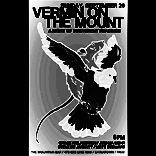
Vermin on the Mount: A Night of Irreverent Readings (9/26@8PM)

when September 26, 2010 @ 8:00pm
where The Mountain Bar, 475 Gin Ling Way, Los Angeles, CA 90027 (313) 660-1175

Admission is free.

Black Clock 4 and 7 contributor Grace Krilanovich reads with Steve De Jarnat, Joshua Mohr, and Matt Stewart at the next Vermin on the Mount reading.

WEHO Book Fair (9/26@10AM-6PM IN LA)

when September 26, 2010 @ 10:00am-6:00pm
where West Hollywood Park, 647 N. San Vicente Blvd, Los Angeles, CA 90069

Admission is free.

A slew of Black Clock contributors including Aimee Bender, Francesca Lia Block, Rachel Resnick, and Rob Roberge will be presenting at the 9th Annual …