

Singular, idiosyncratic and a little mysterious, Black Clock is one of America's leading literary journals.

Posts Tagged ‘Roger Ebert’—

SEE + HEAR + DO (9/30-10/31)

NY ART BOOK FAIR (9/30-10/2, NY)
MoMA PS1
, 22-25 Jackson Ave at the intersection of 46th Ave, Long Island City, NY 11101
Presented by Printed Matter, this three-day exhibit of artists’ books, zines, and periodicals kicks off a month jam-packed with literary festivities. Includes artist-led workshops, symposiums, screenings, signings, readings, and special projects from international and independent presses and booksellers. Check out the program for a list of readers, exhibitions, and workshops. Free.

ROGER EBERT, LIFE ITSELF (10/1@1PM, CHGO)
The Newberry Library
, 60 W Walton St, Chicago, IL 60610
The walking synecdoche for American film criticism introduces and signs his memoir, Life Itself, which the Pulitzer Prize-winning journalist structured as a series of vignettes or self-contained essays–never far from, but never dominated by, his notorious love of the movies. Free.

DOC (10/1@7:30PM, NY)
Anthology Film Archives
, 32 Second Avenue, New York, NY 10003
Harold L. Humes’s daughter Immy Humes directs this documentary about the Paris Review founder and author, which will be shown alongside Dan Drasin’s Sunday, documenting Humes’s protest against the suppression of folk singing in Washington Square Park, as well as excerpts from Humes’s unfinished film Don Peyote. Alternate showtimes 10/2@6PM and 8:45PM. $9 ($7 students).

LITQUAKE (10/7@8PM-10/15@6PM, SF)
San Francisco, CA
The city by the bay, whose citizens spend twice the national average on books, unites in a week-long celebration of literacy spread across her picturesque hills and waterfronts. With a formidable list of authors including such diverse figures as Jennifer Egan, Robert Polito, Oscar Villalon, Ishmael Reed, Alice Sebold, Christopher Moore, and Andrew Altschul, there’s something here to pique everyone’s interest, including sub-quakes for kids and teens. Schedules for the main festival, as well as the concluding Lit Crawl, are online. Those who can’t make it out west might be interested in a follow-up Lit Crawl in Austin on 10/22. Free (tickets required for some events).

STEPHEN PINKER (10/13@6PM, CHGO)
Harold Washington Library Center
, 400 S State St, Chicago, IL 60605
The prize-winning author of The Language Instinct and The Stuff of Thought discusses and signs his newest book, The Better Angels of Our Nature: Why Violence Has Declined. The latest in Pinker’s popular explorations into human nature and cognitive linguistics suggests that the world might be a far nicer place than we give it credit for. Free (registration required).

&NOW FESTIVAL: TOMORROWLAND FOREVER (9/13-9/15, SD)
UCSD
, 9500 Gilman Dr, La Jolla, CA 92093
&Now truly is the moment we’ve all been waiting for. A creative/critical festival/examination of all things incipient, ingenious, indefinite and intractable, festivities include conferences, multimedia performances, literary rituals, and a book fair hosted by the Rubber Rose adult boutique. You could paint an elephant with the list of Black Clock friends, contributors, and fellow-thinkers who will be presenting and have plenty of names left in the bucket. Don’t wait until tomorrow to start marking up your calendar: The schedule is packed tighter than a fallout shelter on doomsday. $100 Registration Fee.

UGLY FEELINGS (10/16@7PM, LA)
REDCAT
, 631 West 2nd Street, Los Angeles, CA 90012
Jack Halberstam (Female Masculinity, The Drag King Book), Wayne Koestenbaum (Hotel Theory, The Queen’s Throat), and Maggie Nelson (The Red Parts: A Memoir; Women, the New York School, and Other True Abstractions) read from new critical works on the theme of failure, cruelty, and humiliation. Halberstam will be reading The Queer Art of Failure, an examination into the notion of failure in children’s animation, while Koestenbaum’s Humiliation is a meditation on the nature of shame. Nelson’s critically-acclaimed The Art of Cruelty: A Reckoning questions the role of cruelty and violence in avant-garde art. $10 ($5 students).

MARK Z. DANIELEWSKI: THE FIFTY YEAR SWORD (10/31@8:30PM, LA)
REDCAT
, 631 West 2nd Street, Los Angeles, CA 90012
The award-winning, typographically challenging novelist, author of House of Leaves and Only Revolutions, conducts a polyphonic multimedia theatrical presentation of his limited-edition ghost story, The Fifty Year Sword, reprising last Halloween’s haunting performance. A live shadow play, arranged by Christine Marie & Ensemble, adds unexpected depth to Danielewski’s words, and audiences should come prepared for other audiovisual surprises from the man who often charts the limits of narratological structure. $20 ($15 students).
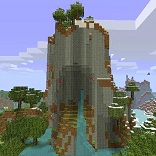

POTENTIAL *EMERGENCY* MINECRAFT (Part 1 Of 2)

This is the third entry in “Playing Between The Lines,” a series of expeditions into the evolving space of interactive storytelling, its praxes and practical benefits.

Video games have terrible stories.  You know it.  Your Great-Aunt Karen knows it.  Roger Ebert, famously and repeatedly, knows it.

Yet people invest hundreds of hours of their lives, long after any apparent narrative satisfaction has been achieved, on what amounts to an endless epilogue of monster-slaying and skill-point distribution.  There is an emergent narrative, in double-jumps and headshots (the kind that involve eruptions of viscera), that gamers find so thrilling they ignore the inadequacies of the scripted tale.  The stauncher of the anti-gaming luddites express bafflement when grown men, not to mention teenage boys, confess to shedding tears over these ridiculous melodramas with nary a trace of three-act structure.  Goodness!

But maybe you, Roger Ebert, Great-Aunt Karen, and the rest of the stauncher luddites are looking at it the wrong way.  Judged against classic film theory or narratological structures, many interactive stories do indeed fall far short.  Yet, if they produce as strong or stronger an emotional or intellectual reaction in their audience, can we really call them inferior?  Interactive stories, video games included, should be judged not by their scripted content, which is often limited.  They should be judged by the potential stories they make possible, which are infinite.  These potential stories don’t exist anywhere in a trailer or script; they can only be experienced by means of true, invested, 1:1 personal interaction.

To illustrate this concept, I’m going to talk about a game I’ve never played.

A CLASSIC IN THE MAKING

I’ve never played Minecraft.

I just wanted to let you know that, if you haven’t played Minecraft either, you’re not alone.  There’s you, me, and probably at least one other person out there somewhere.  Great-Aunt Karen, maybe.  Possibly somebody who has spent the past two years researching flightless birds at a remote base in Antarctica.  It’s also possible they were dwelling at the bottom of the ocean.  Or pinned under rubble.  Not perfect cubes of rubble, though, because if they had, they would have been playing Minecraft.

Minecraft, developed by Markus Persson, a.k.a. “Notch,” is a freeform saga of creation and destruction built in Java.  It began in May 2009 as what is now known as Minecraft “Classic,” or “Creative mode.”  Classic resembles nothing more than a horizonless shoebox filled to the brim with digital legos.  Providing players with a randomly generated terrain and graphically simple cubes of various design, Notch tasked them with building, collectively or alone, anything they could imagine.  The players, experiencing this virtual architectural Toyland from the first-person perspective of a nameless fellow about three cubes tall, could stack limitless quantities of the block of their choice vertically or horizontally, as well as destroy any blocks currently in existence, with the click of a mouse button.

If there’s anything to be learned from Minecraft Classic, it’s that human beings can imagine a great many things, and, like chimpanzees with a typewriter, they will build them given enough time and resources.

This primitive version of Minecraft was an unmitigated success, and within a month Notch was accepting pre-orders for the final version of the game, which is still off there somewhere beyond the edges of the shoebox.  By January 10, 2011, over 1,000,000 copies had been sold.  Lest we forget, this is something that was developed by one person over the span of two years, and it’s still very much a work in progress—in fact, its conceptual framework relies on this state of incompletion.  It can be taken as a given, at this point, that Minecraft will join the ranks of Second Life and World of Warcraft as an honest-to-goodness phenomenon of interactive design.

While the range and complexity of objects produced in Classic is a true testament to humanity’s unswerving drive to — especially keeping in mind that these full-scale reproductions or cloud-capped monuments to whimsy were put together block by pixellated block — the original Minecraft was too blatantly and open-endedly an electronic toy-set to be considered a storytelling platform.  There was no goal, except to build, and no conflict, except for the internal conflicts all creators face.  The most exciting narrative that could arise went something like: build a beautiful structure, make it public, have it destroyed or vandalized by somebody with malicious intent (figures known among collaborative gamers as griefers).  Some might call this the quintessential structure of a tragedy, but it was too repetitive, and too vague, to carry any emotional oomph.

All that changed when Notch introduced “Survival mode.”  In Survival mode — available only to those who have pre-ordered the game — things function in largely the same manner…but for two all-important distinctions.  One, building blocks are no longer free or limitless: the player must now collect and craft every resource by hand.  Two, the procedurally generated worlds are no longer uninhabited: they now contain sheep, cows and chicken, which yield resources as important as leather and feathers.  With this population boom, as well, came mobs of predators, inhabiting dark spaces only to emerge at night and home in on the player with eerie precision.

Suddenly, Minecraft isn’t about devoting weeks to building a scale model of the Tower of Babel.  It’s about scrambling to fashion some form of shelter, just to last through the night.  It’s about venturing into caves infested with hostile creatures in the hopes of discovering some of the more valuable resources.  It’s about survival in a way that camping in the woods doesn’t begin to approximate.  And it’s about making something out of that inkblot of a cubist world, something revelatory and meaningful.

Suddenly, it’s a wellspring of potential narratives.  Which is precisely why I haven’t played Minecraft.

“LET’S PLAY”

I’ve let other people play it for me.  And it’s become an addiction.

Luckily, people seem more than happy to make their struggles and victories public.  Series of “Let’s Play” videos on video sharing sites such as Youtube provide narratives at least as engaging as the highest budget television serials.  If you don’t believe me, check here.  Or here.  Or any of dozens of others.

It can be difficult to explain the draw of these videos to somebody uninitiated in the infinite drama Notch has incepted.  Watching other people play video games seems a counter-intuitive practice, particularly after my declamation about invested personal interaction in the introduction.  The pivot-point here is that there are actually three co-planar levels of narrative at work in any interactive story: “lore” (a term I’m using broadly to encompass all elements of linear storytelling present in an interactive work), potential narrative, and emergent narrative.

I’m going to touch on all three in greater detail in the follow-up post, so you can keep your wig on.  For now, let me just say that Minecraft Survival is deeply emergent.  So emergent, in fact, that I couldn’t hope to navigate the subterranean sprawl that houses its various narratives if I merely played it by myself.  Narratives emerge from the back-and-forth between the simple, flexible, but elegant process that drive the game and the distinct subconscious signatures of the players.  Playing it myself, I would soon fall into a rhythm in the way I react to the way Minecraft reacts to my reactions.  My narratives would begin to homogenize, and the narratives of others would soon become a part of that homogenization, victims of narrative projection.  It’s therefore more rewarding for me, more fascinating, to watch others try to cope with survival.  I witness narratives sprouting up out of the darkness that I would never have seen on my own.

Minecraft has become a door via which the inner minds of its players are made visible.  With each step into the unexplored caves, they are venturing deeper toward the basal planes of their own psyches.  It’s like watching them build a toy block window into their most intimate recesses.  It’s like people-watching with x-ray goggles.  It’s like a number of other analogies with perverted connotations.

It’s what makes Minecraft so appealing to not play.

Watch out for part 2, in which I delve deeper into the narratological trinity from which interactive stories are composed.

by Byron Alexander Campbell
a Black Clock Editorial Assistant preoccupied by dreams and theories of interactivity