
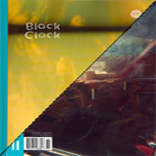
 It has been nearly six years since Black Clock 1 rolled off the presses (presses in Iceland, in fact.) Since then, ten more issues have been published, and the magazine has steadily established itself as a unique forum for experiments in the written word from many of the eminent voices in literature today.
But what is the essence of Black Clock? Is there a consistency across time: a unified vision that persists? Certainly one of the distinctive features of the magazine remains its visual impact as an object of art in and of itself, not merely a sort of textual delivery system. A quick comparison shows that this has not changed even though Black Clock has had three separate art directors: Gail Swanlund, Ophelia Chong, and, currently, Chris Morabito.
From Black Clock 1’s goal, in Steve Erickson’s words, to “bring together a group consisting of some of your favorite and most admired writers, and then have each one write whatever he or she wished” to Black Clock 11’s “tour of that which cannot be recovered,” the premise of each issue has remained maddeningly approximate and yet fully coherent as one makes his or her way through each issue’s content. This becomes all the more surprising in light of Erickson’s decision to open up submissions to new, unsolicited material. Black Clock allows its readers to wander blindly through its pages without hand-holding or explicit context, both visually and thematically, and this seems to be the crux of its aura of mystery.
Black Clock 1 and 11 share two contributors: Rebecca Goldstein and Joanna Scott. Their bios have both bulked up significantly in the intervening years. One general difference that stands out is a vague sense of the ballooning of secondary content between 1 and 11. The staff has grown from ten to twenty eight though this seems mainly due to an increased academic symbiosis between the magazine and its publisher, CalArts. The magazine now sells ad space, has outside benefactors, and devotes several pages to “shout-outs” to those that make its production possible: all signs of a healthy magazine in an era where the written word seems to be on life support as an economically viable means of distribution.
One darkly ironic piece of evidence of this is the variance in respective cover prices – because in the end, we live in a bottom line era. $12 US in March of 2004, and only $13 US as of December 2009. Less than inflation! A tribute to the benevolence of Black Clock to its readership? Evidence of good business practices and a tightly run ship? Sure that’s a part of it. Ah, but what about these numbers: $16 dollars Canadian in 2004. $14 Canadian in 2009. Ouch! Art as a gauge of the economic landscape.
And as grim a picture as these and circulation numbers paint for the small press in the United States, it’s worth noting that maybe the most frequent comment Black Clock fans make to staff at readings and through correspondence is that they think of the it as more than a mere magazine, but as a sort of trans-genre aesthetic object. Something savable, collectable, and treasured. Whatever future awaits the printed word, it seems safe to say that Black Clock 1, 11, and – with a bit of luck – 111 will continue to bear witness to their literary time and place as artifacts, but never fossils.
by Mark Skipton
a graduate of the MFA Writing and Integrated Media Programs at the California Institute of Arts and an Associate Editor for Black Clock
