
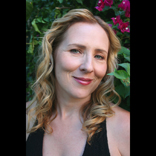
 Some could argue that if Kate Gale ever left Los Angeles, the city’s literary scene would be in dire straights. Not only is she the full-time Managing Editor and founder of Red Hen Press, the largest independent press in southern California, but Kate and her press host no less than four annual reading series in L.A.: Readings at the Ruskin, Conversations at the Geffen, Readings at Boston Court and The Annenberg Beach House series. (There is also a semi-annual Red Hen reading series in New York City.) A former PENUSA President, she currently serves as President of the L.A. chapter of the American Composer’s Forum. She is on the board of A Room of Her Own Foundation, an organization that promotes and celebrates women writers and artists. She has edited four anthologies for Red Hen Press. And she has taught at several college writing programs throughout Los Angeles and beyond.
If that wasn’t enough, Kate is also an accomplished writer; her growing oeuvre includes four books of poetry, two novels, one children’s book, four librettos, and–fortunately for us–a contribution to Black Clock 6. For her work, she has received the Allen Ginsberg Poetry Award and fellowships from Mitchell Lathrop and The Claremont Graduate University.
Kate Gale is serious about literature and her presence in the literary landscape is profound. She took a breath to talk with Black Clock about independent publishing, editing, writing and literature in L.A.:
BLACK CLOCK: What was the motivation for establishing Red Hen Press?
KATE GALE: I wanted to make Red Hen a literary city and have a publishing company that would represent diverse voices from the wilder side of America. I wanted to make Paris happen here.
How did you envision the L.A. you wanted to mold? Do you see any of this in the city today?
No, we would need Shakespeare and Company to really be the literary city Paris was and what we have is Skylight Books which is grand, but I miss all three Duttons stores. I wanted writing happening, a humming of energy, literary salons, special hangouts for writers–of course, now we call those blogs–but seriously, we are wildly humming. We have literary mags, we have writers and we are tapping our keys and going to readings. We are a literary city. With wine.
Red Hen has a great presence in Los Angeles and is host to frequent author events and readings. What is your take on the L.A. literary community?
We’ve slowly built a presence here to the extent that there are a few people who are glad the press is here and seem to have respect for the press. David St. John is the one person in L.A. who I’ve met who has tried to make sure the press could stay here by trying to help me get a job in Los Angeles. I think it matters to him to have a press here. I have to say that I really love David for that. We have a great board and some supporters like Robert Wyman and Lisa Krueger who have helped keep the press going. The press needs to find a permanent space and hire permanent staff. We have a board member in N.Y. who is working with us on that. And I teach in Nebraska now, so that’s a start. The literary community here in Los Angeles is a bit ephemeral.
In what ways is LA ephemeral?
The L.A. community of writers is not all in one place very often. Maybe that’s why I think of us as being ephemeral. We’re split up. We can’t drive from the Westside to Pasadena because it takes so long; we’re stuck in our holes like rabbits, we never see each other.
It seems Red Hen Press is determined to advocate literacy throughout Los Angeles. How has the Writing in the Schools Program enhanced the press?
Our mission statement is all about building literacy, so we are committed to our Writing in the Schools Program which allows us to send writers into the school to teach. It makes us feel that we have come full circle when we can provide books and writing teachers in inner city schools.
Books are in need of promotion as of late. Has Red Hen been affected by the digitalization of literature? How do you feel about the move from print to screen?
It’s all good, it means for a greener printing world with smaller print runs and it means that there are more ways to publicize books with social networking and so on.
Social networking and the online literature boom has sparked a lot of new interest in independent publishing. How would you advise other entrepreneurs eager to start their own independent press?
Get together a book designer, an editor and a sales/marketing person. You need that person who understands money on board from the beginning. You have to raise money, sell books and understand business to run a press, and that piece is often left out. It can’t all be about the dreamers.
On that note, are there any hidden troubles independent publishers don’t often reveal about the process?
How alone it feels. You have to be able to raise the wheat yourself. It doesn’t feel like being part of a large supportive community, the writers often don’t understand how hard publishing is, but it’s also very clear and cold and quiet as you fly along alone in the dark.
And the hidden joys?
I love getting to meet certain fantastic writers. Li Young Lee has a presence, a quiet ticking hum in the universe. I’m glad I ate sushi with him on Sunset Boulevard.
The dream of starting an independent press is to publish work you see vital and important for the world to witness. Red Hen has a strong commitment to literary work. As Managing Editor of the press, what do you seek most in submitted manuscripts?
Edgy wild cool work that resonates for the literary world. Dark spaces, strange spaces, hollow electric fields, I want story that awakens.
Red Hen Press is synonymous with artistic integrity and authenticity. How would you guide the aspiring writer, committed to the same ideals, toward a well-published path?
Find time every week to write and then don’t do anything else. Write like you make love, like nothing else exists. Write on a schedule, mail work on a schedule, ignore rejections, breathe.
You have quite an accomplished list of publishing credits for your own work. What are you working on at the moment?
I’m finishing a memoir, I always work on poetry and then I’ll go back to my novel.
What do you hope the near future holds for your writing?
My book, Wild Horses, to be accepted and do well so that I can have the sensation of flying and feeling my wingtips touching other wings, so I know even when there’s air around me, I’m not alone.
Your contribution to Black Clock in Issue Six, “Echo Light,” is startling and beautiful. The piece really resonated with Black Clock’s mission to showcase innovative writing. Red Hen Press and Black Clock are similar in that both are committed to promoting cutting edge literature. Black Clock fans should find a natural lineage with the work published by the press. Which Red Hen Press authors would you recommend to fans of Black Clock?
Chris Abani, Percival Everett, Doug Kearney, Camille Dungy, Kate Coles, Brendan Constantine, Peggy Shumaker
Be sure to visit the Red Hen Press website and Kate Gale’s blog for more insight from the mind behind the press. If you are in Los Angeles and haven’t attended one of Red Hen Press’s readings, you should catch up: The next Red Hen event will feature David Mason, William Archila, and Alberto Rio at Pasadena’s Boston Court on November 15, 2010.
by Katie Manderfield
an MFA candidate at CalArts & Associate Editor for Black Clock constructing an experimental literary journal for women; her work has been published/ is forthcoming in Pindeldyboz, 3:AM, and dogmatika
