Singular, idiosyncratic and a little mysterious, Black Clock is one of America's leading literary journals.

Posts Tagged ‘Bruce Bauman’—

John. Chapter One. Verse One.

imagesAfter twenty-one hours of traveling, four different countries, three different planes, and three hundred and fifty pages, a litany kept repeating itself in my mind: my life, my time, my hope, my god, my faith, my love, my glory.
 

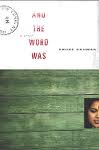
With his 2006 debut novel And The Word Was, Bruce Bauman has given us the gift of an honorable character and an honest man; a man who isn’t afraid to love. Neil Downs is an ER doctor from Queens who runs away from New York City after the tragic death of his son. He ends up in New Delhi, where a myriad of factors come together and blow up in front of the reader, ranging from the political to the philosophical to the hypocrisy that exists in our everyday lives.

Neil tracks down his favourite writer, Holocaust survivor Levi Furstenblum, whose writings are interspersed throughout the novel and are the catalysts to certain events. What was fascinating to me was Neil finding himself in the writings of Levi while Levi’s writing reflected what Neil is not. Levi might have lost his god, his family, and his faith in humanity, but Neil did not. Yes, Neil lost his son, his god, and even his wife for a while, but he was always on the path toward repairing this. Perhaps my favourite parts of the novel are the instances when Neil kneels down to help an injured young woman, and to place rocks on specific graves, as if he is brought to his knees from all the guilt, the tormented ghosts of his past, and his regrets.

(And perhaps my choice of Edith Piaf’s “Non, Je Ne Regrette Rien” wasn’t a random yearning that has been haunting me ever since I read Bauman’s first sentence.)

Curiously enough, “epistasis is the biological term, which science best defines as that nothing is simple and everything depends on everything else” (Bauman 230). The etymology of “epistasis” comes from the Greek word “epi,” meaning “upon,” and “stasis,” which means “stopping;” therefore “a stopping” or “stoppage.” While Neil is in this constant game of “stop and go” (something that Levi knows all too much about), they both need each other and everything that exists in the universe in order to survive.

In essence, this sums up Bauman’s novel beautifully (even if the science that has been carefully penned into this novel is sometimes out of my reach but hey! That is the beauty of fiction). When you lose a person you love, you lose a part of yourself. When you lose your god, your faith is shaken and you start to shatter into small fragments. Most of the time, those two are interrelated and I’m not quite sure which way the causal relationship works.

It is the tug of war that goes on in our entire universe. It is the debate of god and science, of love and loss, of death and life. It is the alienation that Neil feels wherever he may be, mentally or physically. It is his wish to go deaf—for silence in a world that is anything but silent. It is the desperation for something more and the unwillingness to accept that perhaps seeing is  believing. It is the bonding of people who are suffering and how they heal each other by searching for the truth together, consequently bringing each other to salvation.

I can’t stop thinking about the struggle that Holika, an intriguing upper-class Indian woman who had a brief affair with Neil, faced with the social norms that exist in India. I can’t help but think about Abraham and Isaac. About Rilke and “The minds of murderers are easily comprehended.” About the similarities between India and America. Between Israel and Palestine. All the corruption and death, but all of the underlying humanity that is surely found between them. Between, between, between . . .

Ultimately, the greatest tragedy is not Levi Furstenblum losing his family or his god. It is not Neil Downs losing his son in a savage hate crime. It is not the unfairness that plagues India, America, or the world. The tragedy, fundamentally, lies with Sarah Roberts—Neil’s wife who is lamentably silent throughout the first part of the novel—who has her own heavy cross to carry. A cross that is so heartbreaking and so intense, that not even words could contain her pain as most of her journey was off the page. She was alone. And when Neil hears the anguished words of what really happened, our stomachs are in our throats, too.

Because while every single one of the broken characters in the book lose faith in a god that lives out of reach, Sarah loses faith in the man she loves. She lost faith in herself. But as much faith as was stolen from her, she did not lose faith in humanity. Humanity—which Levi (spells ‘Evil,’ spells ‘Live’) Furstenblum only saw the most vicious, the most atrocious, the most horrible aspects. Humanity—which never cared about the agony that was found in the victims of the 20th century, a counterpart to the hatred that was felt by their torturers.

 
And The Word Was is a novel that teaches the reader that hope is often found in the strangest, dampest, and darkest of places. It tells the story of hope always dying last. While I willingly run to the city that Neil Downs has tried to leave behind, I realise that hope is time, and my time will last as long as I want.
 

By Eleni Demetriou
an Associate Editor for Black Clock and a graduate of the MFA Writing program at CalArts.

SEE + HEAR + DO (5/31-6/6)

BAXTER BLACK (5/31@7:00PM, Seattle)
The Elliot Bay Book Company, 1521 Tenth Ave, Seattle, WA

Cowboy poet, philosopher, veterinarian, NPR regular, and comedian, Baxter Black will be reading and performing from his newest book, Lessons From a Desperado Poet.  Though his work is maybe a stretch from the usual BC aesthetic (of such an aesthetic exists), in my opinion, Black is a real Western prize, a real voice of the rural West. For a preview, check out the video on his website. Free.

ALOUD: MELISSA FAY GREENE IN CONVERSATION WITH SETH GREENLAND (5/31@ 7:00PM, LA)
Los Angeles Central Library’s Mark Taper Auditorium, 630 W. Fifth Street, Los Angeles, CA 90071

Through their ALOUD series, the Library Foundation of Los Angeles presents Melissa Fay Greene discussing her memoir, No Biking in the House Without a Helmet. She will be in conversation with Black Clock friend and frequent contributor Seth Greenland. An excerpt of Seth’s upcoming novel, The Angry Buddhist, is set to appear in BC 14. Free.

PETE’S READING SERIES: BRUCE BAUMAN (6/1@7:00PM, Brooklyn)
Pete’s Candy Store, 709 Lorimer Street, Brooklyn, NY

Bruce Bauman, Black Clock Senior Editor, will be reading and signing with novelist Darin Strauss, author of Half a Life. Free.

AIMEE BENDER, SAMANTHA COHEN & ALLISON CARTER (6/5@7:00PM, LA)
Workspace, 2601 Pasadena Ave, Unit C, Los Angeles, CA 90031

Black Clock contributors Aimee Bender, Samantha Cohen, and Black Clock friend and Calarts Alum Allison Carter will be reading at Workspace. Samantha will also be featured in BC 14. Free.


Regrets, He Has a Few: Bruce Bauman on Anxiety, History + Fiction

Often funny, occasionally heartbreaking and always revelatory, Bruce Bauman puts deep character-driven narratives through their proverbial paces, playing with conventions of form, genre and conceptions of history. His writing, which runs the literary and journalistic gamut, has appeared in the L.A. Times, Salon, BOMB, Bookforum, numerous anthologies, and literary magazines, and has garnered Bauman the City of Los Angeles Award in Literature, the UNESCO/Aschberg Bursary in Literature, and grants from the Durfee Foundation and the Jewish Communal Fund, among others. The author of the novel And The Word Was–the story of physician Neil Downs, an expatriate New Yorker who travels to India following the dramatic death of his only son–is currently at work on his new book Broken Sleep, which will be published by Other Press. Bauman is also an adjunct professor in the CalArts MFA Writing Program and the Senior Editor of our very own Black Clock.

BLACK CLOCK: Much of your work seems to comment on history and time; individuals’ dynamic relationships with both their own pasts, others’ perceptions and the official record. I’m curious about what draws you to and informs your treatment of these complex subjects.

BRUCE BAUMAN: First, thanks for your compliments and your very thoughtful questions. They made me aware again why interviews are good for my ego but hard on my brain, which leads me to your question. My sentiment is the inverse of Piaf’s “I regret nothing”–I regret everything. I don’t think I’ve gone one day in my life without regretting something I’ve said or done. (I’m already wondering if I will regret this answer.) So, for that reason, and by extension, my characters are always haunted by their actions and their pasts.

I started writing a diary as a teenager. Aside from tedious whining about my failures with girls and in sports, I chronicled my nightmares/dreams. It was also a rant of teenaged angst and anger. Lennon’s song, “Gimme Some Truth”–pretty ironic coming from such a notorious myth-maker–that primal scream against all the bullshit really resonated with me and millions of others. I thought I could find truth. Now, I’m not even sure how to define truth. I don’t believe in any objective truth. There is always more mystery. Questions left unanswered.

Still, fiction became my road to truth. How to wade through our perceptions or deceptions is my challenge. All successful relationships are complicated in their own way. Often, they are based on unstated negotiations, compromises and social contracts. When these negotiations break down or our mythological selves are exposed, the relationships become uniquely unsuccessful and crisis hits. That’s a starting point for much if not all of my fiction. There’s a line in my novel-in-progress, Broken Sleep, that might be relevant here: One person’s version of history is another person’s version of an incomplete truth.

In Word, Sarah and Neil each tell the other a “lie” that they think will protect the other from major pain–which turns out to be a horrible course to take. Yet there are also secrets that each still holds that work to salvage their relationship and sanity. Castor’s death forces Neil to deal with his fractured relationship to god. The resolution he comes to surprised me and was not what I had in mind when I started the book. The characters took over. When the characters take over, in my experience that makes for the best fiction.

I’m obsessed with American History. Each country has its own version of history. I tried to address selective and reshaped historical memory in my character Levi Furstenblum’s Chambers of Commerce where the Holocaust is not a myth as much as reinterpreted such that Hitler wins the Nobel Peace Prize.

In Broken Sleep, each of the four narrators is living under at least one major false assumption about their past. All revelations are intertwined and their lives metamorphose as the story is propelled forward. There’s a line in the book which sums this up: “The past, present and future are fixed and ever recurring, inseparable and singular, ever-changing and never-changing, and always, always at once, dead and alive.”

And The Word Was is quite diverse stylistically. You have Neil’s first person narrative, which perhaps resembles a diary/travelogue, Levi’s writings, which range from the sci-fi/historiography of Chambers of Commerce, to Mystical Mistakes and his Unpublished Works which take the form of philosophical essays, plus a number of Biblical and Vedic stories and personal anecdotes related by various other characters. The pieces fit together beautifully, but at the same time they all have a great deal of vitality of their own. How did the novel develop as such and why this way?

Word developed over many years of false starts and trials and many, many errors. I had the idea of using multiple child sacrifice myths as the philosophical underpinning for the novel. Chambers of Commerce was originally a short story. When it hit me to combine the two–and Wham!–everything coalesced and the character of Levi Furstenblum came alive and his presence in the Neil story and as narrator in his own right and the book finally worked. The Mystical Mistakes and Unpublished Works sections were based on notes I’d been keeping for years. There is much in my work that is thought out and premeditated and there is a great deal more that comes from the well of my unconscious and I am thankful for that.

I’ve often said that Levi is much smarter than me; and I mean it.

I started writing Broken Sleep in the ’90s. It wasn’t right. I stopped until I felt ready to try again. Now I feel good about it. I have super-supportive editors at Other Press. Again, there’s a mix of genres: realism, speculative fiction, diary and for lack of a better phrase, traditional third-person.

There are many theories behind the book, but the bottom line is that the characters have to be compelling. Hate them or love them, I want the reader to be driven to turn the page. The phrase “page turner” has an unfairly pejorative connotation. I try to incorporate linguistic experiments, symbolism, subplots and challenges to the reader but it all has to be building to a climax/revelation. The term “literary fiction” doesn’t have to imply boring or “too difficult.” That’s anti-intelligence and anti-intellectual bullshit.

Who and what inspires you? Do you see yourself as responding to, modifying, or working within or against certain literary, social, or philosophical traditions in particular?

My influences cover a vast spectrum–from The Bible and Jack Kirby to the Marx Brothers and Fitzgerald to all sorts of music and art and that is featured prominently in Broken Sleep.

But if there’s one book that changed my life, it’s Kafka’s The Trial. I was 14 when I first read it. Not that I was that precocious–mostly I was reading sports books or trying to get my hands on a Playboy. I grew up in a working class part of Flushing, Queens. At that age I imagined myself one of the tough guys in The Wild One or like The Who because they were so violent and seemed so cool with the chaos. It was one highly delusional self-image. Riding a motorcycle has always scared the shit out of me.

I was kind of having a nervous breakdown. I’d gotten accepted to Stuyvesant and in an act of teenaged obstinacy, refused to go. The first semester of tenth grade, I mostly just sat in my room like a zombie. My parents made, what in retrospect I see was a major sacrifice, and took out loans for me to go to a private school in Manhattan. I’m not sure why I agreed. Some sense of self-preservation. It meant hours every fucking day on the subway so I read or fantasized– my great escape. I was reading about the Stones and Altamont and Alan Passaro, the Hell’s Angel who stabbed the guy who was going to shoot Jagger, and he mentioned his life was like The Trial. So, I bought it. I was 100% clueless as to who is this guy Kafka. The book was so bleak, so dark and so funny– that in some upside down way it gave me hope. I don’t claim I understood it then as I do now after so many readings (and with the insight of Maurice Blanchot and Erich Heller). Later I read Kakfa’s diaries, which I still carry around like my bible, and the last line he wrote is my mantra– “More than consolation is: You too have weapons.”

And The Word Was is a conscious homage/finger flip to the generation of Jewish writers like Roth, Bellow, Malamud, Potok. You can see that in the opening lines.

Primo Levi was also an influence.

Finally, my wife, Suzan Woodruff, a brilliant painter, inspires me. She really does become one with her paintings—and watching her work just knocks me out.

This concept of all successful relationships being based on often unspoken negotiations and social contract strikes me as being part of the essence of fiction. For example, writers and readers communicate closely, and even though their dialogue is silent and amorphous, they and the text change since a reader’s articulation of his response is a transformative act in itself. It seems to me that as creative non-fiction becomes increasingly popular (and it is, right?) and readers learn (or have the ability to learn, or think they are learning) more about the personal lives of the authors they read, that the relationship between authors, their work and readers is changing profoundly. I’m curious about how you feel about this, especially given the nightmarish tabloid saga in And The Word Was.

The reader and characters have to form a symbiotic relationship. If they don’t, the relationship is over by page 50, if not sooner.

I hope my feelings about the intrusiveness are clear from Word. The rise of creative nonfiction and “new media” encourages the idea that fiction is just disguised autobiography (my life is not that interesting), and has introduced a complicated writer-reader relationship with few boundaries. Even doing interviews gives me pause–not enough that I won’t do them. There’s a reason I’m not on Facebook–yet.

Your short piece, “Day Break – City Lights” seems to exemplify your interest in intertextuality and form–specifically film, whereas “The Necklace” integrates music and Kandinsky. Do you typically approach your stories from these more abstract, evocative sources, or begin with more concrete ideas and adorn them this way later?

I have no consistent plan. I started “Day Break” in ’98 when we were moving to L.A., a town where Peter Pan-like attitudes on time and youth are prevalent, and as a reaction to the blather about the fractured structure of Pulp Fiction. I wanted to write a story out of chronological order in the way films are shot out of chronological order and was also about movies. It also had roots in Heinrich Boll’s story “Murke’s Collected Silences.”

“The Necklace,” which is also a nod to de Maupassant, was inspired by an interview I saw with a Viet Nam vet about wearing “necklaces.” I’m a huge fan of Kandinsky and the way he created personal myths and symbolism, so the imagery from his apocalyptic paintings seeped into me.

You mention allowing the characters in And The Word Was to take over; I’m curious how you approach facilitating this. Do you feel that successful relationships between you and your characters require this kind of ambiguity?

I don’t have a systematic approach. I write and write and write. If the characters take over the story starts to tell itself and I keep going. If not, it gets tossed into the “I wish I were a tennis pro” bin with scores of others. And then, onto the next story.

_
by Seth Blake
an Editorial Assistant for Black Clock and an MFA Writing candidate at CalArts

photography by Justin Kalman

Black Clock At The Los Angeles Times Festival Of Books (UCLA)

Black Clock @ The Los Angeles Times Festival Of Books (UCLA)

Saturday, April 26 2008 (10 AM to 6 PM) – Sunday, April 27 2008 (10 AM to 5 PM)

Black Clock and CalArts will be among the exhibitors at the 13th Annual Los Angeles Times Festival Of Books. Drop by booth #661 (Zone F – Dickson Court North) to meet our editorial staff, purchase issues of Black Clock, and learn more about The CalArts MFA Writing Program. Additionally, Black Clock Editor Steve Erickson and Senior Editor Bruce Bauman will be participating in the following Festival panels:

  • “Fiction: Grace Under Pressure” (11:30 AM Saturday, April 26 2008; Moore 100)

    Bruce Bauman / Barbara Isenberg (Moderator) / Gina Nahai / Andrew O’Hagan / Arthur Phillips

  • “Fiction: Alternative Visions” (1 PM Sunday, April 27 2008; Korn Hall)

    Steve Erickson / Shelley Jackson / Zachary Lazar / Nina Revoyr / David L. Ulin (Moderator)

Please consult the Festival website for further information about admission, parking, schedules, etc.

Black Clock 8 Embarks On Outer And Inner Journeys

The eighth issue of Black Clock arrives on newsstands and in bookstores in early January 2008. The stories and poetry in the newest issue of California Institute of the Arts’ (CalArts) literary journal are “loosely linked by the idea of physical and emotional nomadism,” said editor Steve Erickson. “These are travels and sojourns of the outward and inward sort, guided by such writers as Geoffrey O’Brien, Susan Straight, Tom Carson, Lisa Teasley, Yxta Maya Murray, Chris Kraus, Michael Ventura and others.”

From the cover image of a tunnel leading deep into the magazine’s pages, Black Clock 8 speaks to our wanderlust even if, as in the case of Geoff Nicholson’s “A Walk Around the World,” the central character decides to walk a distance circling the globe all within his own backyard. In “The Sting of Irrelevancy” author Joanna Scott is stranded in Rome and finds herself contemplating Jorge Luis Borges’ wandering dreamers, while in Lewis Shiner’s “Wonderland” the protagonist’s journey takes him only a few blocks from where he lives and works into 1960’s Harlem–which might as well be another planet.

Published by CalArts in association with the MFA Writing Program, Black Clock features work by prominent national writers, talented regional authors and the very best emerging writers.

Black Clock‘s staff includes Erikson, a novelist, critic and CalArts MFA Writing Program faculty member in addition to being the magazine’s Editor, Senior Editor and adjunct member of CalArts Writing Program faculty Bruce Bauman, Editor-at-Large Dwayne Moser, Managing Editor Michaele Simmering and Art Director Ophelia Chong.

Black Clock 7 Sizzles

The seventh issue of Black Clock is the most provocative issue of the journal yet. It features twenty-five stories, one essay and four poems about sex and the erotic by such writers as Samuel R. Delany, Janet Fitch, Aimee Bender, Lynne Tillman, Geoff Nicholson, Francesca Lia Block, Rachel Resnick, Brian Evenson, Lisa Teasley, Seth Greenland, Tara Ison, John Haskell and others. This current issue will begin heating up newsstands and bookstores in late June.

Published by the California Institute of the Arts (CalArts) in association with the MFA Writing Program, Black Clock features work by prominent national writers, talented regional authors and the very best emerging writers.

Black Clock 7 includes Yxta Maya Murray’s “Girl Called Casanova”, in which the world’s greatest lover takes female form and sets out to seduce Angelina Jolie; Wanda Coleman’s “Howlin’ With the Woofdog”, about a tryst between a well-known radio DJ and a reluctant virgin; Joy Nicholson’s “Manson Girl”, a tale at once sweet, funny and chilling about the sexual dynamics of a murderous cult; and Tom Carson’s “My Mother, Marie Christ, (b. Hope Springs, TN, 1951 d. Memphis, July 4, 1985)”, about a boy named Jesus growing up in Reagan’s America who has a thing for his Mom.

Novelist, critic and CalArts MFA Writing Program faculty member Steve Erickson is the Editor of Black Clock. Dwayne Moser, adjunct faculty and CalArts MFA Writing Program coordinator, and Bruce Bauman, also an adjunct member of the Writing Program faculty, serve as Senior Editors. Gail Swanlund, Graphic Design faculty at CalArts, is the magazine’s art director.

Black Clock 6 Features American Poets

The current issue of the literary journal, Black Clock, is devoted to poetry. Previous issues have included poetry in their thematic mix, but never exclusively as in Black Clock 6. This current issue is now on newsstands and in bookstores

“From the beginning, poetry has set the tone for each issue of Black Clock, which nonetheless has been slanted toward prose and fiction, said Black Clock editor, novelist, critic and CalArts MFA Writing Program faculty member Steve Erickson. “It seemed time for poetry to stop serving as prologue and afterthought and have an issue of its own.

Published by the California Institute of the Arts (CalArts) in association with the MFA Writing Program, Black Clock features work by prominent national writers, talented regional authors and the very best emerging writers. Black Clock 6 includes nearly 70 poets ranging from newly published poets Shana Cleveland and Maggie Lopez to such established writers as Heather McHugh and David Trinidad

The magazine’s poetry editor, Arielle Greenberg, selected the majority of the works in Black Clock 6.

“The work in the all-poetry issue is uniformly daring but in no other way uniform,” said Greenberg. “I hope people will get a big kick out of it. Steve and I each solicited a lot of poets. I was looking for work that struck me as strange, enticing, risk-taking, sometimes disturbing, but always with a heart beating inside it. I chose to begin and end the issue with work by two of my most beloved poets, Michael Burkard and Jean Valentine, who have both been mentors to me. Their book-ending the issue is a kind of personal homage.

Dwayne Moser, adjunct faculty and CalArts MFA Writing Program coordinator, and Bruce Bauman serve as Senior Editors of Black Clock. Gail Swanlund, Graphic Design faculty at CalArts, is the magazine’s art director.