
Singular, idiosyncratic and a little mysterious, Black Clock is one of America's leading literary journals.

Posts Tagged ‘Black Clock 12’—

Skylight Books: Los Angeles’ Neighborhood Lit Shop

Before Black Clock 12 ‘s release reading in September, editors Bruce Bauman and Steve Erickson looked at each other—this was one the first meetings with the new interns—and agreed Skylight Books was one of the few, good independent book stores around. Really, they couldn’t think of others that have survived Amazon, Barnes and Noble, and the well-told condition of the publishing world nearly as well. In the recent “Best Of” issue, LA Weekly pitched Skylight as the “Indie-est Indie Bookstore,” topping Book Soup based mostly on its high-falutin’—“the Botoxed celebs, and the hellish parking situation, and the almost certain fact that you will have a ticket for not rotating your wheels toward the curb upon your return”—location. This is not to criticize—being new to L.A., I sometimes find myself enamored by the Botoxed celebs—as Book Soup does many similar things for contemporary reading as Skylight, and my one dig against Skylight, like Book Soup, is the parking situation. Maybe this is an L.A. dig. Steve and Bruce both pointed this out too: Be sure to go early if headed to one of the store’s many events. That said, above all, be sure to check out the events. The bookstore manages to bring tons of great authors to read and discuss their works. Even a cursory glance at the store’s calendar will show Skylight is constantly hosting a diverse group of artists. In the last two months, they’ve had James Ellroy, Tao Lin, Rick Moody, and even Judd Apatow to name a few. Yet, Skylight manages, as they claim, to be “what a neighborhood book store should be.”

“The neighborhood is trendy,” this is what a Hollywood local told me, “Yeah, kind of artsy, I guess.” The nearest Borders is two miles away. The nearest Starbucks, respectively, is at the end of the block, far from Skylight and businesses like Pyschobabble Café, Squaresville, Fred 62 (after the reading, a fellow CalArts MFA student said, “Man, you’ve got to eat there. It’s like a big thing,” so we went) and PopKiller. Yet, Skylight is far from trendy. They’re real and concerned. Just read the online reviews or go in and ask if it’s the culture of the neighborhood that’s made them so unique. They’ll say, “Well, I hope it’s actually that we’ve got a level of expertise.” This was my experience. Skylight is simultaneously from the Los Feliz neighborhood and beyond it, encompassing all of Los Angeles—they brought in Judd Apatow, remember—to become the city’s best vehicle to a national and international literary world. This is the feeling I get as I go. This comes just before the optimistic (is this a fallacy?) realization people do read books that aren’t written by Sarah Palin, Snookie, or Mario Lopez and even that there’s a productive literary culture still creating art. It’s intimidating, reassuring, and exciting for a young writer. I think: This is why I have come to Los Angeles to study. There’s opportunity—and maybe this is a fallacy too, but like the last it’s something I have to live on—if you want to work to find it. But this is about Skylight.

Like most real bookstores—this is told to me because my undergraduate college experience was spent in orders from Hastings and Amazon—employees have personalized favorite lists that are easy to delve into. This isn’t unlike the science behind Pandora or, sadly I admit, Amazon—“You might also like…”—just more intimate. I think even Borders is doing something like this now. Of course, independent bookstores did it first, but even in the rural, off-grid manner that my parents raised me in almost no independent bookstores existed. If I didn’t order a book through the Northwest Public Library or if neither my mom nor dad had it, I didn’t read it. So in ways, experiencing Skylight is new and nostalgic. They’ve got a collection of zines—available online because this is how a small bookstore survives—and chapbooks. They’ve a full collection of L.A. literature. They’ve a collection of real poets: Recently, Eileen Myles was in and now signed copies of her new novel, Inferno (A Poet’s Novel), are available on the shelves. They even have a special section for L.A. poets. Through talking with one of the workers, I got turned onto a great book by Pat Lawrence, Bedford, I’m confident I would never found otherwise. Not only do people here read; L.A. reads a lot. Skylight—I get this as I ask, “Excuse me, is this seat taken?”—is a knowledgeable community center celebrating literature.

For the Black Clock 12 reading there was standing room only. Bruce thanked everyone for coming(I think he said “Wow.”) and tossed up that Steve was probably somewhere enjoying a black russian before telling how the manager who’d just introduced him was a CalArts alum. This isn’t a shout out to CalArts. I just think it speaks to the community. Skylight is a neighborhood bookstore, welcoming, comfortable—there’s a tree inside, a high, domelike wood ceiling with skylights, and an open arrangement of shelves that invite movement—and intelligent but hip. Our reading was on a Sunday. The Post Office across the street was closed, so parking was free if only with a small risk; my other experiences have been cruising the side streets for a meter but if you’re of the mind, try L.A.’s metro (red line stop at Sunset and Vermont). But please don’t be deterred by parking. The effort is worth it. It’s not a tourist trap promising so much that seems aggressively used up by the time you make it. It’s Bruce giving away Black Clock garb to anyone who can answer: “Who was the only pitcher to ever throw a no-hitter on acid?” It’s Tod Goldberg rasping about golf and character Kip’s struggle with The Yips. It’s Paul Cullum reading his piece, “Why I Hate Sports” for all those who aren’t fanatics. It’s the comment from the front row, “Who scheduled this the same time as the best [football] game of the day?” just after Monica Carter spins Brett Farve’s thoughts during the biggest game of his literally endless career. There’s fulfillment and hope. It makes me realize a romantic thought about the culture of writing isn’t too ridiculous because there’s something intangible shared at Skylight that talks to that.

by Justus Caudell
an Editorial Assistant for Black Clock and an MFA Writing candidate at CalArts
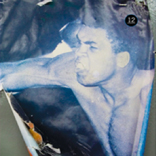
Black Clock 12 Reading (9/19@5PM IN LA)

when September 19, 2010 @ 5:00pm
where Skylight Books, 1818 N Vermont Ave, Los Angeles, CA 90027 (313) 660-1175

Admission is free.

Come join us as we celebrate Black Clock 12 with contributors Monica Carter, Paul Cullum, Samantha Dunn, Tod Goldberg, Richard Rayner, and Nina Revoyr at Skylight Books!

Black Clock 12 takes you out to the ball game, where obsessions abound inside and outside the white lines. In these stories, essays and poems, the demarcation between winning and losing, humor and sadness is blurred; in sports, whether participating, watching or …rejecting, you discover who you are and who you’re not. As the writers in Black Clock know, the game may be played under bright lights but it’s in the crevices of darkness where the true game is found, because sports lie beyond the pleasure principle.

MONICA CARTER, a 2010 PEN USA Emerging Voices Fellow and 2010 Lambda Emerging LGBT Voices Fellow, has also been published in Pale Fire. She is working on her novel, Eating the Apple, set in 1930s Manhattan, which tells the story of an aging, alcoholic lesbian writer caught in a love triangle.

PAUL CULLUM is a freelance writer living in the Silver Lake region of Los Angeles. He has written extensively for the L.A. Weekly, New York Times, Los Angeles Times, Variety, the Hollywood Reporter, Stop Smiling, Arthur, and hundreds of tiny magazines that pay comically little. His Los Angeles Times West Magazine story on the Mexican Midget Rodeo was anthologized in The Best American Sports Writing 2007, published by Houghton Mifflin. His essay “Why I Hate Sports” is his first for Black Clock.

SAMANTHA DUNN is the author of several books, including the novel Failing Paris and the memoir Not By Accident: Reconstructing a Careless Life. She teaches in the UCLA Writers Program.

TOD GOLDBERG is the author of seven books of fiction, including the novels Living Dead Girl, a finalist for the Los Angeles Times Book Prize, Fake Liar Cheat, and the popular Burn Notice series, as well as
the short story collections Simplify and, most recently, Other Resort Cities. He lives in La Quinta, CA, where he directs UC-Riverside’s low residency MFA program in Creative Writing & Writing for the Performing Arts.

RICHARD RAYNER, born in England, now lives in Los Angeles. His books include the nonfiction book A Bright and Guilty Place, the memoir The Blue Suit and the novels The Cloud Sketcher, L.A. Without a Map, and Murder Book. His work has appeared in the New Yorker, the New York Times, and many other publications.

NINA REVOYR is the author of three novels, including Southland, a Los Angeles Times “Best Book of 2003,” and The Age of Dreaming, a finalist for the 2008 Los Angeles Times Book Prize. Her new novel, Wingshooters, will be published in 2011.

More information at www.blackclock.org and at www.skylightbooks.com/event

Resident Anti-Hero at Pronoia (7/31)

Black Clock 12 contributor, muay thai warrior and self-described “disgruntled storyteller, professional lyricist, and literary guerrilla eco-thug” Dante Zúñiga-West will be performing as a member of Resident Anti-Hero at this year’s Pronoia Festival in Arkansas, July 30 – August 1.

Pronoia (being both the cosmological and moral opposite of paranoia) is “a litter-free weekend of great music focused on community, sustainability, art, spirituality, and education.”  Festivities will be held at Byrd’s Adventure Center in Ozark, AR.  In addition to music, workshops and consciousness-raising events, attendees will be offered all the recreational amenities of the park (zip lines, hiking, kayaking and more), which is located in the Mulberry River Valley within the Ozark National Forest.  For additional information, visit: http://www.myspace.com/pronoiafest.

Resident Anti-Hero’s music has been called “dystopic mythopoesis,” “militantly off-the-grid,” and as presenting “a model, mostly imaginary but grounded in the facts many of us dare not contemplate, for a sustainable and still uniquely American post-civilization experience.”  You can learn more about the Anti-Hero Underground at http://www.residentantihero.com/.

Dog Days: A Reading of Sorts… (7/17@8PM)

when July 17, 2010 @ 8:00pm
where 820 Industrial Street, Los Angeles, CA 90021

Black Clock 12 author Katy Petty is reading/performing this dog of a Saturday with The Shone, Senia Moon, Ani Raya-Flores, Jared Woodland, Stephen van Dyck, Captain Alex Machiavelli, “a special guest…and you.”

“Dog Days: A Readings of Sorts…” is “a reading, but it’s also not a reading, it’s a performance, it’s a party, it’s a gun club, it’s a play, it’s a powwow, it’s a street fight, a strip club, a circus tent, a vacation spot, the vatican, church, a bon fire, a rehab clinic…So…come enjoy some shit, have a beer, bring a beer, bring a friend, bring pirates, bring nerve endings, a scalpel, bring your mom, smoke a joint, crack anyone? I think the point is, you don’t have to like literature, you just gotta like good old fashioned fun!”

Loud and Quiet: An Interview with Anne-Marie Kinney

In “Zizou Président,” author Anne-Marie Kinney flexes literary skills as deft as Zizou’s footwork to capture the palpable energy of the World Cup without the maddening buzz of the vuvuzela.  Kinney’s story, published in Black Clock 12 and free to read online, brings us back to the summer of 1998 when Zinedine Zidane led France to its ultimate World Cup victory and became a soccer legend.  Though set in a specific moment and place in time, Kinney’s depiction of the raw frenzy of collective emotion that hinges on the superhuman achievements of select individuals is universal; marked by a kind of historical clairvoyance, it offers a glimpse of things to come for the next country and the next “president” to claim the championship title in July.  Black Clock recently spoke with Kinney about her writing, Zizou, the World Cup, celebrity, mass culture, and naming her dog Dee Dee Ramone.

BLACK CLOCK: What inspired you to write “Zizou Président”?

ANNE-MARIE KINNEY: I’ve always found Zinedine Zidane to be compelling.  Aside from the fact that his fame and influence can’t be overstated, I really see him as a poet.  He transcends the game.  I wouldn’t call myself a huge fan of any sport only because I’m too scatterbrained to know when games are on and get myself in front of a TV at an appointed time, but I do enjoy soccer because it’s so emotional and violent, and there was something extra with Zidane.  You could see the fury inside him, in his face, and the way he channeled it into the most precise, beautiful moves.  When I learned that Black Clock was seeking submissions for a sports issue, he immediately leapt to mind.

This story is sublime and so well-crafted.  In a few pages, it takes a very specific person, moment in time, and place to create a tableau of humanity.  How did you decide on your narrative approach to this piece? In other words, how the hell’d you do it?

I can’t say I ever decide on a narrative approach.  It just happens however it happens and then I see what I’ve got.  I started with my memories of being in Paris during the ’98 World Cup–which was the World Cup that really made Zidane a superstar–and just being wrapped up in the energy of it all.  For the opening ceremonies, they had these four sort of giant robots that were crouched in different parts of the city, and it seemed like they were there, motionless, for the longest time, so it was so startling and also such a release to see them finally come to life on the big day.  I watched it on TV and then went out, where it seemed like everyone in the whole city was in the street celebrating, and it got pretty out of hand.  It was hot, hard to move, there was glass flying, cops running–it’s kind of a blur.  I guess the story built itself from that peripheral blur, and the dangerous, anything-can-happen thickness in the air, and I went from there into Zidane’s head, into the quiet center.  I was inspired by things he’s said in interviews, what I knew of his life, the racism he’s faced, both overt and implicit, and also the documentary Zidane: a 21st Century Portrait, which is just a match shown with him in close-up the entire time with this very intense and hypnotic music by Mogwai in the background. I wanted the story to center on loudness and quiet, and the way each feeds the other.  That’s probably the most conscious narrative choice I made.

Did you write “Zizou Président” before or after the famous headbutting Materazzi incident?

I just wrote this a few months ago.  At first, I thought if I was going to write about Zidane I was sort of obligated to address the 2006 incident, but I ended up being more interested in his rise, rather than what some would deem his fall, though I wouldn’t.  I think he was forgiven pretty quickly.  He was and is far too beloved for it to taint his legacy too much.

Perhaps because it’s still relatively fresh in my mind even a few years later, the supposed “fall” (which I agree with you in that I don’t think it’s really his fall) was the elephant in the room when I read the story.  Not an annoying, crowding, why-aren’t-you-addressing-this elephant; more one that expands the story into a realm beyond the moment, making it both historical and prescient.

I wanted the Materazzi incident to be kind of hanging somewhere outside or beyond this story.  When it happened, people started talking about Zidane’s history of violence, and speculating about all the possible reasons he might have done it, or what Materazzi might have said to provoke him, so those elements–his response to taunting, his quick temper–are all here in the story, waiting, suggesting where they’re going to lead.  In the end, his head hurts from the two goals he scored with it, but I like to imagine that he’s also feeling the pain of what’s to come.

Have you written other work that considers the perspective of other famous individuals?

My characters tend to pay a lot of attention to pop music.  I did write an as yet unpublished story about a character who worships Dee Dee Ramone.  Which is only a little autobiographical.

Do you worship Dee Dee Ramone?

I don’t worship anybody, but I did name my dog after him.

What do you think makes an icon, draws us to some and not to others, generates a cult of personality?

That’s a really good question.  I’m not sure I know how to answer.  I think some of it is about a person having the right appeal at the right time, either socially or politically.  That’s definitely a part of it with Zidane, as an Algerian-French player who became the best just as tensions were building for Arabs in France.  I don’t know if I could break it down like that for every icon.  I guess they wouldn’t be icons without some indefinable spark.

What are you working on these days?

I’m working on a new short story, and I have another novel sort of brewing, slowly.  My first novel is currently making the rounds of publishers, so I’m just going to work every day and trying not to think about that.

And watching the World Cup?

I’m following it in the news, but the only match I’ve caught was a re-broadcast of England vs. USA.  It’s tough because the matches are in the morning.

Do you have a favorite team or player?  Any predictions?

I don’t have any predictions, but I can’t help but root for the home team.  I’d love to see the U.S. make a respectable showing.

Anne-Marie Kinney is a writer and copy editor from Northern California.  She completed her MFA in creative writing from CalArts in 2008, and her work has appeared or is forthcoming in Indiana Review, Keyhole, Satellite Fiction, as well as Black Clock.  She lives in Los Angeles with her husband.

by Kyoung Kim
Assistant Managing Editor of Black Clock

Black Clock 12

Black Clock 12 takes you out to the ball game, where obsessions abound inside and outside the white lines. In these stories, essays and poems, the demarcation between winning and losing, humor and sadness is blurred; coaches may claim, “There is no ‘I’ in team,” but when you look closely enough there is always a “me,” and in sports, whether participating, watching or rejecting, you discover who you are and who you’re not. As the writers in Black Clock know, the game may be played under bright lights but it’s in the crevices of darkness where the true game is found, because sports lie beyond the pleasure principle.

In Black Clock 12, we are pleased to bring you work by the following authors:

RAJ BAHADUR Bambino Calls His Shot
MONICA CARTER The Retirement Plan
PAUL CULLUM Why I Hate Sports
DENNIS DANZIGER Hoop Schemes
KENNETH DEIFIK The Horse Finds His Own Way Home, Even Without Clues
KATHERINE DUNN Listening
SAMANTHA DUNN The Tortilla Construction Handbook
ROBERT EISELE Catch and Release
COLIN FLEMING Dare Me to Breathe
TOD GOLDBERG Welcome to Thousand Palms
JOHN HARLOW Will the People
CAROLYN KELLOGG Stroke
ANNE-MARIE KINNEY Zizou Président
ELOISE KLEIN HEALY The Season
JONATHAN LETHEM + CHRISTOPHER SORRENTINO Poem by Harris Conklin / Reply by Ivan Felt
KARA LINDSTROM My Own Private Ashtanga
CHRIS LOWRY Cricket’s Crashing Continents
LOU MATHEWS Racing in the Streets
RICHARD PEABODY Shirts and Skinjobs
KATY PETTY Fathom
LISA TEASLEY Beach Volleyball is Church
RICHARD TERRILL Found Poems
LYNNE TILLMAN The Unconscious is Also Ridiculous
RICHARD RAYNER Shoot the Ref
NINA REVOYR Charlie and Me
BRAD SCHREIBER George Blanda Ate My Homework
DAVID L. ULIN Member of the Tribe
OSCAR VILLALON The Roar
MATTHEW ZAPRUDER Poem for Jim Zorn
ALAN ZAREMBO Going Fast
DANTE ZÜNIGA-WEST This Is Not a Sport

Excerpts from Black Clock 12 can be read online. The issue can be purchased at these local area bookstores and online in both print and PDF format.
