
 Black Clock and, by extension, the MFA Writing Program that produces it, supports experimentation pointed at uncovering idiosyncratic, mysterious elements, the likes of which come together in every issue to make a unique and prominent literary journal. Issue number 11 invited readers to “be dazzled by the mysterious connections lighting the horizon…” and to experience, “secret stories told by characters who find themselves driven out of their own times by their own pursuits.” It seems fitting then, amidst the index of innovative contemporary writers featured in Black Clock today, to examine figures of contemporary literature whose work has also focused on mysterious connections, paving the way for the traditions of experimentation that have blossomed in the recent past, fostered by publications such as Black Clock and programs like CalArts’ Creative Writing.
In a series of posts centered around the writing of consciousness, memory and human experience, I intend to examine individual writers who experimented with writing consciousness and cognition in ways that subverted old norms of narrative as linear, “realist” and marked by set beginnings, middles and ends.
I’ll look first to the past and writers Virginia Woolf, Dorothy Richardson and Gertrude Stein–women represented individually by wide and diverse bodies of work as well as collectively, unified by a common gender and a shared historical standpoint. Such intersections of style, period and sex will behoove us to ask what about the twentieth century propelled writers away from the “realist” narrative forms elevated and celebrated by nineteenth century literature.
Likewise, and with a shift towards an examination of contemporary writers such as Carole Maso, Eva Figes and Jeanette Winterson, who, like their predecessors Woolf, Richardson and Stein, produce non-linear, experimental fiction and are themselves similarly associated with the female gender, this series will unpack in relation to experimental writing and the evocation of human consciousness, questions of gender, sexuality and the dubious existence of an “ecriture feminine.”
INTRODUCTION
We write now wholeheartedly into our own obsolescence, our own obscurity- a place at once tender and absurd and fierce. We chronicle figments, and it is as if we have already disappeared and our shadow words are trailing us, leaving their extraordinary, flickering residue.
______________________________________________________________ – Carole Maso
That a novel can be fractal, composed of splices, sound bites and memory scenes, is certainly not a new idea. After all, our pasts remain to us more as phrases of moments, flickers of sensory experience, than streamlined stories beginning with a problem and ending upon its resolution. Still, within a literary community historically committed to the “realist” novel as the ultimate form of storytelling, works of fiction structured to mirror human consciousness have oftentimes been categorized as too obscure to satisfy a perceived need for conflict, climax and culmination. Nevertheless, the twentieth century saw writers such as Dorothy Richardson, Gertrude Stein, and Virginia Woolf experiment with writing consciousness and cognition in ways that subverted old norms of narrative as linear, “realist” and marked by set beginnings, middles and ends.
That each of these writers was female and each productive of work outside the linear lines drawn by the literary canon that preceded them certainly ushered in a myriad of theories concerned with connections between stream of consciousness prose and a feminine ecriture. Similarly, multiple connections between patriarchal constructs of traditional fiction and what subversion with non linear forms means to the establishment of a “feminine consciousness” have been made and surely bear consideration. For example, there is something to be made of Luce Irigary’s ideas of oceanic “feminine” experiences of pleasure, time and storytelling versus the climax and ultimate come down that characterizes the patriarchal, phallocentric structure of the modern Western world, narrative conventions included. Likewise, there are convincing connections to be made between postmodernism, the death of the subject, the infinitude of consciousness connected with it, and the centrality of narrative coherency given such changes.
And yet, in the face of such weighty concepts and questions, it seems to this reader that pivotal to the discussion of non linear narrative are not the theories of how culture creates form, or how social constructions influence our readings of said forms, but rather who creates them and how the work of independent writers simultaneously stands alone as examples of contemporary literature as well as components of an experimental tradition, connected by a shared interest in writing human consciousness.
EVOKING HUMAN CONSCIOUSNESS, A TRADITION RAISED BY A WOOLF
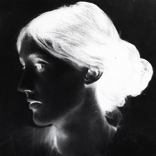
At the birth of this tradition we find Virginia Woolf and her Mrs. Dalloway, a piece detailing a single day spent inside the momentary thoughts of several characters, each of whom meander mentally through time, blurring tense and distinctions between indirect and direct narration.
Mrs. Dalloway is centered around the character of Clarissa Dalloway but segues fluidly from the interior of her mind to those of other characters and back again. The book, written in 1925, marks what many consider to be Woolf’s first successful work of fiction and certainly her most experimental up to that point. Where the majority of novels at the time designated sections and scenes via chapter breaks, Mrs. Dalloway is organized into parts, elements of the piece’s structure that serve to mirror the fluidity with which Woolf moves from the interior of one character’s mind to that of another. Certainly, at the core of Mrs. Dalloway is Woolf’s interest in individual consciousnesses and their intersections. Likewise, the novel marks Woolf’s attempt to explore the difference between individual consciousness and its insertion into group settings. Throughout the text we are privy to each character’s internal narrative while watching them interact with others and navigate social settings.
To be sure, the thoughts of characters connected to the novel’s protagonist, Clarissa Dalloway, intertwine and intersect without their knowing. In rare, revelatory moments, however, Woolf’s characters experience the “moments of being” she writes of in her 1941 collection of essays as, “A philosophy; at any rate it is a constant idea of mind that behind the cotton wool is hidden a pattern; that we – I mean all human beings – are connected to this; that the whole world is a work of art; that we are parts of the work of art.”(Woolf, “Poetry, Fiction and the Future”) Said philosophy, described in Mrs. Dalloway as, “moments like…buds on the tree of life, flowers of darkness,”(Woolf, Mrs. Dalloway) is why the characters of Woolf’s novels cannot be disconnected from the network of thought, feeling and experience that binds them. The character of Clarissa Dalloway, for example, seemingly isolated and self contained, merges with the character of Septimus Warren Smith, via an unconscious association with his problems and perceptions.
Mrs. Dalloway, although certainly not Woolf’s most experimental work, is oftentimes credited with the advent of “stream of consciousness” prose and frequently compared to James Joyce’s Ulysses, which although similarly divided and structured, taking place over the course of one day, remains, in terms of perspective, seated in the interior mind of one principle character, Leopold Bloom. Mrs. Dalloway, widely considered to be Woolf’s response to Joyce’s novel, was criticized at the time for the perceived narrowness of its scope, given that it takes place within the sphere of the domestic, the everyday. That Woolf manages to address the interconnected pattern of human experience using the seemingly mundane, “feminine” experience of household and hosting duties is not only what sets her work apart from Joyce structurally, but is also what arguably makes it a more successful example of written evocation of human cognition, consciousness, and memory.
Indeed, Woolf actively refuted the “damned egotistical self,” she saw rendered by the work of Joyce as well as fellow female author Dorothy Richardson, concerning herself not with, “the single life, but with lives together.”(Woolf, Holograph Drafts) Such is certainly obvious in Mrs. Dalloway, a novel which, despite being focused on Clarrissa Dalloway as its primary character, drew connections between her interior mind and that of the myriad of characters whose thoughts Woolf also traced. Yet where Mrs. Dalloway focused on the intersections of distinct consciousnesses and was considered groundbreaking for doing so, Woolf’s later novel, The Waves, being more concerned with the collectivity and interconnectivity of time and thought, marked a development in her ideas of consciousness.
In 1926, two years after completing Mrs. Dalloway, Woolf finished her To the Lighthouse , the writing of which, according to her journals, propelled her into a deep depression. This depression, which took her deep into the intricacies and darkness of her own mind, must have retrospectively operated as a gift to Woolf, who emerged intent upon writing those moments in which one glimpses their own consciousness. The nothingness Woolf experienced during her depression, and the mental space that supported it are part and parcel of what she is writing towards in The Waves. And such is why, as is true of many contemporary works pointed at evoking the nature of consciousness, The Waves is without a distinct climax, taking instead a shape that mirrors its title, swelling and backwashing, arising and subsiding.
Prior to beginning work on The Waves, Woolf addressed the difficulties facing writers aiming to address the nature of modern consciousness her essay “Poetry, Fiction and the Future,” writing that the new form will have to encompass, “something of the exaltation of poetry but much of the ordinariness of prose. It will be dramatic and yet, not a play…it will stand further back from life. It will give the relation of the mind to general ideas and its soliloquy in solitude.” (Woolf, “Poetry, Fiction and the Future”) Her novel is the subsequent realization of this new form. Framed as a series of episodic soliloquies, The Waves undulates across six individual voices and charts six distinct, but intertwining characters over the course of their lives. Bernard, Susan, Rhoda, Neville, Jinny, and Louis begin the novel as children on holiday by the sea, moving then to their educational lives and ending with adulthood and a final section narrated by Bernard alone in which he directly addresses the reader, moving to “sum up…the meaning of my life.”(Woolf, The Waves) Where over the course of then novel each character emerges as unique and in possession of a distinct voice, Woolf’s intention was to write characters that mirrored the difficulty she experienced in, “collect[ing] oneself into one Virginia, even though the special Virginia in whose body I live for the moment is violently susceptible to all sorts of separate feelings. I wanted to give the sense of continuity.”(Woolf, A Reflection of the Other Person: The Letters of Virginia Woolf) Woolf’s intention to evoke this continuity results in a text marked by the intersections of consciousness and memory. This, “‘continuous stream, not solely of human thought, but of the ship, the night &c, all flowing together; intersected by the arrival of the bright moths’…”(Woolf as quoted by Julia Briggs on page 242 of her, Virginia Woolf, An Inner Life) illustrates human consciousness by evoking memories and rendering them stylistically in the same way they occur in one’s mind; fragmented, but intersecting. Arising in a series of interconnected waves, one recollection flowing into the next.
Originally, Woolf wrote an initial chapter featuring, “many mothers, and before them many mothers, and again many mothers, groaning and giving birth, like one wave succeeding another…And all these waves have been the prostrate forms of mother, in their flowing nightgowns, with the tumbled sheets about them holding up, with a groan as they sink back into the sea, innumerable children.”(Briggs, p. 243) This early introduction marks not only, “a vision of maternal genesis challenging the patriarchal narrative of scripture,”(Briggs, p. 243) but also the collectivity of the consciousness Woolf was trying to evoke. Despite the eventual omission of this opening scene, the motif of universality remains, reflected in collectivity of The Waves’ characters and evoked by the use of repetition and symbolic motifs that Woolf linked to each.
Indeed, where Mrs. Dalloway was structured by the mundane, everyday experiences it took place inside, The Waves used other motifs to give form to an otherwise uncontained narrative. For example, and of particular pertinence to the idea of consciousness in The Waves, is the idea of absorption. Woolf frames the story with distinct moments of embodied presence, points in time such as childbirth, first kisses, and acts of creation where one is entirely engrossed in their experience and is therefore, purely conscious, fully embodied. (Briggs, p. 245) Such is evidenced by the entirety of the children’s experience in the first section, in which each character is alive inside the present moment, moving effortlessly from one sensory experience to the next. It is the intersection of the children’s bodies with each other, as well as with the natural world, that combines with the continuous and collective consciousness of their experience by the sea, composing Woolf’s idea of child’s time, unfettered by constraints and clock hands but moving, with the section’s progression, towards an awareness of their respective positions within space and time.
Mrs. Dalloway showed the cotton before pulling it away to reveal the inner lives that lie beneath. By contrast, The Waves goes right for the interior, bypassing the external shroud, the transience of which was exemplified by Mrs. Dalloway. In other words, where Mrs. Dalloway was pointed at showing the deep structure of the thoughts that underlie our everyday activities. The Waves does away with the denotative layer of the habitual, the mundane, and frames moments of being instead.
Works Cited
Briggs, Julia: Virginia Woolf, an Inner Life, Harvest Books; First Edition edition (November 6, 2006)
Woolf, Virginia: Selected Essays, Oxford University Press (January 2008)
Woolf, Virginia: The Waves, Cambridge University Press (October 31, 1986)
Woolf, Virginia: Mrs. Dalloway, Harcourt (October 28, 2002)
by Allie Rowbottom
who received her BA in Creative Writing and Women’s Studies from New York University, is currently in CalArts’ MFA Writing Program, and in her free time enjoys yoga, horses and tea
