Singular, idiosyncratic and a little mysterious, Black Clock is one of America's leading literary journals.

Blog—

SEE + HEAR + DO (5/25-5/31)

CHARLAINE HARRIS IN CONVERSATION WITH MELISSA MARR (5/25 @ 12:30PM, NY)
At the Bryant Park Reading Room located on the 42nd Street side of the park – under the trees – between the back of the NYPL & 6th Avenue. Look for the burgundy and white umbrellas.  Bryant Park phone number: 212-768-4242

Charlaine Harris will be interviewed by Melissa Marr, author of the young adult urban fantasy novel, Wicked Lovely, on May 25th. Charlaine will also take fan questions and sign books at the event which is part of the “Word for Word”, an outdoor reading series that features bestselling authors, celebrity writers, and expert-panelists sharing anecdotes, answering questions from the audience, and signing copies of their latest books. Free.

ALMOST FAMOUS READING SERIES (5/25 @ 6:30PM, NY)
apexart, 291 Church Street, New York, NY 10013

Join us for apexart’s third event in the fourth installment of the Almost Famous Reading Series, featuring four new authors each week of our May program. Initiated in March 2010, the series has gained momentum, asking previous participants to recommend their favorite authors from the New York City community, leading to a diverse and interesting spectrum of readers. Refreshments will be served, stories will be shared, and interests will be piqued. Angela Ashman, Dylan Landis, Eric Lindley, and Shelly Oria read. Free.

CHINA MIÉVILLE (5/29 @ 4PM, PORTLAND)
Powell’s Books at Cedar Hills Crossing, 3415 SW Cedar Hills Blvd., Beaverton, OR 97005

Sci-fi author China Miéville doesn’t follow trends. He sets them, relentlessly pushing his own boundaries as a writer — and, in the process, he expands the boundaries of the entire field. With Embassytown, Miéville has crafted an extraordinary novel that’s not only a moving personal drama but a gripping adventure of alien contact and war. Free.

SEE + HEAR + DO (5/18-5/24)

BIG CITY FORUM – WRITERS EDITION (5/18 @ 7PM, LA)
LA Art Association, Gallery 825, 825 N. La Cienega Blvd., Los Angeles, CA 90069

Big City Forum in conjunction with LAAA/Gallery 825 present an evening about the written word. Join a group of L.A.’s most talented up and coming authors as they explore the ways in which fiction shapes our thinking about personal and collective narratives. Presenters: Harold Abramowitz, Grace Krilanovich, Margaret Wappler, and Lauren Strasnick. Free.

CALARTS WRITERS SHOWCASE (5/19 @ 7:30PM, LA)
REDCAT, 631 West 2nd Street, Los Angeles, CA 90012

The School of Critical Studies holds a reading of the best new fiction and poetry by MFA candidates in the Writing Program. Free.

LARRY FLYNT AND DAVID EISENBACH (5/20 @ 7:30PM, PORTLAND)
Powell’s City of Books on Burnside, 1005 W Burnside, Portland, OR 97209

In One Nation under Sex (Palgrave MacMillan), free-speech activist and notorious Hustler magazine publisher Larry Flynt teams up with Columbia University history professor David Eisenbach to peek behind the White House bedroom curtains and document how hidden passions have shaped public life. They unpack salacious rumors and outright scandals, showing how private affairs have driven pivotal decisions — often with horrific consequences. Along the way, they explore the origins of America’s fascination with sex scandals and explain how we can put aside our political moralism and begin focusing on the real problems that threaten our nation. Free.

OPEN CITY 2011 BENEFIT PARTY (5/24 @ 7PM, NY)
Open City, 162 E. 92nd St., New York, NY 10128

Sam Lipsyte and Amine Wefali read at a party to benefit Open City and to mark the release of an anthology with highlights from the magazine, They’re at It Again: Stories From Twenty Years of Open City. Tickets start at $100. Funds raised will support the continuation of Open City Books.

SEE + HEAR + DO (5/11-5/17)

A LITERARY CELEBRATION! GABRIEL GARCIA MARQUEZ’S ONE HUNDRED YEARS OF SOLITUDE (5/11 @ 7:30PM, NY)
Leonard Nimoy Thalia, 2537 Broadway at 95th Street, New York, NY 10025-6990

Oscar Hijuelos (Pulitzer Prize winner of The Mambo Kings Play Songs of Love), Esmeralda Santiago (When I was Puerto Rican), and Kevin Brockmeier (The Illumination) discuss Gabriel García Márquez’s masterpiece. This event will include a performance of Judah Adashi’s Songs and Dances of Macondo with music by Quintet of the Americas and a reading by Sonia Manzano. $25

CALARTS MFA STUDENTS READ FROM THEIR WORK (5/13 @ 7:30PM, L.A.)
Skylight Books, 1818 N Vermont Ave, Los Angeles, CA 90027

Students in the CalArts Master of Fine Arts writing program read from their work. Diana Arterian, Marco Di Domenico, Henry Hoke, Emily Kiernan, and Amanda Montei read. Free.

POETRY FESTIVAL: A CELEBRATION OF LITERARY JOURNALS (5/15 @ 1PM, WEST CALDWELL)
West Caldwell Public Library, 30 Clinton Road, West Caldwell, NJ 07006

In its eighth year, this showcase event displays journals, holds poetry readings, and makes editors available for questions about publication. Free.

LUNADA WRITING WORKSHOP (5/16 @ 6:30PM, SF)
Galeria de la Raza, 2857 24th Street (at Bryant), San Francisco, CA 94110

“Coming Home, Making Home” is a writing workshop facilitated by Cathy Arellano, Andrea Serrano, and Michelle Otero, featured poets of the Lunada  Lunada ~ Literary Lounge & Open Mic SPRING SEASON FINALE: “Búrque to The Bay.”  From the Mission District, and Albuquerque New Mexico, the featured poets of the Lunada Spring Season Finale will offer a special writing workshop, open to the general public, to nurture a poetic exchange between writers from the Bay Area and the Southwest ~ Búrque to The Bay! $10-15 sliding scale; no one turned away for lack of funds.

SEE + HEAR + DO (5/3-5/10)

STEVE ERICKSON AT THE JAPAN SOCIETY IN NYC: SEEING STORIES: FICTION, MANGA & GRAPHIC NOVELS (5/03@76:30PM, NY)
East 47th St, New York, NY 10017
American and Japanese artists have been inspiring each other for decades. Tonight, authors Hideo Furukawa and Steve Erickson share their strong apocalyptic imaginations, and Roland Kelts, half-Japanese author of Japanamerica, will discuss the mutual influences in narrative visual art. Followed by a reception. Buy tickets online or call the Japan Society Box Office at (212) 715-1258, Mon– Fri 11AM–6PM, weekends 11AM–5PM. $12/$8 Japan Society members, seniors & students.

LARRY FLYNT + DAVID EISENBACH (5/04@ 7PM, LA)
Book Soup, 8818 Sunset Blvd, West Hollywood, CA 90069
The authors will discuss and sign their book One Nation Under Sex. Free.

CHICAGO DURUTTI SKOOL: WORKSHOP WITH THE NEXT OBJECTIVISTS (5/05@7PM, CHICAGO)
The Mess Hall, 6932 North Glenwood Ave, Chicago, IL 60626
A free, open-to-the-public poetry workshop dedicated to the study & reproduction of the outsidereal. Free.

THE POETRY OF GLOBAL CITIZENS (5/06@7:30PM)
Beyond Baroque, 681 Venice Blvd, Venice, CA 90291
Celebrate the launch of new works by Iranian-American poet and artist KATAYOON ZANDVAKILI in our upstairs Project Room. Readings to follow. Admission $7, students/ seniors/children $5, Free for members.

FREE COMIC BOOK DAY (5/07@ALL DAY)
Various Locations
Free Comic Book Day is a single day–the first Saturday in May each year–when participating comic book shops across North America and around the world give away comic books absolutely Free to anyone who comes into their stores.

MOTHER’S DAY FESTIVAL ON OLVERA STREET (5/8@ 10AM, LA)
Olvera Street, El Pueblo de Los Angeles Historic Site, Main St & Cesar E Chavez Ave, Los Angeles, CA 90012
Food, fun and celebration of moms. Free.

AN EVENING WITH LEONARD NIMOY (5/09@6PM, BOSTON)
Metcalf Hall, Boston University,  775 Commonwealth Ave, Boston, MA 02116
The pop-icon and Boston native discusses his life and multi-faceted career. $25 admission, Free to members of the Friends of the Libraries and the BU Community.

See + Hear + Do (4/27-5/02)

BEYOND MUSIC: VOICING THROUGH SAUSSURE – JACQUES DEMIERRE & VINCENT BARRAS (4/28@7:30PM, LA)
Beyond Baroque, 681 Venice Bl. Venice, CA 90291

Barras and Demierre present their intense and eccentric performance deconstructing Saussure’s linguistic structures in a mad tour de force of synchronic poésie sonore. $10/ $5 for seniors, students and UCLA faculty, Free for BB members.

BRENT CUNNINGHAM, BRANDY NALANI MCDOUGALL & CRAIG SANTOS PEREZ (4/30 Doors@7PM, LA)
The PRB @ The Public School, 951 Chung King Rd, Los Angeles, CA, 90012
Brent Cunningham is a writer, publisher and visual artist, Brandy Nālani McDougall and Craig Santos Perez: authors and scholars. Free with $5 suggested donation.

LOS ANGELES TIMES FESTIVAL OF BOOKS (4/30-5/1@10AM-6PM and 5PM on Sunday, LA)
University of Southern California, Exposition Blvd and S Figueroa St, Los Angeles, CA 90089.
Panel Discussions, Booksellers, All Things Literary, Food, and of Course, Black Clock! Free. Parking at the USC campus will be $10.

THE DEAD MILKMEN (4/30@7:30PM, CHICAGO)
Congress Theater, 2135 N Milwaukee Ave, Chicago, IL, 60647
“What Spinal Tap is to hair metal, Philly’s The Dead Milkmen was to punk music.” Their latest album, The King In Yellow, was released in March. $18-70.

On a Mission Creek

The Mission Creek Festival cannot compare to the LA Times Festival of Books, The Frankfurt Book Fair, or the London Book Fair in glitz or breadth. The significance of a festival like Mission Creek is that it brings literati and publishing trends to nooks of the cultural universe beyond the campuses of sweeping grandeur and vitalized urban centers. These smaller fairs and festivals are microcosms full of innovative presses, journals and authors. They happen in places often considered far between.

The Mission Creek Festival, which took place from March 28th to April 4th in Iowa City, is just one of the many growing gatherings.  And its continued success shows that yes, people care about books. People care about literary journals. People care about Tao Lin. Drawing crowds of people to see authors like the beatific Tao Lin at the Prairie Lights Bookstore, and the risible Sam Lipsyte at The Mill, the festival flooded The Ped Mall with musical acts and readings spanning a week. This included a lit crawl that featured twenty-five different writers reading “quickies” in six different locations including the Foxhead, famed hangout of the Iowa Writers’ Workshop folks. Joe Tiefenthaler, one of the organizers took the time to fill Black Clock in on some of his thoughts on the festival this year.

BLACK CLOCK: What surprised you about the festival this year?

JOE TIEFENTHALER: Turnout. We all sort of wondered early-on whether or not the events this year would work… there were just so many of them, on more days than ever before, but more people came out than I could have imagined. Speaking on the literary side of the festival’s events, the fair had well over 350 people walk through the tables, nearly double last year, and I saw arms stacked with books walking away. At the lit crawl, audiences of 20 per event would have made me happy enough, but more than 50 showed up at each event–at any point, more than 150 people were out somewhere downtown engaging emerging young authors doing their thing… I’m ecstatic!

What is the most rewarding part of putting on a festival like Mission Creek?

Just that, what the audiences took away, whether it was books or having just seen one of their idols in person (the number of times I heard “I can’t believe I just saw Guided By Voices,” “Sonic Youth,” and “John Waters.”) And everyone new to town loved this place, so the reward is just that–the town and artists we love supporting and excited about having just engaged with one another.

What do you feel Iowa City lends to the experience?

Iowa City is tight-knit, and ready to devour so much… a town of diehard fans ready to consume a range of artistic (and athletic) endeavors in places they frequent and love. It’s a town of people that like to stay engaged, and whether through financial support (a la buying tickets or sponsoring) or volunteering, the community will participate in any way it can.

What are your hopes for the future of the literary portion of the festival?

I’ve already met with other head producers (Andre Perry, our Director, and Chris Wiersema) on the ways in which the literary programming can rival the music, including the pieces of the puzzle we just won’t sacrifice. More events, a larger book fair, etc. My best advice, stay tuned in for next year…

by Sara Gerot
a writer and Associate Editor of Black Clock

SEE + HEAR + DO (4/20-4/26)

In this week’s SEE + HEAR + DO, we consider the world.

PAUL FITZGERALD & ELIZABETH GOULD (4/21 @ 7PM, WALTHAM)
Back Pages Books, 289 Moody Street, Waltham, MA 02453
In Crossing Zero: The AfPak War at the Turning Point of American Empire, the authors explore the war in Afghanistan and its consequences for Pakistan, Russia, India, China, Iran, and America. Free.

GABRIEL TOSO (4/21 @ 7:30PM, LONDON)
Treadwell’s,
33 Store Street, Bloomsbury, London WC1E 7BS
Toso lectures on Vodou Flags: Sequined Spirits of Haiti – their origins, ritualistic uses, value as art objects, and their complex iconography. £7.

ICE-T (4/25 @ 7PM, NY)
Barnes and Noble, 33 E. 17th St. New York, NY 10003

Ice: A Memoir of Gangster Life and Redemption—From South Central to Hollywood, Ice-T’s second memoir, recounts his life’s many exploits, the roles he has played, and surviving Hollywood. Free.

PEN WORLD VOICES FESTIVAL OF INTERNATIONAL LITERATURE (4/26  @ 7:30PM, NY)
The Lighthouse, Pier 61, Chelsea Piers

PEN, the world’s oldest literary and human rights organization, kick-offs of its annual festival with words from festival chair Salman Rushdie, a literary fashion show, and entertainment from favored authors and actors galore, all to celebrate freedom of expression around the world. $30.

ASHLEY GOSSMAN (4/26 @ 7PM, PORTLAND)
Broadway Books, 1714 NE Broadway, Portland, OR 97232
Join
John Sibley Williams, A. Molotkov, Carrie-Ann Tkaczyk, David Cooke and Ragon Linde for A Night of Poetry and Experimental Music. Free.

BILL MORGAN (4/26 @ 6:30PM, SF)
San Francisco Public Library, Koret Auditorium, 100 Larkin Street, San Francisco, CA 94102
Ever wonder where the Beats loved to crash? Get your thirst quenched in Beat Atlas: A State by State Guide to the Beat Generation from City Lights. Free.

SEE + HEAR + DO (4/13-4/19)

This week, we’re sustainable, sexy, and on a mission.

SUSIE BRIGHT (4/13 @ 7PM, LA)
Book Soup, 8818 Sunset Blvd, West Hollywood, CA 90069
In Big Sex, Little Death, Susie Bright recounts a personal history rife with political activism, sex-positive feminism, and sexual experimentation. Free.

NIKKI SIXX (4/14 @ 6PM, SF)
Book Passage,
1 Ferry Building, San Francisco, CA 94111
The Mötley Crüe bassist and songwriter (now radio personality, author, and photographer as well) exposes underbellies and surprising beauty in his book of writing and photography: This Is Gonna Hurt: Music, Photography, and Life Through the Distorted Lens of Nikki Sixx. Free with purchase of book.

RYE BARCOTT (4/15 @ 6PM, SEATTLE)
Town Hall,  1119 Eighth Avenue, Seattle, WA 98101
It Happened on the Way to War is Rye Barcott’s bold memoir of founding a nonprofit organization, Carolina for Kibera, which endeavors to provide sustainable solutions to poverty in the Kibera slum in Nairobi, Kenya. $5.

RENEE WILKINSON (4/17 @ 4PM, PORTLAND)
Powell’s Books, 1005 W Burnside, Portland, OR 97209
Wilkinson lights the path toward better autonomy and economy in Modern Homestead: Grow, Raise, Create. Free.

Poets as Prophets

Literature as it is generally defined–works of creative prose and poetry–has become an obsolete and irrelevant art for the average American. Recent statistics prove this beyond any doubt. A much-publicized study in 2007 found that, in the preceding year, one in four Americans had not read a single book.[1] Even those that do read tend to stay away from literary works; in a separate study, fewer than half of American adults stated that they ever read literary titles.[2] For young adults, the findings are even more depressing: more than half of all Americans aged 18-24 admit to never reading any kind of book for pleasure.[3] Compare this to the average of five hours per day spent watching television, and literature’s decline makes some sense.[4] Nefarious as television may seem, however, no one forces people to spend nearly a third of their waking hours passively engaged before it, rather than reading. That the choice is so commonly made to pass over books, to consider reading “boring” or “pointless,” indicates some deeper shift in the way Americans relate to literature, and especially poetry, which a scant ten percent of people read. (Gifford)

Almost twenty years ago, Dana Gioia, poet and eventual chairman of the National Endowment for the Arts, bemoaned the irrelevance of poetry in contemporary America, and identified several reasons for its decline.[5] The most important is also the most obvious, especially for those invested in poetry, and Gioia states it in the first sentence of his essay: “American poetry now belongs to a subculture.” Poetry, and creative writing in general, has migrated firmly into the realm of academia, and has thus divorced itself from the daily realities of most Americans. Poetry is largely composed and read within the same closed group: MFAs or other students of creative writing, generating reams of material that never reaches a wider audience. There may still be some cultural mystique attached to the label of ‘writer’ or ‘poet’, but “as individual artists they are almost invisible” (Gioia).

Much of this can be attributed to the post-WWII boom of creative writing programs, through which a student can begin a career path with none of the usual instability historically associated with writing. Rather than living or dying by publication, writers, once credentialed, can theoretically expect to find employment as a teacher of creative writing themselves. Ironically, though less Americans read now than ever, the rise of MFA programs has brought about a veritable explosion of literary production. In 2009, there were 822 creative writing programs in America alone.[6] If each of those programs only admit five to ten new students per year, that’s a production of 60,000 professional writers per decade—many of whom will seek to publish within the pages of literary magazines, which are themselves a dwindling industry. Due to a shrinking audience, the average literary magazine now publishes scarcely 1500 copies of each issue. The collision of these two numbers–60,000 new writers every decade, 1500 annual copies of each typical forum for these writers’ productions—suggests that “no one is reading all this newly produced literature—not even the writers themselves. And with that in mind, writers have become less and less interested in reaching out to readers” (Genoways).

Here there can be seen the confluence of two elements which, together, have created the perfect storm for literature’s decline: a reading public made continually smaller through the encroachment of alternative entertainments, like television, and a rapidly-expanding writing class hermetically sealed in an insular world that cannot support the weight of their publications. These factors herald a general cheapening of the written word, both in terms of how the public values it, and the diluting effect of an exponentially increasing output. Both are negative effects of the democratization of literature, a process that Jacques Rancière identifies as having started in the mid-19th century.[7]

Literature, being comprised of the language that we speak, is inextricably imbedded in and reflective of the world in which it is written. Therefore, as political realities have evolved, so has literature, along with its place and function in society. Rancière identifies this phenomenon as “the politics of literature,” and defines it as, “literature … involved in [the] partition of the visible and the sayable, in [the] intertwining of being, doing and saying that frames a polemical common world” (10). When literature began to reflect in itself the rise of social democratic institutions at the beginning of the 19th century, its very nature changed. This change was crystallized in the mid-19th century in the works of Gustave Flaubert, whose “disregard for any difference between high and low subject matters, for any hierarchy between foreground and background, and ultimately between men and things, was the hallmark of democracy” (12). This marked a distinct break with the classical rhetorical distinctions outlined in Aristotle’s poetics, which elevate the noble art of poetic writing above the base art of historical writing, reflecting a hierarchal sensibility that also places action–deeds and speeches–in the province of persons upon a higher plane than those “who do nothing but ‘live’, who are enclosed in the sphere of a reproductive and meaning-less life” (13). With Aristotle, and continuing through the Renaissance, Elizabethan era, and early Enlightenment, “there was a homology between the rationality of poetic fiction and the intelligibility of human actions, conceived of as an adequation between ways of being, ways of doing and ways of speaking” (13). The functions of literature were thus divided into a hierarchal scheme, defined by the role and intent of the speaker or writer. Ecclesiastical writings, composed by a priest, were meant to improve the spirit; the speech of a rhetorician inspired listeners and spurred them to action; poetry, seen as a transcendent art, revealed hidden layers of reality. Each of these functions had a proper language of its own, and differed from everyday speech in the same way that a Shakespearean king’s manner of speaking differed from that of a peasant.

Rancière defines this system of writing as the “representational regime”, which “was based on a definite idea of the speech-act” (14). At the core of the representational system was “the idea of speaking as using words to produce appropriate aims: specific moves in the souls and motions of bodies” (15). The collapse of the hierarchal system in society brought with it a collapse of the hierarchal organization of language, and thus an end to any definite performative aspect. “The rules and hierarchies of representation hung onto a definite link between saying and doing . . . the highest accomplishment of human action was supposed to be the action made by speaking itself” (15).

In the democratic regime of literature, exemplified by Flaubert and continuing into the present, the “connection between meaning and willing” (15) is utterly dismissed; the writer becomes anybody, as does the reader, and the original function of literature goes into abeyance. Rancière sees democratic literature as composed of “mute letters,” which speak “to anybody, without knowing to whom it had to speak, and to whom it had not” (14). Signaling the end of the age of rhetoric, meaning as communicated through literature is no longer a meeting between two distinct wills. It becomes “a relationship between signs and other signs” (15). The realistic novel exemplifies this new purpose for literature, which presents the entire spectrum of mundane activity as a fabric of signs that, once put on display, are open to decipherment. Language itself has no voice, but provides testimony to the current state of the world, the objective truth of things, instead of the subjective communications of orators. “The words of literature . . . display and decipher the signs and symptoms written in a ‘mute writing’ on the body of things and in the fabric of language” (17). Rancière cites the fabric of literature as comprised of a Balzacian “curiosity shop,” in which all images are equal, “sensitive form[s] that [are] a fabric of signs. All these objects [wear] a history on their body,” in which the realist writer “displays the fossils and heiroglyphs of history and civilization” (19).

We can see this phenomenon manifested clearly in the current vogue for literature that showcases the reality, or soul, of the age. This trend covers the entire literary spectrum, from the works of Nobel laureates, like Orhan Pamuk and Herta Muller, who state their intent as holding a mirror to the society they write from, to the grossly personal and self-reflexive phenomenon of “confessional” literature, in the glut of popular memoirs like Eat, Pray, Love, Million Little Pieces, and Angela’s Ashes. The problem with finding any meaning in such literature, when literature has been divested of the ability to communicate its own meaning, is that the attempts at critical explanation rely upon the same system of “mute letters,” or signs, that support the practice of literature itself (20). “Explaining close-to-hand realities as phantasmagorias bearing witness to the hidden truth of a society, this pattern of intelligibility [is] the invention of literature itself” (20).

Some writers, specifically the literary Modernists, like James Joyce and Samuel Beckett, saw through this charade, the pointlessness of signs pointing to signs, and sought to make literature that existed only for its own sake, without any pretense of meaning. This kind of writing “would no longer be the silent language engraved in the flesh of material things. It would fit the radical muteness of things, which have neither will nor meaning. It would express . . . the nonsense of life in general” (22). The democratization of language had laid bare the infinite materials of language and experience and divorced them from any imbued communicative capability. The writer is left with two options: literature that “covert[s] any scrap of everyday life into a sign of history” (23), or literature that says, and thus accomplishes, nothing at all. The illusion that the former pursuit may bear any transformative benefit–may truly teach anything–becomes subject to the paradox of an interpretation causing the transformation of the interpreted object. This is, as Rancière puts its, the “contradiction of literature” (23).

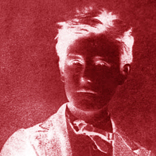
It becomes obvious why literature’s importance has waned in contemporary society: literature no longer does anything. People do not need literature to frame their experience of a shared world. For this they have political commentators, movies, and television. In order for literature to regain value in the minds of the public, writers must reclaim for themselves something of the hierarchal prestige that preceded our current, fully democratized state. Literature must become again the vessel for specialized communication, for knowledge that exists perfectly outside of the common experience. At the end of the 19th century, the French poet Arthur Rimbaud attempted to create a new type of literature that would not simply reflect life, or the meaninglessness inherent in life, but reveal life more clearly to itself, and “change the self-interpretation of life into a new kind of poem, taking part in the framing of a new world and a new collective life” (22). Rimbaud called for a new literature that would no longer describe the world as it appears, but instead leap ahead of it, in advance of life, to reveal the ultimate communality of all things, and the shades of reality hidden beneath the dross of mundane experience. “He called for poems filled with numbers and harmony, for a language open to the five sense, a language of the soul for the soul, containing everything – smells, sounds and colors. This idea of a poetry of the future was in line with the romantic idea of ancient Greek poetry as the music of a collective body” (22).

The importance of this for the continued relevance of literature, and the need for it in our firmly grounded, realist era, cannot be overstated. Rimbaud, in his revolutionary poetics, sought to resuscitate an ancient, visionary purpose for poetry, first exemplified in the Greek Orphic tradition, and carried through the traditions of early Christianity in the mystical writings of Catholic Saints. These two strains, while seemingly divergent in their theology, can be seen as reconciled in their poetic message and intent, and unified in the writings and life of Arthur Rimbaud himself.

by Doug Matus
a writer from Texas who now lives in Los Angeles

____________________________________________________________________________________

[1] Fram, Alan. “One in Four Read No Books Last Year.” The Washington Post 21 Aug. 2007.
[2] Gifford, Sally. “Literary Reading in Dramatic Decline.” National Endowment for the Arts. 8 July 2004. Web. 23 Feb. 2010. <http://www.nea.gov/news/news04/ReadingAtRisk.html>
[3] Allen, Erin. “Americans Read, Understand Less.” Library of Congress. June 2008. Web. 23 Feb. 2010. <http://www.loc.gov/loc/lcib/0806/reading.html>
[4] Semuels, Alana. “Television Viewing at All-Time High.” The Los Angeles Times 24 Feb. 2009.
[5] Gioia, Dana. “Can Poetry Matter?” The Atlantic Monthly May 1991: 94-106.
[6] Genoways, Ted. “The Death of Fiction?” Mother Jones Jan. 2010. Web.
[7] Rancière, Jacques. “The Politics of Literature.” SubStance 33.1 (2004): 10-24. Project Muse. Web.

SEE + HEAR + DO (4/06-4/12)

Death matches, musicians-turned-authors and more in this week’s See + Hear + Do.

AN EVENING OF MUSIC WRITING WITH 33 1/3 (4/07@7:30PM, NYC)
Greenlight Bookstore, 686 Fulton Street, Brooklyn, New York 11217
33 1/3, a series of short books centered around music albums, presents four of their writers this evening: Daphne Carr (Nine Inch Nails’ Pretty Hate Machine), Hank Shteamer (Ween’s Chocolate and Cheese), Christopher Weingarten (Public Enemy’s It Takes a Nation of Millions to Hold Us Back) and Bryan Charles (Pavement’s Wowee Zowee).  Free.

LITERARY DEATH MATCH (4/08@7PM, SF)
Elbo Room, 647 Valencia Street, San Francisco, CA 94110-1150
Literary Death Match combines literary and performative aspects of Def Poetry Jam, each episode this reading series is a competitive, humorous ride.  The match begins with each of the night’s four writers performing, in seven minutes or less, their most electric writing.  They are then judged by a trio of all-stars on literary merit, performance and intangibles.  The two favorite writers advance to the finals where they go head-to-head to fight for the Literary Death Match crown.  Readers: Monica Youn, Dean Rader, Kim Wong Keltner and Kris Saknussemm.  Judges: Kim Addonizio, Anthony Bedard, Glendon Hyde a.k.a. Anna CondaHosted by Alia Volz and comedian Ngaio Bealum.  Doors open at 6:30PM.  21+.  $7 in advance, $10 at door.

THE CLEVELAND CONFIDENTIAL BOOK TOUR (4/08@7PM, Brookline)
Brookline Booksmith, 279 Harvard Street, Coolidge Corner, Brookline, Massachusetts 02446-2908
Three legendary musicians-turned-authors discuss their lives and art.  Featuring: Cheetah Chrome (A Dead Boy’s Tale), former lead guitarist for the punk band The Dead Boys whose songs have been covered by Guns N’ Roses, Pearl Jam, and The Beastie Boys; Mike Hudson (Diary of a Punk), founder of punk rock group The Pagans; and Bob Pfeifer (University of Strangers), founding member of Human Switchboard and Tabby Chinos, and was the President of Hollywood Records.  Free.

MEG WOLITZER’S THE UNCOUPLING (4/10@4PM, Portland)
Powell’s City of Books, 1005 W Burnside, Portland, OR 97209
Meg Wolitzer’s novel about female desire, The Uncoupling, has been labeled funny and provocative.  The choice of “Lysistrata” — the comedy by Aristophanes in which women stop having sex with men in order to end a war — for the school play seems to cast a strange spell over the campus population.  Free.