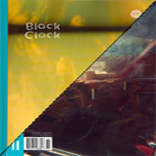
Singular, idiosyncratic and a little mysterious, Black Clock is one of America's leading literary journals.

Archive for the ‘Inside’ Category—

Books Take Shape On (But Mostly Off) the Page

The New York Art Book Fair, which occurred over the weekend of November 5 – 7, was somewhat reminiscent of those book fairs from second grade except only the nerdy kids have consequently become the motley individuals (myself included) milling through the halls of MOMA PS1. Hundreds packed onto each of the building’s three floors, the former site of the first public school in Long Island City. Over 200 small presses, publishers, bookbinders, artists, and activists attended to sell, trade, or give away what they love most–their ideas made tangible.

Printed Matter, a non-profit supporter of “artwork for the page,” hosted the fair in celebration of the book in its traditional form, but also as a vessel that may take many forms. Robbin Ami Silverberg, local artist and papermaker, displayed some recent work that included a small collection of spools threaded with paper from her own Dobbin Mill in Brooklyn. Printed on each thread are a series of misogynistic remarks or proverbs that are then woven into a tangled lattice around wooden spools of varying sizes. Her artwork, which could be described as both delicate and conspicuous, is thoughtful in that it extends the metaphor beyond the domestic and feminine to suggest that the printed word can be overwhelmingly binding.

The Thing, a quarterly “object-based publication” that proves that pages are not always necessary, boasts such contributors as Miranda July, Jonathan Lethem, and James Franco (why?). For each new issue, The Thing asks a different writer, artist, or creative mind to thematically integrate both visual and written elements that often result in an artifact that interrupts everyday connotations with a charming nugget of perspective. Issue 10, a cutting board accompanied by an essay entitled “Crying Instructions” by Starlee Kine, was my favorite by far. The reader is urged to actually employ the issue as it is naturally intended, preferably while cooking and especially after a breakup. Kine suggests chopping onions. A close second to Kine’s work might be Miranda July’s window shade.

For the novice self-publisher, Full Tilt handed out information advertising affordable bookbinding classes of varying technique. I walked away with a How to Make Books book and a keener sense that the consumption of literature is not a solitary activity, but an ongoing act of exchange and participation.

by Ashley Tomeck
who lives and writes in New York City

Cultural Capital vs. Just Plain Capital

This is the third in the “The Real Economics of the Purely Imaginary” series, which circles some very large, very unwieldy, and–for precisely these reasons–very tantalizing questions about knowledge, creativity, teaching, writing, and the university.

I was in the bookstore last night.  Not the indie bookstore that also sells used records–the chain bookstore that also sells lattes.  I should have known better.  Of all the places people go to make themselves feel bad–the gym, home for Christmas, swimsuit shopping, whatever–the chain bookstore, to me, is the worst.  Viewing the shelves filled with political screed, chick lit, and coffee table trophies is an efficient way to a) ruin the nice feeling that comes after a productive day, and b) convert the blah feeling that comes after a nonproductive day into a serious downward spiral.  Is this true just for me, or do other writers experience this?  Granted, it’s easy to make me feel bad.  Like Bridget Jones, I already feel like an idiot most of the time.  (The difference between me and Bridge, though, is that she gets to say “I feel like an idiot” to a sexy, successful lawyer who wants to take her… out for dinner and a movie.  Also, Bridge has a fun career in television.  But I digress.)  Writers who are at peace with what they do, even if they labor in obscurity, may not agree with me about the deleterious effects of a trip to Borders or Barnes & Noble.  But if their self esteem soars after a trip to the big box bookstore, they are probably either famous, possessed of a healthy body image, capable of writing brilliant first drafts, or some combination of the above.  They sound like lovely people.  But I’m not talking about healthy self esteem this week; I’m talking about masochism.

The chain bookstore makes me–and probably you, and probably every writer you know–feel bad because, it seems, every idiot with a word processor and spellcheck can publish a book.  Every idiot, that is, except us.  But more importantly, this big fancy bookstore presents a weird paradox.  On the one hand, we all know, if we read the news online once in a while, that the publishing industry is in steep decline.  Sales are down and shrinking, publishing houses–even the big ones–can’t stay in the black, and if an arty little tome happens to make it to print, Lord knows what compromising acts the publisher had to do to finance it.  (Probably sign with Joe the Plumber.)  People don’t buy books–not the good ones; people don’t read books–again, not the good ones, unless Oprah tells them to; and it’s not long before books make like dinosaurs and retreat underground where they will wait millions of years until humans unearth them and use them as fuel.  But how is one to believe in this doomsday narrative when strolling through several huge, carpeted, air-conditioned levels of retail space, filled with thousands, if not millions of books?

But then one tries to find the poetry section.  At my local Barnes & Noble, poetry occupied one measly section of shelf in a tumbleweed-strewn corner of the store.  There was the requisite Emily Dickinson and the Robert Frost, but most of the section was a mix of pseudo-Norton Anthologies and utter trash–Great Poems of the English Language, 1000 Poems to Read to Children, Poems for World Peace, How Many White Male Poets Can Dance on the Head of a Pin?, Vampire Poetry Through the Ages, Pastor Bob’s Christian Inspirational Poems for Young Girls.  If shelf space is a measure of what people buy–and by extension, obviously, a measure of what people read–only college syllabi or the flimsiest marketing ploys might coerce, or dupe, the unsuspecting consumer into buying a book of poems.

And this state of affair holds true outside the poetry ghetto.  For example: if it’s something thrilling and weird people want, why are The Girl With the Dragon Tattoo books topping bestseller lists and not, say, Lucy Corin’s astonishing Everyday Psychokillers?  (For the record, I read The Girl with the Dragon Tattoo, and I loved it.  A good laugh was exactly what I needed that day.)  Yes, I’m ranting.  And yes, I probably would have been better off skipping Barnes & Noble and instead trooping across the street to Pequod’s Pizza, where I could have eaten myself into either oblivion or a better mood.  But it seems that the choices for writers are:  1) crank out some marketable crap, which may in fact get you grocery money, 2) write what sustains you, at which point you may as well put it in a drawer or line your kid’s hamster’s terrarium with it, or 3) day job and quiet desperation, followed by the inevitable shooting spree in the exurbs.

Clearly this is not a new viewpoint I’m proffering here.  But if you want to think about what actually constitutes cultural capital, or the real economics of the purely imaginary, or score any points for the “An English degree is not a fatuous waste of time” side of the debate, you’ll need to take my rant at least semi-seriously.  Really, why should anyone spend time attempting to read, write, produce, discuss, and engage with literature, considering the mulch that passes for books these days?

The problem, as I see it, is that literature is a gentleman’s pursuit–and we no longer have gentlemen.  That is, a class of independently wealthy, well-educated, and erudite men (and yes, historically, letters have been a man’s game) who can afford to invest their time in artifacts which have no commercial value–unless, that is, we look at the university English department.  For instance: one highly-paid woman in my department runs the composition program.  Translation: her program purports (practical outcomes are another matter) to teach students a measurable, practical skill, which they will need in their toolkit in order to succeed the next four years of their lives–how to write papers in college.  Although this professor does respectable and necessary work, is widely published, and oversees a program that ensures every single student who graduates from the university will take at least one course in the English department (their freshman comp course), hers is not regarded as an intellectually or artistically high-status position.  In fact, without her program, the size of the department, and its share of funds, would probably shrink dramatically.

By contrast:  A highly-paid male professor, who oversees a more intellectual aspect of the department, writes books containing arguments about obscure bodies of literature and obscure schools of thought–arguments which can have a real-world effect only in a lit-nerd’s wildest utopian fantasies.  Translation: no practical skills here, but high pay and very high prestige.  I’m making no claims about who works harder or who deserves more respect–both professors work very hard, both on their own research and in their engagements with students.  But the male professor gets a higher payout, both in salary and in prestige.

Which one is the gentleman, and which one is the worker?

I’m not arguing for commercial value as a measure of actual or absolute value, by the way.  If I were, I’d have recommended Stieg Larson over Lucy Corin.  I’m also not faulting or valorizing either professor for teaching and researching what he/she teaches and researches.  I’m also going to step aside from gender questions, because, while I do think there is a gender bias at work, my main point isn’t about gender inequality.  The inequality I want to point out would remain the same whether both professors in this example were female, or both male, or if the higher paid professor were female and the lower paid professor were male.

There is a distinct hierarchy visible here in the kind of literary work that is valued and in how that value is shown.  I wonder, also, if this imbalance doesn’t have some link to the way literary value plays out at Barnes & Noble.  After all, the two situations look like mirror images of each other.  On the university side: work of practical value, which is intended for all students to access or engage in, gets less pay and less prestige, while work of little practical value, intended for a elite few, gets more pay and more prestige.  On the bookstore side: work intended for the elite few–that is, work with what we might call great cultural value–brings in little money, and takes up little shelf space, while work of perhaps lower cultural value dominates the store and brings in the most money.

This is fine for the bookstore.  The bookstore is a business.  It measures value in money, and so in the world of the bookstore, poetry, or erudite fiction, and so on, are less valuable and treated accordingly.  But the university is not a business–at least, it does not purport to be, despite the fact that more and more universities are adopting business practices in order to try and balance their budgets.  The university’s economy is primarily one of cultural capital–prestige, intellectual worth, social cultural value.  These values, by definition, are not supposed to be measured with money.  In fact, they are supposed to defy any attempt at stamping a dollar sign on them.  Intellectual, cultural, social, artistic merit–these things are supposedly priceless.  Yet the university uses money to measure and reward the acquisition, production, and proliferation of cultural capital.  Isn’t this a problematic mash-up of economies?  What it means, in real-world terms, is that a system of cultural and intellectual inequalities–that is, a system that values different kinds of work differently in a prestige economy–replicates and perpetuates those inequalities in a money economy.  It’s fine, I suppose, in the abstract, for different kinds of academic and intellectual work to achieve different levels of status and prestige in the cultural capital arena.  But when these inequalities are reflected financially, it is no longer an abstract problem or a problem in an imaginary economy, and to my way of thinking, it’s no longer fine.

by Jenn Hawe
who lives, writes, and cooks in Chicago

Walking LA

This is the first in a series of literary meditations on that rare urban pastime of exploring Los Angeles on foot.

L.A. has a reputation as a driver’s city.  I know this, because I’ve read it described elsewhere, endlessly, in peoples’ reflections on the place; and also, because of my first experience of L.A., which came through an old girlfriend who once laughed in my face when I asked her if there were any cool bars or coffee shops within ‘walking distance’ of her house. There are certain things that contribute to L.A.’s demarcation in this regard. First of all, the place is huge; it’s an official “mega-city,” with the metropolitan area comprising almost 500 square miles and containing nearly 15 million souls. Whether you were born and raised in Watts or the OC, chances are that, when asked in polite conversation where you’re from, you’ll respond “L.A.” But who would be willing to hoof the distance between these two areas? Public transport is insufficient. As a new transplant, I’ve seen more shuttered subway stops than functioning ones, and the prospect of navigating a bus system in a place where single streets can stretch for 24 miles (Sunset Blvd.), or the famous highway system regularly suffers the daily glut of seven million cars, leaves me anxious and uninspired. Public transport, in order to be successful, has to be fast and easy. In L.A., it is neither of these, which leaves most residents with no option but to hop behind the wheel, and add their presence to the communal cluster of the 110, 5, 10, or 101.

In reality, L.A. is an imminently walkable city, at least within the neighborhood regions that comprise it. Los Angeles is a city, of course, and an immensely large one; but it is also a conglomerate of individual communities, many of which feel like autonomous regions and have much to offer the foot-bound voyager. So how do we find our feet in this great mecca of urban development? Easy. By putting our feet on the ground, and breaking the city down into the neighborhood elements that comprise its body and soul. There’s a lot of history here, and for such a vehicular city, a vibrant street culture, with food vendors, pedestrians, small storefronts, and a rich visual texture of beautiful buildings, graffiti, flora, and vistas to reward the urban spelunker. In this series of essays I will explore the practice of walking L.A., a project that I hope will endear me more to this strange place that inspires such intense reactions of love and hate. A secondary goal will be to root out the variegated strands of literary culture persistent here at the end of our continent. As Henry Miller stated, great literature is born of the streets; yet Los Angeles, the entertainment capital of the world, has never possessed in the popular imagination a literary heritage comparable to, say, New York. Of course, as with everything here, appearances are deceiving. The great writers of Los Angeles – Chandler, Fante, Bukowski – have all celebrated the city in microcosm, and to read their writings without an awareness of place is to miss half the point. Los Angeles is beautiful and complex, and bears the attention of prolonged study. This fact was made apparent to me continually in the course of my first walk, which centered around the city’s historic Pueblo center.

It was a fantastically beautiful day. This is not strange, noting the locale, but worth mention due to the effervescence the sunshine extracts from the clean white lines of the downtown architecture, interspersed with the oases of public gardens and parks. Los Angeles is a fascinating city architecturally. In the past few decades, attention has been drawn to the fabrication of monolithic wonders, like the Frank Gehry designed Disney Concert Hall. As a city of spectacle, though, L.A. has always been the sight of showy building accomplishment, from the stately halls of public administration to the boutique wonders of homes in the hills. At the center of it all is one of its true stone wonders: Union Station, a New Mission monolith built to much fanfare in 1930 that continues to provide the beginning and end to many West Coast experiences.

If Los Angeles is the Paris of the Americas (and why not?), then Union Station is its Gare Saint-Lazare. This beauteous terminal has been amply represented in cinema and literature, and can serve as a useful representation of the city it serves. Union Station would seem intimidating. After all, it is the downtown transportation hub that links a massive city to its equally massive airport, LAX. Union Station is also an Amtrak and bus terminal, with direct service up and down the West Coast, and east to Texas. It is not intimidating, however; neither its majestic mission facade, rising next to the similarly designed USPS Terminal Annex, nor its generous interior layout. I parked my motorcycle across the street (one must, of course, drive to walk here), entered through the front doors, and was immediately greeted with a splendor of space: a direct line, defined in polished oak and vaulted ceilings, from the curb, straight through the waiting area, to the terminals and bus station. To the left of the entryway, barred to foot-traffic but eminently viewable, is the old ticket-hall, a huge room with a mighty row of art-deco counters, polished marble floors, and paneled-wood ceilings. Its grandiosity and enforced barrenness inspired thoughts of tragic, sudden departures, a teary movie heroine in shades of celluloid buying the first ticket to nowhere, with everyone wearing hats and smoking cigarettes. Opposite this is a nice-looking bar (too early in the day for me to sample, but I’m sure a welcome retreat for weary travelers) and a breezeway that leads to a garden and shuttered restaurant. The gardens that bookend this main area are massive and lush, the kind of arboreal design indulgence one doesn’t find very much out East. The shuttered restaurant is ghostly and romantic, like an old wedding photo. A sign advertised it as available for filming.

The Pueblo lies roughly across the street from Union Station, a fitting welcome for new visitors to the city. The Pueblo was the center of the first incarnation of L.A., El Pueblo de Nuestra Senora la Reina de los Angeles del Rio de Porciuncula, founded in 1781. I’m not sure when the settlement’s name was shortened to “Los Angeles,” but I imagine it came as a relief to natives whose querents would fall asleep during the answer to the question of “Where are you from?” The Pueblo area later became the site of the city’s first Chinatown; hence the references to “New Chinatown,” in regard to the current district. The history of L.A.’s Chinatown, and its reason for relocation, are detailed at the Chinese-American Museum, right off the main Pueblo plaza. Apparently, the original Chinatown was leveled and the residents forcibly removed for the construction of the Union Station I so eulogize in the preceding paragraph.

From my perspective, the two most interesting landmarks on the Pueblo Plaza are La Placita and the Avila Adobe. La Placita was L.A.’s first established church, in 1814, and still provides a full range of services. I walked into the little chapel, where a golden icon was on display behind the altar, and a group of elderly folk were knelt at various pews in quiet prayer and reflection. At the opposite end was an impressive depiction of the crucified Christ, enclosed in a glass coffin and surrounded by a heap of flowers. A couple of people waited in line to pay homage and perform silent reflection. It takes an advanced cynic not to respect the spirit of such a place; such disconnect is out of my reach.

Across the Plaza from La Placita is Olvera Street. This narrow passage, lined with souvenir and trinket shops, is the home of many historic buildings, including the Avila Adobe, built in 1821, and recognized as L.A.’s oldest surviving residence. The place is fairly palatial, with several large rooms surrounding a contained garden; it was constructed by one of the first settlers to make their fortune in ranching, and was later used as the U.S. Army headquarters during the Mexican-American War. Olvera St., with its shaded, brick-paved confines, empties out onto E. Cesar Chavez, one of modern downtown’s main thoroughfares. The contrast between the quiet, adobe lined lanes of the Plaza and the traffic signals and exhaust of the City of Commuters is profound, but a necessary reminder of the L.A.’s depth and complexity. In the words of Emerson, “Do I contradict myself? Well, I contradict myself. I contain multitudes.” So it can be that a city centered around a driving culture can reveal so much to the sidewalk wanderer.

by Doug Matus
a writer from Texas who now lives in Los Angeles

Literally Rankling

A PUBLIC SERVICE?

Perhaps all literary controversies are minor controversies, but, even on the Lilliputian isle of letters, there are scales and differences in degree to consider.  An excellent case in point: the recent back-and-forth that erupted around author and Gigantic editor Lincoln Michel’s “A New Literary Magazine Ranking” (headline since revised to “A Guide To Literary Magazines”), published at The Faster Times.

Before its subsequent transformation, “A New Literary Magazine Ranking” took the form of a “tiered” guide of serial markets for fiction, with journals taxonomized based on a formula measuring: Pushcarts and other prizes won; circulation figures; whether or not the market actually pays (and if so, how much); and reputation, which Michel tried valiantly but unsuccessfully to subsume under the heading of “buzz.” Why undertake such an effort? To help writers, particularly aspiring writers, increase their chances of getting published.

This is nothing but laudable, and Michel’s piece initially held much promise. Practical applications aside, a coherent, as opposed to vehement, scrupulous and transparent rendering of the Baroque economies of regard, patronage and potlatch and on which literary publishing depends is desperately needed, if “only” for ethical reasons. (Let’s indulge quickly in a bit of early 21st Century nostalgia, before Mo Rocca can start delivering “Foetry” one-liners on VH1’s I Love The Naughties) Unfortunately, via the alchemy of reader feedback, Michel’s piece instead deteriorated, perhaps inevitably, into a soggy morass of injured pride, hurt feelings, and offended palates. “Ranking elimae as high as The American Scholar is pretty funny, and probably a result of the fact that our trusty list-maker has contributed to the former. I declare this list suspect!” Net result: a largely abandoned project.

This is not to say that Michel’s rankings were not without their conceptual flaws.

THERE IS NO ORDER TO THE UNIVERSE

1) Michel’s list was far too indebted to previously assembled rankings (such as John Fox’s), with all the built-in prejudices (prizes as a measure of quality) and limitations (highly localized sense of what qualifies as “recognized”) of the same .

2) Specific weightings for each factor, if employed, were not provided or adequately explained by Michel.  For example, if a journal  showing off multiple Pushcarts and respectable circulation figures nevertheless pays very little, did Michel place that title above a less anthologized publication with a larger subscriber base and a reputation for generous compensation?

3) As several comments on Michel’s original piece point out, not all fiction markets are apples.  Some are oranges, some lemons, some clusters of grapes, some tomatoes (technically fruits, but commonly classified as vegetables) and some creatures as exotic and hothouse-y as the mangosteen.  While from one perspective, it just feels “right” to place The New Yorker at the top of the food chain — for reasons of pay, because the magazine reaches a national audience, and because history has lodged its hefty thumb on the scale — it is not primarily a publisher of literature. Bemoaning the fact that your prose poems based on a critical reading of Whole Foods Market product descriptions weren’t picked up by Esquire is a bit like feeling defeated because your in-depth profile of January Jones wasn’t selected by Ander Monson for the latest issue of Diagram.  The whole notion of “market” seems to be compromised by the presence of established, almost pre-fetishized commodities like The New Yorker, Playboy and The Atlantic alongside sweat equity overachievers such as Fence, N+1 and No Colony.  Michel tries hard in his introduction to prepare readers to be ready to exercise reservations (“Consider first of all your work and where it will fit.”), but a ranking folding in upon itself with as many exceptions and caveats as are opened up in that advice is only offering excuses for its own collapse. The fact that Michel confined his rankings to markets for fiction — traditionally viewed as a more mainstream and ”conservative” form than poetry — can be offered as one excuse for construing kind as degree, but that leads us to…

4) Poetry, anyone? More to the point, creative nonfiction? Hybrid forms?

5) Although Michel does make brief mention of duotrope’s digest, I find it disappointing that he did not make a greater effort towards incorporating the vast amount of information duotrope collects about rejection versus acceptance rates, response times, genres and subgenres, etc. into his own rubric.  With the proper funding — surely there’s a research grant out there for this — Michel could even have augmented duotrope‘s data with information regarding the educational background of journal editors, editorial turnover (especially a factor for journals associated with MFA Writing Programs, which draw much of their staff from student populations who are only affiliated with the publication for 2 to 3 years at a time), appearances by individual authors in multiple issues of each periodical, and so on. This is the kind of information that could be very useful to writers hoping to use Michel’s list to identify likely outlets for their work.  Not to mention that such an aggregation would go a long way towards a presenting a much more comprehensive picture than we’ve ever had of precisely with how much calculated casualness and through such tortured causality literary magazine publishing actually operates.

PUT THAT IN YOUR SPREADSHEET AND SMOKE IT

Ultimately, however, the issue becomes: how much does information like this really inform, and, given the context, how much more valuable is subjective opinion?  On the one hand, the inherently subjective nature of Michel’s exercise does damn it as just that.  On the other hand, literature, like all the arts, thrives on word-of-mouth, shared passions, and, increasingly, a sense of what is hip and what is not.  It is also worth remembering that literature has a contemporary cultural existence not unlike that of endangered species: for its own good, it is restricted to a protected habitat — academia — and is subject to a scrutiny attentive less to the intangible benefits of ensuring its survival and much more interested in recording behaviors… before there are no more behaviors to observe. For good or ill, literary studies are “trending” more and more toward scientific models of scholarship (cf. Franco Moretti; Jonathan Gottschall; Brian Boyd.) Consequently, something like an algebra of submissions feels right, and, if not almost like a corrective, then at least genuinely au courant. Yet there is no comparable calculus of publication.  Each journal has its own bent, and each journal, at least in my experience, approaches each issue as a gestalt, an object to be carefully designed, a form with its own expressions.  The editor’s challenge is not just to pluck the “good” writing out of the slush pile, but to recalibrate what “good” writing is within the aesthetic parameters of the publication itself, which is bigger than any one individual set of proclivities or choices. If you’ve ever been on the wrong end of a rejection letter, you may scoff, but it is true: “no”s can be labored over much more so than “yes”es, which are often caught in the first sort and do not demand to be read again and again until it is time to begin thinking “between the covers.”

But how can one most effectively quantify something that is as inherently qualitative and experiential as publishing? As Michel notes, the oldest advice in this regard is perhaps still the most applicable:

“As always, it is essential to read the journals you are considering submitting to.  Not only to keep abreast of current work, but to understand where your work fits and to support the literary world you want to be a part of.  Really, if you are submitting you should be subscribing to at least one or two journals.”

I don’t believe there is any accident accountable for why this knowledge owes its shape and its sound to the anecdotal.  For isn’t that what knowledge is: the product of living with information, the actual handling and processing of it.  In a similiar fashion, no writing “of publishable quality” can be understood as possessing literary quality based on a word by word analysis.  Michel could just have easily have said, “Look, you have to be more than someone who just writes.”  To which I would add: you have to have done more than purchase all the accessories required for a “literary lifestyle.”  Rather, you must give yourself over to the care and tending of a literary ecology, stooping and shouldering, wasting resources now in order to conserve them later, rotating your crops, learning to recognize the beneficial effects of “pests,” and reconciling yourself to the tragedies associated with the intellectual commons.  In other words: always, you just have to keep on toughing it out.

by Joe Milazzo
an Associate Editor of Black Clock and Director of Community Education and Outreach at The Writer’s Garret in Dallas, whose writing has appeared in Electronic Book Review, Chronometry, Tea Party, In Posse Review, Antennae and Black Clock

WHY I HATE THE TERM “CREATIVE WRITING”

This is the second in the column series, “The Real Economics of the Purely Imaginary” that circles some very large, very unwieldy, and–for precisely these reasons–very tantalizing questions about knowledge, creativity, teaching, writing, and the university.

In my last post, I laid out a number of questions surrounding creative writing, the university English department, literary criticism and theory, economics, and knowledge production.  In this installment, I want to talk about one of the most readily-assumed, rarely-questioned, and easily-accepted distinctions we make about kinds of writing and kinds of thinking.  For me, this is the question.  So for starters, riddle me this:

My friend was stuck.  He was facing a deadline for a respected periodical.  The piece had been hanging over his head for months.  Each day that he didn’t work on it was a day he felt he’d failed somehow.  But he just couldn’t work on it.  He knew what he might want to say, but the words wouldn’t come.  The ideas were too big to organize.  Sometimes his ideas just seemed so trite.  He questioned why anyone would want to read his piece at all, thought maybe he was kidding himself about his abilities or the notion that he had anything to say.  What if the piece was crap, what if it ruined his career, what if they rejected it (even though they’d solicited his work)?  Two days before the piece was due, he still had not started writing.  “What do I do?” he asked me.  I dipped into my bag of writerly tricks.  “Compartmentalize,” I said.  “Take the critic in your mind, put him in a room, and shut the door while you write.  Accept that your first draft may be shit: that’s what drafts are for.  Accept that this may not be the best piece you ever write–but it’s not the only piece you ever write.  Just put your ass in a chair in front of your computer and start writing.  If you don’t know what to write, put ‘I don’t know what to write’ until something else comes out.  Do what my writing teacher told me:  make a mess, and then clean it up.  That’s essentially all you need–just get something going, and you can craft a finished piece out of it.”

Eventually my friend did it.  He got his ass in a chair, he typed, he agonized over every word, he got in his own way by trying to edit as he went, he spent most of his time staring at the wall, trying to get words to materialize in his brain… but eventually he found a rhythm, got a draft done, and sent it off to the editors.  They took the piece.  Writer’s block overcome, drinks for all, aren’t I a good friend for helping him, la dee da dee da.

I’m nosing closer to the question: Can you tell from the story above what kind of piece my friend had to write?  A news article?  A critical essay?  A poem?  A short story?  A review?

My point is that there’s no way, simply from talking about my friend’s writing process, to draw a clear distinction about what kind of writing he wanted to produce.  You may have gathered that he was writing prose, but even that is not self-evident from the story.  (Journals do solicit work from writers they like, and who’s to say no one has ever procrastinated on cranking it out?)  He was, in fact, writing a critical essay on pedagogy for an academic (but not scholarly) journal.

Look at his process.  Look at his roadblocks.  They could have been culled from a “Tips for Beginning Writers” fact sheet, or any of the schlocky (and not so schlocky) creative process books out there.  Anyone who’s picked up a copy of Anne Lamott’s Bird by Bird, or Natalie Goldberg’s Long Quiet Highway (two popular creative process books for writers) can recognize that my friend needed to Turn Off the Inner Critic, Build a Writing Practice, Make Peace With Shitty First Drafts, etc..  In fact, the advice I gave him was straight out of meetings with my own creative writing professors when I was working on an MFA.  My friend entered into much the same work, engagement, brainstorming, mental judo, and alligator-wrestling with the empty (or crappily written) page that so-called creative writers tackle when they work.  In fact, I hardly need to graft my friend’s story in here, because I know from writing in both creative and critical modes that the processes are just not all that different.  The products may look radically different, but how we Frankenstien that product into existence is not determined by the product itself.

I just don’t think that the term “Creative Writing” means all that much.  Besides provoking mental associations with 4th-grade “Write a story about a time when you were afraid” assignments, what does this term do?

For one thing, it holds layers of assumptions that could really use some unpacking.  What are we talking about when we say “writing,” anyway?  Are we talking about the act of making a piece of written work–a story, an article, a rant?  Or are we talking about the story, article, rant itself?  Or are we talking about value, use, purpose, and place of both the writing and the writer?

Lots of people–writers and scholars alike–assume that “creative writing” is some kind of hybrid of thing one and thing two, but my vote is on thing three.  Heere’s why I propose we all throw our hats in a new-ish ring, and stop referring to certain kinds of writing as “creative”: the designation implies that the act of writing and the purpose of a piece are known, stable quantities, when they are not.  One need only look at the multitude of conflicting ideas about writing instruction operating on college campuses across the country to see that this is so.  Furthermore, the term tips certain kinds of writing and writers out of the “this work is valuable” basket and into the “this activity is self-indulgent” basket.  This is ridiculous, especially when we can see that the process is often the same regardless of the product.  What if my friend had been writing a story and not an article?  Why would that work have been automatically less “intellectual” and more “frivolous”?  For that matter, why are the many choices he made as a writer, the imagination he used to construct his article, and his flexibility with expression not creative endeavors simply because they went to produce an article?  The finished product may have been critical in nature, but the process of writing it was creative all the same.

“So big deal,” you’re thinking.  “So non-creative writers get writer’s block.  What does this prove, and why should I care?  Everyone freaks out about public speaking, too, but this doesn’t mean that public speaking is the same as acting.”  Or, as another friend put it: “Why not just eat some soup and call it writing?”  (Actually, I think that might be cool, and someone might already have tried it.  Takers?)

I take my friend’s point.  But I’m not saying that distinctions between kinds of writing should never apply.  I’m not claiming that what goes on in the literature classroom and the writing classroom are exactly the same.  I’m not saying that all writing is the same or that we should explode the field.  If anything, I’m arguing for a more precise understanding of what writing is and how it fits into learning and knowledge production.  Consider that, in many creative writing workshops, the discussion of the writing happens in a critical (non-creative) register.  Workshoppers do not give feedback with poems, dances, songs, or paintings (although sometimes I wish they would).  No–they (we) give feedback in critical, analytical discourse.  Even if the workshop is based in a reader-response mindset, reader feedback still is far more like the discussions that take place in literature classes than anything one would think of as meditations on “creative process.”  Workshoppers discuss technical elements such as point of view, focalization, temporality, pace, tone, etc.. Workshoppers make arguments about these things, and make evaluations about the  success of the piece.  These are critical endeavors.  So how can we say that the work of creative writing is totally divorced from critical (non-creative) intellectual activity?  The writer has to evaluate the feedback, decide what to use, what to discard, and how to make changes.  These activities fall under the rubric of creative process–and sometimes it is a gut-level response–but weighing information and ideas, deciding on their credibility, and reevaluating one’s work are also important elements of research and peer review processes.

There are all sorts of assumptions layered into the idea that you’re either a scholar or a writer, and that if you’re a creative writer you’re not a scholar, and vice versa.  Calling some kinds of writing “creative” only helps entrench these assumptions and bury the fact that they are assumptions.  The result is often a sublevel of second-class citizenry within departments that already treat grad students as second-class citizens.  I have heard a firsthand account of a professor who told a doctoral student who was struggling with a paper “Don’t worry.  No one expects you to be able to do this.  You have an MFA.”  I also know of a Creative Writing program director who will not sit on exam committees for PhD students except as a fifth reader (read “fifth wheel”), even though his program grants PhDs with concentrations in Creative Writing; he says it is because he holds an MFA, not a PhD, and is therefore unqualified to sit on exam committees in a department he directs.

But what if non-creative writers-–the critics, the scholars, many of whom (in my department, at least) complain that they “can’t write,” “don’t write,” or “suck at writing”–had access to the kinds of writing instruction that “creative writers” receive?  Might they not produce better work, cope better with paper and article writing, have more success finishing dissertations?  (And, for anyone who thinks this isn’t an issue, I’d suggest doing a bit of research on attrition rates at PhD programs in American universities.  We are having a harder and harder time educating people into the highest echelons of their fields.)  When we assume that certain writers–and certain work–achieve radically different ends and are worth radically different amounts of respect and attention, we overlook the fact that writing, all kinds of writing, makes knowledge go ’round.

by Jenn Hawe
who lives, writes, and cooks in Chicago

In Sanity We Trust: How Literature Keeps L.A. (Relatively) Sane

‘Literary’ might not be the first adjective that comes to mind when describing the city of Los Angeles. But it should be. Sure, there’s Hollywood, the ‘industry’ (both film and porn), the celebrities, the hopeful Midwestern waiters and waitresses working various restaurants throughout the city. You know the L.A. Myth: Being discovered at LAX or the Chevron on Melrose. Becoming an overnight success. From all over the world, people flock to Los Angeles, hoping to benefit from its limitless possibilities. They cash their savings, stuff it into a white legal envelope and head to L.A. Five days later and a hundred dollars or so shorter, they arrive.

What is missing from the stereotypical image of Los Angeles is the literature that gives voice to its less optimistic outcomes. Often grim and sometimes dark, writers frequently portray the other Los Angeles—the one that’s a bit mysterious, that precisely opposes the illusion of glamour. Nathanael West, Raymond Chandler, Charles Bukowski, Joan Didion—without their narratives, L.A. might only be the perpetual and intangible fantasy Hollywood has falsely promised. Instead, literature allows Los Angeles to be multi-faceted; shaded and darkly nuanced. So much so that this city could hardly be what it is today without the stories in which it has starred.

Take Joan Didion’s Play It As It Lays, which chronicles the fame-induced ennui of movie star Maria, who struggles with the emptiness of success. Or Charles Bukowski’s chronically belligerent protagonists as they lose menial jobs, battle poverty, and chase women. While the showbiz side of Los Angeles touts unrealistic ideals of success and stardom, the literary side of the city paints a bleaker portrait. Add to the list Raymond Chandler’s gangsters, dangerous femme fatales, and corrupt policemen and it’s clear that this is not exactly the stuff dreams are made of. Stuff that probably wouldn’t procure a cross-country bus trip and an envelope stuffed with cash. So what then, is it worth?

A great deal. Imagine this place if it was only the concept of Hollywood. Only naive hopeful stars. Only celebrities. That is just not the Los Angeles I know. The L.A. I know is one of spotlighting helicopters; wailing police sirens; autonomic traffic; an overwhelming amount of people; the consistent smell of skunk, broken-in cars, a homeless epidemic, and a keening ability to decipher gang graffiti tags. I love my L.A., but it isn’t very glamorous. Success is slow. Fame amiss. I have yet to be discovered. I’ve seen a celebrity or two, but they both looked tired. Reality exists in my Los Angeles.

The city lies at the crux of this clashing of constructs. There’s the promise of stardom and the often-bleak reality its literature depicts. Los Angeles constantly shifts between these two spheres. Which explains why this city simultaneously attracts and repels me. It is at times beautiful, and at others grotesque. It is suddenly perfect and a moment later all wrong. It is a city in a constant state of confounding confliction. And if you catch it at the right time, you can see the real L.A., which is everything: the success, the squalor, the fame, the infamy, the power and the poverty. The underbelly is at the heart of Los Angeles just as much as the celebrity.

The gritty Los Angeles depicted is, put simply, better than any myth. The real L.A. is culture. It’s street cart oranges, cheap beer, food trucks. It’s the post office, the alleyway, the dive bar. This grit is what makes Los Angeles gleam. Because it’s what actually awaits you when you get here. And the result is an ideal atmosphere for creativity and imagination that is optimal terrain for writers. With an abundance of contradictions, juxtapositions and opposites, the city holds a wealth of inspiration. And in turn, stories of hardship and scandal allow L.A. to be accessed and understood—to exist just as much on the ground as in the clouds. And if this is the L.A. you come for, your white envelope might take you a bit farther than if you come looking for glamour.

Los Angeles’ literary heritage provides the anti-myth. The down-and-outs. The proclivity for dereliction. The dangers of excess. Without these stories, our conception of Los Angeles might be downright dull. Without Raymond Chandler’s noir or ‘The Poet Laureate of Skid Row’s’ vulgarity, what kind of L.A. would come to mind? Call it dark, dreary or depressing, but give it credit for the insight it provides. Because when I read Charles Bukowski’s Post Office, I know his L.A..

They might not warrant prestige or fame—they hardly even sell books—but these bleak stories, quite frankly, keep us grounded. And if there’s one thing we should turn to this city’s literature for, it’s sanity. Yes, sanity. Because it’s the truth; it’s L.A..

by Katie Manderfield
an MFA candidate at CalArts, an editorial assistant for
Black Clock, and is constructing an experimental literary journal for women; her work has been published or is forthcoming in Pindeldyboz, 3:AM, and dogmatika

image courtesy of ATomek

Writing Consciousness in Contemporary Literature

Black Clock and, by extension, the MFA Writing Program that produces it, supports experimentation pointed at uncovering idiosyncratic, mysterious elements, the likes of which come together in every issue to make a unique and prominent literary journal. Issue number 11 invited readers to “be dazzled by the mysterious connections lighting the horizon…” and to experience, “secret stories told by characters who find themselves driven out of their own times by their own pursuits.” It seems fitting then, amidst the index of innovative contemporary writers featured in Black Clock today, to examine figures of contemporary literature whose work has also focused on mysterious connections, paving the way for the traditions of experimentation that have blossomed in the recent past, fostered by publications such as Black Clock and programs like CalArts’ Creative Writing.

In a series of posts centered around the writing of consciousness, memory and human experience, I intend to examine individual writers who experimented with writing consciousness and cognition in ways that subverted old norms of narrative as linear, “realist” and marked by set beginnings, middles and ends.

I’ll look first to the past and writers Virginia Woolf, Dorothy Richardson and Gertrude Stein–women represented individually by wide and diverse bodies of work as well as collectively, unified by a common gender and a shared historical standpoint. Such intersections of style, period and sex will behoove us to ask what about the twentieth century propelled writers away from the “realist” narrative forms elevated and celebrated by nineteenth century literature.

Likewise, and with a shift towards an examination of contemporary writers such as Carole Maso, Eva Figes and Jeanette Winterson, who, like their predecessors Woolf, Richardson and Stein, produce non-linear, experimental fiction and are themselves similarly associated with the female gender, this series will unpack in relation to experimental writing and the evocation of human consciousness, questions of gender, sexuality and the dubious existence of an “ecriture feminine.”

INTRODUCTION

We write now wholeheartedly into our own obsolescence, our own obscurity- a place at once tender and absurd and fierce. We chronicle figments, and it is as if we have already disappeared and our shadow words are trailing us, leaving their extraordinary, flickering residue.
______________________________________________________________ – Carole Maso

That a novel can be fractal, composed of splices, sound bites and memory scenes, is certainly not a new idea. After all, our pasts remain to us more as phrases of moments, flickers of sensory experience, than streamlined stories beginning with a problem and ending upon its resolution. Still, within a literary community historically committed to the “realist” novel as the ultimate form of storytelling, works of fiction structured to mirror human consciousness have oftentimes been categorized as too obscure to satisfy a perceived need for conflict, climax and culmination. Nevertheless, the twentieth century saw writers such as Dorothy Richardson, Gertrude Stein, and Virginia Woolf experiment with writing consciousness and cognition in ways that subverted old norms of narrative as linear, “realist” and marked by set beginnings, middles and ends.

That each of these writers was female and each productive of work outside the linear lines drawn by the literary canon that preceded them certainly ushered in a myriad of theories concerned with connections between stream of consciousness prose and a feminine ecriture. Similarly, multiple connections between patriarchal constructs of traditional fiction and what subversion with non linear forms means to the establishment of a “feminine consciousness” have been made and surely bear consideration. For example, there is something to be made of Luce Irigary’s ideas of oceanic “feminine” experiences of pleasure, time and storytelling versus the climax and ultimate come down that characterizes the patriarchal, phallocentric structure of the modern Western world, narrative conventions included. Likewise, there are convincing connections to be made between postmodernism, the death of the subject, the infinitude of consciousness connected with it, and the centrality of narrative coherency given such changes.

And yet, in the face of such weighty concepts and questions, it seems to this reader that pivotal to the discussion of non linear narrative are not the theories of how culture creates form, or how social constructions influence our readings of said forms, but rather who creates them and how the work of independent writers simultaneously stands alone as examples of contemporary literature as well as components of an experimental tradition, connected by a shared interest in writing human consciousness.

EVOKING HUMAN CONSCIOUSNESS, A TRADITION RAISED BY A WOOLF

At the birth of this tradition we find Virginia Woolf and her Mrs. Dalloway, a piece detailing a single day spent inside the momentary thoughts of several characters, each of whom meander mentally through time, blurring tense and distinctions between indirect and direct narration.

Mrs. Dalloway is centered around the character of Clarissa Dalloway but segues fluidly from the interior of her mind to those of other characters and back again. The book, written in 1925, marks what many consider to be Woolf’s first successful work of fiction and certainly her most experimental up to that point. Where the majority of novels at the time designated sections and scenes via chapter breaks, Mrs. Dalloway is organized into parts, elements of the piece’s structure that serve to mirror the fluidity with which Woolf moves from the interior of one character’s mind to that of another. Certainly, at the core of Mrs. Dalloway is Woolf’s interest in individual consciousnesses and their intersections. Likewise, the novel marks Woolf’s attempt to explore the difference between individual consciousness and its insertion into group settings. Throughout the text we are privy to each character’s internal narrative while watching them interact with others and navigate social settings.

To be sure, the thoughts of characters connected to the novel’s protagonist, Clarissa Dalloway, intertwine and intersect without their knowing. In rare, revelatory moments, however, Woolf’s characters experience the “moments of being” she writes of in her 1941 collection of essays as, “A philosophy; at any rate it is a constant idea of mind that behind the cotton wool is hidden a pattern; that we – I mean all human beings – are connected to this; that the whole world is a work of art; that we are parts of the work of art.”(Woolf, “Poetry, Fiction and the Future”) Said philosophy, described in Mrs. Dalloway as, “moments like…buds on the tree of life, flowers of darkness,”(Woolf, Mrs. Dalloway) is why the characters of Woolf’s novels cannot be disconnected from the network of thought, feeling and experience that binds them. The character of Clarissa Dalloway, for example, seemingly isolated and self contained, merges with the character of Septimus Warren Smith, via an unconscious association with his problems and perceptions.

Mrs. Dalloway, although certainly not Woolf’s most experimental work, is oftentimes credited with the advent of “stream of consciousness” prose and frequently compared to James Joyce’s Ulysses, which although similarly divided and structured, taking place over the course of one day, remains, in terms of perspective, seated in the interior mind of one principle character, Leopold Bloom. Mrs. Dalloway, widely considered to be Woolf’s response to Joyce’s novel, was criticized at the time for the perceived narrowness of its scope, given that it takes place within the sphere of the domestic, the everyday. That Woolf manages to address the interconnected pattern of human experience using the seemingly mundane, “feminine” experience of household and hosting duties is not only what sets her work apart from Joyce structurally, but is also what arguably makes it a more successful example of written evocation of human cognition, consciousness, and memory.

Indeed, Woolf actively refuted the “damned egotistical self,” she saw rendered by the work of Joyce as well as fellow female author Dorothy Richardson, concerning herself not with, “the single life, but with lives together.”(Woolf, Holograph Drafts) Such is certainly obvious in Mrs. Dalloway, a novel which, despite being focused on Clarrissa Dalloway as its primary character, drew connections between her interior mind and that of the myriad of characters whose thoughts Woolf also traced. Yet where Mrs. Dalloway focused on the intersections of distinct consciousnesses and was considered groundbreaking for doing so, Woolf’s later novel, The Waves, being more concerned with the collectivity and interconnectivity of time and thought, marked a development in her ideas of consciousness.

In 1926, two years after completing Mrs. Dalloway, Woolf finished her To the Lighthouse , the writing of which, according to her journals, propelled her into a deep depression. This depression, which took her deep into the intricacies and darkness of her own mind, must have retrospectively operated as a gift to Woolf, who emerged intent upon writing those moments in which one glimpses their own consciousness. The nothingness Woolf experienced during her depression, and the mental space that supported it are part and parcel of what she is writing towards in The Waves. And such is why, as is true of many contemporary works pointed at evoking the nature of consciousness, The Waves is without a distinct climax, taking instead a shape that mirrors its title, swelling and backwashing, arising and subsiding.

Prior to beginning work on The Waves, Woolf addressed the difficulties facing writers aiming to address the nature of modern consciousness her essay “Poetry, Fiction and the Future,” writing that the new form will have to encompass, “something of the exaltation of poetry but much of the ordinariness of prose. It will be dramatic and yet, not a play…it will stand further back from life. It will give the relation of the mind to general ideas and its soliloquy in solitude.” (Woolf, “Poetry, Fiction and the Future”) Her novel is the subsequent realization of this new form. Framed as a series of episodic soliloquies, The Waves undulates across six individual voices and charts six distinct, but intertwining characters over the course of their lives. Bernard, Susan, Rhoda, Neville, Jinny, and Louis begin the novel as children on holiday by the sea, moving then to their educational lives and ending with adulthood and a final section narrated by Bernard alone in which he directly addresses the reader, moving to “sum up…the meaning of my life.”(Woolf, The Waves) Where over the course of then novel each character emerges as unique and in possession of a distinct voice, Woolf’s intention was to write characters that mirrored the difficulty she experienced in, “collect[ing] oneself into one Virginia, even though the special Virginia in whose body I live for the moment is violently susceptible to all sorts of separate feelings. I wanted to give the sense of continuity.”(Woolf, A Reflection of the Other Person: The Letters of Virginia Woolf) Woolf’s intention to evoke this continuity results in a text marked by the intersections of consciousness and memory. This, “‘continuous stream, not solely of human thought, but of the ship, the night &c, all flowing together; intersected by the arrival of the bright moths’…”(Woolf as quoted by Julia Briggs on page 242 of her, Virginia Woolf, An Inner Life) illustrates human consciousness by evoking memories and rendering them stylistically in the same way they occur in one’s mind; fragmented, but intersecting. Arising in a series of interconnected waves, one recollection flowing into the next.

Originally, Woolf wrote an initial chapter featuring, “many mothers, and before them many mothers, and again many mothers, groaning and giving birth, like one wave succeeding another…And all these waves have been the prostrate forms of mother, in their flowing nightgowns, with the tumbled sheets about them holding up, with a groan as they sink back into the sea, innumerable children.”(Briggs, p. 243) This early introduction marks not only, “a vision of maternal genesis challenging the patriarchal narrative of scripture,”(Briggs, p. 243) but also the collectivity of the consciousness Woolf was trying to evoke. Despite the eventual omission of this opening scene, the motif of universality remains, reflected in collectivity of The Waves’ characters and evoked by the use of repetition and symbolic motifs that Woolf linked to each.

Indeed, where Mrs. Dalloway was structured by the mundane, everyday experiences it took place inside, The Waves used other motifs to give form to an otherwise uncontained narrative. For example, and of particular pertinence to the idea of consciousness in The Waves, is the idea of absorption. Woolf frames the story with distinct moments of embodied presence, points in time such as childbirth, first kisses, and acts of creation where one is entirely engrossed in their experience and is therefore, purely conscious, fully embodied. (Briggs, p. 245) Such is evidenced by the entirety of the children’s experience in the first section, in which each character is alive inside the present moment, moving effortlessly from one sensory experience to the next. It is the intersection of the children’s bodies with each other, as well as with the natural world, that combines with the continuous and collective consciousness of their experience by the sea, composing Woolf’s idea of child’s time, unfettered by constraints and clock hands but moving, with the section’s progression, towards an awareness of their respective positions within space and time.

Mrs. Dalloway showed the cotton before pulling it away to reveal the inner lives that lie beneath. By contrast, The Waves goes right for the interior, bypassing the external shroud, the transience of which was exemplified by Mrs. Dalloway. In other words, where Mrs. Dalloway was pointed at showing the deep structure of the thoughts that underlie our everyday activities. The Waves does away with the denotative layer of the habitual, the mundane, and frames moments of being instead.

Works Cited
Briggs, Julia: Virginia Woolf, an Inner Life, Harvest Books; First Edition edition (November 6, 2006)
Woolf, Virginia: Selected Essays, Oxford University Press (January 2008)
Woolf, Virginia: The Waves, Cambridge University Press (October 31, 1986)
Woolf, Virginia: Mrs. Dalloway, Harcourt (October 28, 2002)

by Allie Rowbottom
who received her BA in Creative Writing and Women’s Studies from New York University, is currently in CalArts’ MFA Writing Program, and in her free time enjoys yoga, horses and tea


The Real Economics Of The Purely Imaginary

This is the first in a series of columns that circles some very large, very unwieldy, and–for precisely these reasons–very tantalizing questions about knowledge, creativity, teaching, writing, and the university.

Let’s face it: this is a bad time to be an artist, and a worse time to be an intellectual.  It’s popular to say that the university as we know it, and especially the English department as we know it, is in ruins, or is going to ruins, or we thought it was ruined but we didn’t really know ruin until the economy woke up from the last decade with a bad, bad hangover.  My situation, for example, which is really not unusual, is that of a writer who, in order to write, needs to hold down a job.  Because I love teaching, and develop facial tics at even the mention of a 9 to 5, I’ve chosen to teach college.  Because I’d like to be as succulent a hire as possible, I decided to earn a PhPD after getting my MFA.  If this were Hollywood in the 50’s, let’s just say I’d be learning to sing and dance.  What a clever plan, which so many other writers before, with, and after me, have also cleverly planned.  For many, it has worked.  Teaching in academia, while not necessarily the golden ticket, has been a more or less reliable meal ticket for many, many writers.  While it’s afforded few nightly five course affairs, most can scrape together a shake for breakfast, a shake for lunch, and a sensible dinner.  It’s popular now to say that those days appear to be over.

At my own university – a large, publicly funded state school – the perks of making a graduate students sub-living-wage have finally become clear.  We are, as it turns out, immune to the mandatory furloughs, paycuts, and the like – which the school has begun to implement since the  state stopped paying its bills a few months ago.  We simply make too little money to be chopped.  Hurrah.  However, it looks to many of us (and some faculty in my department will openly declare, with attitudes ranging from cynic glee to vindicated Eor-ism to open sorrow to righteous indignation) that we are training for a profession which no longer exists.  Which provokes the question: if writers – even the marginally employed adjunct or lecturer – can no longer produce books during their mornings off and lean summers, when we produce books at all?

Ok, so that question isn’t the real question, and it carries a whole lot of assumptions with it – assumptions about who writers are and where they work and what they do and how they produce.  The real questions have something to do with the future of and for our craft.  Not only how will we do it, but who will read it (already writers are increasingly their own audiences, a closed field in which the producers are also the critics are also the connoisseurs)?  English departments, which historically have produced good readers (it’s their main job for heaven’s sake!) are going the way of history and philosophy departments (at least, if you listen to the Eors and the weathermen): increasingly marginalized, increasingly shrunk, increasingly asked to prove their worth, to prove their relevance, to prove their market value.

One way to immediately increase your market value – or at least, your fiscal value to the university – is to start up a Creative Writing program.  Students will pay, and pay in droves, to study in these programs.  It has to be said: while many graduate and undergraduate programs surely offer their students fine educations (as mine did), they can also be a gentle-eyed cash cow.  No labs, no rehearsal spaces, no special equipment, need to be bought or built.  (No overhead!)  A moderate-to-big-name writer may need to be hired and paid accordingly to direct the program, but (see above) finding one of these in need of steady employment is not exactly at a level of difficulty on par  with, for example, locating the last surviving Nazi war criminals in deepest Paraguay.  And what dividends!  Eager sudents line up around the block to pay for the privilege of studying with Professor Moderate-to-Big-Name-Writer.  The English department grows, and everybody wins.

Another good way, if you are an English department needing to explain to the person who signs the checks exactly why you should get to be around and what you’re good for, is to point to your Freshman composition program.  It is not, of course, fashionable, to describe your program as such.  But whether you are teaching students something called “English 101” or something called “Communications Fluency for Today’s Freshman Student” it is much more sensible to argue that your program teaches students marketable skills.  And, not only marketable skills, but skills which are also valuable to the student regardless of her degree program: skills the student must master to write papers for her other classes, think critically about the readings and assignments in other classes, and, ultimately, put together a good resume and cover letter.  Now, I’m not claiming that writing classes should not, or do not do these things.  Certainly no one should graduate from college without the ability to craft a coherent English sentence or a coherent argument.  What is striking, though, is the extent to which English departments sometimes rely on Freshman composition programs not as an intellectual but as an economic enterprise:  if the student is a consumer, a Freshman composition course is something whose worth can be more easily argued for and defended than, say, a course in Medieval British Literature.  What good will reading Chaucer do anyone in the here and now?  I, for one, have a hard time answering that question, despite the fact that only a few weeks ago my students were discussing the Wife of Bath in my classroom.  But the good of knowing how to present oneself well on paper – for that, the argument hardly needs to be made.

What I am gesturing at here is a scenario in which the act of writing – both creatively and, shall we say, critically, or practically – occupies multitudinous, and frequently contradictory (and even more frequently uninterrogated) positions within a range of interacting economies.  I have a hunch – both creative and practical – that circling these questions (vulture-like, if need be) could tell us a lot about what’s going on just now with our craft, our knowledge, and our teaching.

by Jenn Hawe
who lives, writes, and cooks in Chicago

Between 11 and 1: Zero Hour in the BLACK CLOCK archives

It has been nearly six years since Black Clock 1 rolled off the presses (presses in Iceland, in fact.) Since then, ten more issues have been published, and the magazine has steadily established itself as a unique forum for experiments in the written word from many of the eminent voices in literature today.

But what is the essence of Black Clock? Is there a consistency across time: a unified vision that persists? Certainly one of the distinctive features of the magazine remains its visual impact as an object of art in and of itself, not merely a sort of textual delivery system. A quick comparison shows that this has not changed even though Black Clock has had three separate art directors: Gail Swanlund, Ophelia Chong, and, currently, Chris Morabito.

From Black Clock 1’s goal, in Steve Erickson’s words, to “bring together a group consisting of some of your favorite and most admired writers, and then have each one write whatever he or she wished” to Black Clock 11’s “tour of that which cannot be recovered,” the premise of each issue has remained maddeningly approximate and yet fully coherent as one makes his or her way through each issue’s content. This becomes all the more surprising in light of Erickson’s decision to open up submissions to new, unsolicited material. Black Clock allows its readers to wander blindly through its pages without hand-holding or explicit context, both visually and thematically, and this seems to be the crux of its aura of mystery.

Black Clock 1 and 11 share two contributors: Rebecca Goldstein and Joanna Scott. Their bios have both bulked up significantly in the intervening years. One general difference that stands out is a vague sense of the ballooning of secondary content between 1 and 11. The staff has grown from ten to twenty eight though this seems mainly due to an increased academic symbiosis between the magazine and its publisher, CalArts. The magazine now sells ad space, has outside benefactors, and devotes several pages to “shout-outs” to those that make its production possible: all signs of a healthy magazine in an era where the written word seems to be on life support as an economically viable means of distribution.

One darkly ironic piece of evidence of this is the variance in respective cover prices – because in the end, we live in a bottom line era. $12 US in March of 2004, and only $13 US as of December 2009. Less than inflation! A tribute to the benevolence of Black Clock to its readership? Evidence of good business practices and a tightly run ship? Sure that’s a part of it. Ah, but what about these numbers: $16 dollars Canadian in 2004. $14 Canadian in 2009. Ouch! Art as a gauge of the economic landscape.

And as grim a picture as these and circulation numbers paint for the small press in the United States, it’s worth noting that maybe the most frequent comment Black Clock fans make to staff at readings and through correspondence is that they think of the it as more than a mere magazine, but as a sort of trans-genre aesthetic object. Something savable, collectable, and treasured. Whatever future awaits the printed word, it seems safe to say that Black Clock 1, 11, and – with a bit of luck – 111 will continue to bear witness to their literary time and place as artifacts, but never fossils.

by Mark Skipton
a graduate of the MFA Writing and Integrated Media Programs at the California Institute of Arts and an Associate Editor for Black Clock