Singular, idiosyncratic and a little mysterious, Black Clock is one of America's leading literary journals.

Archive for 2011—

SEE + HEAR + DO (2/17-2/23)

TIM KREIDER (2/17@7PM, NYC)
where Strand Bookstore, 828 Broadway, New York, NY 10003

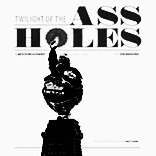
Tim Kreider has been called “extremely extremely f-ing good” (David Foster Wallace), “an iconoclast in the purest sense of the word” (Matt Taibbi) and “the funniest person alive” (Jennifer Finney Boylan). Join him for the release of his latest collection, Twilight of the Assholes. In a slideshow, talk and Q&A, he’ll wax nostalgic about the endearing atrocities and deadly foibles of the Bush administration and have a fond chuckle over the deadpan haplessness of Obama and the fascist antics of the tea party. Free.

SIDESHOW GOSHKO (2/18@7PM, NYC)
where KGB Bar, 85 East 4th St. New York, NY 10003

Award-winning storyteller Leslie Goshko (Manhattan Monologue Slam Champion, NY Fringe Excellence Award, Sirius XM), invites some of NY’s top writers and storytellers to share true, bizarre tales about their lives. There’s live accordion music, a challenging trivia game, and a free wine giveaway where one lucky audience member will walk away with their very own bottle of Sideshow Sauce! Tonight’s stellar lineup includes stories from: Steve Burns (former host of Blue’s Clues), Jim O’Grady (New York Times, Moth GrandSlam Champion), Eugene Ashton-Gonzalez (NY Confidential, The Moth) Free.

RALPH SASSONE (2/19@5PM, LA)
where Book Soup, 8818 Sunset Blvd. W. Hollywood, CA 90069

Ralph Sassone discusses and signs The Intimates A powerful and compassionate debut novel about friendship and how it helps shape us into the people we are…  The Intimates is a brilliant and deeply moving first novel about the varieties of romance. Spanning years and continents, beginnings and endings, it is about two gifted and striving people who discover themselves in the reflection they see in each other, and how their affinity anchors them at critical points in their lives… Full of indelible characters, engrossing situations, and observations as sharply witty as they are lovely and profound, The Intimates renders the wonders and disappointments of becoming an adult, the thrills and mesmerizing illusions of sex, and the secrets we keep from others and ourselves as we struggle to locate our true character. The Intimates marks the emergence of a remarkable new voice. Free.

FEATHERLESS: TISA BRYANT, AMANDA ACKERMAN, JESSICA PIAZZA (2/20@7:30pm, LA)
where Wordspace, 3191 Casitas Ave. #156, Los Angeles, CA

Bryant, Ackerman, and Piazza read and discuss their poetry and fiction. Free.

LITERARY VAUDEVILL: WAYBE WHITE (2/22@8PM, LA)
where Largo at the Coronet, 366 N. La Cienega Blvd., Los Angeles, CA 90048

Join Wayne for a show where he’ll discuss his life, his work, his influences and his many experiences as a painter, illustrator, puppeteer, cartoonist, designer, art director, set designer and Southerner. Admission is $10.

MARJORIE PERLOFF: THE MADNES SOF THE UNEXPECTED (2/23@6:30PM, NYC)
where The James Gallery, 365 Fifth Avenue, New York, NY

Legendary in the worlds of both art and literature, Marjorie Perloff will give the second Keynote Address for Caesura, a series of events in the James Gallery which will invite artists and scholars as well as the public to reflect on a research question or methodology that is of mutual concern. Perloff has chosen Marcel Duchamp and the issue of the “aesthetic” in his entry for the Salon of the Independents of 1917 as her subject. Marjorie Perloff is Professor Emerita of English at Stanford University and currently scholar-in-residence at the University of Southern California. She is the author of numerous books on modern and contemporary poetry, including most recently Unoriginal Genius: Poetry by Other Means in the New Century. Free.

SEE + HEAR + DO (2/09-2/16)

DAVID ULIN LITERARY LUNCHEON (2/9@12PM, LA)
when February 9, 2011 @ 12:00pm
where Wilshire Restaurant, 2454 Wilshire Blvd. Santa Monica, CA. 90403

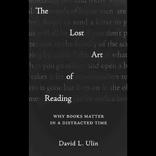
Diesel, A Bookstore in Brentwood is very excited to present a Literary Luncheon with acclaimed author David L. Ulin in celebration of his newest book, The Lost Art of Reading, a timely and important book about the value of reading in an increasingly digitized and distracted age.

David L. Ulin was the book editor for the Los Angeles Times for five years, and is currently the book critic for the Times. He is on the board of the National Book Critics Circle, and he writes regularly for the LA Weekly, Chicago Tribune, Newsday, and the Los Angeles Times. His work has also appeared in  the New York Times Book Review, the Atlantic Monthly, and the Nation, as well as on NPR’s All Things Considered.

Tickets are available for purchase at Diesel, A Bookstore in Brentwood (310-576-9960) and Diesel, A Bookstore in Malibu (310-456-9961). Tickets are $60 and include a signed copy of The Lost Art of Reading and lunch with David L. Ulin.

THE ONION EDITORS (02/10@8PM, LA)
when February 10, 2011 @ 8:00pm
where Royce Hall (UCLA Campus) 340 Royce Dr. Westwood, CA 90024

Deadpan satire and journalistic skill collide in the phenomenon that is The Onion. Founded in 1988 at the University of Wisconsin-Madison, the “fake news” newspaper is the notable precursor to such biting, faux-news programs as The Daily Show and The Colbert Report. Last year, The Onion News Network, an online send-up of 24-hour cable TV news, was named a Peabody Award winner and praised as “hilarious, trenchant and not infrequently hard to distinguish from the real thing.” Join current Onion editor Joe Randazzo and fellow staffers for a multimedia discussion on the state of media, politics and pop culture as they offer up insight into how the paper’s culture-skewering stories and hilarious headlines are created. $28-$48 ($15 UCLA students).

STEPHEN DOBYNS READING (02/12@7:30PM, LA)
when February 12, 2011 @ 7:30pm
where Beyond Baroque, 681 Venice Boulevard. Venice, CA 90291

Beyond Baroque proudly presents an evening with Guggenheim and NEA fellow, poet STEPHEN DOBYNS. Dobyns has published over ten volumes of poetry, including Concurring Beasts (1972), The Balthus Poems (1982), Cemetery Nights, (1987), Velocities: New and Selected Poems (1994), and Pallbearers Envying the One Who Rides (1999). “If there’s a consistency in any of the books, it’s the fact that I like a long line . . . [and] use the linebreak to affect the rhythm of the lines, to affect the rhythm of the poem.” Admission $7, students/seniors/children $5, members Free.

BLACK CLOCK 13 READING (02/13@5PM, LA)
when February 13, 2011 @ 5:00pm
where Skylight Books, 1818 N Vermont Ave, Los Angeles, CA 90027

Come join us as we celebrate Black Clock 13 at Skylight Books with readings by AIMEE BENDER, JANET FITCH, JONATHAN LETHEM, SUSAN STRAIGHT, and LISA TEASLEY with STEVE ERICKSON as emcee.  And buy a copy of 13 at the reading and receive an additional back issue of for FREE!  Free.

WANDA COLEMAN READING (2/16@TBA, LA)
when February 16, 2011 @ TBA
where Oxnard College, 4000 S. Rose Avenue, Oxnard, CA 93033

In celebration of African American History Month, National Book Award winner Wanda Coleman will read original poetry and prose focusing on the residuals of racism in our society and its subtleties, which continue to influence our culture. Free.

The Westwood Borders

Recently, my adapted grandparents both died. I say “adapted” because, through no fault of their own, my biological grandparents were not overtly present in my childhood, so my brother and I adapted our neighbors as grandparents. By recently, I mean days ago. Both of them within a week of one another; Daddy Bob from old age, sepsis, and diabetic complications, and Grandma Barb from heartbreak, worry, fear, old age, or something else I do not yet understand. As I write this first draft, I’m missing Bob’s funeral, but Grandma Barb has not yet been planted–she died this morning before she saw him off. As I am stuck in zip code 90028 with 33,086 others, I likely will not make the second service either. But I have learned something talking to my mother as she hustles around organizing: Every community is good at something. My hometown is good at funerals, and I do not mean this in a morbid way. We stand unopposed in celebrating a life. In a town of 439, it’s not uncommon to get 500 plus. I do not mean to go too far, but when I mentioned this to my mother the last time we were on the phone this evening, she said, “Yeah. People are just dying to have their funerals here.”

* * *

You don’t have to live in Los Angeles to know what this city is known to be good at; really, it’d be a waste to of time to list the obvious.  If you were to say L.A. is good at literature, you might easily be dismissed. But since I moved here six months ago, I have been exploring the spread community of its literati guided on suggestions from peers and profs at CalArts, from store and library pin-ups and emails, and from announcements tucked here and there in L.A.’s worthwhile Weekly, and I have found several venues worthy of note.

Of the bookstores I have found so far, Skylight is my favorite as it tastes the best in many ways; I wrote a post on it that can also found in this blog. I have also been to readings all over town. My favorite to date, perhaps because I was starstruck, was an ALOUD event hosted at Los Angeles’ Central Library. In conversation that evening were Leslie Marmon-Silko—from which I was starstruck—and Judith Freeman. But I have also been to small readings, held in galleries and homes that have been almost equally as entertaining. (Just a tip, almost all of these smaller readings come with free beer, but be careful, as to get to a literary event like any other event in Los Angeles, you almost always have to drive).

LA Weekly‘s “Border’s Denouement” article tipped me off to my most recent literary outing. The first line read, “Ding Dong, the Borders Books and Music superstore in Westwood is dead.” Its closing sale had been going on nearly a week by the time I read the article, but I was ecstatic. I called to ask, “Will you still be open tomorrow?”

“Yeah, at ten,” said the worker who answered—he sounded asleep and I wondered how many people had asked before me—”But if you’re wanting the sales, all the popular stuff is already gone.”

I had never been to that particular Borders, but to some extent, if you have been to one, you have been to them all, right? This was—as the Weekly exaggerated—a superstore.  At one point, there were two stories stuffed with loot, but the day I went, there were merely remnants. The merchandise was reduced to a desperate arrangement of floor shelving with cheap detective fiction and romance paperbacks selling for “99 Cents!!!” and even the shelves, chairs, benches, and tables were already picked off according to sticky-notes that read “Reserved for…”

As for the fiction section, the shelves were surprisingly full. Missing were all García Márquez, Hannah, Faulkner, Kesey, and Proulx titles I have on my reading list, but books had been carted from the back that (probably) should have been tossed away long ago for their lack of popularity. Quickly, I realized the real value of this event was to get me to find different titles by lesser known and forgotten writers, those writers and books everyone else passed time and again.  I tried hard not to pick any based on a cool cover, so I judged them on their first few pages, looking for perspective, narrative, and aesthetic choices that interest me.

The books I found have been really great and, for the most part, truly different from others in my small library. Some are by small presses, some are old, and some are esoterically foreign. I remind myself as I write, each was bought at Borders, and begin to wonder if housing such unpopular titles is why this particular Borders died.

Of the few purchases I have read so far, all have gone beyond expectation. The best is Ellen Foster, a 120 page novella (please do not be offended if Kaye Gibbons is your favorite writer and you feel she is well-known).  But my bias might be unfairly toward it as I am still riding a two-month high from Barry Hannah’s Ray. Really, as I write the second draft of this—I am in LAX, waiting impatiently for my flight home—I am amazed at the quality of almost every book I found. I recognize how silly this is; of course they were good, they were for sale, right? When I remind myself each was from Borders, I am almost disappointed that first, the books did not come from Skylight or Booksoup, and second, that the Borders is no longer.

* * *

As I sit in my apartment in Hollywood a few days after Grandma Barb’s funeral to work my third draft, I am still a bit tired, meaning I’ve been slow to get back to this. I realize there is a need to wrap this together though I am not inclined to do so, just as I don’t want to hear from anyone from home because I’ve talked to all of them too much lately. So I’m not going to. Instead, I will end on a thought that the Father (it was a secular affair, as was Bob’s, but the man in town who always heads the funerals is the Catholic priest) provided at the beginning of Grandma Barb’s service. He said, “A funeral is a sometimes confusing affair. There will be pain. Sadness. Regret. And longing. But with that, there will be happiness. Pride. And good memories. She would want that like she wanted it for Bob’s service. She was a gal who would be annoyed some of us even wore black today. Please forgive me, Barb…”

About the now defunct Westwood Borders? I would have gone back. Too late now.

by Justus Caudell
an Editorial Assistant for Black Clock and an MFA Writing candidate at CalArts

SEE + HEAR + DO (2/02-2/08)

KAREN RUSSELL (02/02@7pm, NYC)
when February 02, 2011 @ 7:00pm
where Book Court, 163 Court St. Brooklyn, NY 11201

Karen Russell (named one of The New Yorker’s Best 20 Writers Under 40) reads from her latest book, Swamplandia. Free.


LITERARY DEATH MATCH (2/02@8PM, DC)
when February 2, 2011 @ 8:00pm
where The Black Cat, 1811 14th St. NW, Washington, DC 20009

With enthusiasm tickling our brains, and patriotism in our hearts, Literary Death Match is thrilled to descend on the Nation’s Capital for our first-ever LDM D.C. event, sponsored by ModCloth and celebrating the inaugural issue of The Written Wardrobe.

Produced in conjunction with 826DC, the night’s AWP-centric event at The Black Cat will feature a fierce foursome of scribes, including world-class performance poet Regie Cabico, …The Written Wardrobe’s own nonfiction mastermind David Wanczyk, shock-good midwest cleverista Elena Passarello, and Moon Milk Review‘s sharp-penned founder Rae Bryant.

They’ll be judged by the dazzlingly blissful and multiple-award-winning author of How to Leave Hialeah Jennine Capó Crucet, actor extraordinaire Delaney Williams (a.k.a. Sergeant Jay Landsman from HBO’s The Wire), and Washington Post-er and former Q And Not U-er Chris Richards! $10 preorder; $25 T-shirt and entry.

KIDS OF THE BLACK HOLE: HOW LA HARDCORE CHANGED THE WORLD (02/03@7PM, LA)
when February 3, 2011 @ 7:00pm
where Book Soup, 8818 Sunset Blvd, W. Hollywood, CA 90069

A panel discussion in conjunction with the Steven Blush release of American Hardcore (Second Edition): A Tribal History. Featuring guests Steven Blush, Keith Morris (Circle Jerks, OFF!), Tony Cadena (Adolescents), Lisa Fancher (Frontier Records) and punk photographer Edward Colver (of the recent book Blight at the End of the Funnel).

Among the important figures who emerged from hardcore are Henry Rollins, Dave Grohl (of Nirvana and Foo Fighters), Ian MacKaye (of Fugazi), and the Beastie Boys. Hardcore’s legacy, however, continues to influence the do-it-yourself anti-commercial trend of independent record labels and touring networks. The author experienced hardcore firsthand as a promoter, record label owner, and radio DJ, and he intersperses the book’s oral histories with his informed commentary. Steven Blush’s “definitive treatment of Hardcore Punk” (Los Angeles Times) changed the way we look at Punk Rock. The Sony Picture Classics–distributed documentary American Hardcore premiered at the 2006 Sundance Film Festival. This revised and expanded second edition contains hundreds of new bands, thirty new interviews, flyers, a new chapter (“Destroy Babylon”), and a new art gallery with over 125 rare photos and images. Free.

CUNY WRITERS’ INSTITUTE READING (2/04@7PM, NYC)
when February 4, 2011 @ 7:00pm
where KGB Bar, 85 East 4th St, New York City 10003

Humera Afridi, moved to New York City in 2001 to pursue an MFA in Creative Writing at NYU, where she was the recipient of a New York Times Fellowship. Humera’s work has appeared, amongst other publications, in Pakistan’s news weekly, The Friday Times, The New York Times, and in the anthologies, Leaving Home (Oxford University, 2001), 110 Stories. New York Writes After September 11 (NYU Press 2002) and in And the World Changed (The Feminist Press, 2008).

Debora Kuan is a poet, writer, and art critic. She holds a BA from Princeton University and an MFA in poetry from the University of Iowa Writers’ Workshop. She is the recipient of a Fulbright media arts scholarship (Taiwan), University of Iowa Graduate Merit Fellowship, Bread Loaf Writers’ Conference work-study scholarship, and Pushcart Prize nomination. Her first poetry collection, XING, is forthcoming from Saturnalia Books in Fall 2011.

Martin Quinn was born in Limerick. After graduate study in engineering, he worked as a proprietary trader in currencies and fixed income in London and Greenwich, CT. His work has appeared in Arena and Esquire (UK). Free.

JOYCE FARMER READING (2/05@5PM, LA)
when February 5, 2011 @ 5:00pm
where Skylight Books, 1818 North Vermont Ave, Los Angeles, CA 90027

Joyce Farmer, together with Lyn Chevely, was the creator of Tits & Clits Comix in 1975. They had formed their own publishing company, Nanny Goat Productions, to counter the sexism they saw in male-produced underground comix of that time. Apart from Tits ‘n Clits, they also produced a comic about abortion, Abortion Eve, in 1973. Joyce also contributed to the other all-woman comix publication, Wimmen’s Comix. In 2000, Joyce Farmer published her work in magazine Zero-Zero. For the last decade-plus, Joyce has been working on her first long-form work, SPECIAL EXITS, a graphic memoir chronicling the decline of the author’s elderly parents’ health, their relationship with one another and with their their daughter, and how they cope with the day-to-day fragility of the most taxing time of their lives. She lives in Laguna Beach, CA. Free.

LITTLE HOUSE ON THE BOWERY SHOWCASE (2/06@4PM, LA)
when February 6, 2011 @ 4:00pm
where Book Soup, 8818 Sunset Blvd, W. Hollywood, CA 90069

Lonely Christopher presents and signs The Mechanics of Homosexual Intercourse with special guest Joseph Mattson (Empty The Sun) reading from Matthew Stokoe’s Cows and host Dennis Cooper.

The Mechanics of Homosexual Intercourse, a radical map of shortcomings in our daily experiences in the form of a debut story collection, presents thematically related windows into serious emotional trouble and monstrous love. Lonely Christopher combines a striking emotional grammar, reminiscent of Gertrude Stein’s Three Lives, with an unyielding imagination in the lovely/ugly architecture of his stories. Free.

BOOK GROUP DISCUSSES IN OTHER ROOMS, OTHER WONDERS (2/07@7PM, OAKLAND)
when February 7, 2011 @ 7:00pm
where Diesel, A Bookstore in Oakland, 5433 College Ave, Oakland, CA 94618

Diesel, a Bookstore in Oakland hosts Book Group #3 as they discuss In Other Rooms, Other Wonders by Daniyal Mueenuddin. Free.


ELIZABETH BISHOP AT 100 READING (2/08@7PM, NYC)
when February 8, 2011 @ 7:00pm
where Cooper Union, The Great Hall 7 E 7th Street, New York, NY 10003

(courtesy of The New Yorker): Twenty poets, including John Ashbery, Frank Bidart, Kimiko Hahn, and Marie Ponsot, each read their favorite Bishop poem on her hundredth birthday. Excerpts from a newly published volume of correspondence between the poet and this magazine will be read by Paul Muldoon, Alice Quinn, and Maria Tucci. For more information, call 212-254-9628 or visit poetrysociety.org.

AUTOBIOGRAPHY OF MARK TWAIN CELEBRATION (2/08@7PM, LA)
when February 8, 2011 @ 7:00pm
where Hammer Museum, 10899 Wilshire Blvd, Los Angeles, CA 90024

The Hammer Museum celebrates the publication of Mark Twain’s autobiography with Twain scholar and editor of the Mark Twain Project, Robert Hirst, who will discuss Twain’s life and work, followed by a panel discussion with Hal Holbrook,moderated by David Kipen, who will discuss Twain’s life and work, followed by a panel discussion with The discussion will be followed by a Q&A session with the audience. In addition there will be a reception with live music and a no-host bar in the courtyard, as well as a book signing.

Free tickets are required, and are available at the Billy Wilder Theater Box Office one hour prior to start time. Limit one ticket per person on a first come, first served basis. Hammer members receive priority seating, subject to availability. Reservations not accepted, RSVPs not required. Free.

Black Clock 13 Reading (02/13@5PM, LA)

when February 13, 2011 @ 5:00pm
where Skylight Books, 1818 N Vermont Ave, Los Angeles, CA 90027

Admission is free.

Come join us as we celebrate Black Clock 13 at Skylight Books with readings by AIMEE BENDER, JANET FITCH, JONATHAN LETHEM, SUSAN STRAIGHT, and LISA TEASLEY with STEVE ERICKSON as emcee.

Buy a copy of 13 at the reading and receive an additional back issue of for FREE!

Weird Words

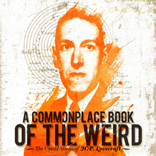
If you’re feeling the distinctly sharp absence of cults, exorcisms, and unnameable discomfort in your life, look no further than A Commonplace Book of the Weird: The Untold Stories of H.P. Lovecraft to soothe your aching void.

Creator of such oddities as the Cthulhu mythos (which has ravaged human hearts since the 1920s), and the fictional grimoire the Necronomicon (inspiration for a slew of literary hoaxes), Lovecraft left behind 221 unwritten stories of dread and mystery, just barely birthed in descriptions like:

142. Members of witch-cult were buried face downward. Man investigates ancestor in family tomb and finds disquieting condition.

106. A thing that sat on a sleeper’s chest. Gone in morning, but something left behind.

41. The Italians call Fear La figlia della Morte–the daughter of Death.

53. Hand of dead man writes.

Edited by Joseph Fink, A Commonplace Book of the Weird anthologizes the interpretations of a legion of authors whose intent was to carry Lovecraft’s darksome visions to completion. And so it was that Marcus Goodyear came to tell a tale of parents undead, F. Omar Telan wove a monstrous thing of an old seaside tavern, and Marta Rainer translated the strange tongue of number 214’s talking rock of Africa. For those who know what darkness breeds beneath the pitch-dark staircases of pyramids, or those who’ve ever known the nausea of losing their faces, this book will be an abyss most comforting. Letters skitter across trembling pages, below the smears of a title comprised of two blacked-out words we’ll never know, opposite drawings etched by ink-stained hands, and between the moaning white columns of poems invisible to human eyes.

There’s a lot to unearth here: horror, “experimental text art,” science fiction, and even a few stygian servings of comedy. You may find yourself lost, at times, in the foggy miasma of labyrinths inaccessible (love letters from aliens, vampire dogs in the distance, a clinging to one girl and Aleister Crowley as both disintegrate, something about a really disturbed plate), but more often than not, you’ll be deftly transported. Wrap your arms around the blissful dread inherent to deals made with the devil, and bask in the bruises left by forbidden knowledge and glitches in time.

Lovecraftian devotion to the monstrous and fantastic is well-reflected in the wide spectrum of pieces held in this enigmatic anthology. If Lovecraft is turning over in his grave, it’s to get a better look at the mirror. And if Cthulhu is listening from the depths of the sea, no doubt there’s a smile on its horrible face.

by Patricia Cram
an Editorial Assistant for Black Clock and an MFA Writing candidate at CalArts

Interacting with Andrew Plotkin

This is the second entry in “Playing Between The Lines,” a series of expeditions into the evolving space of interactive storytelling, its praxes and practical benefits.

Last time, we examined certain properties of interactive storytelling and discussed their implications for literature as a whole. What this inquiry failed to address, of course, was the fact that one of the oldest forms of computer entertainment has been straddling the border between literature and the interactive since the mid-’70s. Often misrepresented as a dead genre, interactive fiction, sometimes known as text adventures and often abbreviated IF, has enjoyed a steady but stealthy renaissance in the past twenty years, thanks to the contributions of independent authors such as Andrew Plotkin.

On his Kickstarter page, Plotkin refers to himself as “a hacker, game designer, and general messer-around of code, art, and language.” Winner of eighteen total XYZZY awards, the IF equivalent of the Oscars, Plotkin has also made numerous technical contributions that have helped make the form more widely accessible. In July 2010 he gave a lecture that attempted to describe IF for readers and writers of traditional fiction, providing a much more elegant and comprehensive introduction than I could hope to. He’s also compiled a page of decent introductory works in the form.

Near the beginning of November, Plotkin made the shocking announcement that he would be quitting his day-job to write interactive fiction, which has been almost exclusively freely-distributed since 1989, full-time. Within a single day, his announced goal of $8,000 in pledges to kickstart this enterprise had already been surpassed, with total pledges exceeding $31,000 as of the sixth of December–a strong indication of the respect the author commands. His first commercially distributed work will be Hadean Lands, available semi-exclusively on the iPhone, iPad, and iPod Touch, a teaser of which is available here.

While all of Plotkin’s major IF works are available to experience in-browser at his website, three in particular are worth singling out. Shade begins in a dark, cramped apartment, but it is not long before the bleak, arid atmosphere, and the overwhelming sense of melancholy, begin weighing down the walls of your tiny existence. Spider and Web is a Rashomon-esque reimagining of the relationship between the interactor’s input and the story–or in this case, stories–consequently constructed. Lastly, Hunter, in Darkness draws inspiration from the classic computer game Hunt The Wumpus, imbuing it with a palpable sense of dread, darkness, and the terror of survival.

Recently, Black Clock had the opportunity to do some old-school interaction with Plotkin, the kind that involves two human beings swapping ideas. In this case, we asked him a few questions about his past and present work, as well as his vision regarding the possibilities of the form in which he works.

BLACK CLOCK: You’re best known as an author of interactive fiction. What exactly does that mean? Just what is it you do?

ANDREW PLOTKIN: I write programs that simulate a story world in an interesting, explorable way.

I build adventure games with a familiar command-line interface, in which the player types simple text commands and the game responds with textual output.

I write stories with a head-thumping abundance of setting and description, inexplicably in the second-person point of view, which give the reader just enough influence over insignificant details to feel responsible for the protagonist’s mistakes.

I take part in a retro school of game design which hearkens back to 1975 (and which was commercially extinct by 1990).

I take part in a forward-looking school of game design which experiments and innovates much faster, and with far more freedom, than the “real” game industry.

Ever heard someone say “twisty maze of little passages, all alike”? Or “it’s dark, you are likely to be eaten by a grue”? I write those.

Alongside people like Graham Nelson, Adam Cadre, and Emily Short, you’re one of the biggest names in independently-developed IF. What’s your proudest contribution?

I hate to choose. Not because of excessive modesty (I’m no more humble than the next guy), but because comparing art with craft is hard. Was it more valuable to create a new IF virtual machine that people now rely on, to come up with a clever dissection of IF storytelling through unreliable narration, or to write an introspective, allusive game that pointed IF beyond the genre adventure story?

Okay, I’m really no more humble than the next guy. The point is, I’m differently proud of software tools, narrative tools, and stories. I’d like to say that I’m most proud of inventing a new rule-based programming paradigm, but after years of thrashing I still haven’t succeeded in inventing it!

On that note, in what role–programmer or writer–do you feel more comfortable?  Or do you inhabit a space between?

I am completely comfortable as a programmer. Programming is easy; you turn the pieces around until they’re elephant-shaped, and then you add anything necessary to hold them in the shape of an elephant, and presto, it’s an elephant. Sometimes you have to knock a bit in half to make the ear look right. I was a programmer to begin with–I mean, from age nine at latest, and we didn’t even have a computer until I was ten–and programming is what I’ve done to make a living.

That is to say: writing is the hard part for me. I haven’t had any formal training in writing, so I’ve had to invent what I do based on the works that I read. See previous question.

I can divide the question up further: I am comfortable writing text, but I’m uncertain writing stories. (This is both cause and effect. IF gives you lots of text to write, even in a game with a slender story, or no story at all. Talent is what you pursue.) If you accused me of pushing those structural boundaries, or writing allusively, in order to gloss over stories that I’m not confident about–I wouldn’t deny it.

You’ve been active in making IF accessible to a more general audience. Do you imagine a future where IF, or some variation thereof, has become as ubiquitous as traditional books?

Imagine? I imagine futures in which people play IF while drifting on very slow glacier-barges across the Mediterranean icefields, pausing occasionally to fight off narratively-starved hordes of extremely literate snow-crabs. Imagining these things is easy.

I don’t find it likely that IF will become as popular as books (that is, books in general)–nor as popular as games (games in general). It’s a narrower medium, and it will have a narrower, more dedicated audience.

But if you were asking me about some new genre of book, I’d inevitably tell you it’s not as popular as books in general. That’s always the wrong question. I think IF could be as ubiquitous as (say) fantasy noir detective stories, or as popular as casual tower-defense games. IF could develop a following that isn’t scattered and disconnected–regular players could be hooked up to authors writing regularly. With discussion and criticism in the literary press.

Then we’d be complaining that our subgenre isn’t as popular as farming teenage vampires, but it’s always something, right?

Speaking of books, have any non-interactive works of fiction been of particular influence to your IF? Or does it change with every project?

You can recognize particular influences–setting, tone, or event–from all sorts of sources. Heliopause riffs on the lyric space opera of Jack Williamson and George R. R. Martin. Hunter has a claustrophobic moment inspired by an Alan Garner novel. Delightful Wallpaper is notionally set in an Edward Gorey illustration.

(I like to remind people that Delightful Wallpaper was inspired by House of Leaves, because the influence is completely undetectable. Except that there’s a house. The book was the start of a thought process, which went off around several corners.)

These aren’t interesting answers. The more fundamental influences…. When I look at prose I try to remember the textures that Patricia McKillip writes. Dave Duncan, and more recently Brandon Sanderson, are great at constructing fictional tools (devices, magics) that interact in subtle, systematic, and surprising ways. C. J. Cherryh can portray a setting, universe and all, just by framing a character’s point of view. Diana Wynne Jones describes the fantastical by grounding it in the reader’s unconscious knowledge of the real world. I try to do all these things.

What element or work of IF first reeled you in as a reader/player? Following from that, what motivated your decision to author your own work?

I got hooked playing Colossal Cave (a.k.a. Adventure), the original text adventure, when I was a child. My father’s office had a take-your-kid-to-work day–one of the few places I could have seen a computer in 1978 or so. He plunked me down in front of a mainframe terminal, and the rest was history.

I started writing IF by sitting in front of the family Apple (a few years later) and thinking “Ok, I can do this. Text input, text output.” I don’t think there was ever a question that I wanted to write IF. IF was the best kind of game there was.

Are there particular spaces or narratives you feel IF is better equipped to explore than traditional fiction?  Than graphical games?

Usually I’m asked what kinds of story-telling IF is best equipped to handle. Immersion, complicity, playing points of view off each other–easy answers. Text games (like any prose form) can do internality and voice; any visual form has to strain to imitate those. (Generally by adding voices, but spoken text is so slow.) IF lets you collapse a room, a building, or a neighborhood into one unit for the player’s attention.

But you asked about spaces and narratives, not techniques. That’s a more interesting question. Questions.

Far as we’ve come in the past twenty years, IF is still best at explorational, environmental stories. A book with that much setting can turn into a travelogue, but in IF you’ve got your hands in it; it won’t get dull. Or it shouldn’t.

Any narrative that turns on a realization is ideal for interactive presentation. Particularly so if the realization is in the reader’s head, with contrasting movement in the protagonist’s. A story that’s conveyed with a system of rules, rather than events, makes great IF…. You know, these are terrible answers. Explore an island! Solve a puzzle! You don’t need me for this.

We’ve just barely begun to figure out what kinds of stories can be told — can only be told — in multiple revisions. What can be conveyed from many outcomes considered together? (Or many in-goes, perhaps?) I don’t have an answer.

In Dual Transform we move between various spaces by invoking metasemantic archetypes, and in Delightful Wallpaper we’re dealing with potentialities and intentions, with all means of physical interaction cut off. Navigation in The Space Under The Window is virtually indescribable by IF standards. Do you think it’s necessary to redefine the way the interactor moves through or conceives space in order to create the sort of conceptual spaces that interest you?

Redefining movement is not necessary, no. Space is a wonderful toy and I love playing with it; it goes back to my love of mazes. (Many IF players will tell you they’re sick of mazes in IF; but if they tell you they’ve never loved mazes, I don’t believe ’em.) But it’s just one toy.

It is necessary for me to build interactions that will befuddle, enlighten, surprise, and then (again) enlighten the player. You could say that any such complex interaction is metaphorically navigation in a state-space. I might say that myself; my perception of game mechanics (and programming mechanics, and probably people mechanics) is proprioceptive and structural, rather than verbal or visual or what have you. But that’s just a way of modeling the design. In the story world, the interesting interactions could just as well be about manipulating objects, or manipulating the environment, as about spatial movement. Wallpaper is an example of all three, in different ways.

(I just asked a bunch of IF-playing friends if they loved mazes, and some of them said “sure” and some looked at me like I was nuts. So, now you know my biases.)

Playing Hoist Sail for the Heliopause and Home, I found myself naturally falling into these nautical or nautical-romantic terms during play, such as ‘weigh anchor’ or ‘hoist rigging’ or even ‘go forth.’  The effect was really liberating, and at the same time immersive; it allowed me to lose myself in the rhythms of this world. Do you think modern IF has become too mired in its traditional input language, these plain dry verbs that have been handed down from things like Zork and Adventure?  How useful is it to revise that vocabulary?

I push around the edges, but the center is always the same. Or if it’s not, shifting it takes a great deal of work.

Even Heliopause relies on some old-school taking, dropping, and putting. Indeed, you can play it through entirely with the standard vocabulary–get the anchor, open the sails, wait. Discovering the new verbs is fun, but if the player reaches for the old ones and finds empty space, the mood will crack right apart.

Heliopause might be on the edge of what we can do. I chose a vocabulary that most people (most native English-speakers, anyway) would recognize. I laid down a great number of verbs, mapping to a very few actions, so that all of the obvious guesses would have useful effect. And most players don’t know real sailing terminology, after all. It’s not like I tried to handle knots.

Plus, Heliopause is short. I think I took the sailing actions as far as I could; any more would have gotten (more) mechanical and tedious. So should more games try (as it were) this tack? Of course; but it’s a harder course than it appears.

How do you deal gracefully with the need to provide your audience with the vocabulary they need for a successful interaction, without sacrificing immersion?

It’s not a graceful maneuver. Nobody expects it to be, at this point.

(Even in commercial video games, teaching the interface isn’t subtle. You’re maintaining good immersion if you pop up a discreet “press X to jump” banner, as opposed to having the protagonist shout “Press the X button to make me jump!”)

Heliopause starts in a very simple environment; you have nothing to do, which is a pointed clue. The description says you can “weigh anchor”. If you try flying or launching (or even going upward), the game again suggests “weigh anchor” or “raise anchor”. The command is (I hope) impossible for the player to avoid, and I repeat it relentlessly. Subtlety is just not worth the risk at this point; if the player doesn’t step into the right frame of mind, the rest of the game is wasted.

In the Hadean Lands demo, I flat-out order the player to try “recall” and “speak word” at the appropriate points. Since I want to make that game accessible to newcomers, I might go farther, and add tutorial messages for all the familiar IF actions.

Later on, one can back down the learning curve, beckoning the player into her own realizations. You’re still managing the process of learning; but you’ve built more structure for the player to climb.

Then, of course, you spend hours sweating out all the possible variations that a player might type. No learning process is unambiguous.

Let’s talk about Hadean Lands for a moment. Without asking you to show your hand too much, is there something new you’re planning, either in terms of narrative or interaction, with this upcoming project?

How about this? I want to get back to an element which isn’t new at all: resource puzzles. 1980s adventure games were full of items that you could use up, destroy, or run out of — food, lantern fuel, fragile treasures, spells that only worked once. If you consumed a resource for the wrong reason (or just ate the food too quickly), well, too bad. You’d have to back up to an old saved game and try to find another way through.

In that era, players expected that sort of hardcore foolery. You kept your saved games, and you expected to run through tough scenes dozens of times before figuring out the right plan. But that got less popular when graphical adventures came along. Maneuvering through a sequence of video animations was slow, particular on 1990-era computers. A style of gameplay which was already tedious in text (where you could type quickly and skim, after all) turned into a tarpit of graphical frustration.

Myst firmly established the idea that there were no fatal mistakes, only puzzles you haven’t solved yet. (Aside perhaps for a few dramatically-failed denouements.) Text games rapidly began following the same path–particularly in the IF Competition, which invited short games and promised a tighter, less frustrating experience.

My first few games allowed fatal mistakes, but for the past decade I’ve been sticking to the “polite,” safer model. I don’t regret that. But I miss the puzzle designs that are possible when you have irrecoverable choices to make.

So for Hadean Lands, I’m going to try a compromise. As you know if you’ve played the demo, you’ll have alchemical resources to use. Some are in limited supply. As you’ll also see in the demo, space and time are… fractured, perhaps… and that will offer a way to recover from mistakes. You’ll be able to try different combinations of elements to solve problems. The trick will be finding combinations that don’t require the same element.

I have to keep the frustration within tight bounds, of course — the iPhone interface discourages unnecessary typing. So there will be shortcuts for various paths, once you know how they work. You won’t have to repeat sequences of commands. That’s all to the good; the fantastic shouldn’t be made familiar through repetition.

Writing IF full-time sounds like a bold move. Do you see it returning as a commercially viable form sometime in the future, or would you prefer IF works remain freely shared among the community?

Didn’t you start by asking me this?

Yes, yes, I do see IF becoming commercially viable. I could be hallucinating, but I see it. Whether I truly wind up doing this full-time depends on the success of Hadean Lands. I’ve collected enough advance funding to cover its development. If that turns out to be repeatable, then I’ve got myself a career. If not, I’ll do something else.

The community will continue to freely share IF works — of course. We’re several Internet decades past the point where anyone could pretend that a free art community is antithetical to commercial art. If my livelihood has to struggle against a tide of work freely available online, then — I’ll have proven that IF is just as viable as writing, music, and filmmaking. Right? Because all of those people have the same problems. I look forward to it.

by Byron Alexander Campbell
a Black Clock Editorial Assistant preoccupied by dreams and theories of interactivity

Black Clock Now Accepting Submissions

Black Clock is accepting unsolicited fiction, poetry and creative nonfiction from January 3rd, 2011 until January 17th, 2011. If you have a manuscript you would like to submit for consideration, please consult the Black Clock website for additional details.