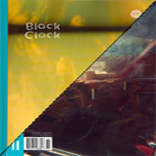
Singular, idiosyncratic and a little mysterious, Black Clock is one of America's leading literary journals.

Archive for 2010—

Chris Ziegler’s business card is bigger than yours

Chris Ziegler is the former music editor at the Orange County Weekly and staff writer at now defunct legendary, Punk Planet. His freelance work has appeared in Paper Magazine, Arthur and Spin, among others. He is one of two co-founders of Los Angeles music paper the LA Record, a free alternative weekly that is distributed on street corners. Along with the brand’s website and other cross-promotional events, the Record tries to promote local Los Angeles music. We recently spoke with Ziegler (via phone) about the internet’s continued impact on the future of literary publishing, and some ideas to stay afloat.

BLACK CLOCK: Do you think what’s happened in the music industry this past decade because of the internet will happen to the literary, publishing industry?

CHRIS ZIEGLER: What’s happened to music is going to come to publishing. People are getting freaked out about e-books and a similar thing is happening with comic books but it’s not as mainstream yet. What’s happening is a total reconstruction of the entire industry and the information is incidental. To retool something so that it can reproduce to make a profit.

How has the LA Record dealt with these challenges?

We planned for it. The whole point is to reinforce and promote the LA music community and we don’t rely solely on the physical format to do that, we can do it through the site, we can do it with the publication and through events. We just need the physical product in the beginning to establish ourselves, basically what we wanted to be to people, so they would know what we are about. We do the physical publication but it’s marketing for the brand, the national newspapers produce the brand to sell the physical product. The LA Record produces the magazine to promote the brand. We also do parties, put out music, it doesn’t necessarily have to be in print, it’s a format that fit[s]. It’s a giant business card.

Do you see any way of salvaging these industries?

I don’t think there is any way to save them the way they are now. There is no way a literary journal is going to turn a profit, maybe if you add DVD’s like Oxford American did. The only way you could do that is to make a physical artifact. I know that sounds like a contradiction but make an artifact that is completely unique that can’t be replicated on the internet. Since everything you can put in a magazine can be replicated online, you have to be super creative and smart at marketing. Point being you can’t just put a bunch of pictures and words on the internet. It needs to be unique.

Do you think reading physical books and magazines will become an artifact of the past?

It’s kind of already an artifact. It’s not like a 150 years when there was a King James Bible in every house. I think Dos Passos said that, don’t quote me.

As soon as there is an effective e-book reader it will kill books. Last night I literally tried to read a Kobo Abe book on my laptop for free but the site format was total crap so I opted not to. Its just physically hard to do, music isn’t so difficult. So as soon as they find some easy replacement that works, they will.

by Nikki Darling
who writes fiction and non-fiction, and graduated from CalArts in May 2010 with an MFA in Critical Studies

Internet Found Poem

no, they have not split
_______________ (the cork
_______________ & the dumb thumb)
real slick
_____twit-spank
__________shake it
_______________ like a shiny new mohawk
heading to rock sugar
an exciting underwear purchase
____________________ driving by an escalade
____________________ _______________ with the license plate: FNG SHUI
____________________ another harlem nocturne
____________________ _______________ like the periphery
____________________ she found her passport
____________________ she is just getting over the h1n1 flu
____________________ she almost missed the vermeer milkmaid at the met
____________________ she misses having even the slightest bit of discipline
____________________ she is eating dried mangos
____________________ she has skater boy hair
____________________ she thinks life is too short for a long story
____________________ ______________ (alternatively, the end is near, but not near enough)
____________________ she doesn’t want to hear any songs about sexin’ hos in a club bathroom
____________________ she wants to rollerdisco in central park
____________________ _________________________ all afternoon
____________________ i found a way
____________________ i found a reason
_________________________ getting sandwiches to go
____________________ i found love on a two way street
____________________ i just want to meet you
____________________ i found god on the corner of 1st and amistad
____________________ wearing a low cut green shirt, glasses, black jacket
____________________ the things that hold me hostage in this city are close to saving me
____________________ ready set go
____________________ shame
____________________ _____ is it the future?
____________________ soul
____________________ & apartment cleansing

I. PURPOSE + HYPOTHESIS

According to the Academy of American Poets, found poetry is the “literary equivalent of a collage.” The Found Poetry Project publishes found poetry and expounds on the definition, asserting that “poetry is everywhere…every phrase that rings in our minds, every two words that sound good together, every quote we want to remember, are each their own small poems.” The process of constructing a found poem differs for each “poet,” or “finder,” but here is the gist: gather existing text, rearrange it, and present it as a brilliant new piece of poetry.

I am constantly intrigued by the amount of losing and finding that takes place in the construction and result of a found poem. Lost snippets of text, often from various sources, find new context. Original sources of phrases and lines are often lost on readers, and eventually on writers as well. Old meanings and contexts are co-opted, colonized, contaminated, altered, exalted, exaggerated. Lines, words, and phrases intermingle and find other newly contextualized word friends, acquaintances, and enemies.

II. MATERIALS + METHODS

In order to highlight the interaction between lost and found imagery, I drew my sources from several types of internet media to construct this found poem.

Not surprisingly, the internet has proven itself as both a boon and a bane in the world of found poetry. Some poets and poem finders have embraced the medium. Most ignore it. And still a large contingent of poets mock it and use the internet satirically. “Flarf,” a genre of experimental-internet-search-engine poetry, is an example of how the internet has been invading and/or livening poetic spaces for the past decade. Flarf is, of course, completely controversial, as evinced in the discussions generated at Art Voice, Poets & Writers, and on the Poetry Foundation Journal.

Despite the unending debates about the value of the internet in poetry and society, one thing most people can agree on is the ephemeral nature of the medium, particularly on social media websites. As a frequent user of social media sites, I am amazed by how quickly I can watch various status updates appear on my news feed, only to get buried beneath a new flurry of information minutes later. As easy as it is to find information on the internet, it takes little effort to completely lose information as well.

I wanted to explore those sentiments in my found poem. To represent the ephemeral and lost, I incorporated status updates from popular social media websites Twitter.com and Facebook.com, as well as postings from other fast-paced, rapidly updated sites perezhilton.com and craigslist.org. In contrast, I used a google.com search on the phrase “I found.”

I let the process of gathering phrases and words guide the tone and eventual focus of the poem. I did searches on all the aforementioned websites and copied down the phrases that popped out at me the most. As I went along, I became more discerning in what phrases to collect, and I picked things that seemed to fit most aesthetically, emotionally, and intellectually with what I had already gathered.

III. RESULTS

Please see above.

IV. CONCLUSION

In the finished product, I hoped for the newly intermingling, random phrases to be able to interact with newfound meaning and cohesiveness. As the poem’s finder, I was fairly pleased with the result, as I was able to connect with the whole piece in a different way than I connected to the individual phrases I borrowed. In many ways, I felt like a co-author/co-poet, and I emerged with a newfound respect and understanding for the genre of found poetry. While I can certainly understand why found poetry may be a turnoff or considered not engaging or simply unimpressive for many readers – after all, the words and phrases themselves do not belong to the authors – I do think that we often don’t give found poetry enough of a chance. After going through the process myself, I realize that poem finders can have quite a bit of agency and creative control in the construction of a found poem. I also discovered that found poetry and “traditional” poetry have more in common than I previously assumed; in found poetry, we lift exact words and phrases from various sources, but in other forms of poetry, do we not “lift” a smattering of observations, anecdotes, vignettes, and even words and phrases from a variety of people and places as well? In a way, found poetry seems to me a more direct, literal exemplification of what we often consider poetry to be.

by Chrysanthe Tan
a singer-songwriter, actor, violinist, poet, Pisces, and Star Wars enthusiast

frieze Magazine’s “Ideal Syllabus” Series

On the prowl for new reads, I discovered a gold mine of literary insight in an unlikely place—in an art magazine. To be fair, frieze Magazine is known to be on the cutting edge of arts and culture, and I often look their way for some of the most provoking and relevant writing being published in contemporary periodicals, critical or not, “art-genre” or not. Their “Ideal Syllabus” series is, in their words, an ongoing series that “asks an artist, curator or writer to list the books that have influenced them.” Contributors include writer and academic Maria Fusco, visual artist Carol Bove, and painter Monika Baer, to name a few. Though at first expecting to see manifestos, philosophy, or other canonized essays (which indeed populate several if not many of the subjects’ lists), I perked up when I came to Tom McCarthy’s list of books—a bounty of fiction.

McCarthy, whose artistic pursuits include the spearheading of an avant-garde organization and a novel (the highly touted Remainder) and a critical study of the work of Hergé, shows a compelling appreciation for both narrative classicism and innovation, with his colorful—dare I say good humored?—sequencing of titles. Praise for Maurice Sendak’s Where the Wild Things Are is sandwiched in between Conrad’s Heart of Darkness and Joyce’s Finnegans Wake. The Adventures of Tintin made the list, as did Pynchon’s chef d’oeuvre. He hails The Sound and the Fury as the “single best novel ever written.” And although I don’t share McCarthy’s enthusiasm for all of his picks, I was absolutely inspired to investigate those that were foreign to me⎯most notably, Alain Robbe-Grillet’s The Voyeur.

You can find the article series in print and online at www.frieze.com/magazine.

by Mallory Farrugia
a writer and freelance editor living in Venice, CA

Black and White Clock

A photographic series of analog clocks in and around Los Angeles (plus one in San Diego) that illustrates Marie von Ebner-Eschenbach‘s truism, “Even a  stopped clock is right twice a day.”

Brand Boulevard & San Fernando Road

Glendale Boulevard

USC Doheny Library

USC Doheny Library II

Atwater Village, Apartment

Hotel, San Diego

Brentwood, House

San Fernando Road & Acacia Avenue

by Diana Arterian
who is currently earning her MFA in Poetry at CalArts and assists California Poet Laureate Carol Muske-Dukes;
her self-published chapbook
First Wind is available at Skylight Books

The Real Economics Of The Purely Imaginary

This is the first in a series of columns that circles some very large, very unwieldy, and–for precisely these reasons–very tantalizing questions about knowledge, creativity, teaching, writing, and the university.

Let’s face it: this is a bad time to be an artist, and a worse time to be an intellectual.  It’s popular to say that the university as we know it, and especially the English department as we know it, is in ruins, or is going to ruins, or we thought it was ruined but we didn’t really know ruin until the economy woke up from the last decade with a bad, bad hangover.  My situation, for example, which is really not unusual, is that of a writer who, in order to write, needs to hold down a job.  Because I love teaching, and develop facial tics at even the mention of a 9 to 5, I’ve chosen to teach college.  Because I’d like to be as succulent a hire as possible, I decided to earn a PhPD after getting my MFA.  If this were Hollywood in the 50’s, let’s just say I’d be learning to sing and dance.  What a clever plan, which so many other writers before, with, and after me, have also cleverly planned.  For many, it has worked.  Teaching in academia, while not necessarily the golden ticket, has been a more or less reliable meal ticket for many, many writers.  While it’s afforded few nightly five course affairs, most can scrape together a shake for breakfast, a shake for lunch, and a sensible dinner.  It’s popular now to say that those days appear to be over.

At my own university – a large, publicly funded state school – the perks of making a graduate students sub-living-wage have finally become clear.  We are, as it turns out, immune to the mandatory furloughs, paycuts, and the like – which the school has begun to implement since the  state stopped paying its bills a few months ago.  We simply make too little money to be chopped.  Hurrah.  However, it looks to many of us (and some faculty in my department will openly declare, with attitudes ranging from cynic glee to vindicated Eor-ism to open sorrow to righteous indignation) that we are training for a profession which no longer exists.  Which provokes the question: if writers – even the marginally employed adjunct or lecturer – can no longer produce books during their mornings off and lean summers, when we produce books at all?

Ok, so that question isn’t the real question, and it carries a whole lot of assumptions with it – assumptions about who writers are and where they work and what they do and how they produce.  The real questions have something to do with the future of and for our craft.  Not only how will we do it, but who will read it (already writers are increasingly their own audiences, a closed field in which the producers are also the critics are also the connoisseurs)?  English departments, which historically have produced good readers (it’s their main job for heaven’s sake!) are going the way of history and philosophy departments (at least, if you listen to the Eors and the weathermen): increasingly marginalized, increasingly shrunk, increasingly asked to prove their worth, to prove their relevance, to prove their market value.

One way to immediately increase your market value – or at least, your fiscal value to the university – is to start up a Creative Writing program.  Students will pay, and pay in droves, to study in these programs.  It has to be said: while many graduate and undergraduate programs surely offer their students fine educations (as mine did), they can also be a gentle-eyed cash cow.  No labs, no rehearsal spaces, no special equipment, need to be bought or built.  (No overhead!)  A moderate-to-big-name writer may need to be hired and paid accordingly to direct the program, but (see above) finding one of these in need of steady employment is not exactly at a level of difficulty on par  with, for example, locating the last surviving Nazi war criminals in deepest Paraguay.  And what dividends!  Eager sudents line up around the block to pay for the privilege of studying with Professor Moderate-to-Big-Name-Writer.  The English department grows, and everybody wins.

Another good way, if you are an English department needing to explain to the person who signs the checks exactly why you should get to be around and what you’re good for, is to point to your Freshman composition program.  It is not, of course, fashionable, to describe your program as such.  But whether you are teaching students something called “English 101” or something called “Communications Fluency for Today’s Freshman Student” it is much more sensible to argue that your program teaches students marketable skills.  And, not only marketable skills, but skills which are also valuable to the student regardless of her degree program: skills the student must master to write papers for her other classes, think critically about the readings and assignments in other classes, and, ultimately, put together a good resume and cover letter.  Now, I’m not claiming that writing classes should not, or do not do these things.  Certainly no one should graduate from college without the ability to craft a coherent English sentence or a coherent argument.  What is striking, though, is the extent to which English departments sometimes rely on Freshman composition programs not as an intellectual but as an economic enterprise:  if the student is a consumer, a Freshman composition course is something whose worth can be more easily argued for and defended than, say, a course in Medieval British Literature.  What good will reading Chaucer do anyone in the here and now?  I, for one, have a hard time answering that question, despite the fact that only a few weeks ago my students were discussing the Wife of Bath in my classroom.  But the good of knowing how to present oneself well on paper – for that, the argument hardly needs to be made.

What I am gesturing at here is a scenario in which the act of writing – both creatively and, shall we say, critically, or practically – occupies multitudinous, and frequently contradictory (and even more frequently uninterrogated) positions within a range of interacting economies.  I have a hunch – both creative and practical – that circling these questions (vulture-like, if need be) could tell us a lot about what’s going on just now with our craft, our knowledge, and our teaching.

by Jenn Hawe
who lives, writes, and cooks in Chicago

Hydra Magazine

www.thehydramag.com

Still in its nascent stages of existence, Hydra Magazine was formed during the last few months of 2009 by a masthead of bicoastal writers who fancy observing and investigating that strange, multi-headed beast called “culture.” A broad range of topics are hashed out – ranging from the future of literary hypermedia to Robert Crumb’s Illustrated Book of Genesis to Gottfried Maurer’s literary capacities to Virginia Woolf’s teeth – in essays that attempt to reinvent the form and accentuate each author’s unique experience in navigating the topic at hand. These writers make no promises to provide extended clarity; rather, their expressed aim is to provide a particular understanding through their own active participation in their subjects. Interest in this new publication is steadily growing and is evident by the healthy number of comment postings from both fans and polite dissenters. All of which has opened up this cacophonous conversation even further, creating a community for lovers of artistic endeavors both popular and esoteric. The perspective at Hydra is refreshing, insightful, and something akin to listening to your hip, witty, and slightly older college roommate poke-fun at or raise a glass to the things that have grabbed her attention at the moment.

by Ashley Tomeck
an MFA candidate at CalArts with an unearthly penchant for snow and a writer of short fiction that often incorporates elements of the fantastic and bizarre

Bookslut: Review of Reviews

www.bookslut.com

Bookslut archived columns go back to 2002 and it is easy to get caught up in the back issues.  It is a webzine and blog that reviews books, and publishes essays on topics in current literature.  A great space to gather directions for reading less conventional titles that slip away from the mainstream, making them difficult to find.  Some of their recent reviews include The Discreet Pleasures of Rejection, French author Martin Page’s second novel; the first novel of Adam Haslett entitled Union Atlantic; and the Three Novellas by Austrian writer Thomas Bernhard.

There are reviews for more than just fiction.  Bookslut makes an effort to include reviews of most any genre of published text, favoring the independent publishers, including even cookbooks.  The interviews with writers such as Nate Pritts, the poet Zachary German, and one of Black Clock’s editors Bruce Bauman are insightful and fresh takes on the writing process and the literary world of work and publishing.  There are essays on the industry, cover art, and irreverent takes on literary industry propaganda such as a reformed “summer reading list.”

Full of great links, more material than one could possibly read, Bookslut is one to bookmark.

by Sara Gerot
a writer and an Associate Editor of Black Clock

Herman Melville Tells All!

“Old age is always wakeful;” Herman Melville once said, “as if, the longer linked with life, the less man has to do with aught that looks like death.” And indeed, for a man of his age, Melville keeps to a surprisingly energetic routine. When I managed to catch up with him in Venice last week, he was enjoying a hearty lunch off the boardwalk between his daily muscle-beach workout and his weekly Thai massage (“it is a way I have of driving off the spleen and regulating the circulation,” he explained, passing me a card). Nevertheless, he was gracious in accommodating a young writer all too thrilled to have landed an interview with one of America’s greatest (if not, of late, most prolific) writers.

Dressed in his customary black overcoat and bilious beard, he stands out against the distinctly bo-ho crowd at the shabby-chic, side-street oyster bar, Essex where he is a fixture and cantankerous local favorite. He hails me from his customary seat at the end of the polished-steel counter, and before I manage to sit down he has already ordered me two kinds of chowder—the house specialty. Melville has apparently already polished off a large bowl, but another soon arrives, and he bends over it happily, his face reddening slightly from the steam. “Chowder for breakfast, chowder for dinner, and chowder for supper, till you begin to look for fishbones coming through your clothes,” he intones—apparently a private joke with the waiter, who smiles either in appreciation or indulgence.

A New Englander by extraction and temperament, Melville seems to have made himself at home in Southern California—even becoming so much a local as to decry the changing face of the beach towns.

“But look!” he exclaims, gesturing to a group of sarong-and-flip-flop-clad young women strutting out of the Starbuck’s next door and pastthe restaurant’s front window. “Here come more crowds, pacing straight for the water, and seemingly bound for a dive. Strange! Nothing will content them but the extremest limit of the land; loitering under the shady lee of yonder warehouses will not suffice. No. They must get as nigh the water as they possibly can without falling in. And there they stand—miles of them—leagues. Inlanders all, they come from lanes and alleys, streets and avenues—north, east, south, and west. Yet here they all unite.”

All bitterness is expelled, however, by a mention of the legendary New England winter, which Melville, for all his tough-as-nails old-sailor’s demeanor, seems not to much miss.

“Such dreary streets!” he laughs, remembering Massachusetts. “Blocks of blackness, not houses, on either hand, and here and there a candle, like a candle moving about in a tomb.”

Melville is attacking his chowder with obvious gusto, but between spoonfuls , the conversation turns to the writing life—and to the illustrious author’s ongoing dry-period. Since the 1860’s— and on the heels of the critical lambasting that met the release of Pierre—Melville’s publishing has slowed to a trickle. Indeed, excepting the unauthorized, 1924 publication of Billy Budd, the great author has given his public not a word since before the turn of the last century. Guessing that Melville might be sensitive about his lack of new works, I try to introduce the subject carefully, expressing my appreciation of his 1891 collection Timoleon and wondering aloud if there might be others like it in the works.

“It is impossible to talk or to write without apparently throwing oneself helplessly open,” he says, growing suddenly pensive and scraping his spoon against the last scraps of clam adhering to his bowl. dismissive“I abandon the glory and distinction of such offices to those who like them. For my part, I abominate all honorable respectable toils, trials, and tribulations of every kind whatsoever.”

Sensing that I may inadvertently have touched upon a sore subject, I assure Melville that even if he never writes another word, his legacy is ensured. That, he assures me, is not a thing he thinks much about.

“I am, as I am; whether hideous, or handsome, depends upon who is made judge.”

And all too soon, our time together is up. Melville is polite in excusing himself—if you find a good masseuse in this town, it’s inadvisable to keep her waiting. But seeing me gathering my things with half a bowl of clam chowder still cooling in front of me, Melville all but orders me to stay until my plate is clean.

“If you can get nothing better out of the world,” he says, by way of parting advice, “get a good dinner out of it, at least.”

by Emily Kiernan
a native of the decaying Pennsylvania steel town from the Billy Joel song, who writes about islands, vaudeville, implacable but unjustified feelings of abandonment, the West, and places that aren’t the way she remembered them

Between 11 and 1: Zero Hour in the BLACK CLOCK archives

It has been nearly six years since Black Clock 1 rolled off the presses (presses in Iceland, in fact.) Since then, ten more issues have been published, and the magazine has steadily established itself as a unique forum for experiments in the written word from many of the eminent voices in literature today.

But what is the essence of Black Clock? Is there a consistency across time: a unified vision that persists? Certainly one of the distinctive features of the magazine remains its visual impact as an object of art in and of itself, not merely a sort of textual delivery system. A quick comparison shows that this has not changed even though Black Clock has had three separate art directors: Gail Swanlund, Ophelia Chong, and, currently, Chris Morabito.

From Black Clock 1’s goal, in Steve Erickson’s words, to “bring together a group consisting of some of your favorite and most admired writers, and then have each one write whatever he or she wished” to Black Clock 11’s “tour of that which cannot be recovered,” the premise of each issue has remained maddeningly approximate and yet fully coherent as one makes his or her way through each issue’s content. This becomes all the more surprising in light of Erickson’s decision to open up submissions to new, unsolicited material. Black Clock allows its readers to wander blindly through its pages without hand-holding or explicit context, both visually and thematically, and this seems to be the crux of its aura of mystery.

Black Clock 1 and 11 share two contributors: Rebecca Goldstein and Joanna Scott. Their bios have both bulked up significantly in the intervening years. One general difference that stands out is a vague sense of the ballooning of secondary content between 1 and 11. The staff has grown from ten to twenty eight though this seems mainly due to an increased academic symbiosis between the magazine and its publisher, CalArts. The magazine now sells ad space, has outside benefactors, and devotes several pages to “shout-outs” to those that make its production possible: all signs of a healthy magazine in an era where the written word seems to be on life support as an economically viable means of distribution.

One darkly ironic piece of evidence of this is the variance in respective cover prices – because in the end, we live in a bottom line era. $12 US in March of 2004, and only $13 US as of December 2009. Less than inflation! A tribute to the benevolence of Black Clock to its readership? Evidence of good business practices and a tightly run ship? Sure that’s a part of it. Ah, but what about these numbers: $16 dollars Canadian in 2004. $14 Canadian in 2009. Ouch! Art as a gauge of the economic landscape.

And as grim a picture as these and circulation numbers paint for the small press in the United States, it’s worth noting that maybe the most frequent comment Black Clock fans make to staff at readings and through correspondence is that they think of the it as more than a mere magazine, but as a sort of trans-genre aesthetic object. Something savable, collectable, and treasured. Whatever future awaits the printed word, it seems safe to say that Black Clock 1, 11, and – with a bit of luck – 111 will continue to bear witness to their literary time and place as artifacts, but never fossils.

by Mark Skipton
a graduate of the MFA Writing and Integrated Media Programs at the California Institute of Arts and an Associate Editor for Black Clock

Jonathan Lethem 2

Each issue arrives in the reader’s hands as an artifact throbbing with potential and strangeness, new names and old names in wild conjunctions and brave forays, a journal to drive the collectors of the future into acquisitive frenzies.